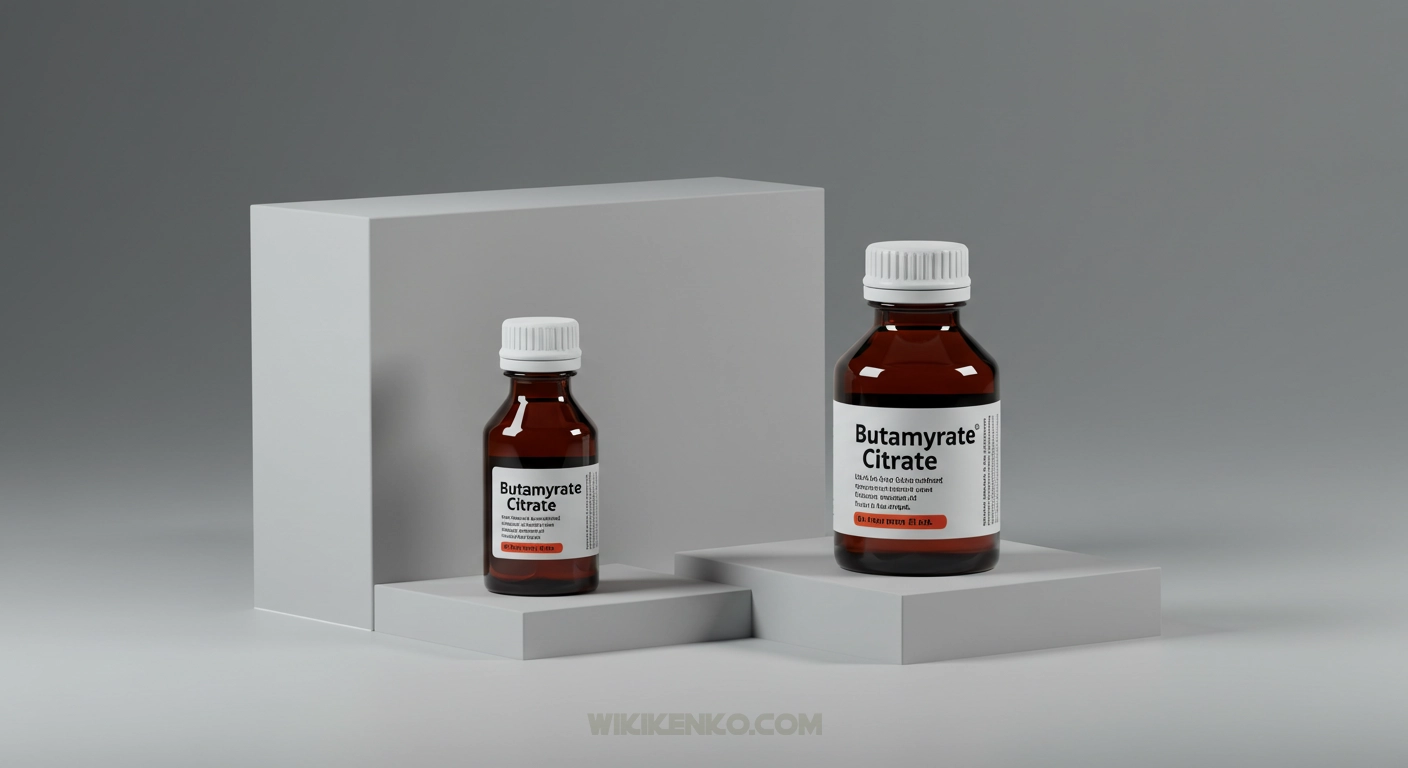
Butamirate Citrate is a non-opioid antitussive agent, widely used for the symptomatic treatment of dry (non-productive) coughs. Unlike traditional cough suppressants such as codeine, Butamirate has no central narcotic effects, no risk of addiction, and is better tolerated, especially in pediatric and geriatric populations. It exerts its therapeutic action by suppressing the cough reflex at the level of the central nervous system while also exhibiting bronchodilatory and anti-inflammatory properties. Available in various oral formulations, Butamirate Citrate is an over-the-counter (OTC) and prescription medication in many countries.
Chemical Structure
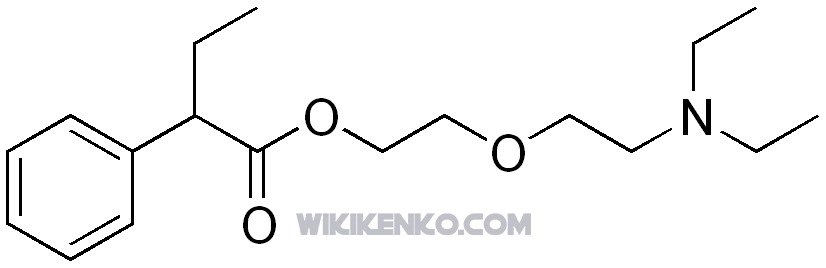
“Butamirate Citrate” is the citrate salt of Butamirate, a molecule with the chemical name: 2-(2-diethylaminoethoxy)ethyl 2-phenylbutyrate citrate. Its molecular formula is C30H44N2O11 (for the citrate salt), and the compound exists as a colorless or slightly yellow viscous liquid in its base form.
- Molecular Weight: Approximately 624.68 g/mol (citrate salt)
- Chemical Class: Synthetic non-opioid antitussive; chemically unrelated to opioids or benzodiazepines
- Functional Groups: Ester, amine, ether, and carboxylic acid (from the citrate)
This compound is lipophilic, which aids its penetration across the blood-brain barrier to exert central action on the cough center.
Butamirate-Based Medicines List
- Sinecod® – Widely known syrup and tablet form, available globally for dry cough.
- Tussinex® Butamirate – Pediatric oral drops for non-productive cough.
- Codelac Neo® – Popular formulation in Russia and Eastern Europe.
- Tuxium® – Oral syrup used in both children and adults.
- Butacor® – Tablet or lozenge form for adult dry cough relief.
- SolvoCough® – Pediatric formulation for night-time cough relief.
- NeoTuss® – Available in effervescent and syrup forms.
- Butavico® – Newer formulation in capsule form for adults.
Mechanism of Action
Butamirate Citrate acts centrally to inhibit the cough reflex by acting on the medullary cough center, without engaging opioid receptors. This allows it to suppress cough effectively without the risk of respiratory depression or dependence. Additionally, it has:
- Bronchodilator effects: Relaxes bronchial smooth muscle, improving airflow.
- Mild anti-inflammatory properties: Reduces irritation in the airways.
- Peripheral action: May desensitize cough receptors in the respiratory tract to some extent.
Because of these combined effects, Butamirate Citrate is useful in managing irritative dry coughs caused by infections, pollutants, or allergies.
Pharmacokinetics
| Parameter | Details |
|---|---|
| Absorption | Rapidly absorbed from the gastrointestinal tract. |
| Peak Plasma Time | 1.5 – 2 hours post-oral administration. |
| Bioavailability | Moderate (exact values not widely published). |
| Metabolism | Hepatic metabolism into active metabolites. |
| Elimination Half-life | Approximately 6–10 hours. |
| Excretion | Mainly via urine (renal route). |
Notably, the pharmacokinetics of Butamirate allow for twice or three times daily dosing, depending on the formulation (e.g., drops, tablets, or syrup).
Therapeutic Uses
| Indication | Clinical Role |
|---|---|
| Dry (non-productive) cough | First-line symptom relief for dry, irritating cough. |
| Night-time cough | Suppresses nocturnal coughing, improving sleep. |
| Post-infectious cough (e.g., after cold or flu) | Reduces residual cough post-viral illness. |
| Cough due to bronchitis | Provides relief by reducing cough reflex sensitivity. |
| Pre/post-surgical cough suppression | Useful to avoid strain in postoperative patients. |
| Cough due to environmental irritation | Alleviates cough triggered by smoke, dust, or allergens. |
| Pediatric cough | Widely used in children due to non-narcotic profile. |
| Cough relief during recovery from ENT procedures | Used when coughing may impair wound healing. |
Side Effects
Butamirate Citrate is well-tolerated, but like all medications, it may cause side effects, usually mild and self-limited:
Common Side Effects
- Drowsiness or fatigue (especially at higher doses)
- Mild gastrointestinal upset (nausea, abdominal discomfort)
- Skin rash or pruritus (rare, likely allergic reaction)
Rare or Serious Side Effects
- Hypersensitivity reaction (very rare)
- Dizziness or headache
- Mild bronchospasm (in hypersensitive individuals)
No respiratory depression or addiction potential has been reported, making it safer than opioid-based antitussives.
Drug Interactions
Butamirate has a low potential for drug interactions, but some caution is advised:
- CNS depressants (e.g., benzodiazepines, alcohol): Additive sedative effect may occur.
- Expectorants or mucolytics: Use with caution; Butamirate suppresses cough, while mucolytics stimulate mucus clearance.
- MAO inhibitors or SSRIs: No known direct interaction, but caution is advisable due to overlapping central effects.
Safety Considerations
It is not recommended to use Butamirate in combination with medications aimed at increasing mucus production in productive coughs, as it may hinder proper airway clearance.
General Safety Profile
Butamirate Citrate is considered safe across pediatric, adult, and elderly populations, with proper dosing. It is:
- Non-opioid, hence not addictive
- Non-respiratory depressant
- Non-sedative at normal doses
Specific Precautions
- Pregnancy: Use only if clearly needed, especially in the first trimester (no well-controlled studies).
- Lactation: Caution advised due to limited data.
- Children under 2 years: Generally contraindicated; use only if explicitly approved.
Overdose Risk
Overdose is rare but may cause:
- Somnolence
- Gastrointestinal disturbances
- Ataxia
Treatment is symptomatic; activated charcoal may be considered in acute cases.
Regulatory Status
Butamirate Citrate is approved for use in Europe, Asia, and parts of Latin America, but is not FDA-approved in the United States. It is listed under Schedule “OTC” or Prescription-Only Medicines depending on the country and formulation strength.
- Prescription Status:
- OTC: In many European and Asian countries (e.g., for pediatric syrups).
- Rx: Higher-dose formulations for adults.
It is not classified as a controlled substance, and no abuse potential has been reported in over four decades of use.
Conclusion
Butamirate Citrate stands out as a safe, effective, and well-tolerated treatment for dry, irritating coughs, particularly when opioid alternatives are unsuitable. With its central antitussive action, absence of respiratory depression, and wide range of pediatric-friendly formulations, it remains a cornerstone antitussive in many parts of the world. Although not yet approved in the United States, its widespread use and favorable safety record continue to support its therapeutic value in cough management globally.