
Description
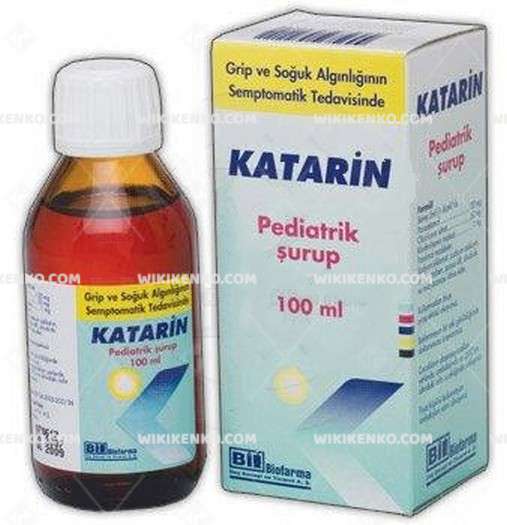
Katarin Pediatrik Syrup is a fixed‑dose combination product formulated as an oral syrup for children, targeting multiple symptoms typically associated with common cold and upper respiratory tract infections. Its pharmacological profile integrates an analgesic–antipyretic (paracetamol), an H1‑antihistamine (chlorpheniramine), and an antitussive/airway‑soothing agent (oxolamine), thereby providing multimodal relief of fever, pain, rhinorrhea, sneezing, and cough.
The product is authorized and marketed in Turkey and is available as a 100 ml pediatric syrup intended for prescription use. Clinical use should always follow national pediatric dosing guidelines and the official product information for the Turkish market.
Pharmaceutical composition and formulation
According to the Turkish short product information (Kısa Ürün Bilgisi, KUB), Katarin Pediatrik Syrup 120 mg + 50 mg + 1 mg/5 ml contains paracetamol, oxolamine citrate, and chlorpheniramine maleate as active pharmaceutical ingredients. One standard measuring spoonful of 10 ml syrup provides 240 mg paracetamol, 100 mg oxolamine citrate, and 2 mg chlorpheniramine maleate, indicating a linear scaling from the labeled 5‑ml strength unit. The formulation is described as a dark pink, clear oral syrup, reflecting the presence of the colorant Ponceau 4R (E124) among its excipients.
Sorbitol (E420) is used as a bulk sweetener, with the KUB indicating approximately 847.5 mg sorbitol per 5 ml (i.e., around 1695 mg per 10 ml) and warning against use in patients with hereditary fructose intolerance. Other excipients (not fully detailed in the available excerpt) likely serve as solvents, flavorings, preservatives, and pH modifiers to ensure stability and pediatric palatability, in line with general principles of pediatric liquid formulation development.
Table 1. Qualitative–quantitative composition per 10 ml (one measuring spoonful)
| Component | Quantity per 10 ml | Role in formulation |
|---|---|---|
| Paracetamol | 240 mg | Analgesic and antipyretic |
| Oxolamine citrate | 100 mg | Antitussive/airway‑soothing agent |
| Chlorpheniramine maleate | 2 mg | H1‑antihistamine |
| Sorbitol (E420) | ~1695 mg | Sweetener, vehicle; osmotic effect |
| Ponceau 4R (E124) | 0.5 mg | Colorant (dark pink appearance) |
| Other excipients (not listed) | q.s. | Solvent, flavor, preservative, pH control |
Therapeutic indications
National sources describe Katarin Pediatrik Syrup as indicated for the symptomatic treatment of common cold and upper respiratory tract infections in pediatric patients. Typical indications include fever, headache and myalgia associated with viral respiratory infections, as well as rhinorrhea, nasal congestion, sneezing, sore throat, and non‑productive cough. The combination is not intended for the treatment of bacterial infection per se and does not replace appropriate antimicrobial therapy when indicated.
Use is generally restricted to short‑term episodes and should be guided by a physician, especially in younger children.
Mechanism of action of active ingredients
Paracetamol
Paracetamol (acetaminophen) is an analgesic–antipyretic that acts mainly by central inhibition of prostaglandin synthesis within the central nervous system. It exhibits minimal anti‑inflammatory activity at therapeutic doses and provides effective relief of mild to moderate pain and fever in children, with a favorable gastrointestinal safety profile compared with non‑steroidal anti‑inflammatory drugs. Its antipyretic effect is mediated at the hypothalamic thermoregulatory center, promoting peripheral vasodilation and heat loss when body temperature is elevated.
Chlorpheniramine maleate
Chlorpheniramine maleate is a first‑generation H1‑receptor antagonist that competes with histamine at H1‑receptors in the respiratory tract, vasculature, and central nervous system. By blocking H1‑receptors, it reduces histamine‑induced vasodilation, increased vascular permeability, and sensory nerve stimulation, thereby decreasing sneezing, rhinorrhea, nasal itching, and conjunctival symptoms. First‑generation antihistamines readily cross the blood–brain barrier and may cause central sedation, but they can also reduce cough and upper airway irritation through central and peripheral mechanisms.
Oxolamine citrate
Oxolamine is classified as an antitussive and airway‑soothing agent used in respiratory conditions. It is considered to act both centrally and peripherally to reduce the cough reflex, while also exerting local anti‑inflammatory effects on the mucosa of the respiratory tract, although detailed pharmacodynamic data are relatively limited compared to other antitussives. Its presence within the combination targets dry, irritating cough that often accompanies viral upper respiratory infections in children.
Pharmacokinetics (component‑based overview)
The overall pharmacokinetic profile of Katarin Pediatrik Syrup is determined by its individual components, which have well‑described behavior in humans, including pediatric patients, although the official KUB excerpt available is focused on composition and safety.
-
Paracetamol is rapidly and almost completely absorbed from the gastrointestinal tract, with peak plasma concentrations typically reached within 30–60 minutes after oral administration in children, and it undergoes hepatic metabolism via glucuronidation, sulfation, and CYP‑mediated oxidation to a reactive intermediate detoxified by glutathione.
-
Chlorpheniramine is absorbed from the GI tract, widely distributed, and extensively metabolized in the liver, with an elimination half‑life of several hours, which may be prolonged in young children and patients with hepatic impairment.
-
Oxolamine demonstrates systemic absorption after oral administration, but detailed pediatric kinetic parameters are less extensively published than for paracetamol and chlorpheniramine; dosing in combination products therefore relies primarily on established clinical practice and safety experience in the Turkish market.
Dosage and administration
Turkish product information describes Katarin Pediatrik Syrup as a pediatric formulation with a standard measuring spoon volume usually corresponding to 5 or 10 ml, with dosing expressed per kilogram of body weight and age group in clinical practice, although the full dosing table is not included in the excerpt consulted. In general, paracetamol‑containing pediatric medications are dosed on a mg/kg basis at defined intervals, with strict attention to maximum daily dose to avoid hepatotoxicity; when used as fixed‑dose combination, prescribers must account for all paracetamol‑containing products the child may receive.
Katarin Pediatrik Syrup is intended for oral administration only, and the duration of treatment is typically limited to a short period (e.g., several days) until symptoms resolve; persistent fever, cough, or respiratory symptoms require medical reassessment. The use of a calibrated measuring device is recommended to avoid under‑ or overdosing in children.
Contraindications
According to the KUB, Katarin Pediatrik Syrup is contraindicated in patients with known hypersensitivity to paracetamol, chlorpheniramine, oxolamine, or any excipient of the formulation. Because the syrup contains sorbitol, it should not be used in patients with rare hereditary fructose intolerance, as these individuals cannot metabolize fructose and may experience serious adverse effects.
First‑generation antihistamines such as chlorpheniramine are classically contraindicated or used with great caution in patients with narrow‑angle glaucoma, urinary retention, severe prostatic hypertrophy, or pyloroduodenal obstruction, and similar precautions apply to pediatric products containing these agents. Concomitant use with other paracetamol‑containing products is contraindicated due to the risk of cumulative overdose and hepatotoxicity.
Warnings and precautions
The KUB highlights multiple clinically relevant warnings, particularly concerning hypersensitivity reactions and excipient‑related risks. Serious cutaneous adverse reactions (SCARs) such as erythema multiforme, Stevens–Johnson syndrome, toxic epidermal necrolysis, and acute generalized exanthematous pustulosis have been reported, albeit rarely, with paracetamol‑containing medicines and require immediate discontinuation if skin reactions occur. The product information also warns about immunologic and hematologic reactions such as immune thrombocytopenia and anaphylactic reactions, which necessitate urgent medical attention.
Sorbitol content mandates caution in children with gastrointestinal disorders, and Ponceau 4R (E124) has been associated with hypersensitivity reactions, particularly in individuals with a history of allergy or asthma. Sedation and psychomotor impairment related to chlorpheniramine may affect older children’s school performance and behavior, and caregivers should be advised accordingly.
Adverse reactions
The official KUB lists adverse reactions by system organ class and frequency, highlighting both common and rare events. At the level of the immune system, there are reports of positive allergy tests and immune thrombocytopenia, as well as angioedema and anaphylactic reactions with unknown frequency, reflecting the potential for serious hypersensitivity events. Dermatologic adverse reactions include rash, urticaria, exanthematous pustulosis, erythema multiforme, Stevens–Johnson syndrome, toxic epidermal necrolysis (including fatal outcomes), and exfoliative dermatitis, typically classified as rare to very rare but clinically significant.
Metabolism‑related effects such as anorexia are also mentioned, though detailed frequency data are not provided in the excerpt. Central nervous system effects (e.g., sedation, agitation, irritability) are consistent with the pharmacology of first‑generation antihistamines and may appear especially in younger children.
Table 2. Selected adverse reactions reported in the KUB
| System organ class | Adverse reaction | Reported frequency category* |
|---|---|---|
| Immune system disorders | Allergy test positive, immune thrombocytopenia | Very rare / unknown |
| Angioedema, anaphylactic reactions | Unknown | |
| Skin and subcutaneous tissue | Rash, urticaria | Rare |
| disorders | Exanthematous pustulosis, erythema multiforme | Rare |
| Stevens–Johnson syndrome, toxic epidermal necrolysis | Rare (incl. fatal) | |
| Exfoliative dermatitis | Rare | |
| Metabolism and nutrition | Anorexia | Unknown |
*Frequency labels reflect the wording in the Turkish KUB excerpt (e.g., “seyrek”, “çok seyrek”, “bilinmiyor”).
Overdose
Overdose with Katarin Pediatrik Syrup is primarily driven by paracetamol toxicity, which can cause severe and potentially fatal hepatocellular injury, particularly in children if toxic doses are ingested. Early symptoms may be nonspecific (nausea, vomiting, malaise), and serious hepatic damage may appear later; prompt hospital evaluation and administration of N‑acetylcysteine as an antidote are standard of care in paracetamol overdose.
Overdose of chlorpheniramine may lead to pronounced anticholinergic symptoms, CNS depression or paradoxical CNS stimulation (especially in young children), seizures, and cardiac arrhythmias, while oxolamine overdose data are limited but may exacerbate CNS and respiratory effects. Caregivers should be warned to store the syrup out of reach of children and to avoid exceeding prescribed doses or combining with other paracetamol‑containing products.
Drug–drug interactions
The combination nature of Katarin Pediatrik Syrup predisposes to several potential drug–drug interactions, even though the detailed table is not visible in the partial KUB. Paracetamol can interact with drugs that induce hepatic microsomal enzymes (e.g., some antiepileptics), increasing the risk of hepatotoxicity in overdose, and with warfarin‑type anticoagulants during prolonged use.
Chlorpheniramine may show additive sedative effects with other centrally acting depressants such as benzodiazepines, barbiturates, sedative antidepressants, and alcohol, and its anticholinergic effects can be potentiated by other anticholinergic drugs. When co‑prescribing with other cold preparations, it is essential to avoid therapeutic duplication of paracetamol or antihistamines, which is a recognized risk with over‑the‑counter pediatric cold medications.
Use in specific populations
In pediatric patients, dosing must be individualized according to age and body weight, with strict adherence to maximum daily paracetamol exposure and careful monitoring for sedative effects of chlorpheniramine. In hepatic or renal impairment, paracetamol clearance is reduced and hepatotoxic risk may be increased, so dosage adjustment or alternative therapies may be necessary.
Patients with hereditary fructose intolerance should not receive the product due to its sorbitol content, and particular caution is advised in children with a history of severe allergic reactions or cutaneous drug eruptions. Although the product is labeled as pediatric, general principles of pediatric formulation safety emphasize that infants, especially neonates, have different drug handling and heightened susceptibility to adverse effects compared with older children, necessitating specialist oversight when using multi‑component cold preparations.
Place in therapy and regulatory status
Katarin Pediatrik Syrup is classified under ATC code R05X “other cold preparations,” indicating its role as a symptomatic treatment rather than a disease‑modifying agent. It is authorized for use in Turkey and produced by Biofarma İlaç Sanayi ve Ticaret A.Ş., with availability in 100‑ml bottles labeled as pediatric syrup. Regulatory trends in pediatric medicine in Europe and internationally emphasize careful benefit–risk assessment of combination cold preparations in children, favoring evidence‑based use and avoidance of unnecessary polypharmacy, particularly in very young patients.
Within this context, Katarin Pediatrik Syrup should be reserved for clinically justified cases, prescribed at the lowest effective dose and for the shortest possible duration, and always accompanied by non‑pharmacological supportive measures for upper respiratory tract infections in children.
Considerations
While paracetamol has an extensive evidence base for pediatric analgesia and antipyresis, published clinical trial data focusing specifically on the Katarin combination (paracetamol + chlorpheniramine + oxolamine) in children are more limited in the publicly accessible domain than for single‑ingredient products. General pediatric pharmacology literature underlines the challenges of multi‑component syrups, especially regarding accurate dosing, excipient safety (e.g., sorbitol, artificial colorants), and the risk of medication errors in home use.
Regulatory and academic reviews of pediatric formulations support the development of palatable and age‑appropriate liquid medicines but also call for rigorous monitoring of adverse events, particularly serious skin reactions and hypersensitivity syndromes associated with paracetamol and certain excipients. Clinicians should therefore apply an individualized, evidence‑based approach, balancing symptomatic relief against potential risks and considering monotherapy alternatives when appropriate.
Important notice
This article is an academic‑style summary derived from publicly accessible Turkish and general pharmacological sources and does not replace the official Turkish full prescribing information or professional medical advice. For clinical decisions, healthcare professionals should consult the complete, up‑to‑date product information approved by the relevant national regulatory authority.










Reviews
There are no reviews yet.