
Description
Chloramphenicol is a broad‑spectrum antibiotic with activity against numerous Gram‑positive and Gram‑negative bacteria and is listed in several pharmacological references as a potent inhibitor of bacterial protein synthesis. Because of its association with serious idiosyncratic bone‑marrow toxicity, systemic use is restricted to severe, life‑threatening infections when safer alternatives are unsuitable. In contrast, topical forms (ocular, otic, cutaneous, and gynecological) are employed for localized infections with limited systemic exposure when used appropriately.
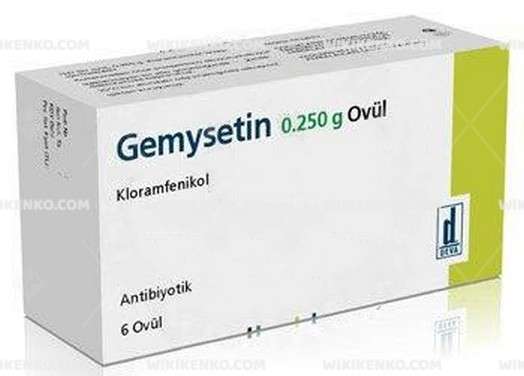
Pharmaceutical Product Description (Gemysetin Ovul)
Gemysetin Ovul (“GEMYSETİN 0,250 g ovül”) is a vaginal dosage form registered in Turkey for intravaginal use. Each ovule contains 0.250 g chloramphenicol as the active substance, formulated with polyethylene glycol‑based excipients (polyethylene glycol monostearate, polyethylene glycol 1500, and related bases) to form a solid suppository that melts or dissolves at body temperature. According to Turkish drug listings, Gemysetin is a brand that contains chloramphenicol as a single active pharmaceutical ingredient in various local formulations, including gynecological preparations.
Qualitative and Quantitative Composition
Chloramphenicol (INN) is the sole active substance in Gemysetin Ovul. The ovule base consists of hydrophilic polyethylene glycol derivatives, which facilitate disintegration and release of drug within the vaginal canal and support adequate spreading over the mucosal surface.
Composition overview (per ovule)
| Component type | Substance | Quantity / characteristics |
|---|---|---|
| Active ingredient | Chloramphenicol | 0.250 g (250 mg) per ovule |
| Suppository base | Polyethylene glycol monostearate | quantity sufficient as base |
| Suppository base | Polyethylene glycol 1500 | quantity sufficient as base |
| Other PEG derivatives | Polyethylene glycol mixtures (q.s.) | to form ovule matrix |
The relatively high drug load (250 mg) in a localized formulation is typical for intravaginal antibiotics, which must achieve concentrations well above minimum inhibitory concentrations (MICs) in the vaginal lumen and mucosa.
Pharmacological Class and Mechanism of Action
Chloramphenicol belongs to the pharmacotherapeutic group of gynecological anti‑infectives and antiseptics, specifically antibiotics (ATC G01AA05). At the molecular level, chloramphenicol binds reversibly to the 50S subunit of bacterial ribosomes, inhibiting peptidyl transferase activity and blocking peptide bond formation during protein synthesis. This action is primarily bacteriostatic at typical therapeutic concentrations, although bactericidal activity may occur against highly susceptible organisms in specific settings.
The agent exhibits broad‑spectrum activity against many Gram‑positive cocci, Gram‑negative bacilli, and anaerobes, and remains active against some strains resistant to other antibiotic classes. However, acquired resistance mediated by enzymatic inactivation (chloramphenicol acetyltransferase) or reduced permeability is widely documented and must be considered in empiric use.
Microbiology and Expected Vaginal Spectrum
Chloramphenicol has in vitro activity against common genital tract pathogens such as certain strains of Streptococcus spp., Staphylococcus spp., and some Enterobacterales, as well as various anaerobic bacteria implicated in pelvic and vaginal infections. Its broad‑spectrum profile theoretically covers a wide range of mixed aerobic–anaerobic flora typical of polymicrobial gynecological infections. Nevertheless, routine use for uncomplicated vulvovaginal candidiasis or bacterial vaginosis is not standard, given the availability of more targeted, safer agents and the need to minimize resistance selection.
Pharmacokinetics and Local Vaginal Application
Systemically, chloramphenicol is well absorbed, extensively distributed, and primarily metabolized hepatically with a half‑life of approximately 1.5–3.5 hours in healthy adults. Topical ocular preparations demonstrate low systemic exposure, though measurable plasma concentrations may occur with intensive or prolonged use. By analogy, intravaginal administration of 250 mg ovules is expected to produce high local concentrations with limited but non‑zero systemic absorption, especially if mucosal integrity is compromised.
Because chloramphenicol can cross biological membranes and distribute widely, clinicians should assume that repeated intravaginal doses might lead to detectable systemic levels, particularly in pregnancy, breastfeeding, or in patients with hepatic impairment. Therefore, treatment duration is typically kept as short as clinically feasible, although precise regimens should follow official labeling and local guidelines.
Therapeutic Indications (Contextual, Class‑Based)
Official product information for Gemysetin Ovul is limited publicly, but the ATC classification as G01AA05 implies use as a gynecological anti‑infective for the treatment of susceptible vaginal infections. Chloramphenicol is generally reserved for situations where first‑line agents are unsuitable because of allergy, resistance, or intolerance, in line with the restrictive principles governing its systemic use. Common systemic indications include typhoid fever, severe rickettsial diseases, meningitis due to Haemophilus influenzae, Neisseria meningitidis, or Streptococcus pneumoniae, and cholera; these illustrate its potency but are not specific indications for the ovule formulation.
Posology and Method of Administration (General Principles)
Specific dosing instructions for Gemysetin Ovul (e.g., once‑daily vs twice‑daily insertion, treatment duration) must be taken from the official Turkish patient or prescribing information and local infectious‑disease protocols. Intravaginal ovules are generally inserted deeply into the vagina, preferably at bedtime to maximize mucosal contact and minimize leakage. Treatment courses for intravaginal antibiotics often range from several days to approximately one week, but extended treatment may be necessary for complicated or recurrent infections under specialist supervision.
Safety Profile and Adverse Effects
Systemic toxicity considerations
Chloramphenicol is associated with two major hematologic toxicities: dose‑related, reversible bone marrow suppression and rare idiosyncratic aplastic anemia, which may occur even after short courses and at low systemic exposure. StatPearls and major drug monographs emphasize that these risks have driven the restriction of chloramphenicol use to severe infections in which no safer alternative is suitable. Additional systemic adverse effects include gastrointestinal symptoms, neurotoxicity (e.g., peripheral neuropathy), and, in neonates, the potentially fatal “gray baby syndrome” due to immature hepatic metabolism.
While topical ocular products have a limited systemic absorption and high‑dose intoxication from eye ointments is described as unknown, warnings to avoid concomitant myelosuppressive drugs and to monitor for systemic toxicity are still emphasized. By extension, intravaginal exposure should be regarded with similar caution, especially if prolonged, high‑dose, or used in patients at high risk for bone‑marrow dysfunction.
Local tolerability
Topical formulations of chloramphenicol may cause local irritation, burning, stinging, itching, or allergic contact dermatitis at the site of application. In the vaginal context, these reactions may manifest as vulvovaginal irritation, increased discharge, or exacerbation of discomfort, and should prompt re‑evaluation of therapy. Immediate hypersensitivity reactions, including generalized rash or anaphylaxis, though rare, are possible and require discontinuation and urgent treatment.
Summary of key risks (class‑based)
| Risk category | Description (chloramphenicol class) |
|---|---|
| Hematologic | Reversible bone marrow suppression, rare idiosyncratic aplastic anemia, risk persists after topical use |
| Neonatal toxicity | “Gray baby syndrome” with systemic exposure in premature and newborn infants |
| Neurologic | Peripheral neuropathy, optic neuritis with prolonged systemic use |
| Hypersensitivity | Rash, urticaria, rare anaphylaxis, local allergic reactions |
| Local irritation (vaginal) | Burning, itching, irritation, discharge (extrapolated from topical products) |
Contraindications and Precautions
Drug information sources recommend that chloramphenicol not be used in patients with a history of hypersensitivity to the drug or any component of the formulation. It is contraindicated or should be avoided in individuals with a history of aplastic anemia or severe bone‑marrow depression, irrespective of cause, because re‑exposure could precipitate life‑threatening hematological events. Caution is advised in hepatic or renal impairment due to altered metabolism and elimination, which may increase systemic exposure.
Patients should avoid concomitant use of other bone‑marrow–suppressive agents (e.g., cytotoxic chemotherapy, certain antiretrovirals) with chloramphenicol because of the potential for additive or synergistic toxicity. Any new onset of unexplained fever, sore throat, pallor, easy bruising, or bleeding during or after treatment should prompt immediate evaluation and complete blood count.
Use in Special Populations
Pregnancy
Product information for ocular chloramphenicol classifies it as pregnancy category C, reflecting animal data and limited human experience, with use only if the potential benefit justifies the potential risk to the fetus. Systemic chloramphenicol crosses the placenta and is detectable in fetal circulation; therefore, caution is strongly advised, particularly near term. For intravaginal formulations such as Gemysetin Ovul, systemic exposure is likely lower than with systemic therapy but not negligible, so use in pregnancy should be reserved for situations where safer alternatives are inappropriate and under specialist guidance.
Lactation
Chloramphenicol is excreted into breast milk and may expose the breastfed infant to the risk of bone‑marrow toxicity and, in neonates, gray baby syndrome. Guidelines for systemic therapy generally recommend avoiding chloramphenicol during breastfeeding or using it only when absolutely necessary with close pediatric monitoring. Given these considerations, intravaginal use in lactating women should also be approached cautiously, balancing the local therapeutic need against potential systemic absorption and infant exposure.
Pediatric and geriatric use
Systemic chloramphenicol use is tightly controlled in pediatric patients due to increased susceptibility to toxicity, especially in neonates and young infants. Intravaginal ovules are not typically used in prepubertal children and would generally be reserved for adults or adolescents under strict medical supervision. In older adults, age‑related decline in hepatic function and comorbidities may increase risk of adverse effects, suggesting shorter courses and careful monitoring where chloramphenicol‑containing gynecological products are used.
Drug–Drug Interactions
Chloramphenicol may inhibit hepatic microsomal enzymes, potentially increasing plasma concentrations and toxicity of co‑administered drugs that undergo hepatic metabolism. Combined use with other agents known to depress bone marrow function (e.g., certain cytostatics, azathioprine, linezolid, some antiretrovirals) is discouraged because of additive hematologic risk, a warning explicitly stated in ophthalmic chloramphenicol labeling. Although systemic exposure from vaginal use is lower, these interaction risks remain relevant in high‑risk patients or with prolonged courses.
Resistance and Stewardship Considerations
Extensive historical use of chloramphenicol has contributed to widespread resistance in many bacterial species, particularly via plasmid‑encoded chloramphenicol acetyltransferase enzymes. Stewardship principles therefore discourage indiscriminate topical use, especially when narrow‑spectrum, better‑tolerated alternatives are available for common gynecologic infections. For Gemysetin Ovul, rational use implies reserving therapy for culture‑documented or strongly suspected infections caused by pathogens likely to be susceptible to chloramphenicol and in situations where alternative therapies cannot be used.
Clinical Role of Gemysetin Ovul within Chloramphenicol Therapy
Within the broader therapeutic landscape of chloramphenicol, Gemysetin Ovul represents a local gynecological formulation designed to deliver high drug concentrations directly to the site of infection while minimizing systemic exposure. Its existence in national formularies confirms that chloramphenicol remains an option in gynecological anti‑infective therapy in Turkey, albeit with the same serious toxicity warnings that constrain systemic use. In practice, such a product would typically be considered a second‑ or third‑line option, used under physician supervision, guided by microbiologic data whenever possible, and for the shortest effective duration to limit toxicity and resistance.
Conclusion
Gemysetin Ovul (chloramphenicol 0.250 g intravaginal ovule) is a gynecological anti‑infective belonging to the chloramphenicol class, characterized by broad antimicrobial activity but constrained by significant hematologic toxicity risks. Its clinical use should be individualized, limited to clearly indicated vaginal infections when safer alternatives are unsuitable, and accompanied by careful attention to contraindications, potential systemic absorption, and the principles of antimicrobial stewardship.











Sara omar –
need to purchase
Medical Guidance Center –
Hi Sara omar, this is WikiKenko. We appreciate you reaching out to us!
I understand you’re looking to get a hold of Gemysetin Ovul, but I want to make sure you know that WikiKenko does not sell any medications. We’re here to provide the facts and data, but we don’t handle the actual sales.
If this is an urgent situation or a life-threatening emergency, please head over to our “Community Support Network” form at https://wikikenko.com/community-support-network/. The community there might be able to help you track down official sellers in your area.