

Propifenazone is a non-opioid analgesic and antipyretic widely used in the management of mild-to-moderate pain and fever. It belongs to the pyrazolone derivative class, sharing structural and pharmacological similarities with drugs like metamizole and aminophenazone. Clinically, propifenazone is employed in the treatment of headaches, dental pain, musculoskeletal pain, and primary dysmenorrhea, often in combination with other analgesics or antispasmodics. Its dual analgesic and antipyretic properties make it a versatile option in symptomatic management of pain and fever.
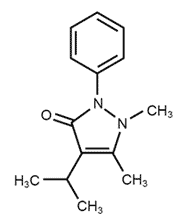
Chemical Structure
- Chemical name: 1,2-dihydro-1,5-dimethyl-3-phenyl-2,3-dioxopyrazol-4-yl propionate
- Molecular formula: C18H20N2O3
- Molecular weight: 308.36 g/mol
- Structure: Propifenazone contains a pyrazolone ring substituted with a phenyl group and a propionate ester, contributing to its lipophilicity and absorption characteristics.
- Properties: White to off-white crystalline powder, sparingly soluble in water, more soluble in organic solvents, facilitating oral and parenteral formulations.
Propifenazone-Based Medicines List
- Novalgin-P® – Oral and injectable analgesic combination.
- Algofen-P® – Pain relief formulation containing “propifenazone” and caffeine.
- Propyfen® – Injectable propifenazone for acute pain.
- Migralgin® – Used in migraine and tension headaches.
- Algopirin® – Combination analgesic with propifenazone, sometimes with antispasmodics.
- Propifenazone-C® – Oral tablets for fever and musculoskeletal pain.
- Febrinol® – Antipyretic formulation for systemic fever management.
- Propifen-P® – Generic parenteral solution for hospital use.
Mechanism of Action
Propifenazone exerts its effects through central and peripheral mechanisms:
- Analgesic effect: Inhibits cyclooxygenase (COX) enzymes, decreasing prostaglandin synthesis in peripheral tissues, which reduces pain sensitization. It may also modulate central pain pathways in the CNS.
- Antipyretic effect: Acts on the hypothalamic thermoregulatory center, lowering elevated body temperature by promoting heat dissipation and reducing prostaglandin-mediated fever response.
- Spasmolytic properties: When combined with antispasmodics, it helps relieve smooth muscle-related discomfort, such as menstrual cramps.
Pharmacokinetics
- Absorption: Rapidly absorbed from the gastrointestinal tract after oral administration.
- Distribution: Widely distributed in body tissues, with moderate plasma protein binding.
- Metabolism: Hepatically metabolized, primarily by oxidative pathways involving cytochrome P450 enzymes.
- Excretion: Excreted mainly through urine as metabolites; minor amounts may be excreted via bile.
- Half-life: Approximately 1.5–3 hours, depending on dose and patient metabolism.
Parenteral administration allows faster onset of analgesia, useful in acute pain management.
Therapeutic Uses
| Condition | Formulation / Use | Role of Propifenazone |
|---|---|---|
| Headache | Oral / injectable | Reduces pain intensity and duration |
| Migraine | Oral / combination formulations | Relief from moderate migraine attacks |
| Musculoskeletal pain | Oral tablets / injectable | Alleviates pain from strains, sprains, and backache |
| Dental pain | Oral / parenteral | Provides analgesic relief post-procedures |
| Primary dysmenorrhea | Oral / combination with antispasmodics | Reduces pain and uterine cramps |
| Fever (pyrexia) | Oral / injectable | Lowers elevated body temperature |
| Post-operative pain | Injectable | Short-term relief after minor surgical procedures |
| Cold and flu symptoms | Oral combination formulations | Symptomatic relief of pain and fever |
Side Effects
Propifenazone is generally well tolerated, but adverse effects may occur:
- Common: Nausea, mild dizziness, rash, gastrointestinal discomfort
- Less common: Headache, hypotension, transient leukopenia
- Serious / Rare:
- Agranulocytosis or aplastic anemia (rare, dose-dependent)
- Severe hypersensitivity reactions (anaphylaxis)
- Liver enzyme elevation or hepatitis in susceptible patients
Monitoring is recommended for prolonged or high-dose therapy due to rare hematological risks.
Drug Interactions
- Anticoagulants (e.g., warfarin): Increased risk of bleeding due to additive effects on platelet function.
- Other NSAIDs: Additive gastrointestinal toxicity and risk of ulcers.
- Cytochrome P450 substrates: Propifenazone metabolism may alter levels of co-administered drugs.
- Alcohol: May increase risk of gastrointestinal irritation.
- Antihypertensives: No direct effect, but caution in combination with drugs affecting renal prostaglandin pathways.
Safety Considerations
- Pregnancy: Limited data; use only if benefits outweigh risks. Avoid in the first trimester unless necessary.
- Lactation: Safety not fully established; caution advised.
- Renal or hepatic impairment: Dose adjustment may be required due to metabolic and excretory pathways.
- Hypersensitivity: Avoid in patients with history of allergy to pyrazolone derivatives.
- Pediatric use: Safety in children should be guided by clinical judgment; monitor for hematologic side effects.

Regulatory Status
- Approved in many countries as an analgesic and antipyretic, though it is less common in the United States, where other NSAIDs are preferred.
- Prescription-only in most regions.
- Included in pain management guidelines in select countries for acute mild-to-moderate pain and fever.
- Limited long-term use due to rare but serious hematologic adverse effects.
Conclusion
Propifenazone is a versatile non-opioid analgesic and antipyretic from the pyrazolone class, effective in headache, musculoskeletal pain, dysmenorrhea, dental pain, and fever. Its rapid absorption and dual analgesic-antipyretic mechanism make it suitable for both oral and parenteral administration in acute settings. While generally safe, rare hematological and hypersensitivity reactions necessitate caution in prolonged or high-dose therapy. Its availability in combination products further enhances its utility in symptomatic relief of pain and fever.