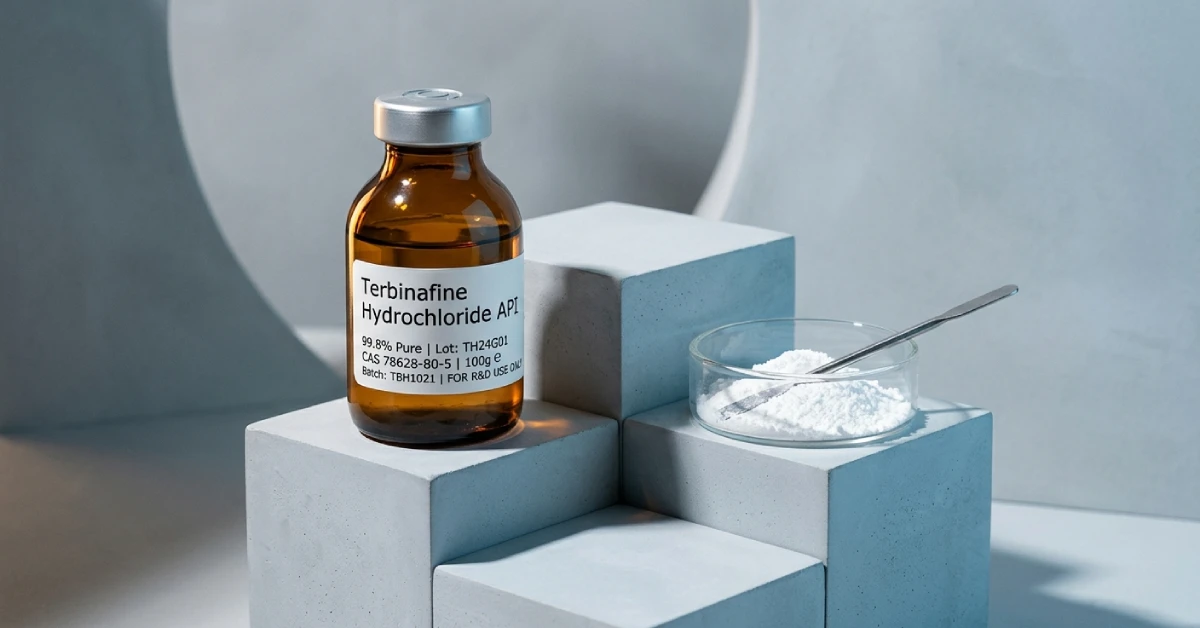
Terbinafine hydrochloride is the hydrochloride salt of terbinafine, a synthetic allylamine antifungal active pharmaceutical ingredient (API). It is used in topical preparations for superficial fungal infections and in oral preparations for selected dermatophyte infections, especially fungal infections of the fingernails and toenails. The best-known brand is Lamisil, although many generic products are available worldwide.
Terbinafine is mainly active against dermatophytes, including Trichophyton, Microsporum, and Epidermophyton species. Depending on the organism and concentration, it may inhibit fungal growth or kill fungal cells. Oral tablets are primarily used for dermatophyte onychomycosis, whereas creams, gels, sprays, and solutions are commonly used for athlete’s foot, jock itch, and ringworm. The U.S. FDA specifically labels oral tablets for dermatophyte infection of the fingernails and toenails.
Chemical Structure
Terbinafine hydrochloride has the molecular formula C21 H26 ClN and a molecular weight of approximately 327.90 g/mol. Its chemical name is (E)-N-(6,6-dimethyl-2-hepten-4-ynyl)-N-methyl-1-naphthalenemethanamine hydrochloride.
The molecule contains a substituted naphthalene ring, a tertiary amine, an alkenyne side chain, and a hydrochloride counterion. Its lipophilic structure allows it to distribute into the skin, hair, and nails, which are common sites of dermatophyte infection. The hydrochloride salt improves pharmaceutical handling and formulation.
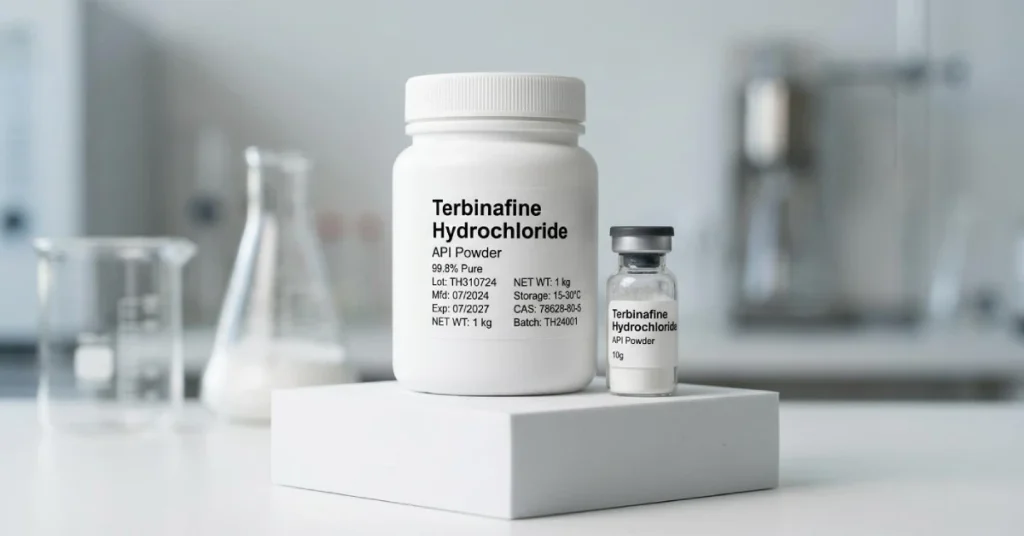
Terbinafine-Based Medicines
Representative terbinafine-containing medicines include:
- Lamisil oral tablets.
- Lamisil AT cream, gel, spray, or solution.
- Generic terbinafine hydrochloride tablets.
- Terbinafine hydrochloride 1% cream.
- Terbinafine hydrochloride topical solution.
- Terbinafine hydrochloride gel.
- Terbisil tablets or topical products.
- Sebifin tablets or topical products.
Availability and legal classification differ by country. A brand name may refer to different strengths or dosage forms in different markets. Some products are prescription-only, while selected topical formulations may be available without a prescription.
Mechanism of Action
Terbinafine inhibits fungal squalene epoxidase, also called squalene monooxygenase. This enzyme catalyzes an early step in the synthesis of ergosterol, an essential component of the fungal cell membrane.
“Terbinafine Hydrochloride” By blocking this enzyme, terbinafine causes depletion of ergosterol and accumulation of squalene inside the fungal cell. The resulting membrane disruption and toxic squalene accumulation inhibit fungal growth and may cause fungal cell death.
Terbinafine is particularly effective against dermatophytes. Its activity against yeasts and other fungi is more variable, so another antifungal may be preferred when the causative organism is uncertain or resistant.
Pharmacokinetics
Terbinafine Hydrochloride After oral administration, terbinafine is well absorbed, and food generally has little clinically significant effect on absorption. It is highly lipophilic and more than 99% bound to plasma proteins. The drug concentrates in skin, sebum, hair, and nails, allowing activity to persist in keratinized tissues after plasma levels fall.
Terbinafine is extensively metabolized in the liver by several cytochrome P450 enzymes, including CYP2C9, CYP1A2, CYP3A4, and CYP2C8. It also inhibits CYP2D6, which accounts for many of its clinically important drug interactions. Elimination occurs mainly through the urine as inactive metabolites.
Patients with hepatic cirrhosis or creatinine clearance of 50 mL/min or less may have approximately 50% lower terbinafine clearance than healthy individuals. This can increase drug exposure and may require avoidance or specialist monitoring.
Terbinafine Hydrochloride Uses
| Condition | Formulation | Typical treatment |
|---|---|---|
| Toenail onychomycosis | Oral tablet | Commonly 250 mg once daily for about 12 weeks |
| Fingernail onychomycosis | Oral tablet | Commonly 250 mg once daily for about 6 weeks |
| Tinea capitis | Oral granules or tablets | Usually about 4–6 weeks, depending on age and organism |
| Tinea pedis | Cream, gel, spray, or solution | Often 1–2 weeks, depending on the product |
| Tinea cruris | Topical formulation | Often about 1 week |
| Tinea corporis | Topical formulation | Often about 1 week |
| Tinea manuum | Topical or oral treatment | Individualized according to severity |
| Pityriasis versicolor | Usually topical treatment | Product-specific and clinician-directed |
The exact dose and duration depend on the formulation, patient age, infection site, causative organism, kidney and liver function, and local labeling. Toenail infections may continue to look abnormal for months because the damaged nail must grow out even after the fungus has been eliminated.
Side Effects
Common adverse effects of oral terbinafine include headache, nausea, diarrhea, indigestion, abdominal discomfort, rash, itching, and taste disturbance. Taste loss or altered taste may reduce appetite and occasionally cause weight loss. These effects often improve after treatment ends, although prolonged symptoms have been reported.
The most important systemic safety concern is liver injury. Rare cases of severe hepatotoxicity and liver failure, including cases requiring transplantation or resulting in death, have occurred with oral treatment. Warning symptoms include persistent nausea, loss of appetite, unusual tiredness, dark urine, pale stools, abdominal pain, generalized itching, or yellowing of the skin or eyes.
Other rare reactions include severe skin rashes, Stevens–Johnson syndrome, toxic epidermal necrolysis, blood-cell abnormalities, depression, anxiety, and worsening of psoriasis or lupus-like reactions.
Topical products may cause local burning, stinging, itching, redness, dryness, peeling, or irritation. Systemic effects are much less likely with topical treatment than with oral therapy.
Drug Interactions
Terbinafine Hydrochloride inhibits CYP2D6 and can increase exposure to medicines metabolized by this enzyme. Examples include some tricyclic antidepressants, selective serotonin reuptake inhibitors, beta-blockers, antipsychotics, and class 1C antiarrhythmics such as flecainide and propafenone.
Rifampin may increase terbinafine clearance and reduce its concentration, whereas cimetidine may reduce clearance and increase exposure. Fluconazole may also increase terbinafine exposure. Patients should provide a complete list of prescription medicines, over-the-counter products, vitamins, and herbal supplements before beginning oral therapy.
Safety Considerations
Oral terbinafine is contraindicated in patients with chronic or active liver disease and in those with a previous allergic reaction to oral terbinafine. Baseline liver-function testing is recommended before treatment, and further monitoring may be required during therapy, particularly if treatment is prolonged or symptoms develop.
Patients with significant kidney impairment require careful assessment because clearance may be reduced. Children should receive pediatric formulations and weight-based dosing when approved. Pregnancy and breastfeeding decisions should be discussed with a healthcare professional because oral terbinafine enters breast milk.
A fungal diagnosis should be confirmed before prolonged oral treatment because nail discoloration and thickening may also result from trauma, psoriasis, eczema, or bacterial disease. Treatment failure may reflect incorrect diagnosis, poor adherence, reinfection, or resistant dermatophytes.
Regulatory Status and Conclusion
In the United States, oral terbinafine tablets are FDA-approved for dermatophyte fingernail and toenail onychomycosis. Oral granules have labeling for tinea capitis in selected pediatric patients, while topical creams, gels, sprays, and solutions are available in prescription and nonprescription forms depending on the product.
Terbinafine hydrochloride is an effective antifungal API with strong activity against dermatophytes and useful penetration into keratinized tissues. Topical therapy is generally well tolerated for localized skin infections, while oral therapy can be highly effective for nail disease but requires attention to liver function, drug interactions, contraindications, and correct diagnosis. Oral terbinafine should be used only under medical supervision.