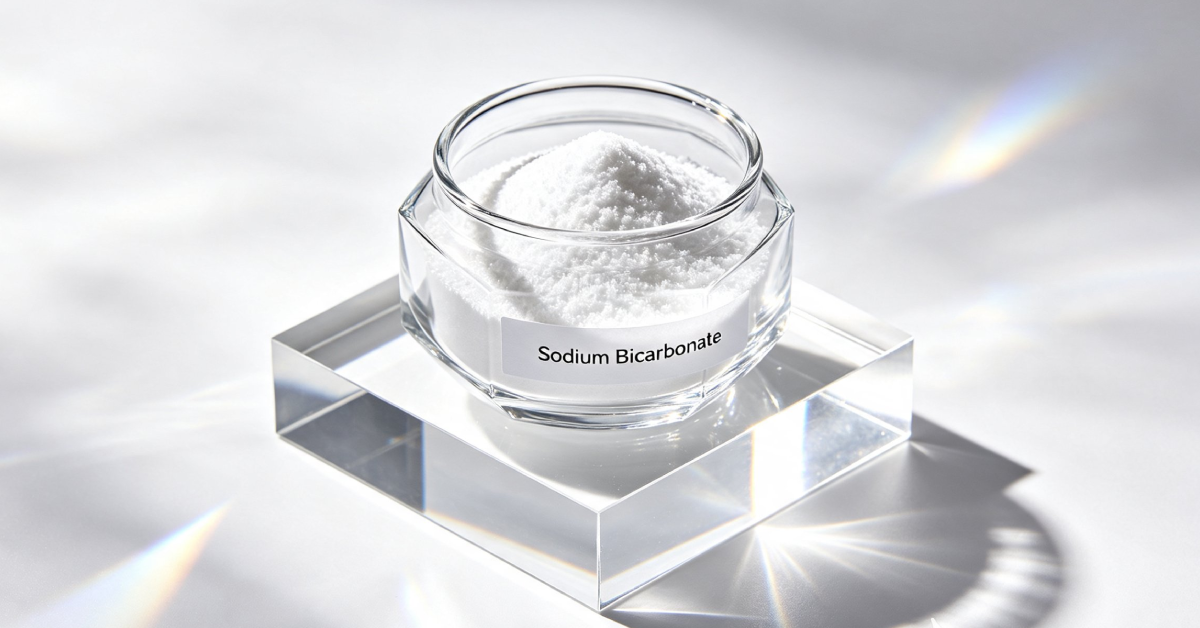
Sodium bicarbonate, also called sodium hydrogen carbonate or bicarbonate of soda, is an inorganic salt used as an active pharmaceutical ingredient, electrolyte, systemic alkalizer, and antacid. It is available in oral powders, tablets, effervescent preparations, oral solutions, and intravenous injections.
Orally, it neutralizes stomach acid and relieves occasional heartburn and indigestion. Intravenously, it raises blood pH and may be used for clinically significant metabolic acidosis in carefully selected patients. It is also used in certain toxicologic emergencies, urinary alkalinization protocols, and some combination reflux products.
Chemical Structure
Sodium bicarbonate consists of sodium ions and bicarbonate ions. Its chemical formula is NaHCO3, and its molecular weight is approximately 84.01 g/mol. The CAS number is 144-55-8.
It is usually a white, crystalline, water-soluble powder. In water, it dissociates into sodium and bicarbonate ions. Bicarbonate can accept hydrogen ions and form carbonic acid, which rapidly converts into water and carbon dioxide:
This reaction explains both its acid-neutralizing action and its ability to release gas when combined with acids.

Sodium Bicarbonate-Based Medicines: Top Eight
Representative products include:
- Sodium bicarbonate oral antacid powder.
- Sodium bicarbonate 650-mg antacid tablets.
- Sodium bicarbonate injection 8.4%.
- Sodium bicarbonate injection 4.2%.
- Gaviscon oral suspension, combined with sodium alginate and other ingredients.
- Zegerid, containing omeprazole and sodium bicarbonate.
- Sodium bicarbonate effervescent tablets.
- Sodium bicarbonate urinary-alkalinizing preparations.
Some products contain sodium bicarbonate as the active ingredient, while others use it as a buffering or gas-producing component. Formulations are not interchangeable because oral and injectable products have very different concentrations and risks.
Mechanism of Action
As an antacid, sodium bicarbonate reacts rapidly with gastric hydrochloric acid and produces sodium chloride, water, and carbon dioxide. This raises gastric pH and temporarily relieves acid-related symptoms.
Systemically, bicarbonate increases plasma bicarbonate concentration and raises blood pH. It may therefore be used to correct certain forms of metabolic acidosis when the underlying cause is also managed. It does not correct hypoxia, poor tissue perfusion, kidney failure, or diabetic ketoacidosis by itself.
Sodium bicarbonate can also alkalinize urine. Increasing urinary pH may enhance elimination of selected weak acids, including salicylates and some barbiturates, under toxicology supervision.
In some cardiac emergencies, bicarbonate may be considered for severe hyperkalemia-associated acidosis or sodium-channel-blocker toxicity, but routine use during every cardiac arrest is not recommended.
Pharmacokinetics
Oral “sodium bicarbonate” is absorbed from the gastrointestinal tract after reacting with stomach acid or entering the intestine. Bicarbonate enters the body’s carbon-dioxide and bicarbonate buffering system, while sodium distributes in extracellular fluid.
The kidneys regulate bicarbonate and sodium concentrations through filtration, reabsorption, and excretion. The lungs also influence bicarbonate physiology by removing carbon dioxide. Consequently, ventilation must be adequate when bicarbonate is administered systemically; otherwise, carbon dioxide can accumulate.
Intravenous sodium bicarbonate acts rapidly, with effects depending on dose, infusion rate, baseline acid-base status, ventilation, kidney function, and ongoing acid production. Excess bicarbonate is excreted renally, but elimination may be impaired in kidney failure.
Therapeutic Uses
| Therapeutic use | Role of sodium bicarbonate |
|---|---|
| Occasional heartburn | Neutralizes gastric acid |
| Acid indigestion | Provides short-term antacid relief |
| Metabolic acidosis | Raises plasma bicarbonate and pH when clinically indicated |
| Severe renal disease | May correct bicarbonate loss or acid accumulation |
| Severe diarrhea | Replaces bicarbonate lost through stool in selected cases |
| Toxic alcohol or salicylate poisoning | Supports alkalinization under specialist care |
| Sodium-channel-blocker overdose | Helps narrow QRS complexes and stabilize cardiac excitability |
| Severe hyperkalemia with acidosis | Used in selected emergency situations |
| Urinary alkalinization | Increases renal elimination of certain weak acids |
| Cardiac arrest with specific indications | May be considered for hyperkalemia or toxicologic causes |
Oral antacid labels commonly limit self-treatment to a short period, often no more than two weeks, unless directed by a clinician. Injectable therapy requires laboratory monitoring and is not appropriate for unsupervised home use.
Side Effects
Common oral effects include belching, bloating, abdominal discomfort, nausea, and increased thirst because carbon dioxide is generated in the stomach. Excessive use may cause metabolic alkalosis, high sodium levels, low potassium, or fluid retention.
Intravenous administration can cause hypernatremia, alkalosis, decreased ionized calcium, muscle twitching, irritability, tetany, seizures, or cardiac rhythm disturbances. Rapid administration can increase the risk of circulatory overload and electrolyte complications.
Extravasation of concentrated injection can injure tissue and cause necrosis. Any intravenous administration must therefore use an appropriate vein and trained monitoring.
Drug Interactions
Sodium bicarbonate and antacid products can alter gastric pH and reduce or delay absorption of medicines such as ketoconazole, itraconazole, iron salts, tetracyclines, fluoroquinolones, and some extended-release products. Other oral medicines may need to be taken several hours apart.
Urinary alkalinization can change the elimination of weak acids and may increase exposure to some medicines. Bicarbonate can also affect potassium, calcium, and phosphate balance, which may alter the effects of cardiac glycosides and other electrolyte-sensitive medicines.
Intravenous sodium bicarbonate should not be mixed in the same line with incompatible medicines. It can precipitate with calcium-containing solutions, and separate administration may be necessary.
Safety Considerations
Patients with hypertension, heart failure, edema, kidney disease, liver disease, or sodium-restricted diets should avoid self-treatment or seek professional advice because sodium bicarbonate can cause sodium retention and fluid overload.
It should be used cautiously in hypokalemia, hypocalcemia, respiratory alkalosis, metabolic alkalosis, and conditions with impaired ventilation. Current injectable labeling advises monitoring electrolytes and stopping treatment if significant alkalosis develops.
Oral tablets should be completely dissolved when the label requires dissolution. Taking large quantities while the stomach is overly full may increase the risk of gastric distension or injury. Children should not receive adult antacid doses without medical direction.
Sodium bicarbonate is not a general treatment for unexplained vomiting, abdominal pain, chronic reflux, or diabetic ketoacidosis. Persistent symptoms require diagnosis and treatment of the underlying condition.

Regulatory Status
Sodium bicarbonate is an established pharmaceutical ingredient used in prescription injections, OTC antacids, urinary-alkalinizing products, and combination medicines. FDA-listed injectable products are approved to raise plasma pH in clinically significant metabolic acidosis.
OTC oral products are labeled for temporary relief of heartburn, sour stomach, acid indigestion, and related upset stomach. Labels commonly warn against use on a sodium-restricted diet and against prolonged maximum dosing.
Conclusion
Sodium bicarbonate is a versatile API that acts as an antacid, systemic alkalizer, electrolyte source, and urinary-alkalinizing agent. Its medical value depends strongly on the route and indication. Oral products can provide short-term heartburn relief, while intravenous treatment is reserved for monitored clinical situations such as significant metabolic acidosis or selected poisonings. Excessive or inappropriate use can cause dangerous alkalosis, sodium overload, electrolyte abnormalities, and fluid retention.