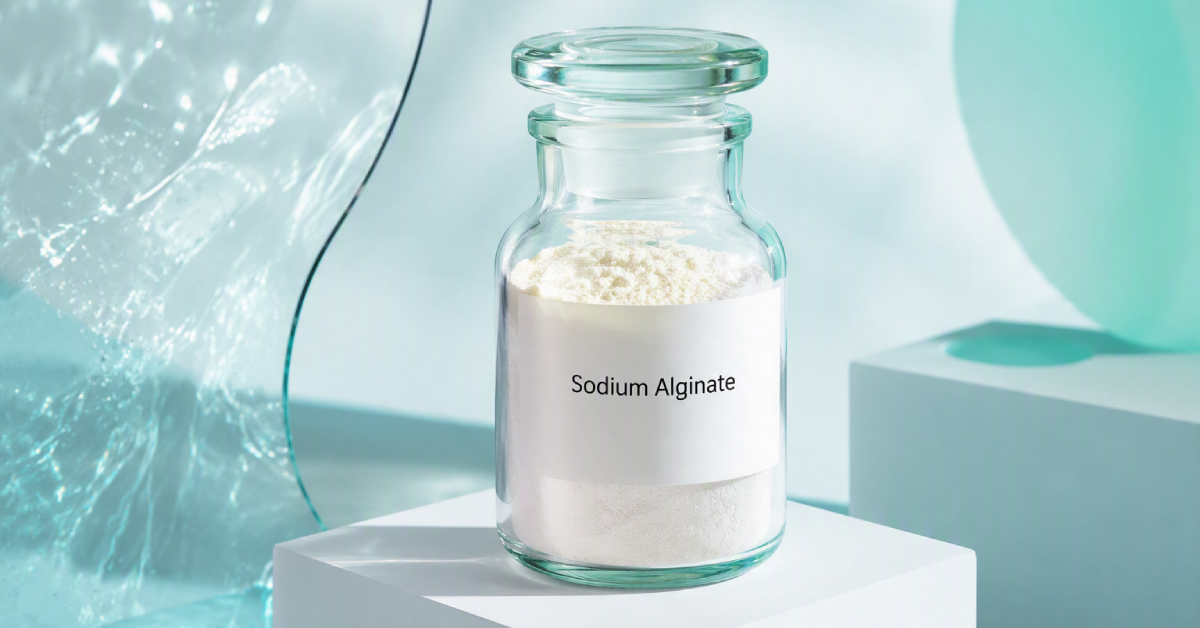
Sodium alginate is the sodium salt of alginic acid, a naturally derived polysaccharide obtained mainly from brown seaweeds such as Laminaria, Macrocystis, and Ascophyllum. It is used in pharmaceutical products as a reflux suppressant, thickening agent, suspending agent, film former, and wound-care material.
Its most recognized medical use is in alginate-antacid products for heartburn and gastroesophageal reflux. After ingestion, sodium alginate reacts with gastric acid and forms a floating gel layer, often called a raft, that helps prevent stomach contents from flowing back into the esophagus. Unlike systemically absorbed drugs, its reflux-suppressing action is primarily physical.
Chemical Structure
Sodium alginate is a linear copolymer composed of varying proportions and sequences of two uronic-acid residues: β-D-mannuronic acid and α-L-guluronic acid. These units are linked through 1→4 glycosidic bonds.
Its empirical formula is commonly represented as (C6H7NaO6)n, although the exact composition varies with molecular weight, source seaweed, and mannuronic-to-guluronic acid ratio. Sodium alginate is therefore a polymer rather than a single discrete small molecule. Its commonly cited CAS number is 9005-38-3.
The guluronic acid blocks can interact with divalent cations such as calcium to form strong gels. This property is used in pharmaceutical suspensions, wound dressings, dental materials, and controlled-release systems.

Sodium Alginate-Based Medicines: Top Eight
Representative products containing “sodium alginate” include:
- Gaviscon Original.
- Gaviscon Advance.
- Gaviscon Double Action.
- Gaviscon Infant.
- Algicon oral suspension.
- Sodium alginate antacid suspensions.
- Alginate-based reflux sachets.
- Sodium alginate wound dressings and gastrointestinal barrier products.
Many reflux products combine sodium alginate with sodium bicarbonate, calcium carbonate, or potassium bicarbonate. The brand name, alginate concentration, antacid content, and approved indications vary by country and formulation.
Mechanism of Action
When sodium alginate reaches the acidic stomach environment, it is converted into alginic acid and forms a viscous gel. In formulations containing bicarbonate, carbon dioxide becomes trapped within this gel, making the raft buoyant. Calcium salts can further strengthen the gel.
The raft floats on top of the stomach contents and acts as a physical barrier against gastroesophageal reflux. It may reduce exposure of the esophagus to acid, pepsin, and bile. In some products, the raft may also reflux into the esophagus and provide a soothing or demulcent effect.
In products containing calcium carbonate or sodium bicarbonate, these ingredients additionally neutralize some gastric acid. Sodium alginate itself is not primarily an acid-neutralizing drug; its principal effect is barrier formation.
Pharmacokinetics
Sodium alginate is not significantly absorbed into the systemic circulation when used orally as a reflux suppressant. Its action takes place within the stomach and upper gastrointestinal tract, and the material is subsequently eliminated through the digestive tract.
Because systemic absorption is minimal, conventional pharmacokinetic measures such as plasma concentration and hepatic metabolism are not generally clinically relevant. The duration of effect depends on the formulation, stomach contents, gastric emptying, and the strength and persistence of the raft.
The lack of meaningful systemic absorption contributes to its usefulness during pregnancy when symptoms of reflux occur, although pregnant patients should still follow the specific product label and professional advice.
Therapeutic Uses
| Use | Role of sodium alginate |
|---|---|
| Gastroesophageal reflux | Forms a barrier that reduces reflux of gastric contents |
| Heartburn | Provides local relief, often with antacid ingredients |
| Acid regurgitation | Helps prevent upward movement of stomach contents |
| Reflux-related indigestion | Reduces symptoms associated with gastric reflux |
| Pregnancy-related heartburn | Provides non-systemic barrier treatment in selected products |
| Laryngopharyngeal reflux | May help symptoms such as hoarseness, cough, and throat discomfort |
| Post-surgical reflux | Used in some products for reflux after gastric surgery |
| Infant reflux | Selected pediatric preparations may be used under professional guidance |
Gaviscon product information describes use for heartburn, acid regurgitation, indigestion, and selected reflux-related throat symptoms. Some formulations may provide protection for up to approximately four hours, although duration varies by product and patient.
Side Effects
Sodium alginate products are generally well tolerated. Possible effects include nausea, bloating, abdominal discomfort, constipation, diarrhea, or an unpleasant taste. These effects may result from sodium alginate itself or from accompanying bicarbonate and carbonate ingredients.
Products containing substantial sodium may cause fluid retention or contribute to excess sodium intake. Patients with hypertension, heart failure, kidney disease, or sodium-restricted diets should check the label carefully.
Rare hypersensitivity reactions may include rash, facial swelling, wheezing, or breathing difficulty. Emergency treatment is required if severe allergy symptoms develop.
If reflux symptoms persist, worsen, or are associated with difficulty swallowing, vomiting blood, unexplained weight loss, chest pain, or black stools, medical assessment is necessary rather than continued self-treatment.
Drug Interactions
Sodium alginate and accompanying antacid ingredients can interfere with absorption of some oral medicines by binding them, changing gastric pH, or forming a physical barrier. Product information commonly recommends separating sodium alginate-antacid products from other oral medicines by approximately two hours.
Medicines requiring particular attention include tetracyclines, fluoroquinolones, iron salts, thyroid hormones such as levothyroxine, bisphosphonates, ketoconazole, chloroquine, digoxin, penicillamine, some beta-blockers, and certain corticosteroids.
Patients should tell a pharmacist about all medicines and supplements they take. The relevant interaction may arise from calcium, magnesium, bicarbonate, or carbonate in the combination product rather than sodium alginate alone.
Safety Considerations
Patients with kidney disease, heart failure, hypertension, or sodium-restricted diets should select products carefully because sodium content can be clinically important. Some formulations also contain calcium and should be used cautiously in hypercalcemia, recurrent calcium kidney stones, or severe renal impairment.
The product should be measured accurately and shaken when labeled as a suspension. It should not be used beyond the recommended duration without medical advice. Sodium alginate is not a substitute for evaluation of persistent reflux or suspected ulcers.
Infant products require special attention because not all formulations are appropriate for newborns or young children. Pregnancy and breastfeeding use should follow the product label and advice from a clinician.

Regulatory Status
Sodium alginate is recognized internationally as a pharmaceutical excipient and medicinal ingredient. It is used in oral reflux-suppressant products, suspensions, controlled-release systems, wound dressings, and other medical materials. Regulatory status differs according to the formulation, dose, accompanying ingredients, and therapeutic claims.
In the United Kingdom and several other countries, alginate-antacid products such as Gaviscon are authorized for reflux and heartburn. The exact composition and instructions differ among Gaviscon Original, Advance, Double Action, and pediatric products.
Origin and Manufacturing
Alginic acid was discovered in 1881 by Edward Charles Cortis Stanford, who extracted it from brown algae in Dalmuir, Scotland. Sodium alginate is produced by extracting alginate from seaweed, purifying the polymer, converting it to the sodium salt, and controlling viscosity and moisture.
Conclusion
Sodium alginate is a seaweed-derived polysaccharide with important pharmaceutical and medical uses. Its principal therapeutic role is forming a buoyant gastric raft that helps reduce reflux, heartburn, and acid regurgitation. Because it is minimally absorbed, it has few systemic effects, but sodium content, antacid components, oral-drug separation, and persistent symptoms must be considered. Product-specific instructions should always be followed.