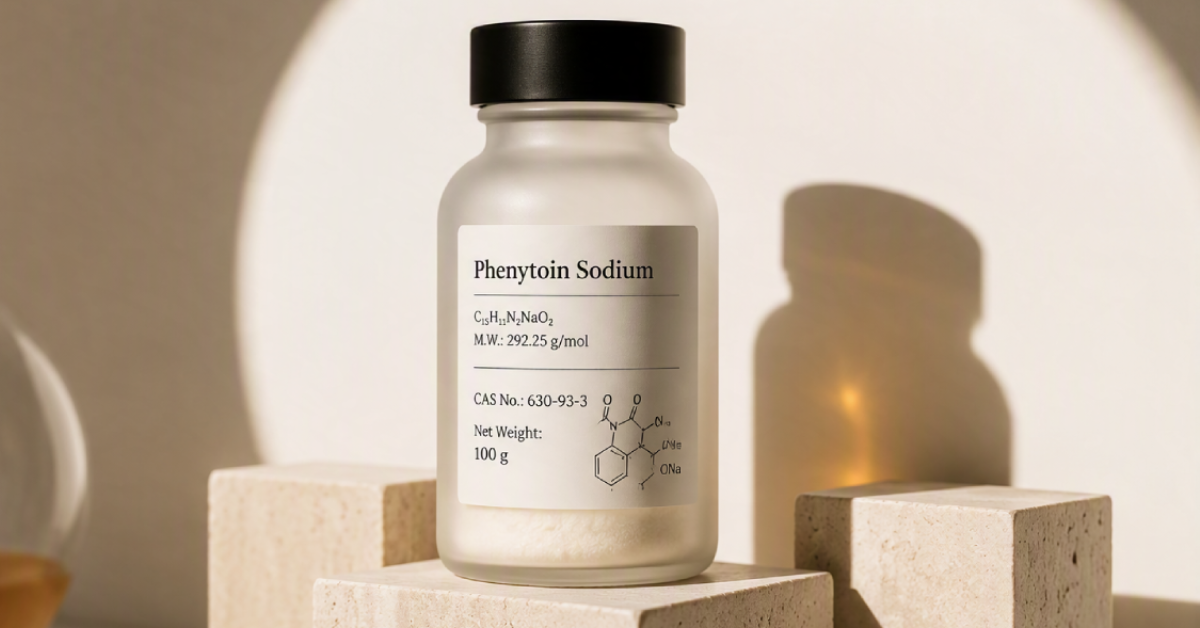
Phenytoin sodium is the sodium-salt form of phenytoin, a hydantoin anticonvulsant and active pharmaceutical ingredient (API). It is used to control generalized tonic-clonic seizures and focal seizures with impaired awareness. Injectable phenytoin sodium may also be used for generalized convulsive status epilepticus and for prevention or treatment of seizures associated with neurosurgery.
Phenytoin has a narrow therapeutic range and nonlinear pharmacokinetics. Small dose increases can produce disproportionately large increases in blood concentration, making therapeutic-drug monitoring important. It also has many drug interactions and should not be stopped suddenly without medical supervision.
Chemical Structure
Phenytoin sodium is chemically known as sodium 5,5-diphenylhydantoin or sodium 2,4-dioxo-5,5-diphenylimidazolidin-1-ide. It consists of phenytoin, a hydantoin ring with two phenyl groups attached to carbon 5, combined with a sodium ion.
Its molecular formula is , and its molecular weight is approximately 274.25 g/mol. The CAS number is 630-93-3.
The sodium salt is more suitable for certain pharmaceutical formulations, especially injectable products. Phenytoin itself is poorly water-soluble, while “phenytoin sodium” can be formulated for oral and parenteral administration under carefully controlled conditions.
Phenytoin Sodium-Based Medicines: Top Eight
Representative products include:
- Dilantin extended-release capsules.
- Dilantin Infatabs chewable tablets.
- Phenytoin sodium injection.
- Generic extended phenytoin sodium capsules.
- Generic phenytoin chewable tablets.
- Generic phenytoin oral suspension.
- Epanutin capsules or suspension.
- Cerebyx, or fosphenytoin, which is a related injectable prodrug converted to phenytoin.
Not all products contain phenytoin sodium in exactly the same form. Fosphenytoin is a separate prodrug used when rapid parenteral administration is required. Formulations, strengths, and brand availability differ by country.
Mechanism of Action
Phenytoin stabilizes electrically excitable neuronal membranes by limiting sustained, high-frequency action potentials. Its principal action is voltage-dependent blockade of neuronal sodium channels, particularly during repetitive firing.
By prolonging the inactive state of sodium channels, phenytoin reduces the ability of neurons to generate repeated action potentials. This suppresses the spread of abnormal electrical activity through the brain and helps prevent generalized or focal seizures.
Phenytoin is not generally effective for typical absence seizures and may worsen some absence or myoclonic seizure types. Selection of therapy should therefore be based on accurate seizure classification.
Pharmacokinetics
Phenytoin is absorbed variably after oral administration. Absorption may be affected by food, enteral feeding, antacids, calcium-containing products, and formulation differences. Extended-release capsules, chewable tablets, and oral suspension are not always interchangeable on a milligram-for-milligram basis without clinical monitoring.
The drug is approximately 90% bound to plasma proteins, mainly albumin. The unbound fraction is pharmacologically active and may increase in hypoalbuminemia, kidney disease, pregnancy, or the presence of competing highly protein-bound drugs.
Phenytoin is metabolized mainly by CYP2C9 and CYP2C19. Metabolism is saturable, meaning that elimination becomes less efficient as concentrations rise. Consequently, a small dose increase can cause a large increase in serum concentration and toxicity. The half-life commonly ranges from 10 to 15 hours but may become longer at higher concentrations.
Most drug is eliminated through the bile as inactive metabolites, with urinary excretion of metabolites and a small amount of unchanged drug. Total and, when appropriate, free phenytoin concentrations should be monitored.
Therapeutic Uses
| Condition | Therapeutic role | Important considerations |
|---|---|---|
| Generalized tonic-clonic seizures | Controls and prevents grand-mal seizures | Long-term maintenance therapy |
| Focal impaired-awareness seizures | Treats complex partial or temporal-lobe seizures | Dose guided by response and serum levels |
| Convulsive status epilepticus | Injectable phenytoin may provide continued seizure control | Fosphenytoin is often preferred for rapid administration |
| Neurosurgical seizures | Prevents or treats seizures during or after brain surgery | Oral or injectable therapy may be used |
| Short-term replacement therapy | Injectable form can temporarily replace oral treatment | Used when oral administration is not possible |
| Mixed seizure disorders | May be combined with other anticonvulsants | Requires interaction and level monitoring |
| Post-traumatic seizure prevention | May be used in selected specialist situations | Duration depends on clinical circumstances |
| Emergency seizure management | Supports ongoing control after acute treatment | Requires cardiac and neurologic monitoring |
Extended-release oral products are commonly given once daily or in divided doses, while injectable administration must follow strict rate and monitoring requirements. Intravenous infusion in adults should not exceed 50 mg per minute because rapid administration can cause severe hypotension and cardiac arrhythmias.
Side Effects
Common dose-related nervous-system effects include nystagmus, ataxia, slurred speech, dizziness, drowsiness, impaired coordination, blurred vision, and mental confusion. Gastrointestinal effects may include nausea, vomiting, constipation, abdominal discomfort, and loss of appetite.
Long-term use may cause gingival overgrowth, excessive facial or body hair, acne-like changes, coarsening of facial features, peripheral neuropathy, and reduced bone mineral density. Good dental hygiene and regular dental care are important.
Serious reactions include severe skin eruptions, Stevens–Johnson syndrome, toxic epidermal necrolysis, drug reaction with eosinophilia and systemic symptoms, liver injury, blood-cell abnormalities, lymph-node enlargement, and lupus-like reactions. Phenytoin has also been associated with suicidal thoughts or behavior as with other antiepileptic drugs.
Drug Interactions
Phenytoin is a potent inducer of hepatic drug-metabolizing enzymes. It can reduce the effectiveness of oral contraceptives, corticosteroids, doxycycline, some antifungals, antiretrovirals, chemotherapy medicines, warfarin, and other drugs.
Medicines that may increase phenytoin levels include amiodarone, azole antifungals, chloramphenicol, cimetidine, disulfiram, fluoxetine, isoniazid, omeprazole, sulfonamides, and some antidepressants. Carbamazepine, chronic alcohol use, rifampin, sucralfate, and St. John’s wort may reduce concentrations. Antacids and calcium products can reduce absorption and should be separated from phenytoin when advised.
Phenytoin is contraindicated with delavirdine because it may cause loss of virologic response and resistance. Warfarin interactions are unpredictable and require close INR monitoring.
Safety Considerations
Phenytoin should be used cautiously in liver disease, kidney disease, low albumin, diabetes, porphyria, pregnancy, and patients with a history of severe drug rashes. HLA-B*1502 testing may be considered in genetically at-risk patients of certain Asian ancestry because of the risk of serious cutaneous reactions.
Pregnancy exposure may increase the risk of congenital malformations and developmental problems. Patients who may become pregnant should discuss contraception and alternative therapy with a specialist. Phenytoin passes into breast milk, so breastfeeding decisions should be individualized.
Patients should not switch brands or formulations without medical advice. Treatment should never be stopped abruptly because withdrawal can precipitate severe seizures. Any rash, facial swelling, fever, jaundice, unusual bruising, or severe imbalance requires prompt medical attention.
Regulatory Status
Dilantin received initial U.S. approval in 1953, and phenytoin sodium remains available as a prescription anticonvulsant in oral and injectable forms. The FDA-approved oral indications include generalized tonic-clonic and focal impaired-awareness seizures, as well as seizure prevention and treatment during or after neurosurgery.
Generic phenytoin sodium products are widely approved, and FDA records list numerous generic applications. Injectable phenytoin sodium is used when oral treatment is impossible, but administration requires cardiac and blood-pressure monitoring.
Conclusion
Phenytoin sodium is an effective but complex anticonvulsant with a narrow therapeutic range, saturable metabolism, extensive protein binding, and numerous interactions. It is valuable for several seizure types and selected emergency or neurosurgical situations, but safe treatment requires consistent formulation, serum-level monitoring, careful dose adjustment, and attention to severe skin, liver, blood, neurologic, and pregnancy-related risks.