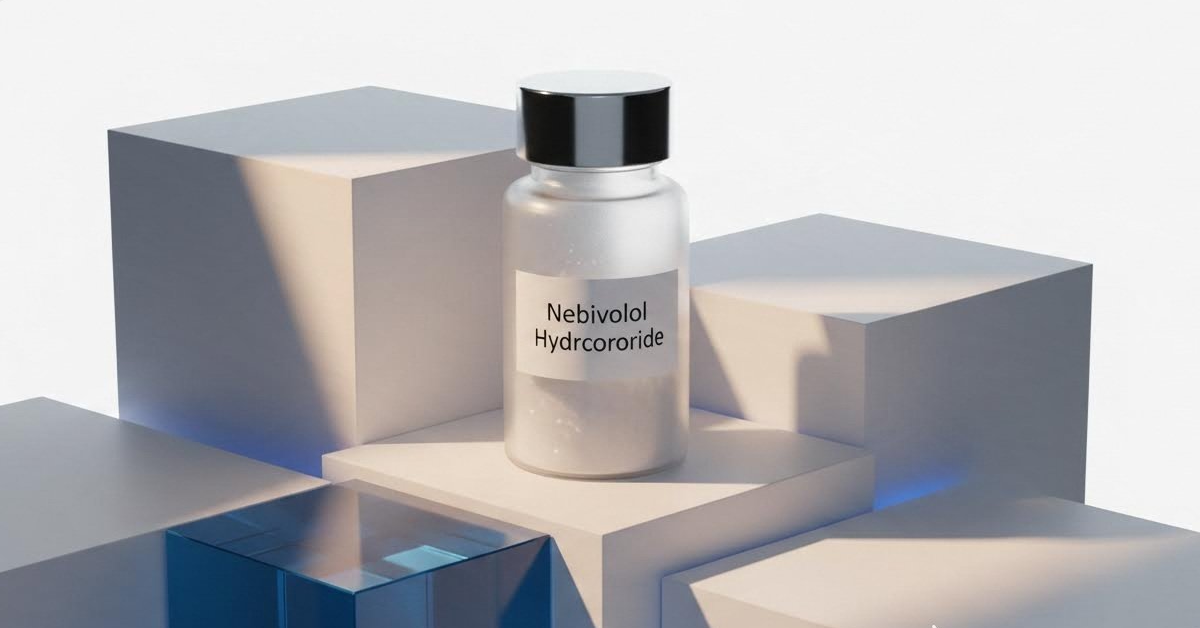
Nebivolol hydrochloride is the hydrochloride salt of nebivolol, a third-generation, highly cardioselective beta-adrenergic blocker. It is primarily used to treat hypertension by reducing heart rate, cardiac workload, and vascular resistance. Nebivolol is distinctive because it combines selective beta-1 receptor blockade with a vasodilating effect associated with the nitric-oxide pathway.
The medicine is marketed worldwide under names such as Bystolic and Nebilet. In the United States, nebivolol tablets are FDA-approved for lowering blood pressure in adults, and generic products are widely available.
Chemical Structure
“Nebivolol hydrochloride” is chemically described as a stereoisomeric mixture of substituted chromanol derivatives. The chemical name in U.S. labeling is (αR,α′R,2R,2′S)-rel-α,α′-[iminobis(methylene)]bis[6-fluoro-3,4-dihydro-2H-1-benzopyran-2-methanol] hydrochloride.
Its molecular formula is , also written as . Its molecular weight is approximately 441.90 g/mol, and the CAS number is 152520-56-4.
Nebivolol Hydrochloride is a racemic mixture containing d-nebivolol and l-nebivolol. The d-isomer contributes most of the beta-1 blocking activity, while the l-isomer is associated mainly with vasodilating effects. The molecule contains two fluorinated chroman rings, secondary alcohol groups, and a secondary amine that forms the hydrochloride salt.

Nebivolol-Based Medicines: Top Eight
Representative medicines containing nebivolol include:
- Bystolic tablets.
- Nebilet tablets.
- Lobivon tablets.
- Nebivolol hydrochloride generic tablets.
- Nebilong tablets.
- Nebistar tablets.
- Nebicard tablets.
- Nebicip tablets.
Some products contain nebivolol alone, while others combine it with amlodipine or hydrochlorothiazide. Brand names and manufacturers vary among countries. Bystolic is the principal U.S. brand, while Nebilet is widely marketed in Europe and other regions.
Mechanism of Action
Nebivolol Hydrochloride competitively blocks beta-1 adrenergic receptors in the heart. This reduces sympathetic stimulation, slows the heart rate, decreases myocardial contractility, and suppresses renin release from the kidneys. The overall effect is reduced cardiac output and lower blood pressure.
Nebivolol also promotes vasodilation through interaction with the endothelial L-arginine/nitric-oxide pathway. This may increase nitric-oxide availability, relax vascular smooth muscle, and reduce systemic vascular resistance. The combination of cardiac beta-1 blockade and peripheral vasodilation distinguishes nebivolol from many conventional beta-blockers.
At therapeutic doses, nebivolol is highly selective for beta-1 receptors. However, selectivity is dose-dependent and may diminish at higher concentrations, so bronchospasm remains possible in susceptible patients.
Pharmacokinetics
Nebivolol Hydrochloride is well absorbed orally, with peak plasma concentrations generally reached within 0.5–2 hours. Food does not significantly affect absorption, so it may usually be taken with or without food.
The drug undergoes extensive first-pass hepatic metabolism, mainly through CYP2D6, with additional glucuronidation and hydroxylation pathways. Genetic differences in CYP2D6 activity produce substantial variability. Extensive metabolizers may have an effective half-life of approximately 12 hours for d-nebivolol, whereas poor metabolizers may have a half-life of about 19 hours or longer.
Nebivolol is eliminated through both urine and feces, primarily as metabolites. Strong CYP2D6 inhibitors can increase nebivolol concentrations and intensify beta-blocking effects. The drug’s pharmacokinetic variability is clinically important when patients develop excessive bradycardia, dizziness, or hypotension.
Therapeutic Uses
| Condition | Therapeutic role | Typical treatment considerations |
|---|---|---|
| Hypertension | Lowers blood pressure and cardiovascular workload | Common adult starting dose is 5 mg once daily |
| Hypertension in older adults | Provides beta-1 blockade with vasodilating activity | Lower starting doses may be appropriate |
| Hypertension with renal impairment | May be used with careful monitoring | Dose selection depends on kidney function |
| Hypertension with diabetes | Controls blood pressure | May mask some signs of hypoglycemia |
| Stable cardiovascular disease | May reduce heart rate and myocardial workload | Individualized by the prescriber |
| Selected heart-failure regimens | Used in some countries or specialist protocols | Not the primary U.S. FDA indication |
| Combination antihypertensive therapy | Combined with agents such as amlodipine | Used when monotherapy is insufficient |
| Cardiovascular-risk management | Supports blood-pressure control | Works with diet, exercise, and other therapy |
The usual adult dosage range is 5–40 mg once daily, although U.S. hypertension labeling commonly starts at 5 mg and adjusts according to response. Patients with severe kidney or liver disease may require lower doses or an alternative medicine.
Side Effects
Common adverse effects include headache, fatigue, dizziness, nausea, diarrhea, slow heart rate, and shortness of breath. Dizziness may be more noticeable when therapy begins or when the dose is increased.
More serious effects include severe bradycardia, hypotension, worsening heart failure, atrioventricular block, bronchospasm, and peripheral circulatory problems. Beta-blockers may worsen symptoms in patients with asthma or other bronchospastic disease, especially at higher doses.
Nebivolol Hydrochloride may cause erectile dysfunction, sleep disturbance, vivid dreams, depression, or cold hands and feet in some patients. It can mask warning symptoms of low blood sugar, particularly a rapid heartbeat, in people with diabetes.
Drug Interactions
Other medicines that slow heart rate or impair cardiac conduction can produce additive effects. These include verapamil, diltiazem, digoxin, amiodarone, and some antiarrhythmic medicines. Blood pressure may fall excessively when nebivolol is combined with other antihypertensives, nitrates, or certain antidepressants.
Strong CYP2D6 inhibitors, such as paroxetine, fluoxetine, quinidine, and some other medicines, can increase nebivolol exposure. Rifampin and other enzyme inducers may reduce exposure. Alcohol and sedating medicines may worsen dizziness or fatigue.
Nebivolol Hydrochloride should not be stopped abruptly because sudden withdrawal can worsen angina, provoke rhythm problems, or increase cardiovascular risk. Dose reduction should be supervised medically.
Safety Considerations
Nebivolol is contraindicated in severe bradycardia, cardiogenic shock, decompensated heart failure, significant heart block, sick-sinus syndrome without a functioning pacemaker, and severe hepatic impairment.
Patients with asthma, chronic obstructive pulmonary disease, peripheral vascular disease, diabetes, hyperthyroidism, kidney disease, or a history of fainting require careful monitoring. Blood pressure and pulse should be checked regularly.
Pregnant or breastfeeding patients should discuss treatment with a healthcare professional. Nebivolol crosses the placenta and may affect fetal or neonatal heart rate and blood pressure. Patients should also rise slowly from sitting or lying positions to reduce dizziness.
Regulatory Status
Bystolic received initial U.S. FDA approval in 2007 for the treatment of hypertension. Generic nebivolol hydrochloride tablets are now approved in several strengths, including 2.5, 5, 10, and 20 mg.
Nebivolol Hydrochloride is marketed in many countries as Nebilet, Lobivon, Bystolic, and generic products. In some countries it is also used in heart-failure management, but approved indications differ by jurisdiction. Combination products with amlodipine or hydrochlorothiazide have separate regulatory approvals.
Conclusion
Nebivolol hydrochloride is a highly selective beta-1 blocker with additional nitric-oxide-mediated vasodilating activity. It is mainly used once daily for hypertension and may be useful when blood-pressure control must be achieved without excessive peripheral vasoconstriction. Its safety depends on appropriate dosing, monitoring of heart rate and blood pressure, consideration of CYP2D6 interactions, and avoidance of abrupt discontinuation.