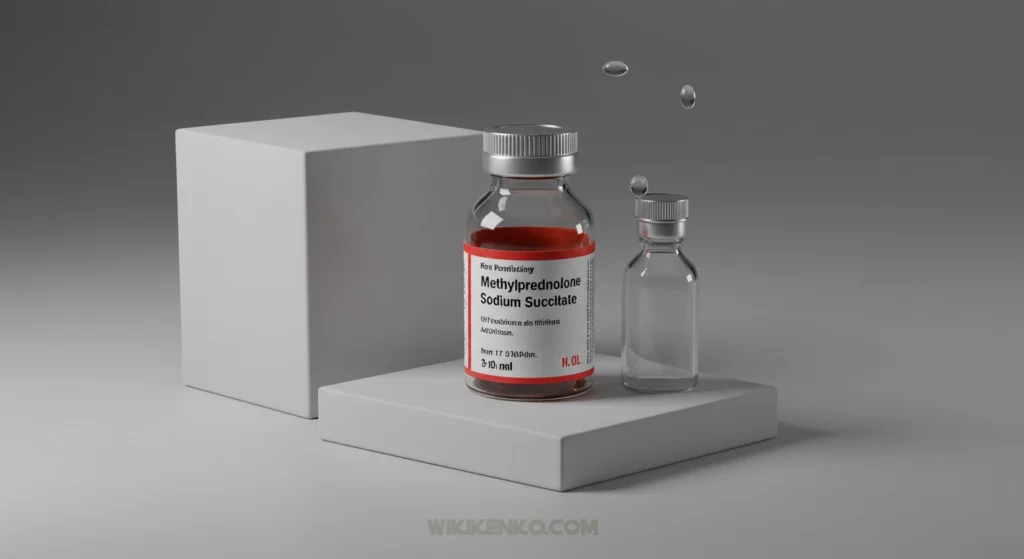
Methylprednisolone sodium succinate is a synthetic glucocorticoid used for its potent anti-inflammatory, immunosuppressive, and anti-allergic properties. It is the water-soluble succinate ester of methylprednisolone, allowing for rapid intravenous or intramuscular administration, which is critical in acute and emergency conditions such as severe asthma attacks, anaphylaxis, and acute exacerbations of autoimmune diseases. It is widely used in hospital settings for systemic corticosteroid therapy, offering faster onset of action than oral formulations.
Chemical Structure
- Chemical name: Methylprednisolone 21-sodium succinate
- Molecular formula: C27H35NaO8
- Molecular weight: 494.56 g/mol
- Structure: Methylprednisolone’s 21-hydroxyl group is esterified with succinic acid and converted to the sodium salt, increasing water solubility for parenteral administration.
- Properties: White to off-white crystalline powder; highly soluble in water, facilitating IV or IM injections.
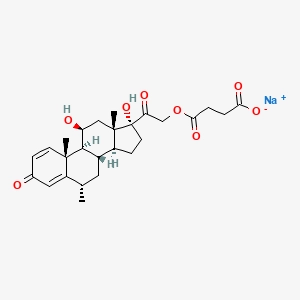
The succinate ester enhances rapid systemic availability, making it ideal for emergency anti-inflammatory therapy.
Methylprednisolone-Based Medicines List
- Solu-Medrol® – Injectable methylprednisolone sodium succinate, widely used in acute care.
- Medrol® – Oral methylprednisolone (non-succinate form) for chronic therapy.
- Depo-Medrol® – Injectable acetate formulation for slower, long-acting effects.
- Methylpred DP® – Generic IV methylprednisolone sodium succinate.
- Methylpred Forte® – Parenteral solution for high-dose therapy in acute exacerbations.
- MPS Injection® – Generic water-soluble succinate injection.
- MPSS® – Regional brand used for immunosuppressive or anti-inflammatory therapy.
- Solu-Medrol 125 mg/500 mg – High-dose emergency IV preparation for hospital use.
Mechanism of Action
“Methylprednisolone sodium succinate” acts as a glucocorticoid receptor agonist, producing anti-inflammatory and immunosuppressive effects:
- Anti-inflammatory: Suppresses pro-inflammatory gene transcription, inhibits cytokine production, reduces leukocyte migration, and stabilizes lysosomal membranes.
- Immunosuppressive: Reduces T-cell and B-cell activation, modulating autoimmune reactions.
- Anti-allergic: Stabilizes mast cells, decreasing histamine release and preventing hypersensitivity reactions.
- Metabolic effects: Increases gluconeogenesis, mobilizes amino acids, and affects fat distribution.
Its rapid IV onset is facilitated by the succinate ester’s high water solubility, allowing prompt therapeutic action in critical scenarios.
Pharmacokinetics
- Absorption: Rapid and complete when administered IV or IM; oral formulations are not used in acute emergencies.
- Distribution: Widely distributed in body tissues; crosses the placenta and enters breast milk.
- Metabolism: Primarily hepatic via CYP3A4-mediated pathways.
- Elimination: Excreted as inactive metabolites through urine; small amount via bile.
- Half-life: Plasma half-life is 2–3 hours, but biological effects may persist 12–36 hours due to receptor-mediated action.
High doses in emergency therapy produce rapid suppression of inflammation, with systemic clearance dependent on liver and kidney function.
Therapeutic Uses
| Condition | Formulation / Use | Role of Methylprednisolone Sodium Succinate |
|---|---|---|
| Acute asthma or COPD exacerbation | IV/IM injection | Rapid anti-inflammatory effect to relieve airway obstruction |
| Anaphylaxis | IV injection | Immediate suppression of severe allergic reaction |
| Autoimmune diseases (SLE, MS) | IV pulse therapy | Short-term immunosuppression for acute flare |
| Severe dermatologic reactions | IV/IM injection | Suppresses acute inflammation and allergic skin reactions |
| Organ transplant rejection | IV pulse therapy | Prevents or treats acute transplant rejection |
| Shock due to adrenal insufficiency | IV injection | Glucocorticoid replacement in acute adrenal crisis |
| Severe musculoskeletal inflammation | IV injection | Reduces pain and edema in rheumatoid arthritis or acute gout flare |
| Neurological emergencies | High-dose IV pulse therapy | Reduces spinal cord edema in acute multiple sclerosis or traumatic injury |
Side Effects
Short-term therapy is generally well tolerated, but high-dose or prolonged use may cause:
- Common (acute): Fluid retention, hypertension, hyperglycemia, mood changes.
- Less common: GI upset, headache, insomnia, hypokalemia.
- Serious/Long-term:
- Adrenal suppression
- Osteoporosis
- Increased infection risk
- Cushingoid features
- Peptic ulcers or GI bleeding
- Psychiatric effects (psychosis, depression)
Monitoring of blood pressure, glucose, electrolytes, and signs of infection is essential during therapy.
Drug Interactions
- NSAIDs: Increased risk of GI bleeding.
- Diuretics: Enhanced potassium loss, risk of hypokalemia.
- Anticoagulants: May alter response to warfarin.
- Vaccines: Immunosuppressive effects may reduce efficacy of live vaccines.
- Cytochrome P450 inducers/inhibitors: Drugs like rifampin or ketoconazole may alter methylprednisolone metabolism.
- Hypoglycemic agents: Glucocorticoids may elevate blood glucose, requiring dose adjustments.
Safety Considerations
- Pregnancy: Category C; may be used if benefits outweigh risks, particularly in acute maternal conditions.
- Lactation: Excreted in breast milk; short-term use considered acceptable with caution.
- Pediatrics: High doses may affect growth; monitoring required.
- Elderly: Increased risk of osteoporosis, hypertension, hyperglycemia, and infections.
- Administration: IV infusion should be done slowly, particularly in high-dose pulse therapy, to avoid cardiovascular complications.
Regulatory Status
- Widely approved for IV and IM use in acute inflammatory, allergic, and immunosuppressive therapy.
- Prescription-only in all regions.
- Included in WHO Essential Medicines list as a critical corticosteroid for hospital and emergency care.
- Available in multiple branded and generic forms, including Solu-Medrol® and hospital-prepared equivalents.
Conclusion
Methylprednisolone sodium succinate is a potent, water-soluble glucocorticoid used for rapid anti-inflammatory, immunosuppressive, and anti-allergic therapy. Its succinate ester allows for IV and IM administration, making it invaluable in acute hospital care, organ transplantation, severe autoimmune flare-ups, and emergency allergic reactions. While generally safe for short-term therapy, careful monitoring of electrolytes, blood glucose, infection risk, and adrenal function is essential to minimize adverse effects. Its rapid onset and broad clinical applicability make it a cornerstone of modern emergency and immunosuppressive pharmacotherapy.