Fluticasone propionate stands as one of the most widely prescribed synthetic corticosteroids in modern medicine, playing a crucial role in the management of various inflammatory conditions. This potent glucocorticoid has become a cornerstone therapy for respiratory disorders like asthma and allergic rhinitis, as well as certain dermatological conditions.
This article provides a detailed exploration of fluticasone propionate as an active pharmaceutical ingredient (API), examining its chemical properties, clinical applications, pharmacological profile, and safety considerations. With its high glucocorticoid receptor binding affinity and limited systemic bioavailability when administered topically, fluticasone propionate offers an advantageous therapeutic profile that balances efficacy with minimized systemic side effects.
Introduction
Fluticasone propionate is a synthetic fluorinated corticosteroid with potent anti-inflammatory and vasoconstrictive properties. First developed in the 1980s, it has emerged as one of the most frequently prescribed corticosteroids worldwide due to its high efficacy and relatively favorable safety profile.
As a glucocorticoid, it belongs to a class of steroid hormones that bind to specific receptors in the body to exert their effects. Fluticasone propionate is characterized by its high receptor affinity and strong anti-inflammatory activity, which is approximately 3 times more potent than beclomethasone dipropionate and 18 times more potent than prednisolone.
Fluticasone propionate is particularly noteworthy for its low oral bioavailability, making it ideal for topical applications such as inhalation or intranasal administration, where local therapeutic effects are desired with minimal systemic absorption.
This pharmacological characteristic helps minimize the hypothalamic-pituitary-adrenal (HPA) axis suppression that is commonly associated with systemic corticosteroid therapy. The API is available in various formulations, including inhalers, nasal sprays, creams, ointments, and lotions, making it versatile for treating a wide range of inflammatory conditions.
In clinical practice, fluticasone propionate has become an important treatment option for chronic respiratory conditions such as asthma and chronic obstructive pulmonary disease (COPD), as well as allergic conditions like rhinitis and certain skin disorders. Its development and widespread adoption represent significant advancements in the management of inflammatory disorders, offering improved quality of life for millions of patients globally.
Chemical Structure
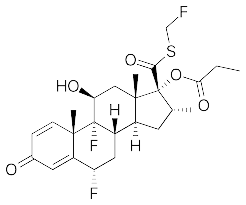
Fluticasone propionate has the chemical name S-(fluoromethyl)6α,9-difluoro-11β-17-dihydroxy-16α-methyl-3-oxoandrosta-1,4-diene-17β-carbothioate, 17-propionate. Its molecular formula is C25H31F3O5S, with a molecular weight of approximately 500.6 g/mol. The compound features a complex, multi-ring steroid structure characteristic of corticosteroids, with several key modifications that enhance its potency and pharmacological properties.
The chemical structure of fluticasone propionate includes a fluoromethyl group at the 20-position of the steroid nucleus, which significantly increases its binding affinity to the glucocorticoid receptor. Additionally, it contains fluorine atoms at positions 6 and 9, which contribute to its enhanced anti-inflammatory activity. The 17β-carbothioate ester group is esterified with propionic acid, forming the propionate ester that gives the compound its name. This esterification improves the lipophilicity of the molecule, enhancing its ability to penetrate cell membranes.
Physically, fluticasone propionate appears as a white to off-white powder that is practically insoluble in water, slightly soluble in ethanol, and freely soluble in dimethyl sulfoxide and dimethylformamide. Its high lipophilicity (log P = approximately 3.2) enables it to readily cross cell membranes, while its low water solubility contributes to its limited systemic absorption when applied topically or administered via inhalation.
The unique structural features of fluticasone propionate confer several advantageous properties, including high receptor binding affinity, prolonged retention time at the receptor site, and slow clearance from the lungs when inhaled. These characteristics collectively contribute to its high potency, extended duration of action, and favorable therapeutic index compared to many other corticosteroids.
Fluticasone Propionate-Based Medicines
Fluticasone propionate is available in numerous pharmaceutical formulations, either as a single active ingredient or in combination with other therapeutic agents. Below are eight of the most prominent fluticasone propionate-based medications currently on the market:
- Flonase (GSK): One of the most recognizable fluticasone propionate products, Flonase is an intranasal spray used primarily for allergic rhinitis. It contains 50 μg of fluticasone propionate per spray and is available both as a prescription medication and as an over-the-counter product (Flonase Allergy Relief) in many countries. Flonase has become a household name for managing seasonal and perennial allergic rhinitis symptoms.
- Flovent (GSK): This is a metered-dose inhaler (MDI) or dry powder inhaler (DPI) containing fluticasone propionate for the management of asthma. Available in different strengths (44 μg, 110 μg, and 220 μg per actuation), Flovent is prescribed as a maintenance treatment for asthma and is not intended for acute bronchospasm relief.
- Advair Diskus/Seretide (GSK): This combination product contains fluticasone propionate and salmeterol, a long-acting β2-adrenergic receptor agonist (LABA). Available in various strength combinations (100/50 μg, 250/50 μg, 500/50 μg), it is used for the maintenance treatment of asthma and COPD. The combination provides both anti-inflammatory effects and bronchodilation.
- Cutivate (GSK): A topical formulation available as cream (0.05%) or ointment (0.005%) for the treatment of inflammatory and pruritic manifestations of corticosteroid-responsive dermatoses. Cutivate is particularly useful for conditions like eczema, psoriasis, and contact dermatitis.
- Flixotide (GSK): Marketed internationally, Flixotide is similar to Flovent and is available as an inhaler for asthma management. It contains fluticasone propionate and is prescribed as a preventative treatment to reduce the frequency and severity of asthma attacks.
- Veramyst/Avamys (GSK): This is a nasal spray formulation containing fluticasone furoate (a derivative of fluticasone propionate) used for the treatment of symptoms of allergic rhinitis. Each spray delivers 27.5 μg of fluticasone furoate.
- Flutiform (Mundipharma): A combination inhaler containing fluticasone propionate and formoterol fumarate (another bronchodilator), available in multiple strength combinations. It is prescribed for the regular treatment of asthma where use of a combination product is appropriate.
- Dymista (Meda Pharmaceuticals): A combination nasal spray containing fluticasone propionate (50 μg per spray) and azelastine hydrochloride (137 μg per spray). Azelastine is an antihistamine, making this product particularly effective for allergic rhinitis by addressing multiple symptom pathways simultaneously.
Mechanism of Action
Fluticasone propionate exerts its therapeutic effects primarily through its potent anti-inflammatory and immunosuppressive properties. At the molecular level, its mechanism of action involves multiple pathways and cellular processes that collectively result in the suppression of inflammation. Understanding these mechanisms provides insight into both the therapeutic benefits and potential adverse effects of this widely used corticosteroid.
The fundamental mechanism begins when fluticasone propionate crosses the cell membrane due to its lipophilic nature. Once inside the cell, it binds with high affinity to cytosolic glucocorticoid receptors (GRs). This binding affinity is notably higher than many other corticosteroids, with fluticasone propionate demonstrating approximately 18 times greater receptor binding affinity than dexamethasone. The binding induces a conformational change in the receptor, causing the release of chaperone proteins and exposure of nuclear localization signals.
The activated fluticasone-GR complex then translocates to the nucleus, where it modulates gene expression through several mechanisms. The primary mechanism involves binding to specific DNA sequences known as glucocorticoid response elements (GREs), which leads to the transactivation (increased expression) of anti-inflammatory proteins such as lipocortin-1 (annexin A1), IL-10, and inhibitory κB (IκB). Simultaneously, through protein-protein interactions, the fluticasone-GR complex can inhibit the activity of pro-inflammatory transcription factors like nuclear factor-κB (NF-κB) and activator protein-1 (AP-1), leading to the transrepression (decreased expression) of numerous inflammatory mediators.
This dual action results in the inhibition of multiple inflammatory pathways. Fluticasone propionate decreases the production of pro-inflammatory cytokines (IL-1, IL-2, IL-6, TNF-α), chemokines, adhesion molecules, and inflammatory enzymes such as cyclooxygenase-2 (COX-2) and inducible nitric oxide synthase (iNOS). Additionally, it reduces the recruitment and activation of inflammatory cells including eosinophils, neutrophils, mast cells, and T-lymphocytes at sites of inflammation.
In respiratory tissues specifically, fluticasone propionate reduces airway hyperresponsiveness and mucus hypersecretion. It decreases vascular permeability and edema formation, contributing to its effectiveness in conditions like allergic rhinitis and asthma. When used in dermatological conditions, it reduces the release of inflammatory mediators from skin cells and decreases the migration of inflammatory cells to affected areas.
Pharmacokinetics
The pharmacokinetic profile of fluticasone propionate is characterized by its unique absorption, distribution, metabolism, and excretion patterns, which vary significantly depending on the route of administration. Understanding these pharmacokinetic properties is essential for optimizing therapeutic regimens and minimizing adverse effects.
Absorption of fluticasone propionate is notably limited when the drug is administered topically, which includes intranasal, inhaled, and dermatological applications. This limited systemic absorption is a deliberate pharmacokinetic advantage that allows for potent local effects while minimizing systemic exposure. When administered via inhalation, approximately 30% of the dose is deposited in the lungs, while the remainder is swallowed.
The portion deposited in the lungs is slowly absorbed into the systemic circulation, while the swallowed portion undergoes extensive first-pass metabolism in the liver, resulting in very low oral bioavailability (less than 1%). For intranasal administration, the systemic bioavailability is approximately 2%, and for dermal application, it ranges from 0.5% to 3% depending on factors such as skin condition, occlusion, and application site.
Distribution of fluticasone propionate follows its entry into the systemic circulation. The drug is approximately 91% bound to plasma proteins, primarily albumin. Its high lipophilicity allows for significant tissue distribution, with a steady-state volume of distribution of approximately 4.2 L/kg. Fluticasone propionate does not extensively distribute to red blood cells, and it has limited ability to cross the blood-brain barrier due to its molecular characteristics.
Metabolism of fluticasone propionate occurs primarily in the liver through cytochrome P450 3A4 (CYP3A4)-mediated hydrolysis of the ester bond at the 17β-carbothioate group, resulting in the formation of the 17β-carboxylic acid metabolite (fluticasone 17β-carboxylic acid). This metabolite has significantly reduced glucocorticoid activity (less than 1% of the parent compound’s activity). The extensive hepatic first-pass metabolism contributes to the drug’s low oral bioavailability and is a key factor in its favorable safety profile when administered topically.
Excretion of fluticasone propionate and its metabolites occurs primarily via the biliary/fecal route (approximately 87-100% of an administered dose), with minimal renal excretion (approximately 5% or less). The terminal elimination half-life ranges from 7.8 hours to 14 hours following intravenous administration. However, the effective half-life is longer when considering topical administration routes, owing to slow absorption from deposition sites and high tissue affinity. For inhaled fluticasone propionate, the lung retention time can extend the local effects for 24 hours, supporting once-daily dosing regimens in some formulations.
Therapeutic Uses
Fluticasone propionate is employed across multiple therapeutic areas due to its potent anti-inflammatory properties and favorable safety profile when administered topically. The following table presents the primary therapeutic applications of fluticasone propionate, including indications, typical formulations, dosing considerations, and clinical efficacy:
| Therapeutic Area | Indications | Formulations | Typical Dosing | Clinical Efficacy |
|---|---|---|---|---|
| Respiratory Disorders | Bronchial Asthma | MDI, DPI (88-220 μg/actuation) | Adults: 88-880 μg twice daily Children: 88-220 μg twice daily | Significant reduction in asthma symptoms, improved lung function (FEV1), reduced exacerbations, decreased need for rescue medications |
| Chronic Obstructive Pulmonary Disease (COPD) | MDI, DPI (usually in combination with LABA) | 250-500 μg twice daily | Moderate reduction in exacerbation frequency, improved symptoms and quality of life, limited effect on disease progression | |
| Allergic Conditions | Seasonal Allergic Rhinitis | Nasal spray (50 μg/spray) | Adults: 1-2 sprays per nostril daily Children ≥4 years: 1 spray per nostril daily | 40-60% reduction in nasal symptoms, effective for sneezing, rhinorrhea, nasal congestion, and itching |
| Perennial Allergic Rhinitis | Nasal spray (50 μg/spray) | Same as seasonal rhinitis | Similar efficacy to seasonal rhinitis, may require longer treatment duration | |
| Nasal Polyps | Nasal spray (50 μg/spray) | 2 sprays per nostril twice daily | Reduction in polyp size, improved nasal airflow, reduced need for surgical intervention | |
| Dermatological Conditions | Atopic Dermatitis | Cream (0.05%), Ointment (0.005%) | Apply thin layer 1-2 times daily for up to 4 weeks | Effective relief of inflammation, pruritus and associated symptoms with medium-high potency effect |
| Psoriasis | Cream, Ointment, Lotion | Apply thin layer 1-2 times daily | Moderately effective for plaque psoriasis, particularly effective for facial and intertriginous areas | |
| Contact Dermatitis | Cream, Ointment | Apply thin layer 1-2 times daily for up to 2 weeks | Rapid reduction in inflammation, erythema, and pruritus | |
| Ophthalmic Disorders | Allergic Conjunctivitis | Eye drops (0.1%) | 1 drop in affected eye(s) 1-4 times daily | Effective relief of ocular itching, redness, and discharge |
| Special Applications | Eosinophilic Esophagitis | Swallowed from MDI or mixed with sweetener | 440-880 μg twice daily | Improvement in dysphagia, reduced esophageal eosinophilia |
| Post-intubation Laryngeal Edema | Nebulized solution | 0.5-2 mg every 12 hours | Decreased incidence of reintubation, reduced laryngeal inflammation |
The therapeutic efficacy of fluticasone propionate is dose-dependent and may vary based on individual patient factors, severity of the condition, and concurrent medications. Therapeutic response typically begins within 24-48 hours of initiating treatment, although maximum benefit may take 1-2 weeks to manifest, particularly in chronic conditions. Regular reassessment of treatment and appropriate dose adjustments are recommended to maintain the optimal balance between efficacy and safety.
Side Effects
Fluticasone propionate, while generally well-tolerated, can cause a range of side effects that vary in frequency and severity depending on the dose, duration of treatment, route of administration, and individual patient factors. Understanding these potential adverse effects is crucial for appropriate risk-benefit assessment and patient counseling.
Local side effects are the most common and are specific to the route of administration. With inhaled fluticasone propionate, patients frequently report oropharyngeal candidiasis (thrush), which occurs in approximately 5-10% of users. This fungal infection manifests as white patches in the mouth and throat and is attributed to the local immunosuppressive effects of the corticosteroid combined with the favorable growth environment for Candida species.
Dysphonia (hoarseness or voice changes) affects up to 50% of patients using inhaled formulations and results from myopathy of the laryngeal muscles. Cough, throat irritation, and bronchospasm may also occur immediately after inhalation in some sensitive individuals, though these effects are less common with newer formulations and proper inhalation technique.
For intranasal formulations, common local side effects include nasal dryness or irritation (reported by 2-10% of users), epistaxis (nosebleeds, occurring in approximately 5% of users), and rarely, nasal septal perforation with long-term use. These effects are often dose-related and may diminish over time as the nasal mucosa adapts to the medication.
When applied topically to the skin, fluticasone propionate may cause application site reactions such as burning, stinging, pruritus, and dryness in 1-10% of users. Prolonged use on the same area, particularly with occlusive dressings, can lead to more serious local effects including skin atrophy, telangiectasia (visible blood vessels), striae (stretch marks), and hypopigmentation.
Systemic side effects are less common with topical administration due to the limited bioavailability but become more prominent with higher doses, prolonged use, or when used in combination with CYP3A4 inhibitors that impair metabolism. Hypothalamic-pituitary-adrenal (HPA) axis suppression is a significant concern, particularly in children receiving high doses or patients using multiple corticosteroid formulations concurrently.
This suppression can lead to adrenal insufficiency if the medication is abruptly discontinued. Growth suppression in children has been reported with prolonged use of inhaled fluticasone propionate, especially at higher doses (>200 μg/day), necessitating regular monitoring of growth in pediatric patients.
Other potential systemic effects include metabolic disturbances such as hyperglycemia, which occurs in approximately 1-2% of patients on high doses, and increased risk of bone mineral density loss with long-term use, potentially contributing to osteoporosis in susceptible individuals. Ocular effects like increased intraocular pressure and posterior subcapsular cataract formation are rare with topical administration but may occur with prolonged therapy, particularly in patients with existing risk factors.
Drug Interactions
Fluticasone propionate engages in several clinically significant drug interactions that healthcare providers must consider when prescribing this medication. These interactions primarily involve pharmacokinetic mechanisms affecting the metabolism of fluticasone, though some pharmacodynamic interactions also warrant attention.
The most clinically significant interactions occur with strong inhibitors of cytochrome P450 3A4 (CYP3A4), the primary enzyme responsible for metabolizing fluticasone propionate. Potent CYP3A4 inhibitors such as ritonavir, ketoconazole, itraconazole, and clarithromycin can dramatically reduce fluticasone clearance, potentially increasing systemic exposure by 10-fold or more.
This interaction has particular clinical relevance with ritonavir, a protease inhibitor used in HIV treatment, which has led to numerous cases of iatrogenic Cushing’s syndrome and adrenal suppression when co-administered with fluticasone propionate. In one reported case series, patients receiving inhaled fluticasone with ritonavir developed significant cushingoid features within 2-6 months of combined therapy. The interaction is so substantial that concomitant use of fluticasone propionate with ritonavir is generally contraindicated, and alternative corticosteroids with less dependency on CYP3A4 metabolism are recommended for patients on ritonavir therapy.
Moderate CYP3A4 inhibitors such as erythromycin, verapamil, diltiazem, and certain antifungals (e.g., fluconazole) may also increase systemic fluticasone exposure, though to a lesser extent. These combinations should be approached with caution, with consideration given to dose reduction or alternative therapies. Even consumption of grapefruit juice, which contains furanocoumarins that inhibit intestinal CYP3A4, could theoretically increase the bioavailability of swallowed fluticasone, though this interaction is likely of limited clinical significance with inhaled or intranasal formulations.
Pharmacodynamic interactions primarily involve additive effects when fluticasone propionate is used concurrently with other corticosteroids, regardless of their route of administration. Patients using multiple corticosteroid-containing products (e.g., inhaled fluticasone for asthma, intranasal fluticasone for allergic rhinitis, and topical corticosteroids for dermatological conditions) may experience cumulative systemic exposure and increased risk of adverse effects. Healthcare providers should assess the total corticosteroid burden when prescribing additional formulations.
Safety Considerations
Ensuring the safe use of fluticasone propionate requires careful consideration of patient-specific factors, appropriate monitoring, and implementation of risk-minimization strategies. Several important safety considerations guide clinical decision-making when prescribing this medication across its various formulations and indications.
Special populations require particular attention regarding safety. In pregnant women, fluticasone propionate is classified as FDA Pregnancy Category C, indicating that risk cannot be ruled out due to insufficient human studies. However, observational data from asthma registries suggest that inhaled fluticasone propionate use during pregnancy is not associated with increased risk of major congenital malformations or adverse pregnancy outcomes.
The consensus among most professional organizations is that the benefits of maintaining good asthma control during pregnancy outweigh theoretical risks of inhaled corticosteroid use. For lactating women, minimal amounts of fluticasone propionate are expected to pass into breast milk due to its low systemic bioavailability, making it generally compatible with breastfeeding according to most guidelines.
Pediatric use warrants special consideration due to potential effects on growth. Multiple studies have documented small but statistically significant reductions in growth velocity (approximately 1 cm per year) in children using inhaled fluticasone propionate, particularly at higher doses. This effect appears to be dose-dependent, with doses exceeding 200 μg daily posing greater risk.
However, long-term follow-up studies suggest that final adult height is typically not significantly affected when appropriate doses are used. To minimize risk, clinicians should prescribe the lowest effective dose, monitor growth regularly, and consider growth velocity deceleration as a potential indication for dose adjustment or therapeutic alternatives.
Geriatric patients may experience increased systemic effects due to age-related changes in pharmacokinetics and thinner skin or mucous membranes. Additionally, older patients are more susceptible to adverse effects such as skin atrophy with topical use and increased risk of pneumonia with inhaled use, particularly those with COPD. Dose adjustments are generally not required based on age alone, but close monitoring for adverse effects is recommended.
Regulatory Status
Fluticasone propionate has undergone extensive regulatory scrutiny worldwide, resulting in approvals across multiple formulations and indications. The regulatory landscape for this corticosteroid reflects decades of clinical experience, evolving safety assessments, and expanded therapeutic applications since its initial introduction.
In the United States, the Food and Drug Administration (FDA) first approved fluticasone propionate in 1990 as a nasal spray (Flonase) for allergic rhinitis. Subsequent approvals followed for inhaled formulations (Flovent) for asthma in 1996 and topical formulations (Cutivate) for dermatological conditions in 1990. Over time, the FDA has approved numerous additional branded and generic formulations across various delivery systems, including metered-dose inhalers, dry powder inhalers, nasal sprays, creams, ointments, and lotions.
A significant regulatory milestone occurred in 2014 when the FDA approved Flonase Allergy Relief (fluticasone propionate 50 μg/spray) as an over-the-counter (OTC) product for allergic rhinitis in adults and children 4 years and older, making it the first corticosteroid nasal spray available without a prescription in the US.
The European Medicines Agency (EMA) and national European regulatory bodies have similarly approved fluticasone propionate across multiple formulations. In Europe, fluticasone propionate is available under various trade names including Flixotide (inhaled), Flixonase (intranasal), and Cutivate (topical). The regulatory framework in Europe generally maintains prescription-only status for fluticasone propionate products, with some variations in approved indications and age restrictions across different member states.
Combination products containing fluticasone propionate have also received regulatory clearance worldwide. Notable examples include Advair/Seretide (fluticasone propionate with salmeterol) for asthma and COPD, approved by the FDA in 2000 and by the EMA shortly thereafter, and Dymista (fluticasone propionate with azelastine) for allergic rhinitis, approved by the FDA in 2012. These combination products have undergone separate regulatory reviews focusing on both efficacy and potential interaction effects between the active components.
Pediatric approvals for fluticasone propionate have evolved over time as additional safety data became available. Current regulatory authorizations typically permit inhaled fluticasone propionate use in children as young as 4 years, intranasal use in children 4 years and older, and topical use in children 3 months and older, though specific age restrictions vary by country, formulation, and indication.
Conclusion
Fluticasone propionate has established itself as one of the most clinically valuable synthetic corticosteroids in modern medicine, demonstrating remarkable versatility across multiple therapeutic applications and delivery systems. Its molecular structure, characterized by the presence of the fluoromethyl group and strategic fluorination, confers exceptional receptor binding affinity and prolonged tissue retention that translates to potent anti-inflammatory effects with minimal systemic impact when administered topically.
This favorable pharmacological profile has made fluticasone propionate a first-line therapy for numerous inflammatory conditions, particularly in respiratory medicine where it significantly improves quality of life for millions of patients with asthma and allergic rhinitis.
The pharmacokinetic characteristics of fluticasone propionate, notably its limited systemic absorption from topical sites and extensive first-pass metabolism, provide a therapeutic advantage by maximizing local efficacy while minimizing systemic exposure. This feature is particularly important for long-term maintenance therapy, where the risk-benefit ratio must remain favorable over extended treatment periods.
However, clinicians must remain vigilant about potential drug interactions, particularly with CYP3A4 inhibitors, which can dramatically alter this favorable pharmacokinetic profile and increase the risk of systemic adverse effects.
Special consideration must be given to vulnerable populations, including children, pregnant women, elderly patients, and those with hepatic impairment. For pediatric patients, growth monitoring remains an important aspect of safety surveillance, while benefit-risk assessments in pregnancy typically favor continued treatment for conditions like asthma where uncontrolled symptoms pose greater risks than the medication itself.
The availability of various formulations and strengths allows for individualized therapy, enabling clinicians to select the most appropriate delivery method and dose for each patient’s specific needs.
Despite the development of newer corticosteroids and alternative anti-inflammatory agents, fluticasone propionate remains a cornerstone therapy due to its established efficacy, well-characterized safety profile, and extensive clinical experience.
As healthcare continues to evolve toward more personalized and precision-based approaches, fluticasone propionate will likely maintain its important role in the therapeutic armamentarium, supported by decades of clinical evidence and millions of patient-years of experience across diverse populations and conditions.