
Description
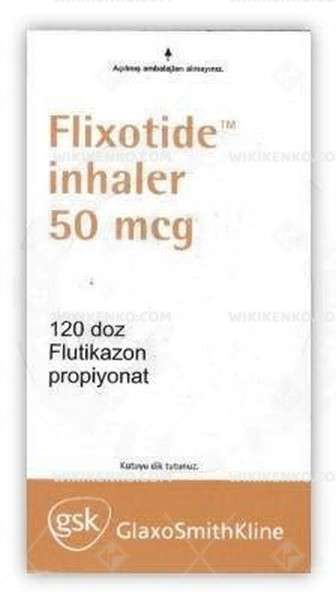
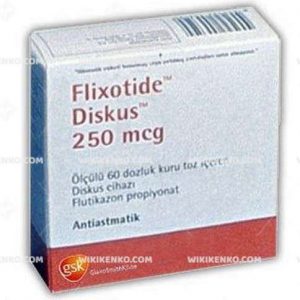
Flixotide Inhaler 50 micrograms is a pressurised metered‑dose inhaler containing the synthetic corticosteroid fluticasone propionate for inhalation, used as a prophylactic controller therapy in persistent asthma. It is marketed internationally by GlaxoSmithKline and licensees under the trade name Flixotide as CFC‑free formulations in multiple strengths, including 50 micrograms per actuation.
Qualitative and Quantitative Composition
Each metered dose of Flixotide Inhaler 50 micrograms contains 50 micrograms of fluticasone propionate as the active ingredient in a pressurised suspension formulation. The complete formulation also includes propellant(s) and excipients appropriate for a CFC‑free metered‑dose inhaler, such as hydrofluoroalkane propellant and dispersing agents, in accordance with the individual country’s Summary of Product Characteristics (SmPC).
Pharmaceutical Form and Device Characteristics
Flixotide 50 micrograms inhaler is presented as a pressurised inhalation, suspension in an aluminium canister fitted with a metering valve and actuator, designed to deliver a fixed dose per actuation after shaking and depression of the canister. The product is formulated as a CFC‑free inhaler, typically using hydrofluoroalkane propellant, consistent with international regulatory requirements for ozone‑friendly inhalation products.
Mechanism of Action
Fluticasone propionate is a highly potent synthetic glucocorticoid that exerts a strong local anti‑inflammatory effect within the bronchial mucosa when delivered by inhalation. It binds with high affinity to intracellular glucocorticoid receptors, modulating gene transcription to decrease production of pro‑inflammatory cytokines, chemokines, adhesion molecules and inflammatory mediators, and to increase anti‑inflammatory proteins, resulting in reduced airway oedema, mucus secretion, and bronchial hyper‑responsiveness.
Pharmacodynamic Properties
Anti‑inflammatory and Clinical Effects
At recommended doses, inhaled fluticasone propionate produces a pronounced anti‑inflammatory effect in the lungs, leading to reductions in asthma symptoms, exacerbation frequency, and rescue bronchodilator use in patients previously treated with bronchodilators alone or other prophylactic therapies. The onset of therapeutic benefit typically occurs within 4 to 7 days of initiating regular treatment, although maximal improvement may take longer, particularly in patients with more severe disease.
In comparative terms, fluticasone propionate demonstrates approximately double the microgram‑for‑microgram potency of older inhaled corticosteroids, such as CFC‑containing beclometasone dipropionate or budesonide, such that 100 micrograms of fluticasone is clinically roughly equivalent to 200 micrograms of these agents.
Effects on Hypothalamic–Pituitary–Adrenal Axis
At recommended inhaled doses, Flixotide generally has minimal impact on systemic adrenal function, reflecting its high first‑pass metabolism and low systemic bioavailability. Nevertheless, high doses or prolonged use, particularly when combined with other corticosteroid exposure, can cause measurable suppression of the hypothalamic–pituitary–adrenal axis, necessitating careful monitoring in susceptible populations.
Pharmacokinetic Properties
Absorption
Following inhalation, a portion of the delivered dose reaches the lower airways, with the remainder deposited in the oropharynx and subsequently swallowed; the fraction absorbed from the lung contributes predominantly to systemic exposure due to rapid and extensive first‑pass hepatic metabolism of swallowed drug. Absolute bioavailability of inhaled fluticasone propionate is low, reflecting both limited gastrointestinal absorption and extensive first‑pass clearance mediated primarily by cytochrome P450 3A4 (CYP3A4).
Distribution
Fluticasone propionate is extensively distributed in tissues, exhibiting a large apparent volume of distribution and high plasma protein binding. The drug concentrates particularly in the lungs after inhalation, supporting its favourable ratio of pulmonary to systemic effects.
Metabolism and Elimination
The compound undergoes rapid and extensive hepatic metabolism via CYP3A4 to inactive metabolites, which are subsequently eliminated predominantly via the biliary–faecal route. Systemic clearance is high, and terminal half‑life is relatively short, contributing to low systemic exposure when used at recommended inhaled doses.
Therapeutic Indications
Flixotide Inhaler 50 micrograms is indicated for the continuous anti‑inflammatory prophylactic treatment of persistent asthma. Persistent asthma is typically defined by daytime symptoms several times per week and/or night‑time symptoms more than twice per month, requiring regular controller medication rather than short‑acting bronchodilators alone.
Patients who may benefit include:
-
Individuals with mild persistent asthma inadequately controlled on as‑needed short‑acting β2‑agonists alone.
-
Patients with moderate asthma whose symptoms remain unstable or worsen despite existing prophylactic therapy or bronchodilator monotherapy.
-
Patients with severe chronic asthma, including those dependent on systemic corticosteroids, many of whom may be able to reduce or discontinue oral steroids after introduction of high‑dose inhaled fluticasone under specialist supervision.
Posology and Method of Administration
General Dosing Principles
The dose of Flixotide should be individualised and titrated to the lowest dose that maintains effective asthma control. Therapy is administered by inhalation via the pressurised inhaler device, and regular twice‑daily dosing is generally recommended to maintain stable airway anti‑inflammatory activity.
Adult and Adolescent Dosing
For adults and adolescents over 16 years of age, typical total daily doses of inhaled fluticasone propionate for asthma prophylaxis range from 100 to 1,000 micrograms twice daily, often administered as two inhalations twice daily at strengths appropriate to the severity of disease. The 50 microgram strength allows low‑dose regimens or fine titration in milder disease or in step‑down therapy once asthma control has been achieved.
Paediatric Considerations
The 50 microgram formulation is commonly used in paediatric populations where very low starting doses may be clinically appropriate, although exact age approvals and dosing recommendations vary by jurisdiction and must follow local SmPC or product information. In all paediatric patients, dosing should be regularly reviewed and maintained at the minimal effective level, with attention to growth monitoring.
Method of Administration
Correct inhaler technique is essential to achieve therapeutic benefit and minimise systemic exposure and local adverse events. Patients should be instructed to shake the inhaler, exhale gently, place the mouthpiece between the lips, actuate the canister during a slow deep inhalation, then hold their breath for several seconds and exhale slowly, rinsing the mouth afterwards to reduce oropharyngeal candidiasis risk.
Comparative Dose Potency
The following table summarises approximate clinical dose equivalence between fluticasone propionate and older inhaled corticosteroids, based on regulatory product information.
| Inhaled corticosteroid (CFC formulations) | Approximate dose providing similar clinical effect to 100 micrograms fluticasone propionate | Evidence basis |
|---|---|---|
| Fluticasone propionate | 100 micrograms (reference dose) | SmPC data |
| Beclometasone dipropionate | 200 micrograms | SmPC comparative statement |
| Budesonide | 200 micrograms | SmPC comparative statement |
This equivalence illustrates that fluticasone propionate has higher microgram potency, allowing similar asthma control at approximately half the daily microgram dose compared with these agents.
Clinical Efficacy and Evidence Base
Asthma Control and Exacerbations
Clinical studies of inhaled fluticasone propionate in mild to severe asthma have consistently demonstrated improvements in lung function, symptom scores and peak expiratory flow, alongside reduced exacerbation frequency compared with baseline or active comparators. In patients previously maintained on short‑acting bronchodilators alone, introduction of fluticasone propionate reduces daytime and nocturnal symptoms and enhances quality of life when used regularly.
Dose–Response and Device Studies
Dose‑response studies in asthma indicate that low to moderate doses of fluticasone produce substantial improvements, with diminishing incremental benefit at very high doses, supporting titration to the lowest effective dose. Investigations comparing different particle sizes and delivery devices (e.g. monodisperse aerosols, multidose dry powder inhalers) have examined clinical endpoints such as FEV1 and exacerbation rates, showing that appropriately formulated and delivered fluticasone provides effective control across a range of devices.
Safety Profile
Local Adverse Reactions
Common local adverse effects of inhaled fluticasone propionate include oropharyngeal candidiasis (thrush), hoarseness, and throat irritation, which are typically mild, dose‑related and often preventable with mouth rinsing after inhalation and use of a spacer device where appropriate. Oropharyngeal candidiasis responds to topical antifungal treatment without usually requiring discontinuation of inhaled therapy.
Systemic Effects
Systemic corticosteroid effects, though much less frequent than with oral steroids, may occur particularly at high inhaled doses, prolonged use, or with concomitant systemic steroid exposure. Potential systemic effects include adrenal suppression, decreased bone mineral density, cataract, glaucoma, Cushingoid features, and effects on growth velocity in children and adolescents, warranting the use of the minimal effective dose and regular clinical review.
Adverse Reactions Overview
The table below summarises key adverse reactions associated with inhaled fluticasone propionate, based on product information documents.
| Site/organ system | Representative adverse reactions | Typical relationship to dose/exposure | Notes |
|---|---|---|---|
| Oropharyngeal | Candidiasis, dysphonia, throat irritation | More frequent at higher doses | Often mitigated by mouth rinsing and spacer use |
| Endocrine/adrenal | Adrenal suppression, Cushingoid features | Associated with high doses, prolonged use | Monitor particularly in patients on multiple steroid routes |
| Skeletal | Reduced bone mineral density | Risk increases with cumulative dose | Consider bone health assessment in long‑term high‑dose users |
| Ophthalmic | Cataract, glaucoma | Usually with prolonged high‑dose exposure | Periodic ophthalmologic review may be appropriate |
| Paediatric growth | Reduced growth velocity | Dose‑dependent | Regular growth monitoring recommended |
Contraindications
Flixotide Inhaler is contraindicated in patients with known hypersensitivity to fluticasone propionate or any excipients contained in the formulation. It is not indicated for the relief of acute bronchospasm or status asthmaticus, and should not be used as rescue therapy in acute asthma attacks.
Warnings and Precautions
Patients with severe asthma require regular medical assessment, as death may occur, and such patients should receive high‑dose inhaled corticosteroids, often with additional therapy, under specialist supervision. Systemic effects of inhaled corticosteroids are more likely when high doses are prescribed for prolonged periods; therefore, patients should be reviewed regularly, and dose reduction should be considered once control is achieved.
Abrupt withdrawal of inhaled or systemic corticosteroids can precipitate adrenal insufficiency or worsening asthma; tapering and careful clinical monitoring are required when stepping down or switching from oral to inhaled therapy. Marked hepatic impairment or co‑administration with strong CYP3A4 inhibitors (e.g. certain azole antifungals, HIV protease inhibitors) may increase systemic fluticasone exposure, warranting caution and individual risk–benefit assessment.
Drug Interactions
Fluticasone propionate is metabolised by CYP3A4; concomitant administration with potent CYP3A4 inhibitors, such as ritonavir or ketoconazole, can markedly increase systemic corticosteroid exposure, with reports of Cushing’s syndrome and adrenal suppression. Co‑administration with other inhaled or systemic corticosteroids may produce additive systemic effects, and the total corticosteroid burden should be considered when designing a regimen.
Use in Special Populations
In paediatric patients, inhaled fluticasone is effective for asthma control, but growth should be monitored and the minimal effective dose used because of the potential impact on growth velocity. In elderly patients, no specific dose adjustment is generally required, although comorbidities and concomitant medications, particularly those affecting CYP3A4, should be considered.
During pregnancy and lactation, use should be restricted to situations where the expected benefit to the mother outweighs any potential risk to the fetus or infant, with inhaled routes generally preferred over systemic corticosteroids when clinically appropriate.
Overdose
Acute inhalation of fluticasone propionate at doses significantly above therapeutic recommendations may result in transient adrenal suppression, typically not requiring emergency intervention but warranting medical observation. Chronic overdose with high inhaled doses can result in clinically relevant adrenal suppression, necessitating gradual tapering of dose and appropriate endocrine evaluation.
Regulatory and Quality Considerations
Regulatory agencies in multiple regions (e.g. Europe, New Zealand, Lebanon and others) have approved Flixotide CFC‑free inhalers, including the 50 microgram strength, based on comprehensive evidence of efficacy, safety, and pharmaceutical quality. Guidances from agencies such as the US FDA also outline bioequivalence and clinical endpoint requirements for fluticasone propionate inhalation aerosols, emphasising rigorous in vitro characterisation and clinical endpoint studies for generic and alternative formulations.
Conclusion
Flixotide Inhaler 50 micrograms, containing fluticasone propionate, is a potent inhaled corticosteroid indicated for the prophylactic treatment of persistent asthma, offering strong local anti‑inflammatory effects with relatively low systemic bioavailability at recommended doses. Appropriate patient selection, inhaler technique training, dose titration to the lowest effective level, and regular monitoring for both local and systemic corticosteroid effects are essential to optimise therapeutic outcomes and minimise risk.












Reviews
There are no reviews yet.