Diethylamine salicylate is a widely used salicylic acid derivative that has gained significant recognition in the field of topical analgesics. This compound represents a cost-effective and straightforward first-line treatment option for various musculoskeletal conditions. With its enhanced penetrative capabilities compared to other salicylate compounds, it has become a staple in topical pain management formulations worldwide. This article provides an in-depth exploration of diethylamine salicylate’s properties, applications, and clinical considerations.
Introduction
Diethylamine salicylate is a salt formed by the combination of salicylic acid and diethylamine, functioning primarily as a topical analgesic and anti-inflammatory agent. It belongs to the broader class of salicylates, which are known for their pain-relieving and anti-inflammatory properties. What distinguishes diethylamine salicylate from other salicylates is its remarkable skin penetration capability, which is significantly higher than that of other salicylate derivatives.
This enhanced penetration allows for more effective local delivery of the active compound to affected tissues, making it particularly valuable in topical formulations. The compound has been in clinical use for decades and continues to be a trusted option for the management of various musculoskeletal pain conditions.
Chemical Structure and Properties
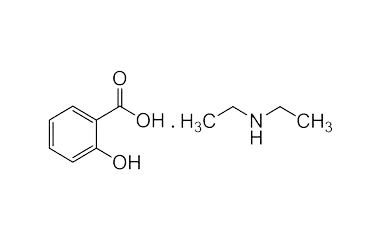
Diethylamine salicylate has the molecular formula C11H17NO3 (alternatively written as C7H6O3.C4H11N), highlighting its composition as a salt of salicylic acid and diethylamine. With a molecular weight of 211.26 g/mol, this white to brown solid compound is characterized by its specific ionic structure that contributes to its therapeutic efficacy. The compound has a melting point above 75°C and demonstrates slight solubility in organic solvents such as acetonitrile, chloroform, and methanol.
The chemical structure of diethylamine salicylate features the salicylate moiety paired with diethylamine to form a hydrophilic salt. This structural arrangement is crucial for its enhanced skin permeability compared to other salicylates. Studies have demonstrated that diethylamine salicylate exhibits 3-5 times greater skin penetration than other salicylates due to its ionic structure and optimized lipophilicity. This property makes it particularly valuable for topical applications where effective penetration through the stratum corneum is essential for therapeutic action.
From a physical chemistry perspective, the compound has a predicted water solubility of approximately 0.397 mg/mL and a logP value of 1.35-1.98, indicating moderate lipophilicity that facilitates skin penetration while maintaining sufficient water solubility.
Diethylamine Salicylate-Based Medicines List
Diethylamine salicylate is available in various formulations across different global markets. Below are eight prominent pharmaceutical products containing this active ingredient:
- Algesal – A widely recognized cream formulation containing 10% diethylamine salicylate, used for rheumatic and musculoskeletal conditions
- Algésal Suractivé – A combination product containing diethylamine salicylate and myrtecaine (nopoxamine), providing enhanced analgesic effects through complementary mechanisms
- Multigesic – Available in the Indian market as a topical analgesic formulation for musculoskeletal pain
- Activon – Marketed by Eskayef Pharmaceuticals Ltd. in Bangladesh as a 10% cream in 50 gm tubes
- Agonil – Produced by Navana Pharmaceuticals Ltd. in Bangladesh as a 10% cream in 30 ml tubes
- Bengay – A well-known topical pain reliever that includes diethylamine salicylate in some of its formulations
- Icy Hot – Another popular brand that utilizes diethylamine salicylate in certain product variants for topical pain relief
- Aspercreme – A widely used topical analgesic that includes diethylamine salicylate in some formulations for musculoskeletal pain management
These products are typically available as creams or ointments with a concentration of 10% w/w diethylamine salicylate as the active ingredient, though formulations may vary by region and manufacturer.
Mechanism of Action
Diethylamine salicylate exerts its therapeutic effects through several complementary mechanisms. The primary mode of action involves the inhibition of cyclooxygenase (COX) enzymes, specifically COX-1 and COX-2. By blocking these enzymes, diethylamine salicylate reduces the production of prostaglandins and thromboxanes from arachidonic acid, which are key mediators of pain and inflammation. This inhibition results in decreased inflammatory responses and reduced pain sensation in the affected tissues.
The compound’s analgesic action is further enhanced by its ability to penetrate the skin effectively and reach target tissues. Upon application, diethylamine salicylate dissociates into salicylic acid, which is responsible for the therapeutic effects. Some studies suggest that diethylamine salicylate may also have a cortisone-like effect via stimulation of the pituitary-adrenal axis, which enhances its anti-inflammatory profile.
Additionally, diethylamine salicylate has been reported to possess bacteriostatic and fungicidal properties, which may contribute to its overall therapeutic efficacy in certain conditions. The compound also functions as a rubefacient, producing a warming sensation by dilating blood vessels near the application site, which can provide additional pain relief through counter-irritation mechanisms.
The ionic nature of diethylamine salicylate contributes significantly to its enhanced penetrative capability, making it approximately 800% more effective than sodium salicylate in terms of skin absorption. This superior penetration allows for more effective delivery of the active compound to the affected tissues without requiring systemic absorption, thus minimizing potential systemic side effects.
Pharmacokinetics
The pharmacokinetic profile of diethylamine salicylate is characterized by its topical application and limited systemic absorption. When applied to the skin, small amounts of the compound are absorbed and converted to salicylic acid. Studies have shown that the maximum plasma levels of salicylic acid from diethylamine salicylate typically range from 2 to 6 μg/ml, which is considerably lower than the minimum effective plasma level required for systemic therapeutic action (50 μg/ml).
This indicates that while diethylamine salicylate is effective topically, its systemic absorption remains limited, which contributes to its favorable safety profile.
The penetration of diethylamine salicylate through the skin is influenced by various factors, including the formulation’s composition, the condition of the skin at the application site, and the duration of application. Once absorbed, the salicylic acid component follows the typical metabolic pathways for salicylates, primarily involving conjugation with glycine and glucuronic acid in the liver. The metabolites are then excreted primarily via the kidneys into the urine.
Compared to oral salicylates, topical diethylamine salicylate demonstrates a significantly different pharmacokinetic profile, with minimal systemic exposure, which translates to a reduced risk of systemic adverse effects commonly associated with oral NSAID therapy.
Therapeutic Uses
Diethylamine salicylate is primarily used for the topical treatment of various musculoskeletal and rheumatic conditions. Its applications can be summarized in the following table:
| Condition | Application Method | Effectiveness | Common Dosage |
|---|---|---|---|
| Rheumatic Pain | Applied to affected area 2-3 times daily | High efficacy in relieving pain and inflammation | 10% w/w cream massaged into skin until absorbed |
| Lumbago | Topical application with gentle massage | Effective for localized back pain relief | 10% w/w cream applied 2-3 times daily |
| Fibrositis | Direct application to tender points | Moderate to high effectiveness | Apply sparingly 2-3 times daily |
| Sciatica | Applied along the path of the sciatic nerve | Provides temporary symptomatic relief | 10% w/w cream 3 times daily |
| Muscle Strains | Applied directly to strained muscle areas | High effectiveness for acute strains | Apply 3 times daily with massage |
| Sports Injuries | Topical application to injured area | Good for minor to moderate injuries | Apply as needed, typically 2-3 times daily |
| Bruises | Gentle application over bruised area | Helps reduce discoloration and pain | Apply 2-3 times daily |
| Tendinitis | Applied to inflamed tendon area | Moderately effective for symptom relief | 10% w/w cream applied 2-3 times daily |
The standard application is to apply the cream (typically 10% w/w concentration) to the affected area two to three times daily, massaging gently until the product is fully absorbed. Treatment duration varies depending on the condition but typically ranges from a few days to several weeks for chronic conditions.
Side Effects
Though diethylamine salicylate is generally well-tolerated when used as directed, it can cause certain adverse effects, primarily local reactions at the application site. The most commonly reported side effects include temporary skin reactions such as redness, rashes, and irritation. Some patients may experience a burning or warming sensation upon application, which is often transient and resolves without intervention. This sensation is partly related to the compound’s rubefacient properties, which cause local vasodilation.
In rare cases, patients may develop contact dermatitis or hypersensitivity reactions, particularly those with known sensitivities to salicylates or aspirin. These reactions typically manifest as intense local inflammation, itching, or worsening of symptoms and may require discontinuation of the product.
Unlike oral salicylates, topical diethylamine salicylate is associated with minimal risk of systemic adverse effects due to its limited systemic absorption. However, when used inappropriately (such as application to large areas of skin, broken skin, or with occlusive dressings), there is a theoretical risk of increased systemic absorption, which could potentially lead to salicylate toxicity, though this is extremely rare with normal use.
Drug Interactions
Although diethylamine salicylate is applied topically and has limited systemic absorption, certain drug interactions should be considered, particularly in patients using multiple medications. The following interactions have been documented:
Diethylamine salicylate may enhance the anticoagulant effects of warfarin, potentially increasing the risk of bleeding. This interaction is more theoretical than practical with topical use due to limited systemic absorption, but it warrants caution in patients on anticoagulant therapy who are applying the product to large areas of skin or using it for extended periods.
There is also evidence suggesting that diethylamine salicylate may increase the blood concentrations of methotrexate, potentially enhancing its toxicity. Again, this interaction is primarily a concern with extensive use or application to damaged skin that might increase systemic absorption.
Patients taking oral salicylates or other NSAIDs concurrently should use diethylamine salicylate with caution, as there may be an additive effect that could increase the risk of adverse reactions associated with these drug classes. Additionally, the use of multiple topical NSAID preparations simultaneously should be avoided to prevent potential cumulative toxicity.
Safety Considerations
Several important safety considerations should be observed when using diethylamine salicylate. The compound should never be applied to broken, abraded, or damaged skin, as this could significantly increase systemic absorption and the risk of adverse effects. Additionally, it should not be applied to mucous membranes or near the eyes, and contact with these areas should be avoided during application.
Diethylamine salicylate is contraindicated in patients with known hypersensitivity to salicylates, aspirin, or other NSAIDs, particularly when this hypersensitivity is associated with a history of asthma. Patients with a history of aspirin-induced asthma, urticaria, or rhinitis should avoid using products containing diethylamine salicylate.
Special caution is advised for patients with asthma, even without a known hypersensitivity to salicylates, as there is a theoretical risk of exacerbating their respiratory condition. The use of diethylamine salicylate during pregnancy and lactation is generally not recommended due to limited safety data in these populations. Similarly, its use in children under 6 years of age is not advised.
Toxicity studies have indicated that diethylamine salicylate is less toxic than sodium salicylate, with a higher lethal dose (LD50) for mice. Skin tolerance tests on rabbits have shown better tolerability compared to methyl salicylate, which caused more severe irritation and lesions.
Regulatory Status
Diethylamine salicylate is regulated differently across various countries and regions. In many countries, it is available as an over-the-counter medication, typically formulated as a 10% w/w cream or ointment. The compound is listed in pharmacopoeias and drug databases worldwide, including the United States Pharmacopoeia (USP), European Pharmacopoeia (EP), and British Pharmacopoeia (BP).
In the European Union, diethylamine salicylate is registered with the European Community (EC) number 224-586-4. In the United States, it has been assigned the FDA UNII (Unique Ingredient Identifier) 5V7PT38BJU. The compound is classified as a salicylic acid derivative topical analgesic and is regulated accordingly by health authorities.
Product formulations containing diethylamine salicylate must comply with relevant quality standards and regulatory requirements, including appropriate labeling that indicates the active ingredient, concentration, indications, contraindications, and warnings. These requirements may vary by jurisdiction, but generally include warnings about avoiding application to broken skin and guidance on appropriate use.
Conclusion
Diethylamine salicylate represents an important option in the topical management of musculoskeletal and rheumatic pain conditions. Its enhanced skin penetration capabilities, combined with effective analgesic and anti-inflammatory properties, make it a valuable therapeutic agent for localized pain management. While it shares the fundamental mechanisms of action with other salicylates, its formulation as a diethylamine salt confers distinct advantages in terms of skin penetration and local efficacy.
Despite its generally favorable safety profile when used as directed, appropriate precautions should be observed, particularly regarding contraindications in patients with salicylate hypersensitivity and restrictions on use in special populations. As with all medications, the benefits and risks should be carefully considered, and patients should be educated on appropriate use to maximize therapeutic outcomes while minimizing the potential for adverse effects.
Ongoing research continues to explore optimal formulations and combinations to enhance the efficacy of diethylamine salicylate while maintaining its favorable safety profile, ensuring its continued relevance in the management of common painful musculoskeletal conditions.