Alfuzosin hydrochloride is a widely used urological medication that plays an important role in the management of benign prostatic hyperplasia (BPH). This medication has demonstrated effectiveness in improving urinary symptoms associated with BPH and offers an alternative to surgical intervention for many patients. The following comprehensive review explores the various aspects of alfuzosin hydrochloride, from its chemical structure to clinical applications and safety considerations.
Introduction
Alfuzosin hydrochloride is a quinazoline-derivative alpha-adrenergic blocking agent primarily used for the treatment of symptomatic benign prostatic hyperplasia (BPH). First patented in 1978 and approved for medical use in 1988, alfuzosin reached the United States market for BPH treatment in 2003. It is commercially available under the brand name Uroxatral (manufactured by Sanofi Aventis) and various other trade names internationally. As of 2020, alfuzosin was the 336th most commonly prescribed medication in the United States, with more than 700,000 prescriptions filled annually.
This medication belongs to the alpha-1 blocker class and works by relaxing specific muscles in the prostate and bladder neck, thereby facilitating urination in men with enlarged prostates. Unlike some other medications in its class, alfuzosin demonstrates a favorable urological selectivity, which contributes to its relatively lower incidence of certain side effects, particularly those related to blood pressure changes.
Chemical Structure
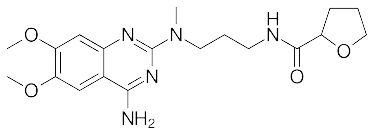
Alfuzosin hydrochloride has the molecular formula C19H27N5O4·HCl and a molecular weight of 425.9 daltons. The IUPAC name for the compound is (R,S)-N-[3-[(4-amino-6,7-dimethoxy-2-quinazolinyl)methylamino]propyl]tetrahydro-2-furancarboxamide hydrochloride.
Structurally, it is classified as a monocarboxylic acid amide, a tetrahydrofuranol, and a member of the quinazoline family of compounds. An important characteristic of alfuzosin is that it contains a stereocenter, making it a chiral molecule with two enantiomeric forms: (R)-alfuzosin and (S)-alfuzosin. In clinical practice, the drug is administered as a racemate, meaning it’s a 1:1 mixture of these two enantiomeric forms.
The CAS registry number for the (S)-enantiomer is 123739-70-8, while the overall compound is registered under 81403-68-. The chemical properties of alfuzosin contribute to a certain degree of uroselectivity, which explains its favorable side effect profile compared to some other alpha-blockers.
Alfuzosin-Based Medicines List
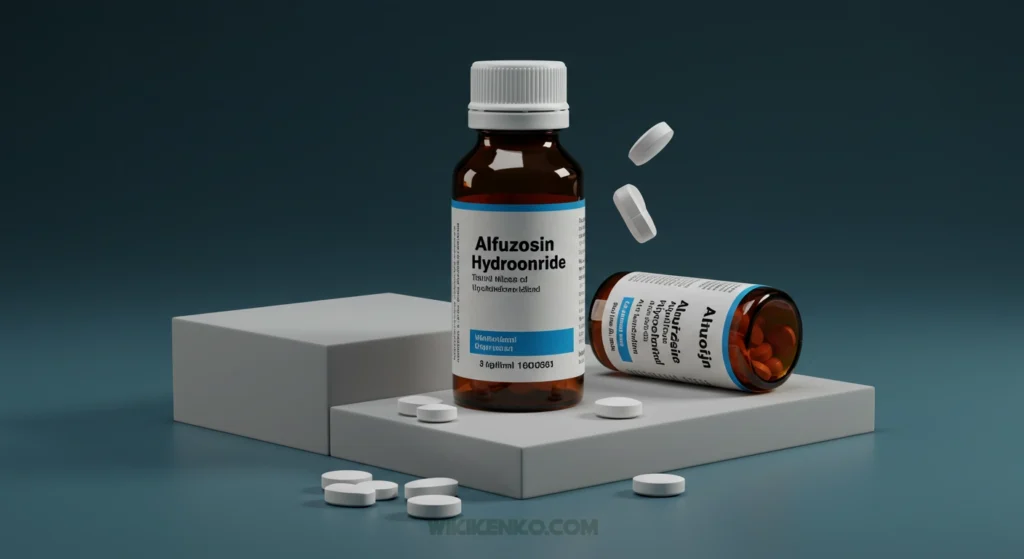
Alfuzosin hydrochloride is marketed worldwide under various brand names. The following are among the top commercially available alfuzosin products:
- Uroxatral (Sanofi Aventis) – Primary brand in the United States
- Xatral (Sanofi-Aventis) – Widely available internationally
- Alfoo (Dr. Reddy’s) – Popular in several Asian markets
- Flotral (Ranbaxy) – Available across multiple countries
- Alfasin XR (Incepta) – Extended-release formulation
- Alfuran (Terapia) – Available in European markets
- Rantral (Ranbaxy) – Alternative formulation by Ranbaxy
- Xelflo (Sun) – Manufactured by Sun Pharmaceuticals
These medications typically come in extended-release tablet formulations containing 10 mg of alfuzosin hydrochloride, designed for once-daily dosing.
Mechanism of Action
Alfuzosin hydrochloride functions as a selective antagonist of post-synaptic alpha1-adrenoreceptors, which are located in the prostate, bladder base, bladder neck, prostatic capsule, and prostatic urethra. By binding to and inhibiting these receptors, alfuzosin blocks the effect of endogenous catecholamines (epinephrine and norepinephrine) on smooth muscle tissue in these areas.
This blockade results in the relaxation of smooth muscle in both the prostate and bladder neck, leading to decreased resistance to urinary flow and improved bladder emptying. The medication’s mechanism directly addresses the dynamic component of bladder outlet obstruction in BPH, as opposed to addressing the mechanical obstruction caused by the enlarged prostate tissue itself.
Though technically a non-subtype specific alpha1-blocker, the chemical properties of alfuzosin lead to a certain degree of uroselectivity, meaning it has preferential distribution to prostate tissue compared to vascular tissues. This preferential distribution contributes to its efficacy in treating urinary symptoms while minimizing vascular side effects such as orthostatic hypotension.
Pharmacokinetics
Alfuzosin is readily absorbed in the gastrointestinal tract following oral administration, with an absolute bioavailability of approximately 49% under fed conditions. In patients over 75 years of age, the drug is absorbed more rapidly, and peak plasma levels are higher than in younger individuals. When taken with food, particularly after the same meal each day, absorption is enhanced and bioavailability increases.
Following multiple doses under fed conditions, maximum plasma concentration (Cmax) is typically achieved in 8 hours, with values around 13.6 ng/mL and an area under the curve (AUC0-24) of approximately 194 ng·h/mL. The extended-release formulation provides sustained drug release over 20 hours with a nearly constant dissolution rate between 2 and 12 hours.
Alfuzosin demonstrates moderate protein binding, ranging from 82% to 90%, with 68.2% bound to human serum albumin and 52.5% bound to human serum alpha-glycoprotein. The volume of distribution after intravenous administration is approximately 3.2 L/kg, indicating extensive tissue distribution. Notably, the drug distributes preferentially to prostate tissue compared to plasma, enhancing its therapeutic effect where it’s most needed.
The medication undergoes extensive hepatic metabolism, primarily via the CYP3A4 enzyme pathway. Three main metabolic pathways are involved: oxidation, O-demethylations, and N-dealkylation. Only about 11% of the administered dose is excreted unchanged in the urine. The apparent elimination half-life following oral administration is approximately 10 hours. Excretion is predominantly via the feces (69%) and urine (24%).
Therapeutic Uses
Alfuzosin hydrochloride has established therapeutic applications and several off-label uses, as outlined in the following table:
| Indication | Description | Approval Status |
|---|---|---|
| Benign Prostatic Hyperplasia (BPH) | Treatment of lower urinary tract symptoms associated with BPH, including difficult urination, weak stream, hesitation, dribbling, incomplete emptying, frequency, and urgency | FDA Approved |
| Neurogenic Bladder Neck Obstruction | Treatment of female lower urinary tract symptoms (LUTS) due to neurogenic bladder neck obstruction | Off-label |
| Urinary Stone Management | Improvement of spontaneous passage of distal ureteral stones | Off-label |
| Acute Urinary Retention | Short-term management to improve chances of successful voiding trial after catheter removal in men with acute urinary retention related to BPH | Investigated use |
In clinical studies, alfuzosin has demonstrated effectiveness in improving the International Prostate Symptom Score (IPSS), maximum urinary flow rate, and quality-of-life indices in patients with BPH. The medication shows notable efficacy in improving nocturia (nighttime urination), with studies reporting a reduction of 0.9 episodes per night (approximately 30% improvement). Additionally, most patients (56%) perceive symptomatic relief within the first two weeks of treatment.
Side Effects
Alfuzosin hydrochloride generally exhibits a favorable side effect profile compared to some other alpha-blockers, particularly regarding vasodilatory effects and sexual function. The most common adverse effects include dizziness (often due to postural hypotension), upper respiratory tract infections, headache, fatigue, and various abdominal disturbances. These side effects are typically mild to moderate in severity and often transient, resolving with continued treatment as the body adjusts to the medication.
Cardiovascular effects may include initial hypotension, orthostatic collapse, and reflex tachycardia, though these are usually transient. Studies have identified a slightly increased risk (HR 1.2) of cardiac failure in patients with pre-existing cardiac comorbidities. Other reported side effects include nasal congestion, weakness, and rarely, priapism (prolonged erection). A notable advantage of alfuzosin over some other alpha-blockers is its significantly lower rate of retrograde ejaculation-approximately 70% lower than what is observed with tamsulosin.
Long-term studies extending to two years have shown sustained efficacy with continued tolerability. Interestingly, some research suggests that alfuzosin may even slightly improve various domains of sexual function, such as sexual drive, erection, ejaculation, and satisfaction with sexual life, particularly in men with more severe urinary symptoms at baseline.
Drug Interactions
Understanding potential drug interactions is crucial for safe administration of alfuzosin hydrochloride. The medication is primarily metabolized by CYP3A4 enzymes, making it susceptible to interactions with inhibitors of this enzymatic pathway. Strong CYP3A4 inhibitors like ketoconazole, itraconazole, and ritonavir can significantly increase alfuzosin plasma concentrations, potentially enhancing both therapeutic effects and adverse reactions. Consequently, coadministration with potent CYP3A4 inhibitors is generally contraindicated.
Combining alfuzosin with other alpha-adrenergic blockers like doxazosin, prazosin, or tamsulosin is not recommended as this may increase the risk of hypotension due to additive effects. Similarly, caution is warranted when using alfuzosin concurrently with antihypertensive medications such as ACE inhibitors, beta-blockers, or calcium channel blockers, as enhanced blood pressure-lowering effects may occur.
Phosphodiesterase type 5 (PDE5) inhibitors used for erectile dysfunction (including sildenafil, tadalafil, and vardenafil) should be used cautiously with alfuzosin. Since both drug classes are vasodilators, their combined use may cause symptomatic hypotension in some patients. Patients should be stabilized on either medication before starting the other, and initial doses should be conservative.
Food interactions are also important to consider. Taking alfuzosin on an empty stomach significantly reduces bioavailability, so it should consistently be taken after the same meal each day to ensure optimal and predictable absorption. This consistency helps maintain therapeutic drug levels and minimize fluctuations that could lead to side effects.
Safety Considerations
Several important safety considerations must be addressed when prescribing alfuzosin hydrochloride. Patients with liver disease may require special attention as the drug undergoes extensive hepatic metabolism. In severe hepatic impairment, alfuzosin is generally contraindicated due to increased plasma levels and prolonged half-life. Similarly, patients with severe renal impairment may experience altered drug pharmacokinetics requiring careful monitoring.
Cardiovascular safety is a significant concern, particularly regarding orthostatic hypotension. Patients with pre-existing hypotension or a history of symptomatic orthostatic hypotension should use alfuzosin with caution. The medication is also contraindicated in mechanical heart failure (valvular diseases, pericarditis) due to potential exacerbation of symptoms. Studies have identified a slightly increased risk of cardiac failure (HR 1.2) in patients with cardiac comorbidities.
For patients undergoing cataract surgery, the potential for intraoperative floppy iris syndrome should be discussed with their ophthalmologist. This condition can complicate cataract surgery and has been associated with alpha-blocker use, though the incidence with alfuzosin appears lower than with some other medications in this class.
Administration guidelines specify that alfuzosin should be taken as a whole tablet (not split, crushed, or chewed) immediately after the same meal each day to ensure consistent absorption. Starting treatment with alfuzosin does not require dose titration, which simplifies the treatment regimen compared to some other alpha-blockers. The recommended dosage is typically one 10 mg extended-release tablet daily.
Regulatory Status
Alfuzosin hydrochloride has a well-established regulatory history globally. It was first patented in 1978, received initial regulatory approval for medical use in 1988, and was subsequently approved by the U.S. Food and Drug Administration specifically for benign prostatic hyperplasia in 2003. In the United States, the medication is only available by prescription under the brand name Uroxatral and as generic alfuzosin.
The FDA-approved indication for alfuzosin is specifically limited to the treatment of signs and symptoms of benign prostatic hyperplasia. Importantly, the FDA label explicitly states that alfuzosin is not indicated for the treatment of hypertension or for use in the pediatric population. The medication is classified as Pregnancy Category B, though it is not indicated for use in women.
In European markets, alfuzosin has been available longer and is marketed under various brand names, with Xatral being common in several countries. Different formulations have evolved over time, from immediate-release tablets requiring three-times-daily dosing to sustained-release formats allowing twice-daily administration, and finally to the current extended-release formulation permitting convenient once-daily dosing.
As of 2020, alfuzosin ranked as the 336th most commonly prescribed medication in the United States, with more than 700,000 prescriptions filled annually, indicating its established place in urological treatment protocols. The medication’s favorable side effect profile and convenient once-daily dosing continue to make it an important therapeutic option for men with BPH symptoms.
Conclusion
Alfuzosin hydrochloride represents an important pharmacological option for the management of benign prostatic hyperplasia. Its selective alpha-1 adrenergic blocking action provides effective relief of lower urinary tract symptoms while maintaining a favorable side effect profile. The preferential distribution to prostate tissue and relatively low incidence of vasodilatory and sexual side effects make it particularly valuable in the therapeutic landscape.
The extended-release formulation allowing once-daily dosing enhances patient convenience and compliance. While important drug interactions and safety considerations exist, proper patient selection and monitoring allow for safe and effective use. As BPH continues to affect an aging male population worldwide, alfuzosin remains a cornerstone therapy that significantly improves quality of life for many patients.