
Description
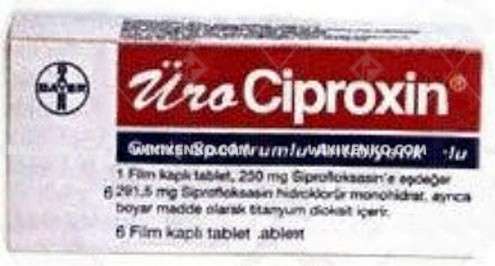
Urociproxin Film-Coated Tablet contains 291.5 mg ciprofloxacin hydrochloride monohydrate, equivalent to 250 mg ciprofloxacin, formulated as a solid oral film-coated tablet for systemic administration. Ciprofloxacin is a synthetic fluoroquinolone derivative of 1-cyclopropyl-6-fluoro-1,4-dihydro-4-oxo-7-(1‑piperazinyl)-3‑quinolinecarboxylic acid, with an empirical formula C17H18FN3O3 and molecular weight 331.4. The core typically contains excipients such as microcrystalline cellulose, maize (corn) starch, sodium starch glycolate, magnesium stearate, talc, and colloidal silica to ensure tablet integrity, disintegration, and manufacturability, while the film coat includes hypromellose, macrogol (polyethylene glycol), and titanium dioxide (E171) as opacifier and colorant.
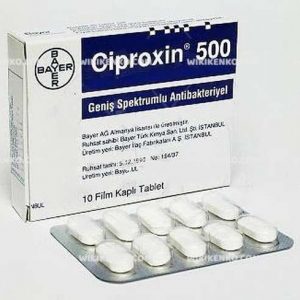
Titanium dioxide within the film-coating serves primarily to provide opacity, photostability, and a uniform white appearance, aiding product identification and protecting the active ingredient from light. The tablets are usually described as white or white to off-white, round, film-coated units, often with debossing indicating strength in analogous 250 mg ciprofloxacin film-coated tablet products.
Mechanism of Action and Antimicrobial Spectrum
Ciprofloxacin exerts its bactericidal activity through inhibition of bacterial DNA gyrase (topoisomerase II) and topoisomerase IV, enzymes that control DNA supercoiling and segregation during replication, transcription, repair, and recombination. Inhibition of these targets leads to double-stranded DNA breaks and rapid death of susceptible bacteria, a property that distinguishes fluoroquinolones from purely bacteriostatic agents. Ciprofloxacin displays concentration-dependent killing, with pharmacodynamic efficacy best related to the ratio of area under the concentration–time curve to minimum inhibitory concentration (AUC/MIC) and peak concentration to MIC (Cmax/MIC), informing contemporary dosing strategies.
The antimicrobial spectrum of ciprofloxacin includes a broad range of aerobic Gram-negative organisms, such as Escherichia coli, Klebsiella pneumoniae, Proteus spp., Pseudomonas aeruginosa, Haemophilus influenzae, Neisseria gonorrhoeae, and many Enterobacterales, as well as selected Gram-positive organisms including Staphylococcus aureus (methicillin-susceptible strains) and some streptococci. Activity against anaerobes is generally limited, and resistance can arise via chromosomal mutations in gyrA/parC, efflux pumps, or decreased outer-membrane permeability, emphasizing the need for culture‑guided use and stewardship.
Pharmacokinetics
Absorption and Bioavailability
Following oral administration of a 250 mg ciprofloxacin film-coated tablet, ciprofloxacin is rapidly absorbed from the upper gastrointestinal tract, with peak plasma concentrations typically achieved within 1–2 hours. The absolute oral bioavailability is approximately 70%, allowing interchangeability between oral and intravenous routes with dose adjustment. Concomitant administration with multivalent cation-containing products, such as antacids containing magnesium or aluminum, or products containing iron or zinc, can significantly reduce absorption via chelation, necessitating staggered dosing.
Distribution, Metabolism, and Elimination
Ciprofloxacin exhibits a large apparent volume of distribution (approximately 2–3 L/kg), reflecting extensive penetration into tissues including lung, urinary tract, prostate, and gastrointestinal mucosa. Plasma protein binding is relatively low, around 20–40%, which favors diffusion into extravascular compartments and sites of infection. Ciprofloxacin is eliminated predominantly via renal excretion as unchanged drug, with contributions from biliary and intestinal elimination; its terminal elimination half-life is about 4 hours in individuals with normal renal function.
In patients with impaired renal function, systemic clearance is reduced and half-life prolonged, requiring dosage adjustment based on creatinine clearance to avoid accumulation and toxicity. Non-renal clearance includes hepatic metabolism to several less active metabolites, and both parent drug and metabolites are excreted in urine and feces.
Clinical Indications and Uses
Ciprofloxacin 250 mg film-coated tablets are widely indicated in adults for the treatment of mild to moderate infections caused by susceptible organisms, particularly in the urinary and gastrointestinal tracts. Typical approved indications for ciprofloxacin tablets include:
-
Uncomplicated and complicated urinary tract infections, including pyelonephritis, caused by organisms such as E. coli and Klebsiella pneumoniae.
-
Certain gastrointestinal infections, including infectious diarrhea caused by enteropathogenic E. coli, Salmonella, and Shigella species.
-
Skin and skin structure infections due to susceptible Gram-negative organisms.
In European and UK product characteristics, ciprofloxacin is also used for infections of the respiratory tract, particularly due to Gram-negative pathogens, and for prophylaxis or treatment of inhalational anthrax, subject to local regulatory approval and antimicrobial stewardship considerations. Clinical use should always be guided by local susceptibility patterns, national guidelines, and individual patient risk factors to minimize resistance and adverse reactions.
Posology and Method of Administration
For a 250 mg ciprofloxacin film-coated tablet, dosage is individualized according to infection site, severity, pathogen susceptibility, and renal function. Uncomplicated lower urinary tract infections in adults are commonly treated with 250 mg twice daily, whereas more severe infections or those involving the upper urinary tract may require higher strengths or prolonged duration. The tablets should be swallowed whole with fluid and can be administered independent of meals, but interactions with dairy products and mineral supplements must be considered due to chelation.
In patients with reduced creatinine clearance, dosing intervals may be extended or individual doses reduced to maintain appropriate exposure and avoid accumulation. Treatment duration typically ranges from 3 days for uncomplicated infections to several weeks for complicated or deep‑seated infections, with continuation for at least 48–72 hours after resolution of clinical symptoms.
Safety Profile and Adverse Reactions
Ciprofloxacin carries a well-characterized safety profile, but important serious adverse reactions have led to boxed and prominent warnings in regulatory product labels. Common adverse effects include gastrointestinal complaints such as nausea, diarrhea, abdominal pain, and dyspepsia, as well as central nervous system effects like headache and dizziness. Tendinitis and tendon rupture, particularly involving the Achilles tendon, have been reported, with increased risk in elderly patients and those receiving concomitant corticosteroids.
Fluoroquinolones, including ciprofloxacin, are associated with peripheral neuropathy, central nervous system effects (seizures, psychosis, agitation), and exacerbation of myasthenia gravis, leading to contraindications in patients with known myasthenia gravis and caution in those with neurological disorders. Additional concerns include QT interval prolongation, dysglycemia (both hypo‑ and hyperglycemia), Clostridioides difficile-associated diarrhea, and rare but serious aortic aneurysm or dissection risk, prompting careful patient selection.
To support an academic overview, selected key safety aspects are summarized in the following table, derived from ciprofloxacin tablet regulatory labeling analogous to Urociproxin’s strength and formulation.
Table 1. Selected clinically important safety warnings for ciprofloxacin 250 mg film-coated tablets
| Safety domain | Description (regulatory and clinical relevance) |
|---|---|
| Tendinitis and tendon rupture | Fluoroquinolones increase risk of tendinitis and tendon rupture (e.g., Achilles), especially in older adults and corticosteroid users. |
| Peripheral neuropathy | Potentially irreversible sensory or sensorimotor neuropathy; treatment should be discontinued at first signs of neuropathic symptoms. |
| CNS effects and seizures | Risks include seizures, tremors, psychosis, and increased intracranial pressure, particularly in predisposed individuals. |
| Myasthenia gravis exacerbation | Worsening of muscle weakness, potentially life‑threatening; contraindicated in patients with myasthenia gravis. |
| QT prolongation and arrhythmias | Use with caution in patients with known QT prolongation or receiving other QT‑prolonging drugs. |
| Dysglycemia | Both hypoglycemia and hyperglycemia reported, particularly in diabetic patients on hypoglycemic agents. |
| C. difficile-associated diarrhea | Antibiotic-associated colitis ranging from mild diarrhea to fatal colitis; requires prompt recognition and management. |
Contraindications and Precautions
Ciprofloxacin-containing products are contraindicated in patients with hypersensitivity to ciprofloxacin, other quinolones, or any excipient in the formulation. Contraindication extends to individuals with a history of severe adverse reactions to fluoroquinolones, including serious tendon disorders related to previous quinolone therapy. Use is generally discouraged in children and adolescents except for specific, well-defined indications where benefits outweigh risks, due to concerns about effects on cartilage and musculoskeletal development.
Precaution is required in patients with epilepsy or other seizure disorders, known or suspected CNS disorders, pre-existing risk factors for QT prolongation, and those receiving concomitant medications such as theophylline, warfarin, antiarrhythmics, and systemic corticosteroids. Renal impairment necessitates careful dose individualization, and adequate hydration is recommended to minimize crystalluria and nephrotoxicity risk.
Drug–Drug and Drug–Food Interactions
Ciprofloxacin is subject to numerous clinically relevant interactions, largely mediated by chelation, cytochrome P450 inhibition, and additive pharmacodynamic effects. Concurrent administration with antacids containing aluminum or magnesium, sucralfate, or products containing calcium, iron, or zinc can markedly decrease ciprofloxacin bioavailability; administration should be separated by several hours. Ciprofloxacin inhibits CYP1A2 and can increase plasma concentrations of substrates such as theophylline and tizanidine, potentially leading to serious toxicity and necessitating avoidance or close monitoring.
Co-administration with vitamin K antagonists like warfarin may enhance anticoagulant effects and bleeding risk, requiring INR monitoring and possible dose adjustment. Combination with drugs that prolong the QT interval (e.g., certain antiarrhythmics, tricyclic antidepressants, macrolides) may increase the risk of torsades de pointes, warranting a careful risk–benefit assessment.
Comparative Formulation and Regulatory Context
Ciprofloxacin 250 mg film-coated tablets from multiple manufacturers share the essential characteristic of delivering 250 mg ciprofloxacin base via ciprofloxacin hydrochloride in a white film-coated tablet with titanium dioxide as a key opacifier. Summaries of Product Characteristics from European medicines databases describe nearly identical qualitative compositions for film-coating systems (hypromellose, macrogol, titanium dioxide), supporting the extrapolation of physicochemical and biopharmaceutical properties between brands.
Regulatory assessments, such as those for generic ciprofloxacin film-coated tablets, commonly base approval on demonstration of bioequivalence to reference products like Ciproxin, confirming comparable systemic exposure and therapeutic performance. As a ciprofloxacin 250 mg film-coated tablet, Urociproxin thus fits within a well-characterized regulatory class with extensive post-marketing data on efficacy, safety, and quality attributes.
Summary
Urociproxin Film-Coated Tablet, containing ciprofloxacin hydrochloride monohydrate equivalent to 250 mg ciprofloxacin, is a systemically active fluoroquinolone antibacterial with broad Gram-negative coverage and established oral pharmacokinetics. Its formulation with titanium dioxide and standard tablet excipients conforms to recognized quality and biopharmaceutical criteria for ciprofloxacin film-coated tablets, allowing its use in a range of susceptible bacterial infections when guided by antimicrobial stewardship and regulatory labeling. The potential for serious, sometimes irreversible adverse effects and complex drug interactions requires careful patient selection, individualized dosing, and rigorous monitoring to achieve a favorable benefit–risk balance in clinical practice.












Reviews
There are no reviews yet.