
Description
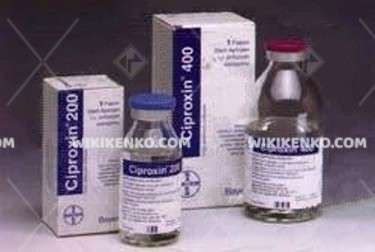
Ciproxin Infusion 400 mg is presented as a ready‑to‑use, clear, isotonic intravenous solution containing ciprofloxacin as the lactate salt at a concentration of 2 mg/mL (400 mg in 200 mL). Each mL of solution for infusion typically contains 2 mg ciprofloxacin corresponding to approximately 2.544 mg ciprofloxacin lactate, with excipients such as electrolytes and stabilising agents to maintain isotonicity and pH within a physiologically acceptable range. The solution is supplied in flexible infusion containers or bottles designed for single use and is administered by short‑term intravenous infusion.
Mechanism of Action and Antibacterial Spectrum
Ciprofloxacin is a second‑generation fluoroquinolone that exerts a bactericidal effect by inhibiting the bacterial type II topoisomerases DNA gyrase and topoisomerase IV, thereby blocking DNA replication, transcription, repair and recombination. Inhibition of these enzymes leads to rapid bacterial cell death, particularly in rapidly dividing organisms where DNA supercoiling control is essential. Ciprofloxacin shows concentration‑dependent killing, and its pharmacodynamic effect correlates primarily with the ratio of area under the plasma concentration–time curve (AUC) to the minimum inhibitory concentration (MIC) and the peak concentration (Cmax) to MIC.
Ciprofloxacin displays potent in vitro activity against a wide range of aerobic Gram‑negative pathogens, including Enterobacterales (e.g. Escherichia coli, Klebsiella spp., Enterobacter spp.), Pseudomonas aeruginosa and other non‑fermenters, and has activity against some Gram‑positive organisms such as Staphylococcus aureus (methicillin‑susceptible strains) and Streptococcus species, although resistance among Gram‑positive cocci is more frequent. It is inactive against most anaerobic bacteria; therefore, in mixed aerobic–anaerobic infections it must be combined with appropriate agents active against anaerobes (e.g. metronidazole), in accordance with local guidelines.
Clinical Indications
Ciproxin Infusion 400 mg is indicated for systemic infections due to ciprofloxacin‑susceptible organisms when parenteral therapy is clinically justified, especially in severe disease or when oral administration is not feasible. Indications in adults include:
-
Complicated urinary tract infections and acute pyelonephritis, including infections caused by multidrug‑resistant Gram‑negative organisms.
-
Hospital‑acquired and severe community‑acquired pneumonia, particularly when caused by Gram‑negative bacilli including Pseudomonas aeruginosa.
-
Severe infections of the skin and soft tissues, bones and joints, especially when caused by Gram‑negative bacteria.
-
Intra‑abdominal infections (in combination with agents active against anaerobes) and severe gastrointestinal infections such as infectious diarrhoea due to susceptible pathogens.
-
Bacteraemia/septicaemia occurring in association with or secondary to the above infection sites, when a susceptible pathogen is suspected or documented.
-
Management of neutropenic patients with suspected or proven bacterial infections, usually in combination with other broad‑spectrum antibacterials.
-
Inhalational anthrax (post‑exposure prophylaxis and curative treatment) following confirmed or suspected exposure to Bacillus anthracis.
Paediatric use is generally restricted to specialist indications such as complicated urinary tract infection and pyelonephritis and inhalational anthrax when the benefit is judged to outweigh the risk of joint‑related adverse events; intravenous administration must be undertaken under expert supervision.
Posology and Method of Administration
Dosage should be individualised according to the type and severity of infection, pathogen susceptibility, patient renal function and body weight, taking into account local antimicrobial stewardship guidance. In adults with normal renal function, typical intravenous dosing regimens for ciprofloxacin 400 mg/200 mL solution for infusion are summarised below.
Adult dosage (normal renal function)
-
400 mg every 12 hours for most moderate to severe infections (e.g. complicated urinary tract infections, pneumonia, intra‑abdominal infections in combination therapy).
-
400 mg every 8 hours for very severe or life‑threatening infections, including certain cases of hospital‑acquired pneumonia and pseudomonal infections.
-
400 mg every 12 hours for inhalational anthrax post‑exposure prophylaxis and treatment, for a total duration of up to 60 days following confirmed exposure.
The solution must be administered by intravenous infusion over approximately 60 minutes for the 400 mg dose to minimise the risk of local venous irritation and reduce the incidence of infusion‑related adverse reactions; the 200 mg dose is typically infused over 30 minutes. Slow infusion into a large vein is recommended.
Dose adjustment in renal impairment
Ciprofloxacin is eliminated predominantly via renal excretion; therefore, dose and/or dosing interval should be adjusted in patients with reduced creatinine clearance. In moderate renal impairment (creatinine clearance 30–50 mL/min/1.73 m²), many product characteristics state that no adjustment is required, whereas in more severe impairment (creatinine clearance <30 mL/min/1.73 m²) the dose or frequency should be reduced, for example to 200–400 mg every 24 hours, depending on infection severity and local guidance. In patients undergoing renal replacement therapy, specialist advice is necessary to optimise dosing in relation to the dialysis schedule and to avoid under‑ or over‑exposure.
Table 1. Example adult dosing regimens for ciprofloxacin intravenous infusion (including 400 mg/200 mL strengths)
| Clinical situation (adult) | Suggested dose and frequency* | Infusion duration | Notes |
|---|---|---|---|
| Moderate to severe infections (e.g. cUTI, pyelonephritis, intra‑abdominal infections with combination therapy) | 400 mg every 12 hours | 60 minutes | Adjust based on clinical response and pathogen MIC. |
| Very severe or life‑threatening infections (e.g. Pseudomonas pneumonia, severe sepsis) | 400 mg every 8 hours | 60 minutes | Consider combination therapy; monitor closely for toxicity. |
| Inhalational anthrax post‑exposure prophylaxis and treatment | 400 mg every 12 hours | 60 minutes | Total duration up to 60 days after confirmed exposure. |
| Renal impairment (CrCl 10–30 mL/min/1.73 m²) | 200–400 mg every 24 hours | 30–60 minutes | Reduce total daily dose or extend interval. |
| Renal impairment (CrCl <10 mL/min/1.73 m²) | Approx. 50% of usual dose (e.g. 200 mg every 24 hours) | 30–60 minutes | Seek specialist advice, especially in severe infection. |
*Exact dosing recommendations may vary by national product information and institutional protocols; local guidance should always be consulted.
Pharmacokinetic and Pharmacodynamic Characteristics
Following a 60‑minute intravenous infusion of 400 mg ciprofloxacin every 12 hours, systemic exposure (AUC) is bioequivalent to that achieved with 500 mg oral ciprofloxacin every 12 hours, while a 400 mg intravenous dose over 60 minutes every 8 hours approximates the exposure of a 750 mg oral dose given every 12 hours. The 400 mg intravenous infusion results in a peak plasma concentration (Cmax) similar to that observed after a 750 mg oral dose, while providing more predictable bioavailability and rapid achievement of therapeutic levels.
Ciprofloxacin exhibits a relatively low plasma protein binding of approximately 20–30%, with a steady‑state volume of distribution that indicates extensive penetration into extravascular tissues and body fluids. Therapeutically relevant concentrations are achieved in urine, renal parenchyma, lung tissue, bronchial secretions, skin, bones, and intra‑abdominal organs, supporting its use in diverse systemic infections. Elimination occurs mainly by renal excretion via glomerular filtration and tubular secretion, with additional non‑renal clearance; the elimination half‑life in subjects with normal renal function is approximately 4–5 hours, prolonged in renal impairment.
Contraindications
Ciprofloxacin intravenous infusion is contraindicated in patients with known hypersensitivity to ciprofloxacin, other quinolone antibacterials, or any component of the formulation. It must not be used in patients with a history of serious adverse reactions associated with fluoroquinolones, including severe tendon disorders related to previous quinolone therapy. Use is generally contraindicated in children and adolescents in routine indications due to concerns regarding effects on the developing cartilage, except for specific severe infections where the expected benefit outweighs potential risks.
Warnings and Precautions
Ciprofloxacin and other systemic fluoroquinolones have been associated with rare but potentially serious, disabling and sometimes irreversible adverse reactions affecting multiple organ systems; therefore, its use should be reserved for infections where other antibacterial options are inappropriate. Particular warnings include:
-
Tendinitis and tendon rupture: Increased risk in elderly patients, those receiving concomitant corticosteroids, and transplant recipients; treatment must be discontinued at the first signs of tendon pain or inflammation.
-
Peripheral neuropathy: Cases of sensory or sensorimotor polyneuropathy, which may be rapid in onset and potentially irreversible; patients should be advised to report symptoms such as pain, burning, tingling or weakness.
-
Central nervous system effects: Seizures, psychotic reactions, depression, agitation, tremor and other CNS adverse events have been reported, particularly in patients with pre‑existing CNS disorders or risk factors for seizures.
-
QT interval prolongation and torsades de pointes: Use with caution in patients with known QT prolongation, uncorrected electrolyte disturbances (e.g. hypokalaemia), or concomitant use of other QT‑prolonging agents, and in the elderly.
-
Dysglycaemia: Both hypoglycaemia and hyperglycaemia have been reported, especially in diabetic patients receiving concomitant antidiabetic therapy; blood glucose monitoring is recommended and therapy discontinued if serious dysglycaemia occurs.
-
Hepatotoxicity: Cases of hepatic necrosis and life‑threatening liver failure have been described; therapy should be stopped if signs of hepatitis, jaundice or significant liver enzyme elevation develop.
-
Aortic aneurysm and dissection: Epidemiological data suggest increased risk, particularly in elderly patients or those with pre‑existing aortic aneurysm or risk factors; ciprofloxacin should only be used in such patients if no alternative exists.
-
Clostridioides difficile‑associated diarrhoea: As with other broad‑spectrum antibacterials, ciprofloxacin can precipitate C. difficile‑associated colitis, which may be severe and life‑threatening; antibiotic therapy must be reconsidered in cases of severe, persistent or bloody diarrhoea.
Adequate hydration should be maintained to prevent crystalluria, and concomitant use with drugs that strongly interfere with ciprofloxacin metabolism or excretion (e.g. certain antiarrhythmics, theophylline or strong CYP1A2 substrates) requires monitoring or avoidance.
Table 2. Selected major warnings associated with ciprofloxacin intravenous therapy
| Safety concern | Clinical description | Risk factors | Recommended clinical action |
|---|---|---|---|
| Tendinitis / tendon rupture | Pain, swelling, or rupture (especially Achilles tendon) during or after therapy | Age >60 years, corticosteroid use, transplant recipients | Discontinue immediately, immobilise affected tendon, consider alternative antibiotic. |
| Peripheral neuropathy | Paresthesia, burning pain, numbness, weakness, sensory deficits | Previous neuropathy, diabetes, prolonged therapy | Stop treatment at first symptoms; avoid re‑exposure to fluoroquinolones. |
| CNS effects including seizures and psychosis | Seizures, confusion, hallucinations, depression, suicidal ideation | CNS disorders, epilepsy, concomitant lowering seizure threshold drugs | Use with caution; discontinue if serious CNS events occur. |
| QT prolongation / torsades de pointes | Prolonged QT, arrhythmias, syncope, sudden death | Pre‑existing QT prolongation, electrolyte imbalance, QT‑prolonging drugs, elderly | Avoid in high‑risk patients; correct electrolytes; ECG monitoring if needed. |
| Dysglycaemia | Hypoglycaemia or hyperglycaemia, sometimes severe | Diabetes, concomitant antidiabetics | Monitor glucose; stop ciprofloxacin if significant dysglycaemia occurs. |
| C. difficile‑associated colitis | Severe, sometimes bloody diarrhoea, abdominal pain, fever | Broad‑spectrum antibiotic exposure, hospitalisation | Discontinue antibacterial; initiate specific therapy (e.g. oral vancomycin) as indicated. |
Adverse Reactions
The overall safety profile of ciprofloxacin intravenous infusion is consistent with that of systemic fluoroquinolones, with most adverse reactions being mild to moderate and reversible, but with potential for serious events in some patients. Commonly reported adverse reactions (≥1%) include nausea, diarrhoea, vomiting, abdominal discomfort, rash, pruritus, headache and transient elevations in hepatic transaminases. Intravenous administration can also cause local reactions such as phlebitis, injection site pain and venous irritation, which are minimised by slow infusion into a large vein.
Less frequent but clinically important adverse reactions include hypersensitivity and anaphylactic reactions, photosensitivity, tendinitis and tendon rupture, peripheral neuropathy, CNS effects (seizures, psychosis, agitation, tremor), QT prolongation, severe cutaneous adverse reactions, hepatic injury and aortic aneurysm or dissection, some of which may be irreversible or life‑threatening. Haematological abnormalities such as eosinophilia, leukopenia, thrombocytopenia or haemolytic anaemia have been observed, and antibiotic‑associated colitis due to C. difficile may occur with potentially fatal outcome if not recognised promptly.
Use in Special Populations
In elderly patients, ciprofloxacin should be used with particular caution because of an increased risk of tendon disorders, QT prolongation, aortic aneurysm and dissection, and CNS adverse reactions; dose adjustment may be necessary due to age‑related decline in renal function. In patients with renal impairment, reduced clearance leads to higher systemic exposure and prolonged half‑life, requiring appropriate dose adjustment or extension of the dosing interval as described above.
During pregnancy, ciprofloxacin use is generally not recommended owing to limited human data and evidence of arthropathy in juvenile animals exposed to quinolones; it should be considered only when potential maternal benefit justifies the potential risk to the fetus. Ciprofloxacin is excreted in breast milk, and breastfeeding is usually not advised during therapy or for a short period after the last dose to minimise the risk of joint toxicity in the nursing infant.
Overdose Management
Acute overdose with ciprofloxacin intravenous infusion may lead to dizziness, tremor, confusion, hallucinations, gastrointestinal discomfort, crystalluria and reversible renal toxicity. Management is primarily supportive and symptomatic, including careful monitoring of cardiac rhythm, renal function and electrolyte balance, with maintenance of adequate hydration to prevent crystalluria and promote urinary elimination. Haemodialysis or peritoneal dialysis removes only a limited amount of ciprofloxacin, but may be considered for general supportive care in patients with renal failure.
Summary and Clinical Considerations
Ciproxin Infusion 400 mg (ciprofloxacin lactate equivalent to 400 mg ciprofloxacin in 200 mL) is a parenteral fluoroquinolone antibacterial agent indicated for the treatment of severe infections due to susceptible Gram‑negative and selected Gram‑positive pathogens when intravenous therapy is appropriate. Its pharmacokinetic properties provide high tissue penetration and allow for flexible dosing regimens, with intravenous 400 mg infusions achieving systemic exposures comparable to high‑dose oral formulations while ensuring reliable bioavailability in critically ill or non‑oral patients. However, due to the potential for serious, sometimes irreversible adverse reactions, especially involving tendons, peripheral nerves, CNS, cardiovascular system, liver and bowel, its use should be carefully weighed against alternative treatments and strictly guided by susceptibility data and antimicrobial stewardship principles.
For any specific product such as a national or Turkish‑marketed “Ciproxin Infusion 400 mg” preparation, the official Summary of Product Characteristics or equivalent regulatory document should be consulted for definitive, country‑specific information on composition, indications, dosing and safety requirements.



















Reviews
There are no reviews yet.