
Description
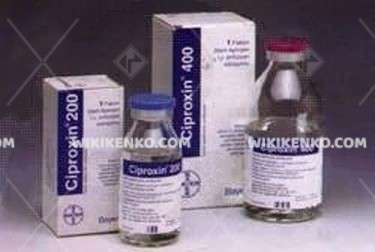
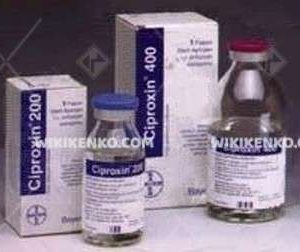
Each 100 mL of Ciproxin Infusion 200 mg contains ciprofloxacin lactate (often as the monohydrate) in an amount equivalent to 200 mg ciprofloxacin, corresponding to a concentration of 2 mg/mL. The solution for infusion is typically clear, colorless to slightly yellow, and presented in glass bottles or plastic infusion containers suitable for intravenous administration. Excipients commonly include lactic acid (to form the lactate salt and adjust pH), sodium chloride to render the solution approximately isotonic, hydrochloric acid or sodium hydroxide for pH adjustment, and water for injections as vehicle.
The pH of ciprofloxacin lactate infusion solutions is generally mildly acidic, and the product is usually photosensitive, requiring protection from light until use. Stability data indicate that, after opening, the microbiological and hygienic conditions limit the in-use shelf-life, even though the solution itself is chemically stable in the presence of oxygen for several days.
Table 1. Qualitative and quantitative composition of a typical ciprofloxacin lactate 200 mg/100 mL infusion
| Component | Quantity per 100 mL | Function |
|---|---|---|
| Ciprofloxacin (as lactate) | 200 mg | Active antibacterial agent |
| Lactic acid (approx. 90%) | q.s. | Salt formation, pH adjustment |
| Sodium chloride | ~0.9 g | Isotonicity adjuster |
| Hydrochloric acid / NaOH | q.s. | pH adjustment |
| Water for injections | to 100 mL | Vehicle for infusion |
Mechanism of action and antibacterial spectrum
Ciprofloxacin is a second‑generation fluoroquinolone that exerts a bactericidal effect by inhibiting bacterial DNA gyrase and topoisomerase IV, enzymes essential for DNA replication, transcription, repair, and recombination. Inhibition of these targets leads to disruption of bacterial DNA metabolism, chromosomal fragmentation, and ultimately cell death.
Ciprofloxacin displays broad‑spectrum activity against many aerobic gram‑negative bacilli, including Enterobacterales (such as Escherichia coli, Klebsiella spp., Enterobacter spp., Proteus spp.) and non‑fermenters such as Pseudomonas aeruginosa. It is also active against several gram‑positive organisms, including Staphylococcus aureus and Streptococcus pneumoniae, although resistance and reduced susceptibility may limit use as first‑line therapy for pneumococcal pneumonia. The minimal inhibitory concentrations (MICs) for many susceptible clinical isolates are often below 1 µg/mL, reflecting high intrinsic potency.
Therapeutic indications
Ciprofloxacin 200 mg/100 mL solutions for infusion, including products marketed under names such as Ciproxin, are indicated in adults for the treatment of a range of infections caused by susceptible bacteria, taking into account official guidance on the appropriate use of antibacterial agents. Typical evidence‑based indications (which may vary by national authorization) include:
-
Lower respiratory tract infections, including hospital‑acquired pneumonia and severe community‑acquired pneumonia due to gram‑negative pathogens (e.g. Klebsiella, Enterobacter, Pseudomonas, Haemophilus, Legionella), when other antibiotics are inappropriate.
-
Complicated urinary tract infections and acute pyelonephritis caused by susceptible gram‑negative organisms.
-
Intra‑abdominal infections, usually in combination with other antibacterial agents active against anaerobes.
-
Skin and soft‑tissue infections caused by gram‑negative bacteria.
-
Bone and joint infections due to susceptible organisms, often as part of combination regimens.
-
Systemic infections such as sepsis due to gram‑negative pathogens, where ciprofloxacin is considered appropriate based on susceptibility.
In some product characteristics, ciprofloxacin lactate infusion is also described as an advisable (but not first‑choice) treatment in pneumonias caused by Klebsiella, Enterobacter, Proteus, Pseudomonas, Haemophilus, Branhamella, Legionella, and Staphylococcus species, particularly in outpatients with pneumococcal pneumonia when alternative agents cannot be used.
Dosage and administration
Ciprofloxacin infusion is administered intravenously, usually via peripheral or central venous access, with the infusion rate adapted to dose and clinical context. For 100–200 mg doses in 100 mL, the recommended infusion duration is approximately 30 minutes, whereas a 400 mg dose (commonly in 200 mL) is infused over about 60 minutes to reduce the risk of venous irritation and local reactions.
Typical adult dosing regimens vary from 200 mg twice daily to 400 mg three times daily, depending on the indication, the severity of infection, renal function, and local product labeling. Dose adjustments are required in patients with impaired renal function due to predominant renal excretion of ciprofloxacin; reductions in dose or extension of dosing interval are recommended based on creatinine clearance. Intravenous therapy may be switched to oral ciprofloxacin when clinically appropriate, using established bioequivalence principles between oral and parenteral exposure.
The infusion solution can be co‑administered with compatible intravenous fluids such as 0.9% sodium chloride or certain glucose solutions; however, Y‑site or admixture compatibility must be verified because physical or chemical incompatibility (e.g. precipitation, clouding, discoloration) can occur with some drugs or solutions. Incompatibility may result from pH differences or complex formation, and visually detectable changes mandate discarding the mixture.
Pharmacokinetic and pharmacodynamic properties
After intravenous administration of 200 mg ciprofloxacin over 30 minutes, peak plasma concentrations in adults typically lie within a range similar to those obtained after a 250–500 mg oral dose, reflecting good systemic exposure. Ciprofloxacin displays a relatively large apparent volume of distribution, indicating extensive tissue penetration, including lungs, kidneys, liver, bile, skin, and soft tissues. Protein binding is low to moderate, generally about 20–30%, facilitating distribution into extravascular compartments.
Ciprofloxacin is eliminated predominantly by renal excretion through glomerular filtration and tubular secretion, with a smaller proportion undergoing hepatic metabolism and biliary excretion. The systemic elimination half‑life in subjects with normal renal function is typically 4–5 hours, supporting twice‑daily dosing in many indications. In renal impairment, reduced clearance leads to prolonged half‑life and higher systemic exposure, necessitating dosage adjustments.
Pharmacodynamically, the efficacy of ciprofloxacin correlates best with the ratio of the 24‑hour area under the concentration–time curve (AUC) to MIC (AUC/MIC) and, to some extent, the peak concentration to MIC (Cmax/MIC) for gram‑negative bacilli. Optimized dosing regimens aim to maximize these indices while minimizing toxicity and resistance selection. Experimental formulations of ciprofloxacin with lactose carriers have demonstrated rapid drug release and concentration‑dependent antibacterial activity against Staphylococcus aureus and Pseudomonas aeruginosa, supporting the concentration‑dependent killing characteristics typical for fluoroquinolones.
Contraindications and important precautions
Ciprofloxacin infusions are contraindicated in patients with known hypersensitivity to ciprofloxacin, other fluoroquinolones, or any excipients in the formulation. Use is also generally contraindicated in patients with a history of fluoroquinolone‑associated tendinopathy or tendon rupture, particularly involving the Achilles tendon.
Caution is required in patients with:
-
Pre‑existing central nervous system disorders (e.g. epilepsy) due to risk of seizures and other neuropsychiatric adverse reactions.
-
Known or suspected QT interval prolongation, uncorrected electrolyte disturbances, or concomitant use of QT‑prolonging drugs.
-
Glucose‑6‑phosphate dehydrogenase (G6PD) deficiency, due to potential hemolytic reactions.
Fluoroquinolones, including ciprofloxacin, have been associated with serious adverse reactions such as tendinitis, tendon rupture, peripheral neuropathy, central nervous system effects, and, rarely, aortic aneurysm and dissection; risk–benefit evaluation and adherence to current regulatory safety communications are essential. In many jurisdictions, their use in mild or self‑limiting infections is discouraged, and they are reserved for situations where alternative agents are inappropriate.
Adverse reactions
The safety profile of intravenous ciprofloxacin encompasses both systemic effects of the fluoroquinolone class and reactions related to parenteral administration. Commonly reported adverse reactions include gastrointestinal disturbances (nausea, vomiting, diarrhea, abdominal pain), central nervous system symptoms (headache, dizziness), and local reactions at the infusion site, such as phlebitis and injection‑site pain.
Serious but less frequent events comprise:
-
Tendinitis and tendon rupture, particularly in elderly patients and those on concomitant corticosteroids.
-
Peripheral neuropathy manifesting as paresthesia, hypoesthesia, or weakness, potentially irreversible.
-
Seizures, psychosis, agitation, and other neuropsychiatric events.
-
Hypersensitivity reactions including anaphylaxis, angioedema, and severe cutaneous adverse reactions.
-
Hepatotoxicity with hepatocellular injury and cholestatic patterns.
Alterations in laboratory values such as transient elevations in transaminases, serum creatinine, or eosinophilia may occur. Clostridioides difficile‑associated diarrhea has been reported with systemic fluoroquinolone therapy and should be considered in patients with severe or persistent diarrhea during or after treatment.
Table 2. Selected adverse reactions associated with intravenous ciprofloxacin
| System organ class | Adverse reaction examples | Notes |
|---|---|---|
| Gastrointestinal | Nausea, vomiting, diarrhea, abdominal pain | Usually mild to moderate |
| Nervous system | Headache, dizziness, seizures | Higher risk in CNS disorders or with interacting drugs |
| Musculoskeletal | Tendinitis, tendon rupture, arthralgia | Risk increased in elderly, corticosteroid use |
| Immune / hypersensitivity | Rash, pruritus, anaphylaxis, angioedema | Discontinue immediately if severe |
| Hepatobiliary | Elevated transaminases, hepatitis, cholestasis | Monitor in prolonged therapy |
| Vascular / local | Phlebitis, infusion‑site pain | Related to IV route |
Drug interactions and compatibility
Ciprofloxacin is subject to clinically relevant drug–drug interactions mediated by both pharmacokinetic and pharmacodynamic mechanisms. It is a moderate inhibitor of CYP1A2 and can increase serum concentrations of drugs metabolized by this pathway, such as theophylline and tizanidine, possibly leading to toxicity; concomitant use with tizanidine may be contraindicated in some labels. Co‑administration with other agents known to prolong the QT interval can enhance the risk of cardiotoxicity and should be approached with caution.
In parenteral therapy, compatibility with concomitant intravenous solutions and medications must be assured. Simulated Y‑site administration studies have evaluated the physical compatibility of ciprofloxacin lactate with sodium bicarbonate and other infusates, emphasizing that precipitation or turbidity may occur under certain conditions, necessitating separate administration when compatibility is unproven. Product information often recommends that, if compatibility has not been established, ciprofloxacin infusion should be administered through a separate line or flushed thoroughly before and after co‑infusion with other drugs.
Pharmaceutical handling, storage, and stability
Ciprofloxacin lactate infusion solutions are usually supplied in light‑protected outer cartons and should be kept in their original packaging until immediate use, due to sensitivity of the solution to light. Storage conditions typically specify controlled room temperature within the limits stated in the local product characteristics, avoiding freezing and excessive heat. After first opening or dilution (if applicable), the in‑use storage time and conditions depend on aseptic handling; from a microbiological standpoint, the product should generally be used immediately unless prepared under validated aseptic conditions.
The solution should be inspected visually before administration, and only clear solutions free from visible particles and discoloration should be used. Any unused portion remaining in the container after infusion should be discarded, and partial use of bottles is usually discouraged to minimize contamination risk.
This article synthesizes data from product information for ciprofloxacin 200 mg/100 mL infusion, ciprofloxacin lactate formulations, and pharmacological literature; nonetheless, formulation details, indications, and regulatory warnings can differ by country and manufacturer, so clinicians must always defer to the locally approved prescribing information for Ciproxin Infusion 200 mg or its exact national equivalent.












Reviews
There are no reviews yet.