
Description
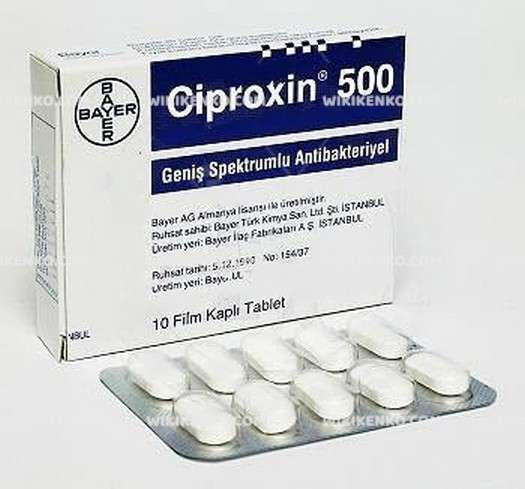
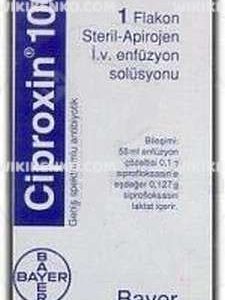
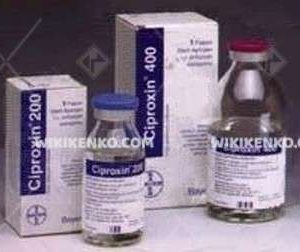
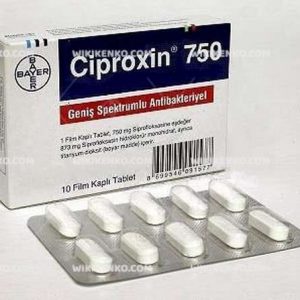
Each Ciproxin film‑coated tablet 500 mg contains 582 mg ciprofloxacin hydrochloride (monohydrate), corresponding to 500 mg ciprofloxacin as the active substance. The tablet core typically includes excipients such as microcrystalline cellulose, maize starch, crospovidone, colloidal anhydrous silica, and magnesium stearate to ensure adequate tablet hardness, disintegration, and manufacturability. The film coat usually consists of hypromellose, macrogol (polyethylene glycol), and titanium dioxide, which provide protection from light and improve swallowability.
Ciprofloxacin is chemically a fluoroquinolone carboxylic acid derivative that forms a hydrochloride monohydrate salt to improve aqueous solubility and stability. In solid oral dosage forms, this salt form allows robust analytical control by stability‑indicating high‑performance liquid chromatography (HPLC) and consistent bioavailability.
Mechanism of Action and Antibacterial Spectrum
Ciprofloxacin exerts a bactericidal effect by inhibiting bacterial DNA gyrase (topoisomerase II) and topoisomerase IV, enzymes essential for DNA replication, transcription, repair, and recombination. Inhibition of these targets leads to DNA strand breaks and ultimately bacterial cell death, particularly in rapidly dividing organisms. Fluoroquinolones exhibit concentration‑dependent killing, with pharmacodynamic efficacy best correlated with the ratio of area under the curve (AUC) to minimum inhibitory concentration (MIC).
The agent has broad activity against many Gram‑negative organisms, including Enterobacterales (e.g. Escherichia coli, Klebsiella spp.), Pseudomonas aeruginosa, Haemophilus influenzae, and Neisseria spp., as well as some Gram‑positive bacteria such as staphylococci and streptococci, although resistance among Gram‑positives and certain Gram‑negatives is increasingly prevalent. Ciprofloxacin also shows activity against atypical pathogens and has been approved for use in post‑exposure prophylaxis and treatment of inhalational anthrax due to Bacillus anthracis.
Clinical Indications
Regulatory product information for 500 mg ciprofloxacin film‑coated tablets lists multiple systemic indications in adults, with use guided by local resistance epidemiology and official antibacterial policies. Typical indications include:
-
Complicated and uncomplicated urinary tract infections, including pyelonephritis.
-
Bacterial prostatitis.
-
Lower and upper respiratory tract infections caused by susceptible organisms (e.g. exacerbations of chronic obstructive pulmonary disease, certain pneumonias).
-
Gastrointestinal and intra‑abdominal infections (e.g. infectious diarrhoea, typhoid fever) where susceptible pathogens are documented.
-
Skin and soft tissue infections caused by susceptible Gram‑negative bacteria.
-
Bone and joint infections, often in combination with other agents.
-
Post‑exposure prophylaxis and curative therapy for inhalational anthrax.
-
Certain invasive infections due to Pseudomonas aeruginosa in appropriate clinical settings.
In paediatric populations, use is more restricted and usually reserved for serious infections (e.g. cystic fibrosis pulmonary exacerbations due to Pseudomonas aeruginosa, complicated urinary tract infections, or post‑exposure inhalational anthrax) when no alternative agents are suitable.
Posology and Method of Administration
General Dosing Principles
Ciproxin 500 mg film‑coated tablets are intended for oral administration and are typically dosed twice daily, with exact dosage and duration based on indication, pathogen susceptibility, renal function, and patient clinical status. Tablets should be swallowed whole with fluid and can be taken with or without food, but administration with dairy products or mineral‑fortified beverages should be avoided as these can reduce absorption.
Ciprofloxacin exhibits high oral bioavailability (approximately 70%) and achieves peak plasma concentrations within 1–2 hours after dosing, justifying its use as an oral step‑down therapy following parenteral treatment in many indications.
Representative Adult Oral Doses (Illustrative)
The following table summarises typical oral dosing ranges for ciprofloxacin 500 mg film‑coated tablets in adults, as described in representative product characteristics; actual prescriptions must follow specific product information and local guidelines.
| Infection type (adult) | Typical oral dose with 500 mg tablets | Usual treatment duration | Notes |
|---|---|---|---|
| Uncomplicated lower UTI | 250–500 mg twice daily | 3–7 days | Consider local resistance and alternative agents. |
| Complicated UTI / pyelonephritis | 500 mg twice daily | 7–14 days | May start i.v. then switch to oral. |
| Bacterial prostatitis | 500–750 mg twice daily | 2–4 weeks or longer | Long courses required for prostatic penetration. |
| Lower respiratory tract infection | 500–750 mg twice daily | 7–14 days | Use guided by susceptibility. |
| Gastrointestinal infections (e.g. severe travellers’ diarrhoea) | 500 mg twice daily | 1–7 days | Duration depends on pathogen and severity. |
| Bone and joint infections | 500–750 mg twice daily | Weeks to months | Often combined with other antibiotics. |
| Post‑exposure inhalational anthrax | 500 mg twice daily | 60 days | Initiated as soon as possible after exposure. |
Dose adjustment is necessary in patients with impaired renal function; for creatinine clearance below defined thresholds, dosing frequency or dose magnitude should be reduced according to product‑specific recommendations.
Pharmacokinetic and Pharmacodynamic Properties
After oral dosing of 500 mg ciprofloxacin, peak plasma levels typically range between approximately 2–3 mg/L, with linear pharmacokinetics within the usual therapeutic range. The drug distributes widely into tissues and body fluids, including the urinary tract, lungs, prostate, bone, and gastrointestinal tract, achieving concentrations often exceeding plasma levels. Protein binding is moderate, and the apparent volume of distribution supports effective tissue penetration.
Ciprofloxacin is eliminated via both renal and non‑renal pathways, with about 40–50% excreted unchanged in urine and additional amounts as metabolites or via faeces. The elimination half‑life in subjects with normal renal function is approximately 4 hours, and accumulation is modest with twice‑daily dosing. Pharmacodynamically, efficacy correlates with achieving target AUC/MIC and Cmax/MIC ratios against the causative pathogen, underpinning recommendations for adequate dosing particularly in severe infections and for organisms with higher MICs.
Contraindications
Ciprofloxacin‑containing products such as Ciproxin film‑coated tablets 500 mg are contraindicated in several settings:
-
Hypersensitivity to ciprofloxacin, other quinolones, or any excipient.
-
History of serious adverse reactions (e.g. tendinopathy) associated with fluoroquinolone or quinolone therapy.
-
Concomitant use with tizanidine due to risk of profound hypotension and sedation from CYP1A2 inhibition.
-
Use in children or adolescents for non‑approved indications where risk–benefit has not been established (product‑ and guideline‑dependent).
Patients with known glucose‑6‑phosphate dehydrogenase deficiency are at increased risk of haemolytic reactions and should generally avoid ciprofloxacin unless benefits clearly outweigh risks.
Warnings and Precautions
Fluoroquinolones as a class, including ciprofloxacin, require stringent risk mitigation due to rare but serious adverse events.
Key warnings include:
-
Tendinitis and tendon rupture (particularly Achilles tendon), sometimes bilateral, which may occur within 48 hours of treatment or months after discontinuation; risk is increased in older patients, those on systemic corticosteroids, and transplant recipients.
-
Peripheral neuropathy, potentially irreversible, presenting with pain, burning, paraesthesia, or weakness.
-
Central nervous system effects, including seizures, increased intracranial pressure, psychosis, anxiety, depression, or suicidal thoughts, particularly in patients with pre‑existing CNS disorders.
-
QT interval prolongation and risk of arrhythmias, especially in patients with existing QT prolongation, electrolyte abnormalities, or concomitant use of QT‑prolonging drugs.
-
Dysglycaemia (hypoglycaemia or hyperglycaemia), particularly in diabetic patients taking hypoglycaemic agents.
-
Risk of Clostridioides difficile‑associated diarrhoea due to alteration of gut flora.
Photosensitivity reactions can occur, so exposure to intense sunlight or UV radiation should be minimised during therapy. Ciprofloxacin can promote selection of resistant organisms during prolonged or repeated treatment; therefore, its use should be limited to indications where benefit is clearly demonstrated and supported by susceptibility data.
Drug–Drug Interactions
Ciprofloxacin participates in multiple clinically relevant interactions through effects on cytochrome P450 enzymes, transporters, and chelation with polyvalent cations.
-
Strong inhibition of CYP1A2 can lead to increased plasma concentrations of substrates such as theophylline, tizanidine (contraindicated), clozapine, and certain psychotropic agents; dose adjustments or avoidance may be needed.
-
Concomitant administration with antacids, sucralfate, or supplements containing magnesium, aluminium, calcium, iron, or zinc can substantially reduce ciprofloxacin absorption; these products should be taken several hours apart.
-
Co‑administration with warfarin and other vitamin K antagonists may enhance anticoagulant effect, necessitating closer monitoring of coagulation parameters.
-
Interactions with certain anti‑arrhythmics, tricyclic antidepressants, macrolides, and antipsychotics can further increase QT‑prolongation risk.
Careful medication review is essential before initiating Ciproxin 500 mg in order to mitigate interaction‑related adverse outcomes.
Adverse Reactions
The safety profile of ciprofloxacin 500 mg film‑coated tablets is consistent with that of systemic fluoroquinolones, with most adverse reactions being mild to moderate and reversible, but with rare serious events necessitating prompt discontinuation.
Commonly reported adverse reactions include:
-
Gastrointestinal: nausea, diarrhoea, vomiting, abdominal pain.
-
Central nervous system: headache, dizziness, insomnia.
-
Skin: rash, pruritus, photosensitivity reactions.
-
Laboratory changes: transient elevations of liver enzymes or creatinine.
Uncommon to rare but serious reactions encompass tendinitis, tendon rupture, peripheral neuropathy, psychosis, seizures, severe cutaneous adverse reactions (e.g. Stevens–Johnson syndrome), and fulminant hepatitis. Fluoroquinolone‑associated disability (FQAD), characterised by long‑term, multi‑system symptoms, has prompted regulatory warnings and more restrictive prescribing recommendations.
Pharmaceutical Quality and Stability
Stability‑indicating methods based on reverse‑phase HPLC have been developed and validated for quantitative assay of ciprofloxacin hydrochloride in solid dosage forms, allowing separation of degradation products from the parent drug and ensuring product quality throughout shelf‑life. Such analytical methods demonstrate linearity over a broad concentration range (typically 50–150% of target), high specificity, and adequate precision, fulfilling ICH requirements for routine quality control.
Ciprofloxacin hydrochloride monohydrate exhibits specific degradation pathways under stress conditions such as acid or base hydrolysis, oxidation, and light exposure, which are addressed by appropriate formulation, packaging, and storage recommendations in the product documentation. Film coating and inclusion of stabilising excipients support maintenance of potency and minimisation of photodegradation for Ciproxin 500 mg tablets.
Special Populations
In patients with reduced renal function, dosage adjustment is mandatory to avoid excessive systemic exposure and minimise toxicity, typically by prolonging dosing intervals or lowering doses according to creatinine clearance. In hepatic impairment, dose modification is usually not required, as renal excretion predominates, but caution is advised in severe hepatic disease in combination with renal dysfunction.
Use during pregnancy is generally not recommended due to concerns from animal data about effects on developing cartilage, although human data have not conclusively demonstrated a major teratogenic risk; ciprofloxacin should be reserved for situations where benefits outweigh potential risks. Ciprofloxacin is excreted in breast milk, and breastfeeding is usually discouraged during therapy or should be temporarily interrupted, depending on national recommendations.
Summary and Clinical Considerations
Ciproxin Film‑Coated Tablet 500 mg (ciprofloxacin hydrochloride monohydrate equivalent to 500 mg ciprofloxacin) is a broad‑spectrum fluoroquinolone antibiotic indicated for a range of moderate to severe bacterial infections, especially those caused by susceptible Gram‑negative organisms. Its clinical utility arises from favourable oral pharmacokinetics and excellent tissue penetration, supporting both monotherapy in selected infections and combination regimens in complex disease.
However, due to its association with serious, sometimes irreversible adverse reactions and increasing antimicrobial resistance, ciprofloxacin use must be guided by careful risk–benefit assessment, microbiological data, and antimicrobial stewardship principles. For any specific product such as a Turkish‑marketed “Ciproxin 500 mg film‑coated tablet,” prescribers and pharmacists should consult the current local Summary of Product Characteristics or equivalent regulatory document for precise indications, dosing, and safety information.












Reviews
There are no reviews yet.