

Description
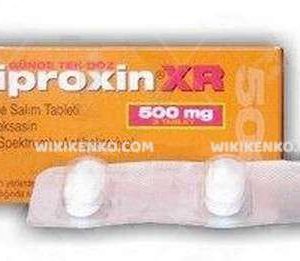
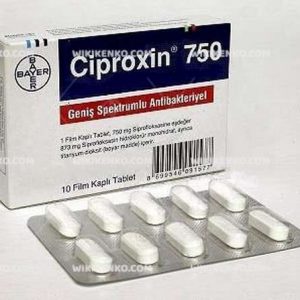
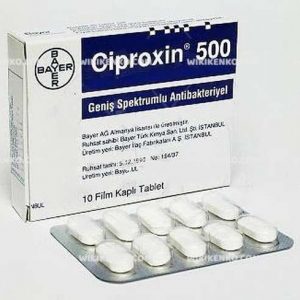
Ciproxin XR modified‑release tablet 1000 mg is a prolonged‑release oral formulation of ciprofloxacin, a synthetic fluoroquinolone antibacterial agent. Each extended‑release tablet contains 1000 mg ciprofloxacin equivalent, typically as a combination of ciprofloxacin hydrochloride and ciprofloxacin base embedded in a biphasic, hydrophilic matrix that delivers an initial immediate‑release fraction followed by sustained release. Comparable reference products include CIPRO XR and Proquin XR, which are approved for once‑daily management of urinary tract infections and are not interchangeable with conventional immediate‑release ciprofloxacin tablets on a milligram‑to‑milligram basis.
From a regulatory perspective, ciprofloxacin extended‑release products are registered as prescription‑only medicines, with indications restricted largely to uncomplicated and complicated urinary tract infections (UTI) and acute uncomplicated pyelonephritis in adults. Labeling emphasizes serious class‑related safety concerns, including tendon disorders, peripheral neuropathy, central nervous system effects, dysglycemia, and rare but severe hypersensitivity reactions, which guide cautious, indication‑focused use.
Qualitative and Quantitative Composition
Extended‑release ciprofloxacin 1000 mg tablets typically contain:
-
Ciprofloxacin 1000 mg (as ciprofloxacin hydrochloride plus ciprofloxacin base in defined proportions)
-
Film‑coating excipients and matrix‑forming polymers (for example, hydrophilic cellulose derivatives and excipients enabling biphasic release)
-
Standard tablet excipients such as fillers, binders, and lubricants (details may vary by manufacturer)
The tablet is usually oblong, biconvex, film‑coated, and designed to be swallowed whole; crushing, chewing, or splitting the tablet disrupts the modified‑release characteristics and is therefore discouraged.
Mechanism of Action
Ciprofloxacin exerts bactericidal activity by inhibiting bacterial DNA gyrase and topoisomerase IV, enzymes essential for DNA replication, transcription, repair, and recombination. Inhibition of these enzymes leads to DNA strand breaks and rapid bacterial cell death, particularly in actively dividing Gram‑negative organisms such as Escherichia coli, the predominant pathogen in uncomplicated and complicated UTIs. Fluoroquinolones in general show concentration‑dependent killing, and the pharmacodynamic driver of efficacy is the ratio of area under the concentration–time curve to the minimum inhibitory concentration (AUC/MIC), which the extended‑release design is intended to optimize over the 24‑hour dosing interval.
Pharmacokinetics and Modified‑Release Characteristics
Absorption and Bioavailability
After oral administration of ciprofloxacin extended‑release tablets, peak plasma concentrations are typically achieved within approximately 1 to 4 hours. The extended‑release matrix of CIPRO XR‑type products delivers about 35% of the total dose as an immediate‑release fraction, with the remaining 65% embedded in a slow‑release matrix that maintains ciprofloxacin plasma concentrations over 24 hours. Systemic exposure (AUC) achieved with CIPRO XR 500 mg once daily is comparable to that of immediate‑release ciprofloxacin 250 mg twice daily, and the same principle applies to the 1000 mg once‑daily regimen relative to 500 mg twice daily, although Cmax values differ modestly.
Distribution, Metabolism and Elimination
Ciprofloxacin distributes extensively into tissues and fluids, including the renal parenchyma and urinary tract, where high urinary concentrations provide a pharmacological basis for UTI indications. It is eliminated primarily via renal excretion, with both glomerular filtration and tubular secretion contributing, and a smaller fraction is metabolized hepatically to less active metabolites. In patients with impaired renal function, systemic exposure increases and dosage adjustment or avoidance of the 1000 mg extended‑release strength is recommended in severe renal impairment due to the risk of drug accumulation and toxicity.
Indications and Clinical Use
Extended‑release ciprofloxacin 1000 mg once daily is indicated for:
-
Complicated urinary tract infections (cUTI) caused by susceptible organisms
-
Acute uncomplicated pyelonephritis in adults, typically premenopausal, non‑pregnant women without structural or functional urological abnormalities
In contrast, lower strengths (for example 500 mg extended‑release) are indicated for uncomplicated acute cystitis. Regulatory labels emphasize that ciprofloxacin extended‑release tablets are not interchangeable with other ciprofloxacin formulations (immediate‑release tablets, oral suspension, or intravenous infusion), and specific dosing tables must be followed for each indication.
Dosage and Administration
For adults with normal renal function, guideline labeling for CIPRO XR‑type products recommends:
-
Uncomplicated acute cystitis: 500 mg once daily for 3 days
-
Complicated UTI or acute uncomplicated pyelonephritis: 1000 mg once daily for 7 to 14 days
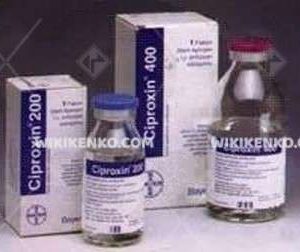
Patients started on intravenous ciprofloxacin for severe UTI or pyelonephritis may be transitioned to the oral extended‑release formulation to complete the course once clinical stabilization is achieved, using the indicated oral daily dose to maintain adequate AUC/MIC coverage. Tablets should be taken whole with fluid, preferably at approximately the same time each day, and may be administered with or without food, while avoiding concurrent ingestion with large quantities of dairy products alone or mineral‑fortified juices, which can reduce absorption.
In patients with reduced creatinine clearance, the total daily dose of extended‑release ciprofloxacin should be reduced, and product labeling specifies that 1000 mg extended‑release tablets are not recommended in severe renal impairment. Extended‑release ciprofloxacin is not routinely recommended in pediatric patients due to safety concerns (tendinopathy, musculoskeletal toxicity) except in carefully selected cases under specialist guidance.
Contraindications and Key Warnings
Absolute contraindications for ciprofloxacin extended‑release therapy include:
-
Known hypersensitivity to ciprofloxacin, other quinolones, or any excipient
-
Concurrent administration with tizanidine due to profound increases in tizanidine exposure and risk of severe hypotension and sedation
-
History of serious fluoroquinolone‑associated tendon disorder related to previous quinolone use
-
Documented myasthenia gravis, where exacerbation of muscle weakness may occur
Regulatory warnings describe potentially irreversible adverse effects such as tendinitis and tendon rupture, peripheral neuropathy, and central nervous system effects (for example agitation, psychosis, seizures) that may occur after the first dose, warranting immediate discontinuation if such manifestations arise. Additional boxed or highlight warnings address risks of Clostridioides difficile‑associated diarrhea, QT prolongation and torsades de pointes, dysglycemia (both hypo‑ and hyperglycemia, particularly in diabetics), hepatotoxicity, and a possible association with aortic aneurysm and dissection.
Adverse Reactions
Common and Serious Adverse Effects
Commonly reported adverse reactions with ciprofloxacin extended‑release regimens include nausea, diarrhea, vomiting, abdominal pain, headache, dizziness, rash, and transient elevations of hepatic transaminases. Post‑marketing and clinical trial data further identify a broad spectrum of less frequent but clinically important reactions such as photosensitivity or phototoxicity, pruritus, urticaria, and vaginitis, including fungal and bacterial etiologies.
Serious reactions documented across ciprofloxacin formulations include acute generalized exanthematous pustulosis, Stevens–Johnson syndrome and related severe cutaneous adverse reactions, anaphylactic reactions with cardiovascular collapse, seizures, status epilepticus, toxic psychosis, hallucinations, severe hepatotoxicity, hemolytic anemia, agranulocytosis, and life‑threatening pancytopenia. Long‑term adverse outcomes may involve persistent tendon damage, chronic peripheral neuropathy, and prolonged dysglycemic episodes, leading regulatory agencies to restrict systemic fluoroquinolone use to situations without appropriate alternatives for certain mild infections.
Adverse Reaction Overview Table
The following table summarizes selected adverse reactions associated with ciprofloxacin extended‑release therapy, grouped by organ system:
| System/Category | Common reactions (≥1%) | Important serious or rare reactions |
|---|---|---|
| Gastrointestinal | Nausea, diarrhea, vomiting, abdominal pain | C. difficile‑associated diarrhea, gastrointestinal bleeding, pancreatitis |
| Hepatic | Mild ALT/AST elevations | Severe hepatotoxicity, cholestatic jaundice, liver failure |
| Central nervous system | Headache, dizziness | Seizures, status epilepticus, toxic psychosis, delirium, hallucinations, increased ICP |
| Musculoskeletal/tendon | Arthralgia, joint swelling, muscle cramps | Tendinitis, tendon rupture (Achilles and others), exacerbation of myasthenia gravis |
| Peripheral nervous system | Paresthesia | Peripheral neuropathy (sensory and motor), potentially irreversible |
| Cardiovascular | Palpitations (uncommon) | QT prolongation, torsades de pointes, aortic aneurysm/dissection, cardiac arrest |
| Hypersensitivity/skin | Rash, pruritus, photosensitivity reactions | Anaphylaxis, angioedema, AGEP, erythema multiforme, exfoliative dermatitis, SJS/TEN |
| Metabolic | Mild hyperglycemia | Severe hypo‑ or hyperglycemia, especially in diabetics on hypoglycemics |
| Hematologic | Eosinophilia (uncommon) | Agranulocytosis, hemolytic anemia, pancytopenia, bleeding diathesis |
Drug Interactions
Ciprofloxacin is a moderate inhibitor of CYP1A2 and can significantly alter plasma concentrations of co‑administered drugs metabolized through this pathway. Concomitant use with tizanidine is specifically contraindicated, as ciprofloxacin markedly increases tizanidine Cmax (approximately seven‑fold) and AUC (approximately ten‑fold), enhancing hypotensive and sedative effects to a clinically dangerous degree. Co‑administration with theophylline has also been associated with serious and occasionally fatal reactions including seizures, status epilepticus, cardiac arrest, and respiratory failure due to elevated theophylline levels, and if unavoidable, close monitoring and dose reduction of theophylline are recommended.
Additional interactions include enhanced anticoagulant effect with warfarin and related agents, altered glycemic control in patients receiving antidiabetic medications, and potential additive QT prolongation with other QT‑prolonging drugs. Absorption of ciprofloxacin is reduced when co‑administered with antacids or supplements containing multivalent cations (for example aluminum, magnesium, calcium, iron, zinc); therefore, administration should be separated by several hours to minimize chelation and bioavailability loss.
Special Populations and Precautions
In elderly patients, higher baseline risk for tendon disorders, QT prolongation, and aortic pathology warrants careful risk–benefit assessment before prescribing high‑dose extended‑release ciprofloxacin. In patients with renal impairment, dose adjustments are essential to prevent accumulation, and in severe kidney disease the 1000 mg extended‑release strength is generally not recommended; a reduced 500 mg once‑daily regimen or alternative therapy may be preferred.
Use in pregnancy and lactation is usually avoided unless the expected benefit clearly outweighs potential fetal or neonatal risk, owing to concerns about cartilage toxicity observed in juvenile animal studies and limited controlled data in humans. Extended‑release ciprofloxacin is not routinely used in children and adolescents for UTIs due to musculoskeletal safety concerns, except in specific indications such as complicated infections under specialist supervision.
Clinical Efficacy in Urinary Tract Infections
Randomized clinical trials summarized in regulatory labels indicate that ciprofloxacin extended‑release 1000 mg once daily for 7–14 days in complicated UTI and acute uncomplicated pyelonephritis yields bacteriological eradication and clinical cure rates comparable to immediate‑release ciprofloxacin 500 mg twice daily, while offering a more convenient once‑daily regimen. In acute uncomplicated cystitis, a 3‑day course of 500 mg extended‑release ciprofloxacin is effective against susceptible pathogens, but stewardship principles recommend reserving fluoroquinolones for cases where first‑line agents (for example nitrofurantoin, trimethoprim‑sulfamethoxazole, fosfomycin) are inappropriate or ineffective.
The extended‑release design aims to maintain therapeutic urine and tissue concentrations over the full dosing interval, ensuring favorable PK/PD parameters such as AUC/MIC and maximal concentration/MIC ratios, which support bactericidal activity against common Gram‑negative uropathogens.
Benefit–Risk Assessment and Stewardship Considerations
Ciproxin XR‑type 1000 mg modified‑release formulations provide effective once‑daily treatment options for complicated UTI and acute uncomplicated pyelonephritis, with pharmacokinetic properties tailored to optimize fluoroquinolone PK/PD targets in the urinary tract. However, the potential for serious, sometimes irreversible adverse effects and significant drug–drug interactions necessitates judicious patient selection, adherence to labeled indications, and close monitoring, particularly in high‑risk populations such as the elderly, patients with renal impairment, and those with cardiovascular or neurologic comorbidities. Antimicrobial stewardship guidelines consistently recommend restricting systemic fluoroquinolones to situations where safer or equally effective alternatives are unsuitable, in order to minimize toxicity and preserve class utility amid rising resistance.
Essential Clinical Counseling Points
Clinicians should advise patients receiving ciprofloxacin extended‑release 1000 mg to:
-
Take the tablet once daily at the same time, swallowing it whole with fluid and avoiding crushing or chewing.
-
Avoid concurrent intake with antacids, iron, zinc, or high‑calcium products within a few hours of dosing to preserve absorption.
-
Discontinue the drug and seek medical attention immediately if they experience tendon pain or swelling, muscle weakness, paresthesia, severe rash, psychotic symptoms, seizures, or significant diarrhea.
-
Inform healthcare providers about all concomitant medications, particularly tizanidine, theophylline, warfarin, antiarrhythmic agents, antidiabetic drugs, and other QT‑prolonging or CNS‑active medications.
These measures support safe and effective use of Ciproxin XR‑like ciprofloxacin modified‑release tablets while mitigating the recognized safety risks associated with systemic fluoroquinolone therapy.












Reviews
There are no reviews yet.