
Description
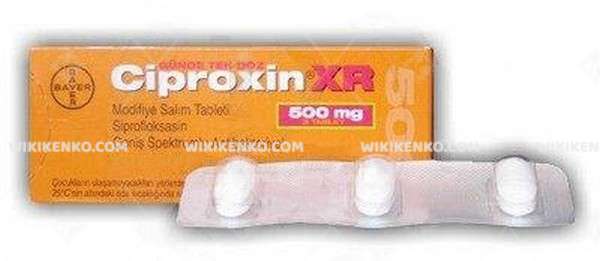
Ciproxin XR 500 mg modified‑release (MR) tablet is a once‑daily formulation of ciprofloxacin designed to provide prolonged plasma concentrations through a biphasic release profile. As a second‑generation fluoroquinolone, ciprofloxacin exhibits concentration‑dependent bactericidal activity against a broad spectrum of Gram‑negative and selected Gram‑positive bacteria. Extended‑release formulations such as Cipro XR have been developed to optimize pharmacokinetic/pharmacodynamic (PK/PD) targets, improve adherence, and simplify dosing regimens compared with immediate‑release tablets.
Pharmaceutical Composition and Formulation Design
Each Cipro XR 500 mg tablet contains 500 mg of ciprofloxacin equivalent, formulated as a combination of ciprofloxacin hydrochloride and ciprofloxacin betaine in a bilayer extended‑release tablet. The dosage form comprises an immediate‑release layer and an erosion‑matrix controlled‑release layer, enabling rapid attainment of therapeutic levels followed by sustained exposure. Excipients include crospovidone, hypromellose, magnesium stearate, polyethylene glycol, colloidal anhydrous silica, succinic acid, and titanium dioxide, contributing to tablet integrity, release control, and film coating.
The tablet is described as nearly white to slightly yellowish, film‑coated and oblong, suitable for oral administration once daily without breaking or chewing to preserve the modified‑release characteristics. Pharmaceutical design aims to maintain adequate ciprofloxacin concentrations over 24 hours to achieve optimal AUC/MIC ratios for susceptible uropathogens while minimizing peak‑related adverse effects.
Mechanism of Action and Antimicrobial Activity
Ciprofloxacin acts by inhibiting bacterial DNA gyrase (topoisomerase II) and topoisomerase IV, enzymes essential for DNA replication, transcription, repair, and recombination. Inhibition of these targets leads to double‑strand DNA breaks and rapid bacterial cell death, with activity that is predominantly concentration‑dependent and associated with a post‑antibiotic effect. Ciprofloxacin demonstrates potent in vitro activity against a wide range of aerobic Gram‑negative organisms, including Escherichia coli and other Enterobacterales, Pseudomonas aeruginosa, and Haemophilus influenzae, as well as selected Gram‑positive pathogens such as Staphylococcus aureus (methicillin‑susceptible) and some streptococci.
Susceptibility breakpoints for ciprofloxacin are defined by organizations such as EUCAST and CLSI, with typical non‑species related breakpoints of susceptible ≤0.5 mg/L and resistant >1 mg/L for many Gram‑negative bacilli. The emergence of resistance, often mediated by mutations in gyrA and parC or via plasmid‑encoded qnr genes and efflux pumps, has significant clinical implications and necessitates judicious use. Therefore, Ciproxin XR should be reserved for infections caused by organisms known or strongly suspected to be susceptible, and local resistance epidemiology should inform empirical prescribing.
Pharmacokinetics and Pharmacodynamics
Absorption and bioavailability
Ciprofloxacin extended‑release tablets are designed to deliver ciprofloxacin over an extended period, with systemic exposure (AUC) comparable to equivalent total daily doses of immediate‑release ciprofloxacin, but with lower peak and higher trough concentrations. After oral administration of 500 mg Cipro XR once daily, peak plasma concentrations are typically achieved within several hours, and food may delay but does not significantly reduce overall bioavailability. Absolute bioavailability of oral ciprofloxacin is approximately 70%, and extended‑release formulations maintain similar bioavailability while modifying the concentration–time profile.
Distribution, metabolism and elimination
Ciprofloxacin exhibits a large apparent volume of distribution, with extensive penetration into urine, kidney tissue, and other body fluids and tissues relevant to urinary tract and systemic infections. Plasma protein binding is low to moderate, facilitating tissue distribution and renal filtration. Elimination occurs via both renal and non‑renal pathways, with a terminal half‑life of approximately 4 to 5 hours in subjects with normal renal function, supporting once‑daily dosing in an extended‑release formulation.
PK/PD considerations
For fluoroquinolones, the principal PK/PD indices associated with efficacy are the ratio of the area under the concentration–time curve over 24 hours to the minimum inhibitory concentration (AUC24/MIC) and the peak concentration to MIC ratio (Cmax/MIC). Extended‑release ciprofloxacin aims to maximize AUC24/MIC while smoothing peak levels, aligning with the concentration‑dependent killing and reducing dosing frequency to once daily. In comparative clinical pharmacology, regimens such as 500 mg once daily Cipro XR have been shown to provide exposures similar to 250 mg twice daily immediate‑release ciprofloxacin for susceptible uropathogens.
Indications and Clinical Uses
Regulatory labeling for Cipro XR extended‑release ciprofloxacin tablets includes indications for complicated urinary tract infections (cUTI), acute uncomplicated pyelonephritis (AUP) in appropriate adult populations, and, in some jurisdictions, uncomplicated urinary tract infections (acute cystitis) where alternative agents are unsuitable. Use in uncomplicated cystitis is generally restricted due to safety concerns with fluoroquinolones and the availability of safer alternatives; guidelines recommend reserving ciprofloxacin for cases in which other options cannot be used. Ciproxin XR 500 mg would typically correspond to dosing regimens for uncomplicated UTI or lower‑dose cUTI treatment, whereas 1000 mg formulations are used for more severe infections such as AUP.
Appropriate use requires microbiological documentation or strong suspicion of infection due to ciprofloxacin‑susceptible organisms, often supported by urine culture and susceptibility testing. Off‑label uses or use in non‑urinary infections must be guided by local product information, clinical guidelines, and risk–benefit assessment due to the established risk profile of systemic fluoroquinolones.
Dosage Regimens and Administration
For adults with normal renal function, typical extended‑release ciprofloxacin dosing recommended in prescribing information is 500 mg once daily for 3 days for uncomplicated urinary tract infections (acute cystitis) and 1000 mg once daily for 7 to 14 days for complicated UTI and acute uncomplicated pyelonephritis, depending on clinical response and pathogen susceptibility. Dose adjustments are required in patients with renal impairment, with extended dosing intervals or reduced doses to prevent accumulation and toxicity. Tablets should be swallowed whole with fluid, preferably at approximately the same time each day, and should not be split, crushed, or chewed to avoid compromising the modified‑release mechanism.
Concomitant administration with multivalent cation‑containing products such as antacids, sucralfate, iron, or zinc supplements can substantially reduce ciprofloxacin absorption; therefore, such products should be taken several hours before or after Ciproxin XR. Adequate hydration is recommended to reduce the risk of crystalluria and maintain urine flow, particularly in patients with pre‑existing renal dysfunction or concomitant nephrotoxic drugs.
Contraindications and Major Warnings
Ciprofloxacin extended‑release tablets are contraindicated in patients with known hypersensitivity to ciprofloxacin, other quinolones, or any component of the formulation. Use is also contraindicated in patients with a history of serious adverse reactions associated with fluoroquinolone use, including tendon disorders related to quinolone therapy.
Regulatory warnings highlight risks of disabling and potentially irreversible adverse reactions involving tendons, muscles, joints, nerves, and the central nervous system, which may occur together in the same patient. Consequently, fluoroquinolones such as ciprofloxacin should be reserved for patients who have no alternative treatment options for acute uncomplicated infections, and therapy should be discontinued immediately at the first sign of serious adverse effects. Additional boxed or prominent warnings in prescribing information include increased risk of tendinitis and tendon rupture (especially in older patients, those on corticosteroids, or transplant recipients), peripheral neuropathy, CNS effects (seizures, psychosis), and exacerbation of myasthenia gravis.
Adverse Reactions and Safety Profile
Common adverse reactions to ciprofloxacin include gastrointestinal symptoms (nausea, diarrhea, abdominal pain), central nervous system effects (headache, dizziness), and laboratory abnormalities such as transient elevations of liver enzymes. Serious but less frequent reactions include tendonitis and tendon rupture, peripheral neuropathy, central nervous system toxicity (seizures, psychotic reactions, confusion), QT interval prolongation, hepatotoxicity, hypersensitivity reactions including anaphylaxis, hemolytic anemia in predisposed patients, and Clostridioides difficile‑associated diarrhea.
In clinical trials of Cipro XR for uncomplicated UTI and cUTI/AUP, the incidence and spectrum of adverse reactions were broadly similar to those observed with immediate‑release ciprofloxacin, although the extended‑release profile may modulate peak‑related effects. Post‑marketing surveillance has further characterized rare but clinically significant reactions, leading to strengthened regulatory warnings and recommendations to limit indications.
Selected adverse effects summarized in table
| Adverse reaction category | Examples and characteristics | Clinical implications |
|---|---|---|
| Musculoskeletal | Tendinitis, tendon rupture (especially Achilles), arthralgia; more common in older adults and corticosteroid users. | Discontinue at first tendon pain; avoid in history of quinolone‑related tendon disorders. |
| Neurological/CNS | Headache, dizziness, seizures, tremor, peripheral neuropathy with paraesthesia or dysesthesia, psychosis, agitation. | Contraindicated or used with caution in seizure disorders; stop drug if neuropathic symptoms develop. |
| Cardiovascular | QT prolongation, arrhythmias especially with other QT‑prolonging agents or in predisposed patients. | Use cautiously in patients with known QT prolongation, electrolyte disorders, or on class IA/III antiarrhythmics. |
| Gastrointestinal | Nausea, vomiting, diarrhea; risk of C. difficile‑associated diarrhea and colitis. | Consider discontinuation and specific treatment if severe or persistent diarrhea occurs. |
| Hepatic and metabolic | Elevated transaminases, cholestatic jaundice, rare severe hepatotoxicity; dysglycemia especially in diabetics. | Monitor liver function and blood glucose in at‑risk patients; discontinue if serious liver injury suspected. |
| Hypersensitivity/immune | Rash, pruritus, urticaria, anaphylaxis, vasculitis. | Immediate discontinuation and emergency treatment for anaphylactic reactions. |
Special Populations and Precautions
Ciprofloxacin should generally be avoided in children and adolescents except for specific approved indications (such as complicated urinary tract infections and pyelonephritis due to E. coli or inhalational anthrax) because of concerns regarding cartilage toxicity observed in juvenile animals. In older adults, the risk of tendon rupture, QT prolongation, dysglycemia, and other serious adverse effects is higher, necessitating careful risk–benefit evaluation and monitoring. Patients with renal impairment require dose adjustment and close observation, as impaired clearance may increase systemic exposure and toxicity.
Use in pregnancy is generally not recommended because of limited human data and concerns extrapolated from animal studies, while ciprofloxacin is excreted in breast milk and breastfeeding decisions should balance infant exposure against maternal benefit. Patients with a history of seizures, psychiatric disorders, significant cardiac arrhythmias, or myasthenia gravis should be treated cautiously or prescribed alternative agents where possible.
Drug–Drug Interactions
Ciprofloxacin is a moderate inhibitor of CYP1A2 and can increase plasma concentrations of substrates such as theophylline, tizanidine, and certain psychotropic drugs, potentially resulting in serious toxicity. Concomitant administration with tizanidine is contraindicated in some product labels due to marked increases in tizanidine exposure and associated hypotension and sedation. Co‑administration with warfarin and other vitamin K antagonists can potentiate anticoagulant effects and increase bleeding risk, necessitating close INR monitoring and dose adjustments.
Absorption of ciprofloxacin is reduced by polyvalent cation‑containing products including antacids, sucralfate, and formulations containing calcium, magnesium, aluminum, iron, or zinc; these should be taken several hours apart from Ciproxin XR to preserve effective exposure. Combined use with other drugs that prolong the QT interval, or with systemic corticosteroids, requires particular caution because of additive risks of arrhythmia and tendon rupture respectively.
Antimicrobial Stewardship and Resistance Considerations
Fluoroquinolone resistance among urinary pathogens, especially E. coli, has increased globally, limiting the empirical utility of ciprofloxacin in many regions. Misuse and overuse of broad‑spectrum agents such as ciprofloxacin contribute to selection of resistant organisms and collateral damage, including disruption of the intestinal microbiota and promotion of C. difficile infection. Stewardship principles therefore recommend reserving ciprofloxacin, including extended‑release formulations such as Ciproxin XR 500 mg, for situations where narrower‑spectrum antibiotics are inappropriate or ineffective and where susceptibility is documented or highly probable.
Clinical decision‑making should integrate local antibiogram data, patient‑specific risk factors, and updated regulatory guidance, recognizing that some national authorities have restricted or contraindicated fluoroquinolones for mild or self‑limiting infections. Within this framework, the modified‑release design of Ciproxin XR provides pharmacological advantages for once‑daily therapy, but does not alter the fundamental need for cautious, evidence‑based use of ciprofloxacin.
Summary of Key Pharmaceutical and Clinical Characteristics (Table)
| Domain | Ciproxin XR 500 mg (ciprofloxacin extended‑release) |
|---|---|
| Active substance | Ciprofloxacin (as ciprofloxacin hydrochloride and ciprofloxacin betaine). |
| Dosage form | Oral extended‑release bilayer tablet, immediate‑release plus erosion‑matrix controlled‑release layers. |
| Strength | 500 mg ciprofloxacin equivalent per tablet. |
| Typical adult dosing | 500 mg once daily for selected uncomplicated UTIs; 1000 mg once daily for cUTI/AUP (duration 3–14 days depending on indication and response). |
| Main indications | Complicated urinary tract infection, acute uncomplicated pyelonephritis, and selected cases of uncomplicated cystitis when no alternatives are appropriate (jurisdiction‑dependent). |
| PK profile | High oral bioavailability; extended exposure with once‑daily dosing; dual renal and non‑renal elimination; half‑life ~4–5 hours. |
| Key warnings | Tendonitis/tendon rupture, disabling and potentially irreversible tendinopathy, peripheral neuropathy, CNS toxicity, QT prolongation, dysglycemia, myasthenia gravis exacerbation, serious hypersensitivity. |
| Major interactions | Polyvalent cations (reduced absorption), CYP1A2 substrates (e.g. theophylline, tizanidine), warfarin and other anticoagulants, other QT‑prolonging agents, systemic corticosteroids. |
Important Note
Naming, indications, and regulatory status of Ciproxin XR 500 mg modified‑release tablets may differ by country, and local product information from the national medicines agency or marketing authorization holder should always be consulted for definitive prescribing details. This overview is not a substitute for a full summary of product characteristics or individual clinical judgment, and any therapeutic decision must be tailored to the patient’s condition, comorbidities, and current guidelines.












Reviews
There are no reviews yet.