
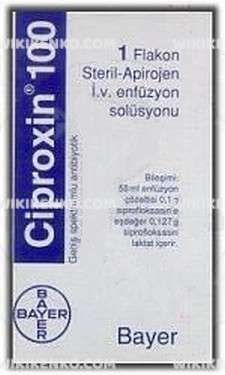
Description
Ciproxin Infusion 100 mg is supplied as a ready‑to‑use solution for intravenous infusion containing ciprofloxacin in the form of its lactate salt. Each 50 ml glass bottle contains 127.2 mg ciprofloxacin lactate, equivalent to 100 mg ciprofloxacin (2 mg/ml) in an aqueous isotonic medium.
Excipients typically include lactic acid (as solubilizing and pH‑adjusting agent), sodium chloride to ensure approximate isotonicity, hydrochloric acid and/or sodium hydroxide for pH adjustment, and water for injections. The pH of ciprofloxacin lactate infusion solutions is usually slightly acidic, often in the range of approximately 3.3–4.6, which contributes to drug solubility and stability during storage.
Pharmaceutical Form, Packaging, and Physicochemical Properties
The medicinal product is presented as a clear, sterile solution for infusion in Type I glass bottles or vials with elastomeric stoppers suitable for aseptic withdrawal or direct connection to infusion equipment. The concentration is 2 mg/ml ciprofloxacin, allowing dose flexibility via volume adjustment while maintaining physicochemical stability.
Ciprofloxacin lactate is a water‑soluble salt; lactic acid improves solubilization relative to less soluble ciprofloxacin forms and enables production of ready‑to‑infuse solutions without reconstitution. The solution is generally free of preservatives and should be used in a single patient according to aseptic technique, with limited in‑use stability after opening due to microbiological considerations.
Mechanism of Action and Antibacterial Spectrum
Ciprofloxacin is a second‑generation fluoroquinolone that exerts a bactericidal effect by inhibiting bacterial DNA gyrase (topoisomerase II) and topoisomerase IV, enzymes essential for DNA replication, transcription, repair, and recombination. Inhibition leads to double‑strand DNA breaks and rapid bacterial cell death, particularly in actively dividing cells.
The agent has broad‑spectrum activity against many Gram‑negative pathogens including Enterobacteriaceae, Pseudomonas aeruginosa, Haemophilus influenzae, Neisseria species, and some Gram‑positive organisms such as Staphylococcus aureus and Streptococcus species, although susceptibility of Gram‑positives is more variable and region‑dependent. Activity against anaerobes is limited; consequently, combination therapy with anti‑anaerobic agents may be required for mixed infections.
Clinical Indications
Approved Systemic Indications (typical for IV ciprofloxacin)
Intravenous ciprofloxacin (as lactate or related salts) is generally indicated in adults for moderate to severe infections caused by susceptible organisms, including:
-
Lower respiratory tract infections (e.g., hospital‑acquired pneumonia, complicated bronchopulmonary infections in cystic fibrosis)
-
Complicated urinary tract infections and acute pyelonephritis
-
Intra‑abdominal infections (usually in combination with appropriate anaerobic coverage)
-
Skin and soft tissue infections caused by susceptible Gram‑negative pathogens
-
Bone and joint infections
-
Gynecological infections (e.g., pelvic inflammatory disease) when caused by susceptible organisms
-
Bacteremia/septicemia in association with the above primary infection sites
-
Inhalational anthrax post‑exposure prophylaxis and treatment, when recommended by national guidelines
Pediatric use is typically restricted to complicated urinary tract infections and pyelonephritis, as well as inhalational anthrax post‑exposure, when potential benefit outweighs musculoskeletal risks. Local product information must be consulted because specific indications and age limits are jurisdiction‑dependent.
Off‑Label and Specialized Uses
Ciprofloxacin infusions may be used off‑label for severe infections due to multidrug‑resistant Gram‑negative bacilli where susceptibility is documented and other options are limited. Use under such circumstances should be guided by infectious‑disease specialists, microbiological data, and institutional antimicrobial stewardship protocols.
Posology and Method of Administration
Recommended Dosing Regimens in Adults
Standard regimens for intravenous ciprofloxacin 2 mg/ml solutions are weight‑ and indication‑dependent, with typical adult doses:
-
200–400 mg every 12 hours for many infections
-
Up to 400 mg every 8 hours for severe or life‑threatening infections, especially in Pseudomonas aeruginosa infections
The 100 mg/50 ml strength is usually employed for lower total daily doses, dose escalation from oral regimens, or in patients requiring reduced dosing (e.g., certain renal impairments), while higher strengths (200 mg/100 ml, 400 mg/200 ml) are commonly used for standard and high‑dose regimens.
Dose adjustment based on creatinine clearance is recommended, with prolongation of dosing intervals or reduction in dose for patients with significant renal impairment. In patients undergoing hemodialysis, dosing typically occurs after dialysis sessions, guided by local protocols.
Intravenous Infusion Technique
Ciproxin Infusion 100 mg should be administered only by slow intravenous infusion in a large vein. For 100–200 mg doses (50–100 ml solution), an infusion duration of at least 30 minutes is recommended; for 400 mg (usually 200 ml), at least 60 minutes is advised to reduce the risk of local venous irritation and transient hypotension.
The infusion solution may be administered via a dedicated line or Y‑site with compatible fluids such as 0.9% sodium chloride or 5–10% glucose, provided compatibility has been verified. Rapid bolus injection must be avoided.
Pharmacokinetics
Absorption and Bioavailability
After intravenous infusion, ciprofloxacin achieves high systemic bioavailability by direct entry into the circulation, bypassing first‑pass metabolism. In clinical studies, a 60‑minute IV infusion of 200 mg or 400 mg produces mean peak serum concentrations of approximately 2.1 µg/ml and 4.6 µg/ml respectively, with levels at 12 hours of about 0.1–0.2 µg/ml.
Oral bioavailability of ciprofloxacin is approximately 70%, allowing straightforward switching between oral and IV routes; a 400 mg IV dose roughly corresponds to 500–750 mg orally in systemic exposure terms, although exact equivalence varies.
Distribution
Ciprofloxacin exhibits a steady‑state volume of distribution of around 2–3 l/kg, reflecting extensive penetration into extravascular compartments and tissues such as lungs, kidneys, liver, gallbladder, urogenital tract, and bone. Protein binding is relatively low (20–40%), which facilitates tissue diffusion and contributes to concentration‑dependent bactericidal activity.
Metabolism and Elimination
Ciprofloxacin is eliminated by both renal and non‑renal routes; 40–50% of a dose is excreted unchanged in urine and a smaller fraction in feces, with additional clearance via metabolism and biliary excretion. The elimination half‑life in individuals with normal renal function is typically about 4 hours, prolonging in renal impairment and necessitating dose adjustment.
Compatibility and Stability Considerations
Compatibility studies demonstrate that ciprofloxacin lactate infusions are stable and compatible with standard isotonic saline, various glucose solutions, and certain mixed dextrose‑saline solutions when stored and administered under recommended conditions. Some Y‑site incompatibilities have been described, notably with sodium bicarbonate solutions and other agents that markedly alter pH or cause precipitation, emphasizing the need to avoid untested mixtures.
Chemical stability is maintained for the shelf‑life if the product is stored in the original container, protected from excessive heat and direct sunlight, and not frozen. After opening, use should be immediate or within a short, specified period, as microbiological contamination—not chemical degradation—typically limits in‑use stability.
Therapeutic Indications and Dosing (Tabular Overview)
The following table summarizes typical adult indications and dosing patterns for IV ciprofloxacin solutions (2 mg/ml), including strengths that correspond to Ciproxin Infusion 100 mg; exact regimens must follow local product information and clinical judgment.
| Clinical situation (adult) | Typical daily dose (IV) | Frequency | Usual duration | Notes on Ciproxin 100 mg infusion use |
|---|---|---|---|---|
| Complicated UTI / pyelonephritis | 200–400 mg twice daily | Every 12 h | 7–14 days (as clinically indicated) | 100 mg/50 ml may be used in renal impairment or step‑down from higher doses |
| Hospital‑acquired pneumonia | 400 mg every 8–12 h | Every 8–12 h | 10–14 days or per guidelines | Initial therapy often uses 400 mg; 100 mg strength less commonly used as monodose in this setting |
| Intra‑abdominal infection (with anaerobic cover) | 400 mg every 12 h | Every 12 h | 7–14 days | May switch to oral route once clinically improved |
| Skin and soft tissue infection | 400 mg every 12 h | Every 12 h | 7–14 days | Dose adaptation based on sensitivity and severity |
| Bone and joint infection | 400 mg every 12 h | Every 12 h | Up to weeks–months | Often in combination regimens; switch to oral as soon as feasible |
| Bacteremia/septicemia | 400 mg every 8–12 h | Every 8–12 h | Individualized (≥10–14 days) | High‑dose IV therapy, with close monitoring |
| Inhalational anthrax (post‑exposure) | 400 mg every 12 h | Every 12 h | Total 60 days (IV then oral) | 100 mg/50 ml may be used to titrate dose in special populations |
This table is illustrative and does not replace official prescribing information or local guidelines.
Contraindications
Ciproxin Infusion 100 mg shares the class contraindications of fluoroquinolones:
-
Known hypersensitivity to ciprofloxacin, other quinolones, or any excipient
-
History of serious adverse reaction (e.g., tendinopathy) associated with fluoroquinolone therapy
-
Concomitant administration with tizanidine, due to risk of profound hypotension and CNS depression (where this interaction is included in local labelling)
-
Use in pediatric patients and adolescents is generally restricted to specific indications because of concerns about effects on developing cartilage
Caution or avoidance is suggested in patients with a history of fluoroquinolone‑associated aortic aneurysm or dissection when alternative options are available, in line with evolving safety communications; clinicians should refer to the most recent regulatory safety updates for their region.
Warnings, Precautions, and Special Populations
Tendinopathy and Musculoskeletal Effects
Fluoroquinolones, including ciprofloxacin, are associated with an increased risk of tendinitis and tendon rupture, particularly of the Achilles tendon, which may occur during therapy or months after discontinuation. Risk factors include advanced age, concomitant corticosteroid therapy, renal dysfunction, and prior tendon disorders; therapy should be discontinued at the first sign of tendon pain, swelling, or inflammation.
Central Nervous System Effects
Ciprofloxacin can precipitate CNS adverse effects such as seizures, tremor, dizziness, confusion, psychosis, and peripheral neuropathy, particularly in patients with underlying CNS disorders or concomitant drugs that lower seizure threshold. If serious neurologic or psychiatric symptoms develop, treatment should be stopped and appropriate evaluation undertaken.
QT Interval Prolongation and Cardiac Effects
Fluoroquinolones may prolong the QT interval and rarely precipitate torsade de pointes, especially in patients with existing QT prolongation, uncorrected electrolyte disturbances, or concomitant use of QT‑prolonging agents. Caution is advised in at‑risk populations and avoidance of simultaneous QT‑prolonging drugs should be considered where possible.
Glucose Homeostasis
Dysglycemia (both hypoglycemia and hyperglycemia) has been observed with fluoroquinolones, especially in elderly patients with diabetes receiving insulin or oral hypoglycemic agents. Blood glucose monitoring is recommended in such patients during therapy and for a short period afterward.
Microbiological Considerations and Resistance
Inappropriate use of ciprofloxacin contributes to resistance among Gram‑negative and Gram‑positive organisms; therapy should be guided by culture and sensitivity results where feasible and aligned with antimicrobial stewardship principles. Superinfection with resistant organisms, including Clostridioides difficile colitis, may occur, requiring reevaluation of therapy.
Special Populations
-
Renal impairment: Dose adjustment is required due to predominant renal excretion.
-
Hepatic impairment: Typically no major adjustment is necessary, but data in severe hepatic dysfunction are limited.
-
Elderly: Increased susceptibility to tendon disorders, dysglycemia, and QT effects warrants careful risk–benefit assessment and monitoring.
-
Pregnancy and lactation: Ciprofloxacin crosses the placenta and is excreted in breast milk; use is generally avoided unless the expected benefit outweighs potential risk to fetus or infant, in accordance with local guidelines.
Adverse Reactions
The safety profile of intravenous ciprofloxacin is consistent with that of the oral formulation, with additional attention required for infusion‑related reactions. Commonly reported adverse events include gastrointestinal disturbances (nausea, diarrhea, abdominal pain), CNS effects (headache, dizziness), and transient elevations in liver enzymes.
Less common but clinically important adverse reactions include serious hypersensitivity reactions (including anaphylaxis), QT prolongation, tendon disorders and rupture, peripheral neuropathy, severe cutaneous adverse reactions (e.g., Stevens–Johnson syndrome), and potentially irreversible arthralgia and musculoskeletal symptoms. Local reactions at the infusion site such as phlebitis, pain, and erythema can occur, particularly with small veins or rapid infusion.
Drug–Drug Interactions
Ciprofloxacin is a moderate inhibitor of cytochrome P450 1A2 (CYP1A2) and may increase plasma concentrations of drugs metabolized by this pathway. Documented interactions of clinical relevance include:
-
Theophylline: Increased theophylline levels and risk of toxicity; monitoring and dose adjustment are recommended.
-
Caffeine: Reduced clearance and prolonged half‑life, potentially enhancing CNS stimulant effects.
-
Warfarin and other vitamin K antagonists: Potentiation of anticoagulant effect with increased bleeding risk; INR monitoring is necessary.
-
Tizanidine: Markedly increased tizanidine exposure with severe hypotension and sedation; concomitant use is contraindicated in many labels.
-
Antacids and multivalent cation preparations (for oral formulations primarily): Reduced ciprofloxacin absorption; less relevant to IV infusion but pertinent when switching to oral therapy.
Concomitant use with other nephrotoxic or neurotoxic agents, corticosteroids, or potent QT‑prolonging drugs requires careful monitoring and risk–benefit assessment.
Overdose Management
Acute overdose with IV ciprofloxacin may cause reversible renal toxicity, CNS symptoms, and gastrointestinal disturbances; crystalluria and hematuria have been reported with excessive systemic exposure. Management is largely supportive, with attention to hydration, renal function monitoring, and symptomatic treatment; hemodialysis or peritoneal dialysis removes only a moderate fraction of ciprofloxacin but may assist in patients with profound renal dysfunction.
Comparative Overview of Ciprofloxacin Infusion Presentations
To contextualize Ciproxin Infusion 100 mg within the broader family of ciprofloxacin infusion products, a concise comparative overview is provided below.
| Product / strength | Volume | Ciprofloxacin form | Ciprofloxacin content | Typical use context |
|---|---|---|---|---|
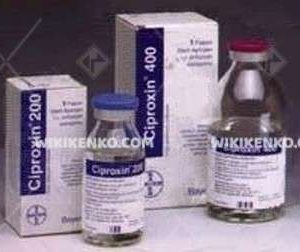
| Ciproxin 100 mg infusion | 50 ml | Ciprofloxacin lactate (127.2 mg) | 100 mg (2 mg/ml) | Lower‑dose regimens, renal impairment, titrated dosing, step‑up/step‑down therapy |
| Ciproxin 200 mg infusion | 100 ml | Ciprofloxacin lactate | 200 mg (2 mg/ml) | Standard dosing for moderate infections |
| Ciproxin 400 mg infusion | 200 ml | Ciprofloxacin lactate | 400 mg (2 mg/ml) | High‑dose therapy for severe infections (e.g., Pseudomonas spp.) |
| Cipronat 200 (2 mg/ml) | Various vials | Ciprofloxacin lactate | 200 mg per 100 ml | Generic/brand alternative with similar pharmacokinetic profile |
| Merck Cipro IV 0.2% in 5% dextrose | 100–400 ml | Ciprofloxacin with lactic acid as solubilizer | 200–400 mg total dose | Ready‑to‑use dextrose‑based infusion, often used where sodium load must be limited |
These presentations are generally interchangeable on a milligram‑for‑milligram basis when adjusted for total dose and infusion volume, subject to local regulatory approvals and product‑specific excipients.
Conclusion
Ciproxin Infusion 100 mg (50 ml, equivalent to 100 mg ciprofloxacin as ciprofloxacin lactate) is a parenteral fluoroquinolone formulation designed for the treatment of serious infections due to susceptible bacteria, particularly when oral therapy is not feasible or adequate. Its clinical utility hinges on appropriate patient selection, adherence to evidence‑based dosing and infusion practices, vigilant monitoring for characteristic fluoroquinolone adverse effects, and rational integration into antimicrobial stewardship programs to mitigate resistance development.
For concrete prescribing decisions—including indication selection, dosing in special populations, and risk management—clinicians should always consult the most recent local Summary of Product Characteristics or equivalent regulatory document for the specific Ciproxin Infusion 100 mg product available in their jurisdiction.














Reviews
There are no reviews yet.