Rupatadine fumarate is a second-generation antihistamine with dual mechanism properties that has gained significant recognition in the treatment of allergic conditions worldwide. This comprehensive article explores its pharmacological profile, clinical applications, safety profile, and regulatory status to provide healthcare professionals with a thorough understanding of this medication’s characteristics and utility in modern allergic disorder management.
Introduction
Rupatadine is a second-generation, non-sedating antihistamine that distinguishes itself through its dual antagonist activity against both histamine H1 receptors and platelet-activating factor (PAF) receptors. It was discovered and developed by Uriach, a Spanish pharmaceutical company, and first launched in Spain in 2003. As a fumarate salt, rupatadine presents enhanced stability and pharmaceutical properties while maintaining the therapeutic efficacy of the parent compound.
The medication has been specifically designed to minimize the central nervous system effects typically associated with first-generation antihistamines, making it a preferred option for patients requiring prolonged allergy treatment without compromising daily activities. With its long-acting properties and once-daily dosing regimen, rupatadine fumarate has established itself as an effective treatment option for various allergic conditions, including allergic rhinitis and chronic urticaria.
Chemical Structure
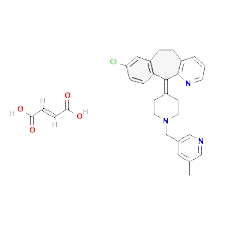
Rupatadine fumarate possesses a complex chemical structure with the molecular formula C30H30ClN3O4 and a molecular weight of 532.04 g/mol. The parent compound, rupatadine, has the formula C26H26ClN3 with a molecular weight of 415.97 g/mol. Chemically, it is identified as (2E)-but-2-enedioic acid; 13-chloro-2-{1-[(5-methylpyridin-3-yl)methyl]piperidin-4-ylidene}-4-azatricyclo[9.4.0.0^{3,8}]pentadeca-1(15),3(8),4,6,11,13-hexaene.
It belongs to the benzocycloheptapyridine class of compounds and shares structural similarities with other antihistamines like azatadine, loratadine, and desloratadine. Its CAS number is 182349-12-8 for the fumarate salt, while the parent compound rupatadine has the CAS number 158876-82-5. The compound appears as off-white to pinkish crystalline powder, soluble in methanol and ethanol, slightly soluble in chloroform, and insoluble in water.
Rupatadine-Based Medicines List
Rupatadine fumarate is marketed globally under various trade names. The following table presents eight prominent brand names:
| Brand Name | Manufacturer/Region |
|---|---|
| Rupafin | Uriach (Multiple countries including Spain, Germany, Italy) |
| Rupall | Pediapharm (Canada) |
| Urtimed | Dr. R. Pfleger Chemische Fabrik (Germany) |
| Alergoliber | Pfizer (Spain) |
| Rinialer | Bial-Industrial Farmaceutica (Spain, Portugal) |
| Pafinur | Biohorm (Italy), Nigaard Pharma (Sweden) |
| Rupax | Menarini (Central America, Dominican Republic) |
| Ralif | Panacea Biotec Ltd. (India) |
This medication is available across numerous countries spanning Europe, Central and South America, Asia, Africa, and Canada, demonstrating its global acceptance as an effective antihistamine.
Mechanism of Action
Rupatadine exerts its therapeutic effects through a dual mechanism that distinguishes it from many other antihistamines available on the market. It functions primarily as a selective antagonist of peripheral histamine H1 receptors, effectively blocking the action of histamine – a key mediator in allergic responses. This inhibition prevents histamine from binding to its receptors and triggering symptoms such as itching, sneezing, nasal congestion, and other manifestations of allergic reactions.
What makes rupatadine particularly valuable is its additional activity as a potent antagonist of platelet-activating factor (PAF) receptors. PAF is another important inflammatory mediator involved in allergic processes, especially in more severe allergic reactions. In radioligand binding assays, rupatadine binds to rabbit platelet membranes and guinea pig cerebellum membranes with apparent Ki values of 0.55 and 0.1 μM, respectively. It inhibits contraction of isolated guinea pig ileum induced by histamine (pA2 = 9.29) and platelet aggregation induced by PAF in washed rabbit platelets (pA2 = 6.68).
Beyond these two primary mechanisms, rupatadine also possesses broader anti-inflammatory properties, including inhibition of mast cell degranulation induced by both immunological and non-immunological stimuli, and inhibition of cytokine release, particularly tumor necrosis factor (TNF) from human mast cells and monocytes. These multiple modes of action contribute to rupatadine’s effectiveness in managing various allergic conditions.
Pharmacokinetics
Rupatadine demonstrates favorable pharmacokinetic properties that support its once-daily dosing regimen. After oral administration, rupatadine is rapidly absorbed, though specific time to maximum plasma concentration values were not detailed in the search results. The drug exhibits extensive protein binding, with 98-99% bound to plasma proteins. This high protein binding contributes to its prolonged duration of action.
The metabolism of rupatadine occurs primarily in the liver through cytochrome P450 enzymes, specifically the CYP3A4 isoenzyme, which is the primary enzyme responsible for its biotransformation.
The drug produces several active metabolites, including desloratadine, 3-hydroxydesloratadine, 6-hydroxydesloratadine, and 5-hydroxydesloratadine, which may contribute to its overall efficacy. The elimination half-life of rupatadine is approximately 5.9 hours.
Excretion of rupatadine and its metabolites occurs through both renal and fecal routes, with approximately 34.6% excreted in urine and 60.9% in feces. This dual elimination pathway helps ensure clearance of the drug even in cases of mild impairment of either excretory system, although the drug is not recommended for patients with significant renal or hepatic impairment.
Therapeutic Uses
Rupatadine fumarate has been approved for specific therapeutic applications based on extensive clinical research demonstrating its efficacy and safety profile.
| Indication | Age Group | Dosage | Administration | Clinical Efficacy |
|---|---|---|---|---|
| Allergic rhinitis (seasonal and perennial) | Adults and adolescents >12 years | 10 mg once daily | Oral, with or without food | Rapid onset of action, effective symptom relief |
| Chronic urticaria/chronic idiopathic urticaria | Adults and adolescents >12 years | 10 mg once daily | Oral, with or without food | Effective reduction in urticaria symptoms |
Rupatadine is available in two main formulations: as 10 mg tablets for adults and adolescents, and as a 1 mg/mL oral solution specifically formulated for pediatric use in children aged 2-11 years (though the tablet form is not recommended for children under 12). The efficacy of rupatadine in treating these conditions has been investigated in several controlled studies, showing comparable or superior efficacy to other second-generation antihistamines such as ebastine, cetirizine, loratadine, and desloratadine. Clinical studies have demonstrated a rapid onset of action and good safety profile even in prolonged treatment periods of up to one year.
Side Effects
Despite being classified as a non-sedating antihistamine, rupatadine, like other second-generation antihistamines, can cause some adverse effects. The most commonly reported side effects in controlled clinical studies were somnolence, headaches, and fatigue. These effects are generally mild and tend to diminish with continued use of the medication.
Less common side effects observed in clinical trials include asymptomatic increases in creatine phosphokinase (CPK) levels, which typically resolve without intervention. Occasional increases in liver enzymes (aspartate aminotransferase and/or alanine aminotransferase) have been reported in some subjects, particularly at higher doses, but these also typically resolve without specific treatment.
Post-marketing surveillance has identified additional potential adverse reactions including arthralgia, back pain, blood creatine phosphokinase increases, cough, dyspnea, epistaxis, fatigue, headache, hypersensitivity reactions (including anaphylactic reactions, angioedema, and urticaria), hypertension, increased appetite, myalgia, muscular weakness, nausea, palpitations, QT prolongation, rash, somnolence, syncope, tachycardia, urticaria, weight gain, and vertigo.
One case of torsade de pointes has been reported following the use of rupatadine when administered with concomitant medications known to have the potential for QT prolongation, highlighting the importance of monitoring cardiac function in patients with relevant risk factors.
Drug Interactions
Rupatadine undergoes metabolism primarily through the cytochrome P450 CYP3A4 enzyme system, making it susceptible to various clinically significant drug interactions. Understanding these interactions is crucial for safe and effective therapy.
The most significant interactions involve potent CYP3A4 inhibitors. Concomitant administration of rupatadine with ketoconazole increases the systemic exposure to rupatadine approximately 10-fold, potentially increasing the risk of adverse effects. Similarly, erythromycin increases rupatadine exposure 2-3 times. For these reasons, co-administration of rupatadine with potent CYP3A4 inhibitors (such as itraconazole, voriconazole, posaconazole, HIV protease inhibitors, clarithromycin, and nefazodone) is contraindicated, and co-administration with moderate CYP3A4 inhibitors (erythromycin, fluconazole, diltiazem) should be avoided.
Food interactions are also notable, particularly with grapefruit juice, which can increase the systemic exposure to rupatadine by 3.5 times due to inhibition of CYP3A4 in the intestinal wall. Therefore, grapefruit or grapefruit juice should not be consumed simultaneously with rupatadine.
Other potential interactions include those with central nervous system (CNS) depressants, where additive effects cannot be excluded. After administration of alcohol, rupatadine at 10 mg produced marginal effects on psychomotor performance, while a higher dose of 20 mg increased the impairment caused by alcohol intake.
Asymptomatic creatine phosphokinase (CPK) increases have been reported uncommonly in rupatadine clinical trials, suggesting a potential for interaction with statins, some of which are also metabolized by CYP3A4. Therefore, rupatadine should be used with caution when coadministered with statins.
Research has shown that rupatadine does not present significant drug-drug interactions with azithromycin, fluoxetine, and lorazepam, making these safer combinations when necessary.
Safety Considerations
Several important safety considerations should be taken into account when prescribing rupatadine fumarate. The medication is not recommended for patients with renal or hepatic impairment due to limited clinical experience in these populations. Similarly, caution is advised when prescribing rupatadine to elderly patients, who may be more sensitive to anticholinergic effects or have age-related changes in drug metabolism.
Rupatadine should not be administered with QTc-prolonging drugs due to potential cardiac risks, as evidenced by a reported case of torsade de pointes when rupatadine was used with other QT-prolonging medications. Patients with predisposing factors such as pre-existing cardiac disease, electrolyte imbalances, or concomitant use of medications that can cause QT prolongation should be monitored carefully if prescribed rupatadine.
The tablet formulation contains lactose, making it unsuitable for patients with rare hereditary problems of galactose intolerance, glucose-galactose malabsorption, or Lapp lactase deficiency. For such patients, alternative formulations or different antihistamines should be considered.
While rupatadine is classified as a non-sedating antihistamine, patients should be advised to exercise caution with activities requiring alertness, such as driving or operating machinery, until they know how the medication affects them personally. Concurrent use with alcohol or other CNS depressants may further impair alertness and psychomotor performance, particularly in sensitive individuals.
Hypersensitivity to rupatadine or any of the excipients is a contraindication for use. As with all medications, rupatadine should be used during pregnancy only if the potential benefit justifies the potential risk to the fetus, and caution should be exercised when prescribing to breastfeeding women.
Regulatory Status
Rupatadine has achieved widespread regulatory approval across multiple regions, though its status varies by country. It was first launched in Spain in 2003 by J. Uriach y Cia, S.A., under the brand name Rupafin. Subsequently, it gained approval throughout much of the European Union, including the United Kingdom in September 2009.
In Canada, rupatadine was approved under the tradename Rupall and is available as a tablet formulation for adult use and a liquid formulation for pediatric use. The approval was granted based on quality (chemistry and manufacturing), non-clinical (pharmacology and toxicology), and clinical (pharmacology, safety, and efficacy) information submitted to Health Canada.
Beyond Europe and North America, rupatadine has secured regulatory approval in numerous countries across Central and South America, including Brazil, Argentina, and Chile. It is also approved in Turkey and at least 14 African countries. The medication is marketed under various trade names across these regions, reflecting its global presence and acceptance as an effective antihistamine.
Based on the available search results, rupatadine does not appear to have received approval from the United States Food and Drug Administration (FDA) as of the data provided. This represents a notable gap in its global regulatory coverage, as the US constitutes one of the largest pharmaceutical markets worldwide.
The widespread regulatory acceptance of rupatadine across diverse health authorities reflects its established efficacy and safety profile for the treatment of allergic conditions, particularly allergic rhinitis and chronic urticaria.
Conclusion
Rupatadine fumarate represents an important advancement in antihistamine therapy, offering a dual mechanism of action that targets both histamine H1 receptors and platelet-activating factor receptors. This comprehensive pharmacological profile makes it particularly effective in managing allergic conditions such as allergic rhinitis and chronic urticaria. Its favorable pharmacokinetic properties allow for convenient once-daily dosing, while its non-sedating nature minimizes impact on daily activities for most patients.
While rupatadine demonstrates an excellent safety profile, healthcare providers should remain vigilant regarding potential drug interactions, particularly with CYP3A4 inhibitors and QT-prolonging medications. Special populations including elderly patients and those with renal or hepatic impairment require careful consideration. With proper patient selection and monitoring, rupatadine fumarate offers an effective therapeutic option for the management of allergic conditions, contributing significantly to improved quality of life for affected individuals.