Below is a comprehensive article on Quetiapine Fumarate. This atypical antipsychotic has been extensively studied and utilized over the past decades in the treatment of several major psychiatric conditions. The following narrative explores the multifaceted aspects of this API—from its chemical structure to its clinical applications and regulatory status.
Introduction
Quetiapine fumarate is a prominent active pharmaceutical ingredient (API) in the class of atypical antipsychotics. Originally introduced to manage symptoms of schizophrenia, its indications have expanded to include various forms of bipolar disorder and even serve as an adjunct in major depressive disorder.
By modulating key neurotransmitter pathways, quetiapine helps restore the balance of dopamine and serotonin in the brain, contributing to improved mood stabilization and alleviation of psychotic symptoms. This article delves into its chemical background, available medicinal formulations, mechanism of action, pharmacokinetic profile, clinical uses (presented in tabular format), side effects, drug interaction potential, safety considerations, and regulatory status.
Chemical Structure
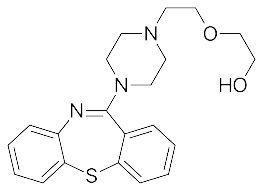
Quetiapine fumarate is the salt form of quetiapine, a molecule characterized by its dibenzothiazepine framework. The quetiapine base, with a molecular formula of approximately C₂₁H₂₅N₃O₂S, features a polycyclic aromatic structure that is integral to its receptor-binding capabilities.
The addition of the fumarate moiety not only aids in ensuring chemical stability but also improves the compound’s solubility and bioavailability in pharmaceutical formulations. This unique structure underlies quetiapine’s capacity to interact with multiple neurotransmitter receptors, forming the basis for its therapeutic actions.
Quetiapine Fumarate–Based Medicines
Quetiapine fumarate is marketed globally under several brand names and in multiple dosage formulations. Here are eight notable preparations based on this API:
- Seroquel (Immediate Release):
The original formulation widely used in clinical settings. - Seroquel XR (Extended Release):
Designed for sustained release and improved adherence. - Generic Quetiapine Fumarate 25 mg Tablets:
A lower-dose option suitable for titration and sensitive patients. - Generic Quetiapine Fumarate 50 mg Tablets:
Often prescribed as an introductory dose in treatment. - Generic Quetiapine Fumarate 100 mg Tablets:
A common intermediate strength utilized in many treatment protocols. - Generic Quetiapine Fumarate 200 mg Tablets:
Employed when a moderate dose is needed for symptom control. - Generic Quetiapine Fumarate 300 mg Tablets:
Frequently used as doses are escalated under clinical supervision. - Generic Quetiapine Fumarate 400 mg Tablets:
This highest strength is reserved for cases requiring robust dosing strategies.
Mechanism of Action
Quetiapine exerts its antipsychotic and mood-stabilizing effects through a complex interplay with multiple neurotransmitter receptors. Primarily, it antagonizes dopamine D₂ receptors and serotonin 5-HT₂A receptors—mechanisms that are foundational in reducing psychotic features and mood dysregulation. Moreover, its major active metabolite, norquetiapine, has been found to inhibit the norepinephrine transporter (NET), thereby contributing additional antidepressant properties.
The drug’s affinity for histamine H₁ receptors explains its marked sedative effects, a property that can be clinically advantageous in selected cases but also demands cautious use. Collectively, this multifaceted receptor profile underpins quetiapine’s clinical efficacy and sets it apart from typical antipsychotic agents that more narrowly target dopamine receptors.
Pharmacokinetics
Quetiapine’s pharmacokinetic profile is characterized by several important features:
- Absorption:
When administered orally, quetiapine is well absorbed, with peak plasma concentrations for the immediate-release formulation generally reached within 1 to 2 hours. - Distribution:
The drug is widely distributed, exhibiting a high volume of distribution—this property facilitates its penetration into various tissues, including the central nervous system. - Metabolism:
Primarily metabolized by the liver enzyme CYP3A4, quetiapine undergoes extensive first-pass metabolism. A significant metabolite, norquetiapine, contributes to its overall pharmacological activity. - Elimination:
The elimination half-life of the immediate-release form is roughly 6 hours, while extended-release formulations are designed to maintain steadier plasma concentrations over a longer period. Excretion is predominantly renal, following hepatic metabolism.
Therapeutic Uses
The diverse clinical applications of quetiapine fumarate can be appreciated through its therapeutic profile. The table below summarizes its primary indications, formulations, target patient populations, and relevant clinical notes:
| Indication | Formulation | Patient Population | Comments |
|---|---|---|---|
| Schizophrenia | Immediate-Release & XR Tablets | Adults & Adolescents (≥13 yrs) | Effective in controlling both the positive and negative symptoms. |
| Bipolar Disorder (Manic/Mixed Episodes) | Immediate-Release & XR Tablets | Adults (and select adolescents) | Helps stabilize mood during acute manic or mixed episodes. |
| Bipolar Depression | Immediate-Release & XR Tablets | Adults | Frequently used as part of a broader mood stabilization regimen. |
| Major Depressive Disorder (Adjunct) | Extended-Release Tablets | Adults | Utilized as augmentation therapy in treatment-resistant depression. |
| Off-label: Insomnia | Lower-Dose Oral Tablets | Adults | Occasionally used off-label for its sedative properties. |
This table underscores quetiapine fumarate’s versatility in psychiatric practice, highlighting its application across various mental health conditions.
Side Effects
While quetiapine fumarate can be highly effective, its use is accompanied by a range of potential side effects. Common adverse reactions include:
- Sedation and Drowsiness:
Often attributed to histaminergic blockade, which can be beneficial or problematic depending on the clinical scenario. - Orthostatic Hypotension and Dizziness:
Reflective of its effects on adrenergic receptors, these cardiovascular effects require careful monitoring. - Dry Mouth and Constipation:
Frequently reported anticholinergic-type effects. - Metabolic Disturbances:
Weight gain, dyslipidemia, and hyperglycemia are of special concern, particularly with long-term use. - Movement Disorders:
Although atypical antipsychotics generally have a lower incidence of extrapyramidal side effects, some patients may develop symptoms such as tardive dyskinesia with prolonged therapy.
In rare cases, serious adverse events like neuroleptic malignant syndrome can occur. The risk profile varies with dose, treatment duration, and the individual patient’s predisposition, necessitating periodic monitoring and dose adjustments.
Drug Interactions
Given its metabolism via the CYP3A4 pathway, quetiapine fumarate is susceptible to several significant drug interactions:
- CYP3A4 Inhibitors:
Co-administration with drugs such as ketoconazole may elevate quetiapine levels, increasing the potential for adverse effects. - CYP3A4 Inducers:
Agents like carbamazepine can enhance metabolic clearance, potentially diminishing quetiapine’s effectiveness. - CNS Depressants:
When used alongside other central nervous system depressants (e.g., benzodiazepines, alcohol), there is an increased risk of sedation and cognitive impairment. - Cardiovascular Agents:
Since quetiapine may lower blood pressure, additive effects can occur with other antihypertensive medications, necessitating caution.
Safety Considerations
Safety remains a cornerstone of quetiapine therapy. Notable considerations include:
- Black Box Warning:
The FDA has issued warnings regarding the elevated risk of mortality in elderly patients with dementia-related psychosis, rendering quetiapine an unsuitable option for this population. - Suicidality in Youth:
Younger patients, including children, adolescents, and young adults, may experience worsening depression or suicidal ideation—especially during initial dose adjustments. - Metabolic Monitoring:
Regular monitoring of weight, blood glucose, and lipid profiles is advised owing to the drug’s potential to induce metabolic syndrome. - Cardiovascular Caution:
Due to risks of hypotension and related cardiovascular issues, patients with compromised cardiac function or those on other blood pressure–lowering medications should be monitored closely.
Collectively, these considerations underscore the importance of a tailored therapeutic approach, balancing efficacy with potential risks.
Regulatory Status
Quetiapine fumarate is approved by regulatory authorities such as the U.S. Food and Drug Administration (FDA) for the treatment of schizophrenia, bipolar disorder, and as an adjunct to antidepressant therapy in major depressive disorder. Its large-scale availability in both branded formulations (like Seroquel and Seroquel XR) and generic versions reflects its widespread clinical acceptance.
However, its regulatory status is paired with stringent guidelines, particularly concerning the treatment of elderly patients with dementia-related psychosis, where its use is either not approved or is heavily cautioned. Ongoing post-marketing studies continue to refine its safety profile, ensuring that emerging long-term data guide future regulatory decisions.
Ongoing Research and Future Directions
Research into quetiapine fumarate is active and evolving. Current studies focus on further elucidating its pharmacodynamic profile, optimizing dosing regimens to mitigate metabolic and cardiovascular risks, and exploring its potential applications in other neuropsychiatric conditions.
Innovations in drug delivery systems—such as formulations that permit even more controlled release or targeted action—are under investigation. As our understanding of brain chemistry deepens, quetiapine’s role may expand, and future findings could pave the way for improved variants with a more favorable adverse effect profile while retaining robust clinical efficacy.
Conclusion
In summary, quetiapine fumarate stands as a pivotal medication in modern psychopharmacology. It offers a multifaceted approach to managing severe mental health disorders by acting on key neurotransmitter pathways. While its therapeutic benefits in schizophrenia, bipolar disorder, and as an adjunct in depressive disorders are well documented, clinicians must remain vigilant regarding its side effects, metabolic implications, and potential drug interactions.
As ongoing research continues to shed light on its long-term use, quetiapine fumarate is poised to maintain—and possibly expand—its role in the psychiatric therapeutic arsenal, ultimately offering hope and stabilization to many in need.
If you’d like to explore further, additional readings on receptor pharmacology, the latest clinical trial outcomes, or comparative analyses with other atypical antipsychotics might provide even more in-depth insights into the evolving landscape of psychiatric treatment.