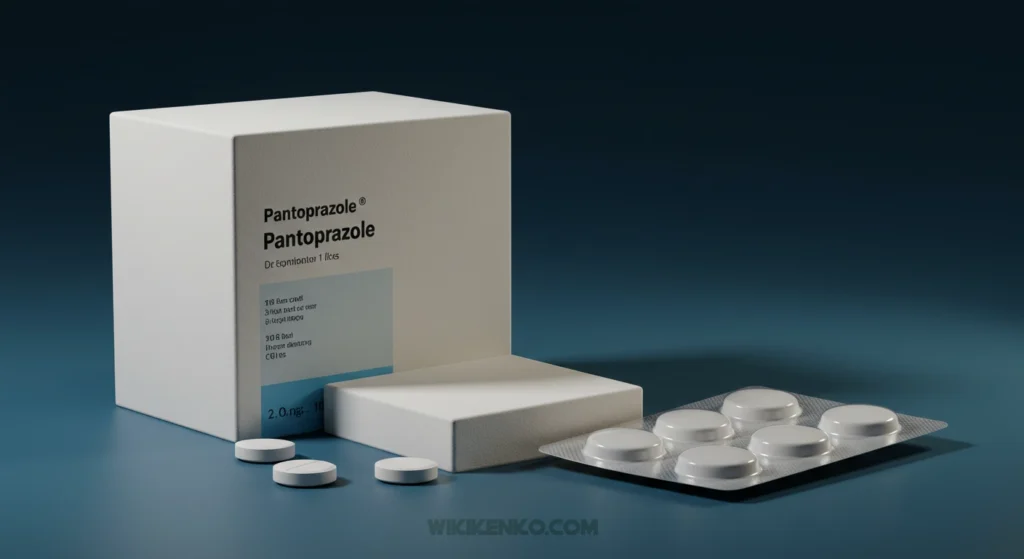
Pantoprazole is a widely used pharmaceutical compound classified as a proton pump inhibitor (PPI). It is prescribed primarily for the treatment of gastrointestinal disorders associated with excessive stomach acid, such as gastroesophageal reflux disease (GERD), Zollinger-Ellison syndrome, and erosive esophagitis. First approved in the 1990s, Pantoprazole has since become a mainstay in both hospital and outpatient settings, valued for its efficacy, safety profile, and long-lasting acid suppression. It is available under various brand names and generic formulations and is often used when other acid-reducing treatments are insufficient.
Chemical Structure
Chemically, Pantoprazole is known as 5-(difluoromethoxy)-2-[(3,4-dimethoxypyridin-2-yl)methylsulfinyl]-1H-benzimidazole. It belongs to the benzimidazole class of compounds and has the following molecular formula:
- C16H15F2N3O4S
- Molecular Weight: 383.37 g/mol

Pantoprazole is a weak base and is typically formulated as a sodium salt (Pantoprazole sodium sesquihydrate) to enhance stability and bioavailability.
Top 8 Pantoprazole-Based Medicines
Pantoprazole is available in various formulations, both branded and generic. Here are eight of the most commonly prescribed:
- Protonix (Pfizer)
- Pantocid (Sun Pharma)
- Pan 40/20 (Alkem)
- Pantoprazole Sandoz (Sandoz)
- Pantoprazole Teva (Teva Pharmaceuticals)
- Pantakind (Mankind Pharma)
- Nexpro (Torrent Pharmaceuticals)
- Pantodac (Zydus Cadila)
These are available in various dosages, such as 20 mg and 40 mg tablets, and some may come in intravenous forms for hospital use.
Mechanism of Action
Pantoprazole acts by irreversibly inhibiting the H⁺/K⁺-ATPase enzyme, also known as the proton pump, in the parietal cells of the stomach lining. This enzyme is responsible for the final step in the production of gastric acid. By binding covalently to cysteine residues on the enzyme, Pantoprazole effectively halts acid secretion for a prolonged period (typically up to 24 hours), allowing for mucosal healing and symptom relief in acid-related disorders.

Pharmacokinetics
Pantoprazole exhibits the following pharmacokinetic characteristics:
- Absorption: Rapid after oral administration; peak plasma concentration (Cmax) occurs within 2–3 hours.
- Bioavailability: Approximately 77%, unaffected by food, though onset may be delayed if taken with meals.
- Distribution: Plasma protein binding is about 98%.
- Metabolism: Extensively metabolized in the liver, primarily by CYP2C19 and to a lesser extent by CYP3A4.
- Half-life: Approximately 1 hour, but due to irreversible binding to the proton pump, the duration of action lasts much longer.
- Excretion: Mostly via urine (80%), with the remainder excreted in feces.
Therapeutic Uses
| Condition | Indication | Formulation |
|---|---|---|
| Gastroesophageal Reflux Disease | Short-term treatment of erosive esophagitis | Oral / IV |
| Zollinger-Ellison Syndrome | Long-term suppression of acid secretion | Oral / IV |
| Duodenal Ulcers | Adjunct to antibiotic therapy | Oral |
| Gastric Ulcers | Healing and prevention | Oral |
| Helicobacter pylori Infection | Part of triple therapy regimen | Oral |
| NSAID-Induced Ulcer Prophylaxis | Prevention in high-risk patients | Oral |
| Stress Ulcer Prophylaxis | In critically ill hospitalized patients | IV |
| Laryngopharyngeal Reflux | Off-label use | Oral |
Side Effects
Pantoprazole is generally well tolerated, but like all medications, it can cause side effects. Common and rare adverse effects include:
Common Side Effects:
- Headache
- Diarrhea or constipation
- Nausea
- Abdominal pain
- Flatulence
Less Common/Rare Effects:
- Dizziness
- Rash or pruritus
- Arthralgia or myalgia
- Elevated liver enzymes
- Vitamin B12 deficiency (with long-term use)
- Hypomagnesemia (long-term/high-dose therapy)
- Increased risk of bone fractures (hip, wrist, spine)
Serious Side Effects (rare):
- Clostridium difficile–associated diarrhea
- Acute interstitial nephritis
- Anaphylaxis or severe hypersensitivity
Drug Interactions
Pantoprazole can interact with various medications, mainly due to altered gastric pH or CYP metabolism:
- Clopidogrel: May reduce activation due to CYP2C19 competition.
- Warfarin: May enhance anticoagulant effects—monitor INR.
- Methotrexate: High-dose methotrexate clearance may be reduced.
- HIV drugs: Absorption of atazanavir and rilpivirine may be reduced.
- Iron salts and antifungals: Reduced absorption due to higher gastric pH.
Safety Considerations
Pregnancy and Lactation:
Pantoprazole is classified as Pregnancy Category B (US FDA)—no evidence of harm in animal studies, but human data is limited. It should be used during pregnancy only if clearly needed. It is excreted in breast milk in small amounts, so caution is advised during breastfeeding.
Pediatric Use:
Approved for use in children aged 5 years and older for GERD, but dosing must be adjusted based on weight and condition.
Geriatric Use:
Generally safe; dose adjustment usually not required unless renal or hepatic impairment is present.
Renal/Hepatic Impairment:
No dosage adjustment required in mild to moderate cases, but caution advised in severe hepatic dysfunction due to altered metabolism.
Regulatory Status
Pantoprazole is approved by regulatory agencies around the world, including:
- U.S. Food and Drug Administration (FDA): Approved for multiple indications including GERD, erosive esophagitis, and pathological hypersecretory conditions.
- European Medicines Agency (EMA): Similar approvals across EU countries.
- World Health Organization (WHO): Included in the WHO Model List of Essential Medicines.
Pantoprazole is available both over-the-counter (OTC) in some countries for short-term heartburn relief and prescription-only for more serious conditions.
Conclusion
Pantoprazole has established itself as a reliable and potent PPI for the treatment of acid-related gastrointestinal disorders. Its ability to provide long-lasting acid suppression with relatively few side effects makes it a go-to therapy for physicians. While long-term use requires monitoring for certain deficiencies and complications, its overall safety and efficacy profile remains strong. As newer PPIs and acid-suppressing therapies continue to emerge, Pantoprazole maintains its position as a cornerstone in gastrointestinal pharmacology.