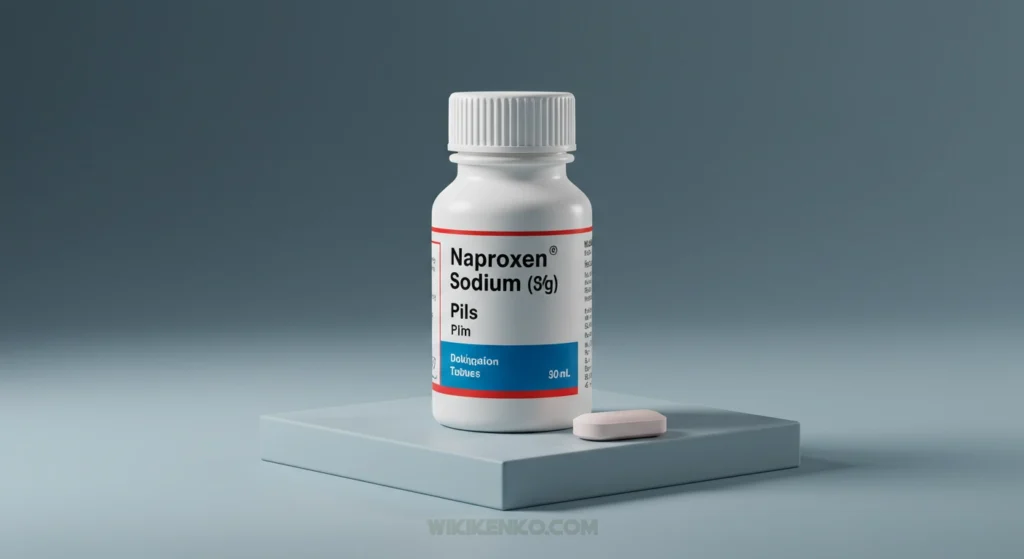
Naproxen sodium is a widely used nonsteroidal anti-inflammatory drug (NSAID) that provides analgesic, antipyretic, and anti-inflammatory effects. It is commonly used for the management of pain and inflammation associated with various conditions such as arthritis, dysmenorrhea, musculoskeletal injuries, and acute mild-to-moderate pain. As a salt form of naproxen, naproxen sodium offers faster absorption and quicker onset of action, making it particularly useful for acute pain episodes. Its effectiveness, over-the-counter availability, and relatively long duration of action have contributed to its popularity among both healthcare providers and patients.
Chemical Structure
Naproxen sodium is the sodium salt of naproxen, a propionic acid derivative classified under arylacetic acid NSAIDs. Its molecular formula is C14H13NaO3, and it has a molecular weight of 252.24 g/mol. Chemically, naproxen sodium is the (S)-enantiomer of 2-(6-methoxy-2-naphthyl)propionic acid, which is responsible for its pharmacological activity. It exists as a white to off-white crystalline powder, readily soluble in water due to the presence of the sodium ion.

The sodium salt allows for enhanced solubility and rapid gastrointestinal absorption compared to the base form of naproxen, although both share an identical mechanism of action once absorbed.
Naproxen Sodium-Based Medicines List
- Aleve – An over-the-counter brand used for temporary relief of minor aches and pains.
- Anaprox DS – A prescription-strength formulation often used in rheumatologic disorders.
- Naprosyn Sodium – Used for chronic conditions like osteoarthritis and rheumatoid arthritis.
- Midol Extended Relief – Combines naproxen sodium for dysmenorrhea (menstrual cramps).
- Naprogesic – An Australian formulation targeting menstrual pain.
- Pamprin Max – Contains naproxen sodium for menstrual pain and inflammation.
- Naprelan Sodium – An extended-release prescription used for arthritis and chronic pain.
- Flanax – Available in certain countries as a general analgesic.
Mechanism of Action
Naproxen sodium exerts its therapeutic effects by inhibiting the cyclooxygenase (COX) enzymes, specifically COX-1 and COX-2. These enzymes are responsible for converting arachidonic acid into prostaglandins, which are mediators of inflammation, pain, and fever. By inhibiting prostaglandin synthesis, naproxen reduces inflammation and alleviates symptoms such as pain, swelling, and fever.
COX-1 inhibition is associated with gastrointestinal side effects due to the suppression of protective prostaglandins in the gastric mucosa. COX-2 inhibition contributes more directly to anti-inflammatory and analgesic effects. Although not COX-2 selective, naproxen has a relatively favorable cardiovascular risk profile compared to other NSAIDs.
Pharmacokinetics
- Absorption: Rapidly absorbed in the gastrointestinal tract. Peak plasma levels occur within 1–2 hours after oral administration of the sodium salt.
- Bioavailability: High oral bioavailability, around 95%.
- Distribution: Extensively bound to plasma proteins (≥ 99%), with a volume of distribution of approximately 0.16 L/kg.
- Metabolism: Hepatically metabolized via CYP enzymes (mainly CYP1A2 and CYP2C9) into inactive metabolites.
- Elimination: Primarily excreted in the urine (approximately 95%) as conjugates and metabolites.
- Half-life: Approximately 12–17 hours, allowing for twice-daily dosing.
Therapeutic Uses
| Condition | Role of Naproxen Sodium |
|---|---|
| Osteoarthritis | Long-term symptom control of joint pain and stiffness |
| Rheumatoid arthritis | Anti-inflammatory and pain relief for autoimmune arthritis |
| Ankylosing spondylitis | Reduces spinal and joint inflammation |
| Gout (acute attack) | Alleviates pain and inflammation during flare-ups |
| Dysmenorrhea | Effective for menstrual pain due to prostaglandin inhibition |
| Tendinitis and bursitis | Used to reduce localized inflammation |
| Migraine (mild-to-moderate) | Provides relief for acute migraine symptoms |
| General musculoskeletal pain | Used in back pain, sprains, strains, and dental pain |
Side Effects
Like all NSAIDs, naproxen sodium can cause side effects, ranging from mild to serious. Common adverse reactions include:
- Gastrointestinal: Nausea, heartburn, indigestion, abdominal pain, diarrhea, constipation, and in more severe cases, gastric ulcers or GI bleeding.
- Cardiovascular: Although naproxen is considered relatively safer among NSAIDs, it may still increase the risk of hypertension, edema, and cardiovascular events (especially at high doses).
- Renal: Long-term use can lead to renal impairment, reduced glomerular filtration rate, or interstitial nephritis.
- Hepatic: Rare instances of elevated liver enzymes or hepatotoxicity.
- Hematologic: Rarely, may cause anemia, leukopenia, or thrombocytopenia.
- Hypersensitivity: Skin rashes, urticaria, or severe reactions such as Stevens-Johnson syndrome and anaphylaxis in susceptible individuals.
Drug Interactions
Naproxen sodium can interact with numerous medications:
- Anticoagulants and antiplatelets (e.g., warfarin, aspirin): Increased risk of bleeding.
- ACE inhibitors/ARBs and diuretics: May reduce antihypertensive efficacy and increase the risk of renal impairment.
- SSRIs and SNRIs: Heightened risk of gastrointestinal bleeding.
- Methotrexate: Increases the risk of methotrexate toxicity due to decreased clearance.
- Lithium: May reduce lithium excretion and lead to toxicity.
- Corticosteroids: Additive risk of gastrointestinal ulcers and bleeding.
- Cyclosporine: Increased risk of nephrotoxicity.

Patients should avoid alcohol during treatment due to additive GI irritation.
Safety Considerations
- Gastrointestinal Risk: Naproxen can cause serious GI complications, especially in elderly patients or those with a history of ulcers or concurrent corticosteroid or anticoagulant use.
- Cardiovascular Risk: Although relatively safer than other NSAIDs, naproxen may still increase the risk of heart attack or stroke, especially with long-term use or in patients with pre-existing cardiovascular disease.
- Renal Impairment: Use with caution in patients with chronic kidney disease or dehydration.
- Pregnancy: Should be avoided in the third trimester due to risk of premature closure of the ductus arteriosus. Use in early pregnancy only if clearly needed.
- Lactation: Considered relatively safe in breastfeeding; small amounts are excreted in breast milk.
- Pediatric Use: Approved for use in children for juvenile arthritis in certain formulations and dosages.
- Elderly: Increased susceptibility to side effects, particularly renal and GI complications.
Regulatory Status
Naproxen sodium is available in both prescription and over-the-counter (OTC) formulations, depending on strength and indication. OTC forms (such as Aleve) are regulated for short-term use, generally limited to 220 mg per tablet, with recommendations not to exceed 660 mg/day unless under medical supervision.
Prescription-strength formulations (e.g., Anaprox DS) can contain up to 550 mg per tablet, and dosing may reach up to 1,375 mg/day under medical guidance. Regulatory agencies such as the FDA, EMA, and other global bodies have approved naproxen sodium for a wide range of pain and inflammatory conditions. Periodic review of its safety profile continues, particularly regarding cardiovascular and renal risks.