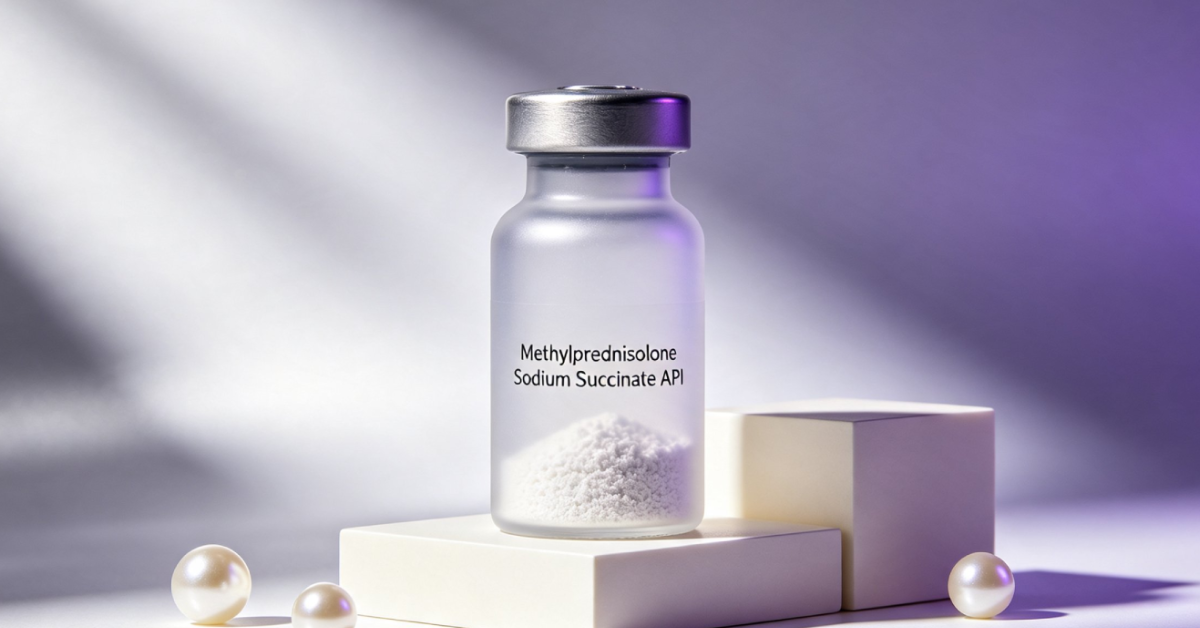
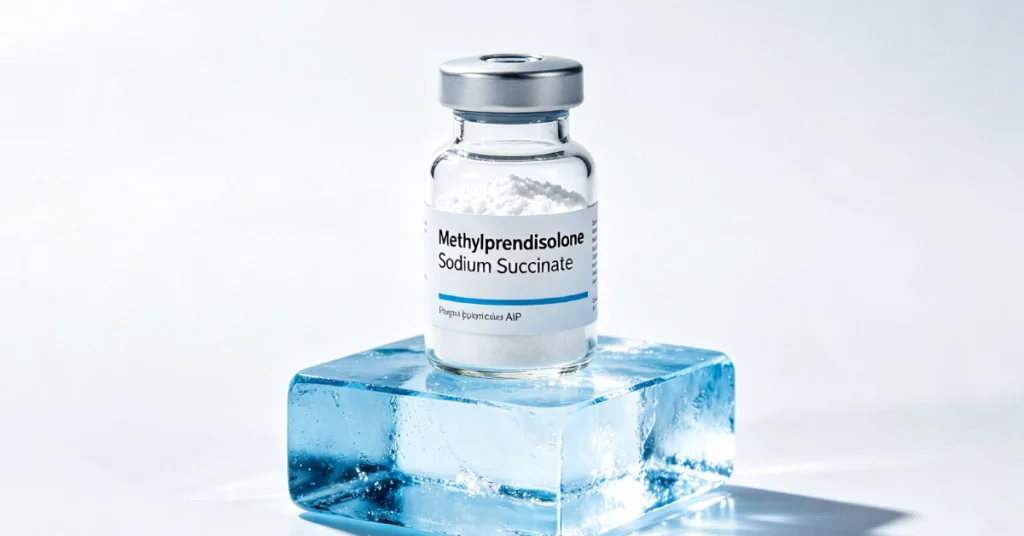
Methylprednisolone sodium succinate is the water-soluble sodium succinate ester of methylprednisolone, a synthetic glucocorticoid. It is supplied mainly as a sterile powder or solution for intravenous or intramuscular injection when a rapid and substantial corticosteroid effect is required.
The medicine has potent anti-inflammatory and immunosuppressive activity. It is used in severe allergic, respiratory, rheumatologic, neurologic, dermatologic, endocrine, and other inflammatory conditions. The best-known product is Solu-Medrol. It should be administered by trained healthcare professionals because high doses can cause serious metabolic, cardiovascular, infectious, and psychiatric complications.
Chemical Structure
Methylprednisolone sodium succinate is chemically named pregna-1,4-diene-3,20-dione, 21-(3-carboxy-1-oxopropoxy)-11,17-dihydroxy-6-methyl-, monosodium salt, (6α,11β). It is an ester of methylprednisolone and succinic acid.
Its molecular formula is , and its molecular weight is approximately 496.53 g/mol. The principal CAS number is 2375-03-3.
The succinate group increases water solubility, allowing rapid preparation for parenteral use. After administration, esterases hydrolyze methylprednisolone sodium succinate to release pharmacologically active methylprednisolone.

Methylprednisolone Sodium Succinate-Based Medicines: Top Eight
Representative products include:
- Solu-Medrol sterile powder for injection.
- Solu-Medrol Act-O-Vial.
- Methylprednisolone sodium succinate injection, USP.
- Generic methylprednisolone sodium succinate injection.
- Solu-Medrone.
- Urbason Soluble.
- Depo-Medrol alternatives are related methylprednisolone products but are not sodium succinate formulations.
- Hospital-compounded methylprednisolone sodium succinate injection products.
Solu-Medrol and generic equivalents are the principal products containing this specific API. Methylprednisolone acetate, marketed as Depo-Medrol, is a different, poorly water-soluble ester intended for other injection uses and should not be considered interchangeable.
Mechanism of Action
Methylprednisolone enters cells and binds to intracellular glucocorticoid receptors. The activated receptor moves into the nucleus and modifies gene transcription. This suppresses production of inflammatory mediators such as cytokines, chemokines, prostaglandins, leukotrienes, and adhesion molecules.
The medicine reduces migration and activation of leukocytes, decreases capillary permeability, suppresses immune-cell activity, and limits tissue swelling. These actions explain its ability to control acute inflammation, allergic reactions, autoimmune disease, bronchial inflammation, and cerebral edema.
Its rapid clinical benefit after intravenous administration results from both the water-soluble formulation and the broad genomic and non-genomic effects of corticosteroid signaling. It does not directly eliminate infections and may worsen or mask them.
Pharmacokinetics
After intravenous injection, “methylprednisolone sodium succinate” is rapidly hydrolyzed to methylprednisolone. The active drug is widely distributed, is approximately 77% protein bound, and crosses biological membranes, including the placenta. It is metabolized mainly in the liver through CYP3A4-dependent pathways.
The elimination half-life of methylprednisolone is approximately 2–4 hours, although biological effects may persist longer because changes in gene transcription continue after plasma concentrations decline. Excretion occurs primarily in the urine as inactive metabolites.
The injection can produce a rapid corticosteroid effect. The FDA label notes that administered drug is nearly completely excreted within approximately 12 hours, although pharmacodynamic effects may last substantially longer.
Therapeutic Uses
| Condition | Therapeutic role | Important considerations |
|---|---|---|
| Severe allergic reactions | Controls inflammation and immune symptoms | Epinephrine remains first-line treatment for anaphylaxis |
| Status asthmaticus | Reduces airway inflammation | Used with bronchodilators and respiratory support |
| COPD exacerbation | Reduces inflammatory airway obstruction | Dose and duration are individualized |
| Multiple sclerosis relapse | Shortens inflammatory neurologic exacerbations | Often given as high-dose pulse therapy |
| Cerebral edema | Reduces vasogenic swelling | Used for selected tumors or neurosurgical conditions |
| Rheumatoid and autoimmune diseases | Suppresses severe inflammation | Usually part of a broader treatment plan |
| Dermatologic disease | Treats severe inflammatory skin disorders | Infection must be excluded or treated |
| Adrenal insufficiency | Provides glucocorticoid replacement | Mineralocorticoid therapy may also be necessary |
| Spinal cord injury | Used in selected protocols and jurisdictions | Benefits and risks require specialist assessment |
| Severe inflammatory emergencies | Provides rapid systemic immunosuppression | Requires monitoring of glucose, blood pressure, and infection |
FDA labeling includes allergic, rheumatic, dermatologic, endocrine, gastrointestinal, hematologic, respiratory, neurologic, renal, and other indications. Approved uses and high-dose protocols vary by country and clinical guideline.
Side Effects
Short-term effects may include increased blood glucose, fluid retention, elevated blood pressure, insomnia, mood changes, indigestion, nausea, headache, and increased appetite. High-dose intravenous administration may cause flushing, palpitations, or transient changes in heart rate.
Longer or repeated courses can cause weight gain, Cushingoid appearance, osteoporosis, muscle weakness, cataracts, glaucoma, skin thinning, delayed wound healing, menstrual irregularities, adrenal suppression, and increased infection risk.
Serious risks include gastrointestinal bleeding or perforation, psychosis, severe depression, pancreatitis, thromboembolic events, arrhythmias, and opportunistic infections. Rapid high-dose intravenous administration has been associated with serious cardiac events, particularly in vulnerable patients.
Drug Interactions
Methylprednisolone is mainly metabolized by CYP3A4. Strong CYP3A4 inhibitors, including ketoconazole, itraconazole, clarithromycin, erythromycin, and some HIV medicines, may increase corticosteroid exposure. CYP3A4 inducers such as rifampin, carbamazepine, phenytoin, and phenobarbital may reduce its effect.
Corticosteroids may reduce vaccine responses and increase the risk from live or live-attenuated vaccines. They can worsen hypokalemia when combined with potassium-depletWarfarining diuretics and may increase toxicity from digoxin. Nonsteroidal anti-inflammatory drugs can increase gastrointestinal ulcer and bleeding risk.
Antidiabetic medicines may require adjustment because methylprednisolone raises blood glucose. Warfarin responses may change and require INR monitoring. Fluoroquinolones may add to the risk of tendon injury.
Safety Considerations
Methylprednisolone sodium succinate is contraindicated in systemic fungal infections and in patients with serious hypersensitivity to methylprednisolone or formulation ingredients. Intrathecal administration is contraindicated because severe neurologic events have been reported. Certain 40-mg presentations contain lactose derived from cow’s milk and may be unsuitable for patients with severe cow’s-milk allergy.
Patients with diabetes, hypertension, heart failure, kidney disease, osteoporosis, peptic ulcer disease, glaucoma, tuberculosis, herpes infection, or psychiatric illness require careful monitoring. Corticosteroids may mask infection symptoms, so fever or clinical deterioration should be evaluated promptly.
Long courses should generally be tapered rather than stopped abruptly to reduce the risk of adrenal insufficiency. During prolonged treatment, clinicians may monitor glucose, blood pressure, electrolytes, bone health, eye pressure, and infection status.
Regulatory Status
Solu-Medrol is an FDA-approved prescription injectable corticosteroid. It is supplied in several vial strengths and may be administered intravenously or intramuscularly according to the approved product information. Generic methylprednisolone sodium succinate injections are also authorized in multiple countries.
The API is included in international pharmacopeial and hospital-manufacturing standards. Regulatory approval applies to particular strengths, diluents, preservatives, routes, and indications; products should not be substituted solely on the basis of the word “methylprednisolone.”
Conclusion
Methylprednisolone sodium succinate is a water-soluble injectable glucocorticoid designed for rapid systemic anti-inflammatory and immunosuppressive action. It is useful in severe allergic, respiratory, neurologic, autoimmune, dermatologic, and endocrine conditions, but it carries important risks involving infection, glucose, blood pressure, gastrointestinal injury, psychiatric effects, and adrenal suppression. It should be administered only under appropriate clinical supervision and according to the current local label.