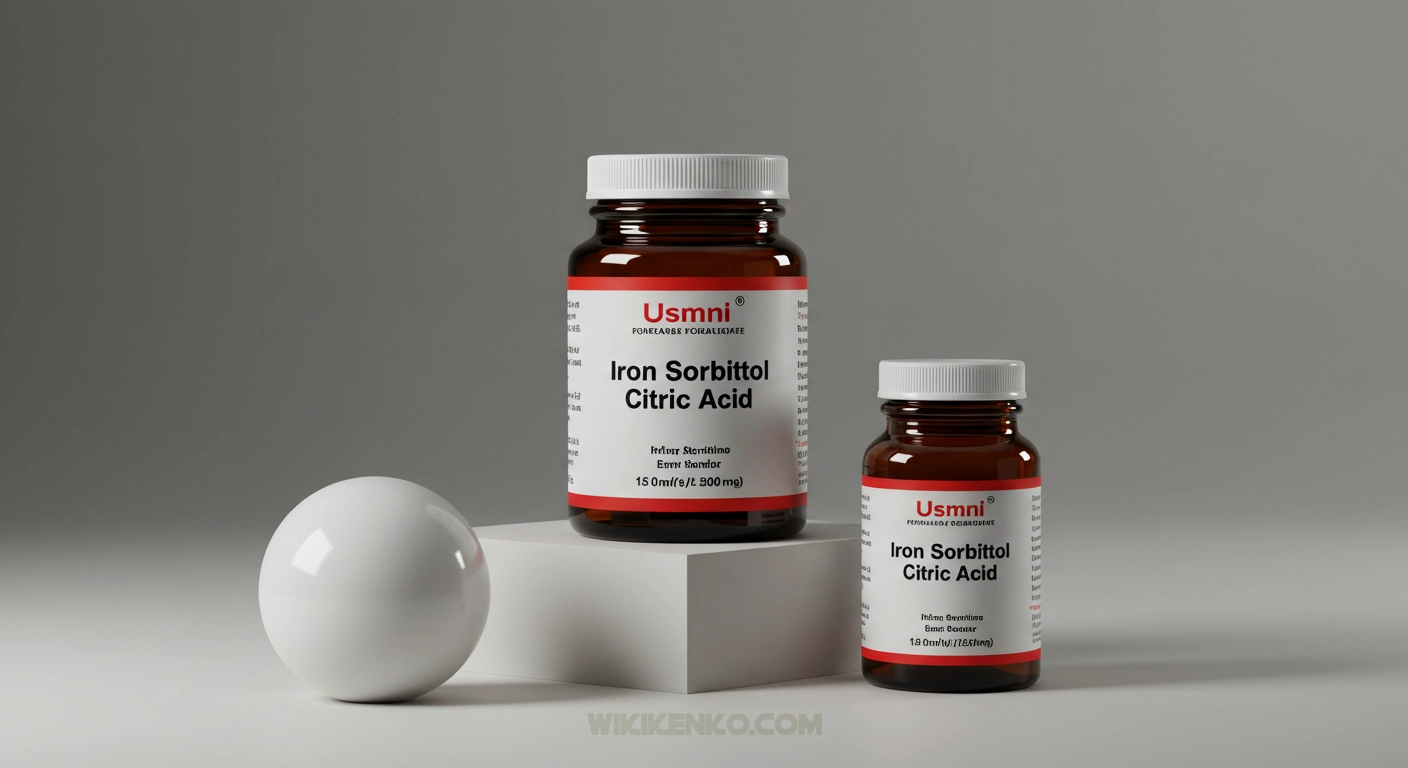
Iron Sorbitol Citric Acid Complex is a parenteral iron preparation used for the treatment of iron-deficiency anemia in patients who cannot tolerate oral iron supplements or where oral therapy is ineffective. This compound is composed of iron, sorbitol, and citric acid, forming a water-soluble complex that allows for intramuscular (IM) or intravenous (IV) administration. It is particularly valuable in chronic conditions such as kidney disease, gastrointestinal malabsorption, or post-surgical states where iron absorption from the gut is compromised.
This formulation offers a more stable and controlled release of iron into the body compared to older injectable iron preparations, reducing the risk of severe hypersensitivity reactions often associated with high-molecular-weight iron dextrans.
Chemical Structure
The Iron Sorbitol Citric Acid Complex is not a single molecule but a coordination complex in which ferric iron (Fe³⁺) is bound with sorbitol and citric acid ligands.
- Components:
- Ferric Iron (Fe³⁺) – the active moiety responsible for hemoglobin synthesis.
- Sorbitol – a sugar alcohol acting as a stabilizer and complexing agent.
- Citric Acid – a tricarboxylic acid that chelates iron, enhancing solubility and stability.
- Appearance: Brownish-red solution
- Solubility: Water-soluble
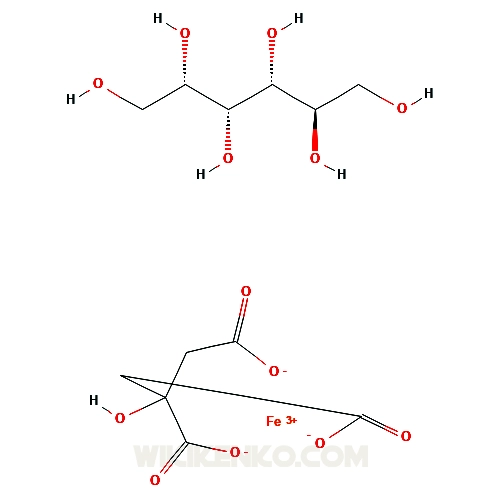
The exact stoichiometry may vary slightly by manufacturer, but it is formulated to allow controlled release and bioavailability of iron for hematopoietic utilization.
Iron Sorbitol Citric Acid-Based Medicines List
- Jectofer® – One of the most widely known brands globally.
- Ferrisol® – Common in Europe and Asia.
- Sorifer® – Frequently used in African and Middle Eastern countries.
- Feronyl® – Often used in IM injection protocols.
- Ferrocit® – Prescribed in some Latin American countries.
- Iron-Sorbitol-Citric Injection (Generic) – Generic versions across multiple markets.
- Sorbifer IM® – Parenteral form used in institutional settings.
- Sorbiferon® – Combination therapies containing folic acid.
These formulations are usually administered by deep intramuscular injection and are available in ampoule or vial form.
Mechanism of Action
Iron Sorbitol Citric Acid delivers elemental iron (Fe³⁺) directly into the systemic circulation, bypassing the gastrointestinal tract. Once administered, the complex dissociates slowly, releasing iron which binds to transferrin, the body’s iron transport protein.
This bound iron is transported to:
- The bone marrow for hemoglobin synthesis
- Storage sites like the liver, spleen, and reticuloendothelial system
The sorbitol-citrate complex helps stabilize the iron and control its release, minimizing oxidative stress and reducing irritation at the injection site compared to older iron preparations.
Pharmacokinetics
| Pharmacokinetic Parameter | Details |
|---|---|
| Absorption | Not orally absorbed; given parenterally (IM or rarely IV) |
| Distribution | Iron binds to transferrin; distributed to liver, bone marrow |
| Metabolism | Iron incorporated into hemoglobin or stored as ferritin/hemosiderin |
| Excretion | Minimal urinary excretion; excess iron stored in tissue |
| Half-life | Variable, depends on iron status and erythropoietic demand |
After injection, iron is gradually released from the complex over several days. The therapeutic effect can be seen after repeated injections, depending on the severity of the deficiency.
Therapeutic Uses
| Condition | Therapeutic Role |
|---|---|
| Iron-deficiency anemia | Primary indication for patients unresponsive to oral iron |
| Anemia in chronic kidney disease | Used alongside erythropoiesis-stimulating agents |
| Postoperative anemia | Helps replenish iron stores after major blood loss |
| Gastrointestinal malabsorption syndromes | Effective when iron absorption is impaired (e.g., IBD, celiac) |
| Pregnancy-related anemia | In select cases where oral iron is poorly tolerated |
| Severe menorrhagia-induced anemia | Restores depleted iron stores rapidly |
| Pediatric anemia (selected cases) | Under strict medical supervision |
| Cancer-associated anemia | Supportive therapy during chemotherapy or radiation therapy |
Side Effects
While Iron Sorbitol Citric Acid is generally well tolerated, certain adverse reactions may occur, especially with improper administration techniques or dosing.
Common Side Effects
- Pain or discomfort at injection site
- Skin discoloration (with IM injection)
- Nausea or metallic taste
- Mild fever or malaise post-injection
Less Common/Rare Side Effects
- Hypersensitivity reactions
- Flushing, urticaria, or rash
- Lymphadenopathy
- Arthralgia or myalgia
- Hypotension (if inadvertently administered IV in bolus)
Severe anaphylactic reactions are less common than with iron dextran but still possible, especially in patients with a history of drug allergies.
Drug Interactions
Although Iron Sorbitol Citric Acid is a parenteral preparation, potential interactions may still occur:
| Drug/Class | Interaction |
|---|---|
| Oral tetracyclines | Iron can chelate with antibiotics (minimal relevance parenterally) |
| Levodopa, Methyldopa | Decreased drug efficacy due to iron binding |
| Vitamin C (ascorbic acid) | Enhances iron utilization but may increase oxidative stress |
| Other parenteral iron drugs | Avoid concomitant use to reduce risk of iron overload |
Caution is advised when combining with agents that affect erythropoiesis or oxidative balance.
Safety Considerations
Administration
- Intramuscular route preferred; must be deep gluteal injection
- Z-track method often recommended to avoid staining and tissue irritation
- IV route is not routinely recommended due to risk of rapid iron release
Contraindications
- Known hypersensitivity to iron complexes
- Hemochromatosis or iron overload conditions
- Active infections (iron can promote bacterial growth)
Monitoring Parameters
- Hemoglobin, hematocrit
- Serum ferritin
- Transferrin saturation
- Liver function in long-term users
Special Populations
- Pregnancy: Considered safe in 2nd and 3rd trimesters under medical supervision
- Pediatrics: Use with caution; avoid repeated IM injections unless necessary
- Geriatrics: Generally well tolerated if renal and liver function are monitored
Regulatory Status
| Region | Status |
|---|---|
| Europe (EMA) | Approved; prescription-only parenteral iron preparation |
| India | Approved and commonly used in public health programs |
| Middle East | Widely used in hospital settings |
| United States (FDA) | Not commonly marketed; other iron formulations preferred |
| Latin America | Registered and used in outpatient anemia clinics |
| Africa | Frequently used in government iron supplementation programs |
The increasing availability of new-generation IV iron (e.g., iron sucrose, ferric carboxymaltose) has reduced the routine use of Iron Sorbitol Citric Acid in some high-income countries, though it remains a cost-effective and practical choice in low-resource settings.
Conclusion
Iron Sorbitol Citric Acid is a clinically valuable parenteral iron therapy, especially in cases of iron-deficiency anemia where oral iron is ineffective or contraindicated. Its controlled release mechanism, reduced hypersensitivity profile, and affordability make it a practical option in many healthcare systems worldwide. Proper administration technique, monitoring for iron overload, and consideration of contraindications are essential to maximize efficacy and safety.
As global anemia management evolves, this formulation continues to hold relevance, especially in public health programs and in treating high-risk or malabsorptive patients who require parenteral iron support.