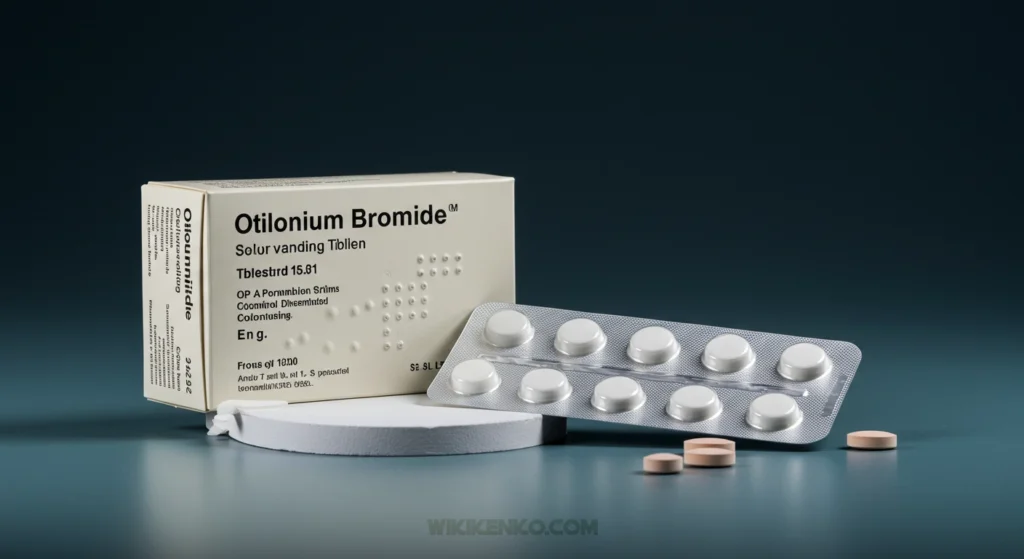
Otilonium bromide is a synthetic antispasmodic agent commonly used in the treatment of gastrointestinal disorders, particularly irritable bowel syndrome (IBS). It acts by reducing smooth muscle spasms in the gastrointestinal tract, thereby alleviating abdominal pain, discomfort, and motility disturbances. As a quaternary ammonium compound, it exerts both local and systemic effects, although its absorption is minimal due to its physicochemical properties. Over the years, it has become a cornerstone therapy for functional bowel disorders, thanks to its favorable safety and tolerability profile.
Chemical Structure
Otilonium bromide is chemically designated as 3-(diethylmethylammonio)-2-butyl-1-phenylpropan-1-one bromide. It is a quaternary ammonium salt, giving it a permanent positive charge. This structural feature prevents it from readily crossing lipid membranes, thereby limiting its systemic absorption and favoring local activity in the gastrointestinal tract.

Its molecular formula is C22H35BrNO2, and its molecular weight is approximately 424.43 g/mol. The compound appears as a white to off-white crystalline powder and is highly soluble in water, consistent with its ionic nature.
Otilonium Bromide-Based Medicines List
Here are some of the most well-known pharmaceutical products containing otilonium bromide as the active pharmaceutical ingredient (API):
- Spasmomen® – Commonly prescribed in Europe and Latin America for IBS and other functional bowel disorders.
- Duspatalin OB® – Used in some regions as a branded otilonium formulation.
- Colospasmin® – Marketed for relief from intestinal cramps and spasms.
- Otilon® – A generic version used in various markets.
- Otilonium Meda® – Manufactured by Meda Pharmaceuticals, designed for functional GI motility issues.
- Spasmopriv® – Used in several countries for managing IBS symptoms.
- Colonex OB® – Focused on colon-targeted therapy.
- Otilux® – Available in select countries as part of antispasmodic therapy.
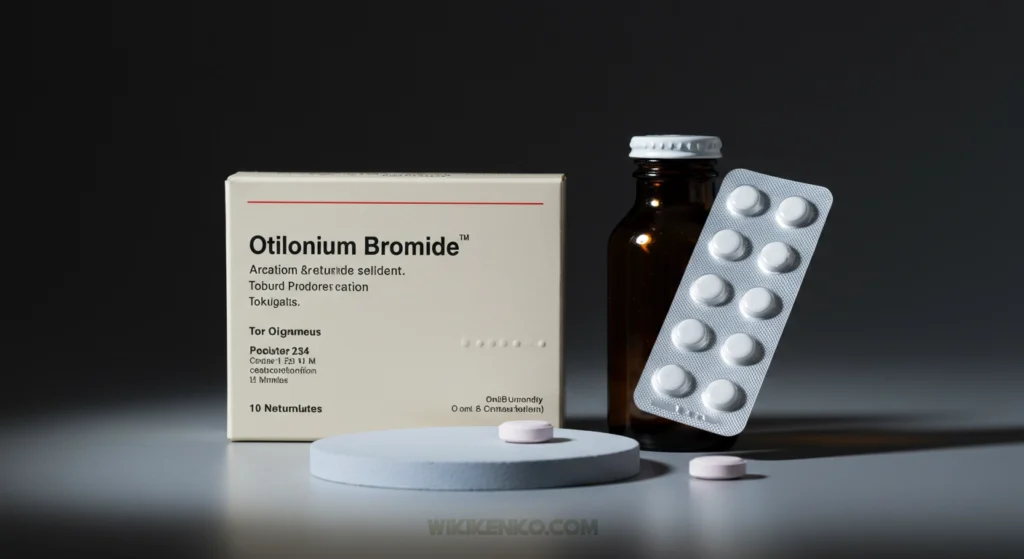
These products are available in tablet or capsule form, typically administered orally.
Mechanism of Action
Otilonium bromide exerts its pharmacological effect primarily by acting on smooth muscle cells of the gastrointestinal tract. It has a multimodal mechanism:
- Calcium Channel Blockade: It inhibits L-type calcium channels, reducing calcium influx into smooth muscle cells. This action diminishes muscular contractions and prevents spasms.
- Muscarinic Receptor Antagonism: Otilonium shows anticholinergic properties by competitively antagonizing muscarinic receptors (mainly M3 subtype) in the gut wall, further decreasing motility and secretions.
- Tachykinin Receptor Inhibition: Some studies suggest that it may inhibit neurokinin-mediated contractions by modulating tachykinin receptors, involved in pain perception and motility.
The combination of these actions makes it particularly effective in conditions like IBS, where hypermotility and visceral hypersensitivity are predominant features.
Pharmacokinetics
Otilonium bromide demonstrates very low systemic bioavailability, which is an advantage for a drug targeting the gastrointestinal tract. After oral administration:
- Absorption: Less than 3% of the dose is absorbed into systemic circulation.
- Distribution: Due to its poor lipid solubility, it remains largely within the intestinal lumen. Minimal distribution occurs in body tissues.
- Metabolism: Because systemic absorption is negligible, hepatic metabolism is limited. Most of the drug acts locally.
- Excretion: The majority of the compound is excreted unchanged via the feces.
Its pharmacokinetic profile allows for effective local action with minimal risk of systemic side effects.
Therapeutic Uses
The table below summarizes the primary therapeutic applications of otilonium bromide:
| Indication | Description |
|---|---|
| Irritable Bowel Syndrome (IBS) | Reduces abdominal pain, bloating, and altered bowel habits |
| Functional Gastrointestinal Disorders | Alleviates spasmodic pain and motility dysfunction |
| Colonic Spasms | Used during radiologic or endoscopic procedures to prevent colonic spasms |
| Non-specific Abdominal Pain | Helps reduce symptoms in patients without organic GI disease |
| Spastic Colitis | Provides symptomatic relief from cramping and urgency |
| Gastrointestinal Motility Disorders | Improves coordination and control of gut muscle contractions |
Side Effects
Otilonium bromide is generally well-tolerated, with a low incidence of adverse reactions. However, like all medications, it may produce side effects in some individuals. Reported side effects include:
- Gastrointestinal:
- Dry mouth
- Nausea
- Constipation or, less commonly, diarrhea
- Neurological:
- Headache
- Dizziness
- Allergic reactions (rare):
- Skin rash
- Itching
- Urticaria
Because of its poor systemic absorption, central nervous system and systemic anticholinergic effects are extremely rare.
Drug Interactions
Due to its minimal systemic absorption, otilonium bromide has a low potential for significant drug-drug interactions. However, caution is advised when co-administered with:
- Other anticholinergics: May enhance drying effects or GI motility reduction.
- Calcium channel blockers: Potential additive effects on smooth muscle relaxation.
- Drugs affecting GI motility: Might interfere with absorption of other medications, especially those requiring specific intestinal transit times (e.g., antidiabetic drugs or digoxin).
Clinical relevance of these interactions remains low but should be considered in polypharmacy situations.
Safety Considerations
Otilonium bromide is considered safe for long-term use in adults, especially those with functional gastrointestinal disorders. Safety precautions include:
- Pregnancy and Lactation: Limited data is available. Use only if clearly needed and under medical supervision.
- Pediatric Use: Not recommended due to lack of sufficient clinical data in children.
- Elderly: Well-tolerated, though clinicians may consider slower gut transit times in older patients.
No evidence suggests significant hepatotoxicity, nephrotoxicity, or cardiotoxicity, even with prolonged use.
Regulatory Status
Otilonium bromide is not approved in the United States by the FDA, but it is widely marketed in Europe, Latin America, and parts of Asia. In these regions, it is considered a prescription-only medication and is approved for use primarily in treating IBS and similar conditions. Regulatory authorities like the European Medicines Agency (EMA) recognize its efficacy and safety in functional gastrointestinal disorders.
Conclusion
Otilonium bromide stands out as a valuable therapeutic agent in the management of irritable bowel syndrome and other functional gastrointestinal disorders. With its unique local action, minimal systemic absorption, and broad safety margin, it provides effective symptom control with minimal side effects. Despite its absence in markets like the United States, its wide acceptance across Europe and other regions underscores its clinical importance. As research continues into its mechanisms and applications, otilonium bromide remains a key player in the field of gastroenterology.