Phenobarbital, also known as phenobarbitone, is one of the oldest and most widely used antiepileptic drugs in medical history. First synthesized in 1912 by chemists working for Bayer, it belongs to the barbiturate class of medications and has since remained on the World Health Organization’s List of Essential Medicines. Initially popularized for its sedative and hypnotic properties, its main use today lies in seizure management, particularly for epilepsy and neonatal seizures. Despite the development of newer antiepileptics, phenobarbital remains a first-line therapy in many low- and middle-income countries due to its affordability and efficacy.
Chemical Structure
Phenobarbital is a substituted barbituric acid derivative with the IUPAC name 5-ethyl-5-phenyl-1,3-diazinane-2,4,6-trione. It has a molecular formula of C12H12N2O3 and a molecular weight of approximately 232.24 g/mol.
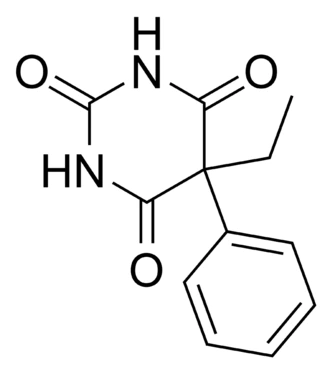
Its structure consists of a barbituric acid ring, which is a six-membered ring with alternating nitrogen and carbon atoms, substituted at the 5th position with an ethyl and phenyl group. These substitutions impart lipophilicity, allowing it to cross the blood-brain barrier efficiently. It is a white crystalline powder, slightly soluble in water, and more soluble in alcohol and ether.
Phenobarbital-Based Medicines (Top 8 Brands and Combinations)
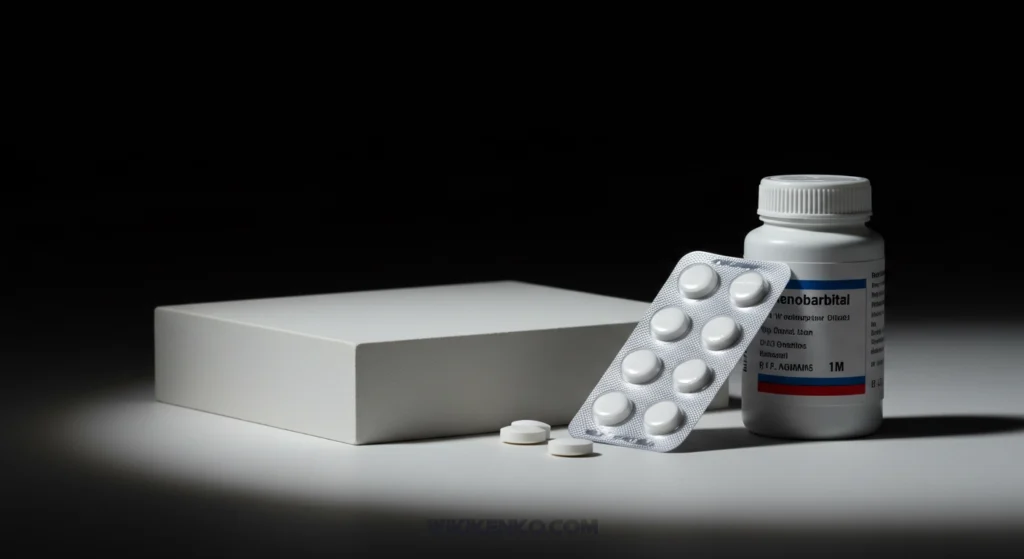
Phenobarbital is available both as a monotherapy and in combination with other drugs. Some of the most well-known brands and combinations include:
- Luminal® – Pure phenobarbital, widely used for epilepsy.
- Phenobarb® – Generic formulation used in both human and veterinary medicine.
- Gardenal® – One of the most commonly prescribed phenobarbital brands.
- Episenta® – Phenobarbital in sodium salt form, used in emergency settings.
- Solfoton® – Oral and injectable formulations for seizure control.
- Mysoline® – A prodrug of phenobarbital (primidone) that metabolizes into phenobarbital.
- Luminaletten® – Used particularly in pediatric patients in Europe.
- FenoBarbital + Phenytoin Combinations – Multi-drug tablets for severe seizure disorders.
Mechanism of Action
Phenobarbital enhances the inhibitory effects of gamma-aminobutyric acid (GABA), the primary inhibitory neurotransmitter in the central nervous system. It binds to GABA-A receptors, prolonging the duration of chloride ion channel opening, which hyperpolarizes the neuronal membrane, making it less likely to fire an action potential.
At higher concentrations, phenobarbital can also directly activate GABA receptors, even in the absence of GABA, and inhibit excitatory neurotransmitters like glutamate by antagonizing AMPA receptors. This dual mechanism makes it effective in controlling seizures, though at the cost of sedation and cognitive impairment.
Pharmacokinetics
“Phenobarbital “is well absorbed orally, with bioavailability exceeding 90%. It reaches peak plasma concentrations within 8–12 hours post-ingestion. Due to its lipophilic nature, it distributes extensively into body tissues, including the brain.
It has a long elimination half-life ranging from 53 to 118 hours, which permits once-daily dosing. The drug is metabolized primarily in the liver via cytochrome P450 enzymes (CYP2C9, CYP2C19) and is also a known inducer of these enzymes, which influences the metabolism of many other drugs.
Approximately 25–50% of the drug is excreted unchanged in the urine, and its clearance is significantly reduced in neonates and the elderly.
Therapeutic Uses
| Condition | Comments |
|---|---|
| Generalized tonic-clonic seizures | Widely used, especially in resource-limited settings. |
| Partial (focal) seizures | Effective, but not preferred due to side effect profile. |
| Status epilepticus | IV phenobarbital is a second-line therapy. |
| Febrile seizures (complex cases) | Occasionally used in recurrent or prolonged cases. |
| Neonatal seizures | First-line treatment worldwide. |
| Sedation in critical care | Used for barbiturate coma therapy in refractory ICP. |
| Alcohol and benzodiazepine withdrawal | Rarely used but effective in resistant cases. |
| Hyperbilirubinemia in neonates | Stimulates hepatic enzyme activity (off-label use). |
Side Effects
While effective, phenobarbital has a narrow therapeutic window and a wide range of adverse effects:
- CNS Effects: Sedation, drowsiness, dizziness, ataxia, cognitive impairment, and behavioral changes in children.
- Psychiatric: Depression, confusion, mood swings.
- Respiratory: Respiratory depression in overdose or neonates.
- Allergic Reactions: Rash, Stevens-Johnson syndrome (rare but severe).
- Hematologic: Megaloblastic anemia (via folate deficiency), thrombocytopenia.
- Dependence and Withdrawal: Long-term use may lead to physical dependence; abrupt withdrawal can precipitate seizures.
- Developmental: In utero exposure may result in congenital malformations or neurodevelopmental delays.
Drug Interactions
Phenobarbital is a potent inducer of cytochrome P450 enzymes, particularly CYP3A4, CYP2C9, and CYP1A2, leading to reduced plasma levels of many concurrently administered drugs. Key interactions include:
- Anticonvulsants: Reduces levels of phenytoin, valproate, carbamazepine.
- Oral contraceptives: Reduced efficacy, increasing risk of pregnancy.
- Anticoagulants: Warfarin metabolism may be increased, reducing anticoagulant effect.
- Antiretrovirals: Decreased efficacy of protease inhibitors.
- CNS Depressants: Potentiates sedation and respiratory depression when used with opioids, benzodiazepines, or alcohol.
Safety Considerations
Pregnancy: Classified as Category D (positive evidence of human fetal risk). However, it may be used if the benefits outweigh risks, especially in seizure control during pregnancy.
Lactation: Excreted in breast milk but generally considered safe with monitoring for sedation in infants.
Pediatrics: Often used in neonates, but may cause long-term neurodevelopmental issues with prolonged use.
Elderly: Increased sensitivity to CNS effects; dose adjustment required due to slower metabolism.
Hepatic/Renal Impairment: Clearance reduced; dose adjustment and monitoring necessary.
Overdose: May result in coma, respiratory failure, hypotension, and death. Management is supportive; activated charcoal, alkalinization of urine, and in severe cases, hemodialysis may be used.
Regulatory Status
Phenobarbital is a Schedule IV controlled substance under the United States Controlled Substances Act, due to its potential for abuse, dependence, and overdose. It is similarly regulated in Europe and other regions.
Internationally, it is classified under the List of Essential Medicines by WHO, acknowledging its importance in global health despite its safety profile concerns. The drug is available both generically and under brand names, and is manufactured by multiple pharmaceutical companies worldwide.
Conclusion
Phenobarbital remains a cornerstone in the treatment of epilepsy, particularly where cost and availability are critical factors. Despite its drawbacks—sedation, drug interactions, and risk of dependence—it continues to save lives, especially in neonatal care and in parts of the world where alternatives are not accessible. Future use may increasingly be restricted to niche indications, but its historical and ongoing significance in pharmacology and neurology cannot be understated.