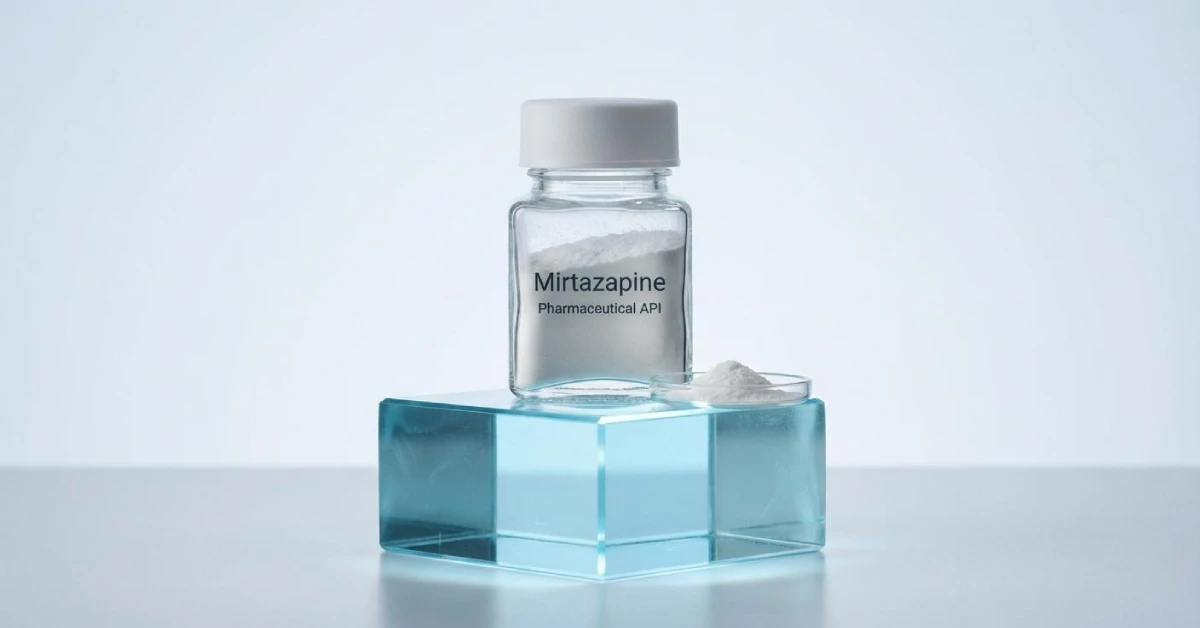
Mirtazapine is a tetracyclic antidepressant used primarily for the treatment of major depressive disorder in adults. Unlike many other antidepressants, mirtazapine has a unique pharmacological profile that combines alpha2-adrenergic antagonism with serotonin and histamine receptor blockade. This combination gives it a distinctive clinical profile, with sedation and appetite stimulation being notable effects alongside its antidepressant activity.
Mirtazapine is marketed under the well-known brand name Remeron in the United States and is also available as generic mirtazapine tablets and orally disintegrating tablets. The drug was first synthesized at Organon and published in 1989, was first approved for use in major depressive disorder in the Netherlands in 1994, and was introduced in the United States in 1996 under the brand name Remeron.
Chemical Structure
“Mirtazapine” is a tetracyclic compound with the molecular formula C17H19N3. Its IUPAC name is 1,2,3,4,10,14b-hexahydro-2-methylpyrazino[2,1-a]pyrido[2,3-c]benzazepine. The molecule contains a pyrazino ring fused to a benzazepine structure, giving it the characteristic tetracyclic framework that distinguishes it from tricyclic antidepressants.
It is a racemic mixture, meaning it contains both R and S enantiomers. The drug acts as an antagonist at central presynaptic alpha2-adrenergic inhibitory autoreceptors and heteroreceptors, as well as at serotonin 5-HT2 and 5-HT3 receptors and histamine H1 receptors. This multi-receptor profile is responsible for its unique clinical effects, including sedation, appetite stimulation, and antidepressant activity.accessdata.
Mirtazapine-Based Medicines List
Mirtazapine is marketed under several brand names and generic products around the world. The following list includes eight well-known mirtazapine-based medicines:
- Remeron — the principal branded mirtazapine product in the United States.
- RemeronSolTab — orally disintegrating mirtazapine tablets.
- Mirtazapine tablets — generic immediate-release oral formulation.
- Mirtazapine orally disintegrating tablets — generic formulation that dissolves on the tongue.
- Avanza — mirtazapine-based product marketed in certain international markets.
- Zispin — mirtazapine-based product available in parts of Europe.
- Norset — mirtazapine-based product marketed in selected regions.
- Mirtazapine and other antidepressant combination products — combination therapies used in some markets for treatment-resistant depression.
The availability and exact product names vary by country. Remeron is the most widely recognized branded mirtazapine product and has been authorized in numerous countries worldwide.
Mechanism of Action
Mirtazapine works through a unique mechanism that differs from most other antidepressants. It acts as an antagonist at central presynaptic alpha2-adrenergic inhibitory autoreceptors and heteroreceptors, which normally suppress the release of norepinephrine and serotonin. By blocking these inhibitory receptors, mirtazapine increases the release of both norepinephrine and serotonin in the central nervous system.
In addition to alpha2 blockade, It is a potent antagonist of serotonin 5-HT2 and 5-HT3 receptors. Blocking 5-HT2 receptors contributes to improved sleep and reduced anxiety, while blocking 5-HT3 receptors reduces nausea and gastrointestinal side effects commonly associated with serotonergic drugs. It also acts as an antagonist of histamine H1 receptors, which is responsible for its sedative effects.
Pharmacokinetics
Mirtazapine is rapidly absorbed after oral administration. The absolute bioavailability of mirtazapine is approximately 50% following oral administration, and peak plasma concentrations are reached within about 2 hours post dose. This relatively rapid absorption supports once-daily dosing, typically taken in the evening due to its sedative effects.accessdata.
It is extensively bound to plasma proteins, with approximately 85% of the drug bound to plasma proteins. It is metabolized primarily in the liver by N-demethylation and hydroxylation via cytochrome P450 enzymes, including CYP1A2, CYP2D6, and CYP3A4. The major metabolite is desmethyl mirtazapine, which has some pharmacological activity but is less potent than the parent compound.
Therapeutic Uses
| Therapeutic Use | Clinical Purpose |
|---|---|
| Major depressive disorder | Treats major depressive disorder in adults, improving mood, sleep, appetite, and overall functioning. |
| Depression with insomnia | Particularly useful in patients with depression who also experience sleep disturbances, due to its sedative effects. |
| Depression with poor appetite or weight loss | Beneficial in patients with depression who have poor appetite or unintended weight loss, due to its appetite-stimulating effects. |
| Off-label use for insomnia | Used off-label for insomnia, particularly in patients who cannot tolerate other sleep medications. |
| Off-label use for anxiety disorders | Used off-label for panic disorder, generalized anxiety disorder, social anxiety disorder, and posttraumatic stress disorder. |
| Off-label use for migraines | Used off-label for migraine prevention in some patients. |
Side Effects
The most common adverse effects of mirtazapine include sedation, drowsiness, increased appetite, and weight gain. These effects are often more pronounced at lower doses, particularly the sedative effects, which is why it is often initiated at a lower dose and titrated upward.
Other common side effects include dry mouth, constipation, dizziness, and abnormal dreams. Some patients may experience increased cholesterol or triglyceride levels, which should be monitored in patients with cardiovascular risk factors. Weight gain is a particular concern with long-term use and may require dietary counseling and regular weight monitoring.
More serious adverse effects include agranulocytosis, a potentially life-threatening decrease in white blood cells, although this is rare. It can also cause serotonin syndrome when combined with other serotonergic medicines, and it carries a risk of suicidal thoughts and behaviors in some patients, particularly children, adolescents, and young adults.
Drug Interactions
Mirtazapine has several clinically important interactions. Combining it with monoamine oxidase inhibitors (MAOIs), including linezolid and intravenous methylene blue, is contraindicated due to the risk of serotonin syndrome. This potentially life-threatening condition is characterized by agitation, elevated body temperature, rapid heart rate, and muscle rigidity.
Combining it with other serotonergic medicines, such as SSRIs, SNRIs, triptans, tramadol, and St. John’s wort, also increases the risk of serotonin syndrome. Caution is advised when using these combinations, and patients should be monitored for signs of serotonin toxicity.
Safety Considerations
Mirtazapine is contraindicated in patients with known hypersensitivity to it or any of its excipients. It should not be used in patients taking or within 14 days of stopping MAOIs, including linezolid and intravenous methylene blue, due to the risk of serotonin syndrome.
Patients with a history of agranulocytosis, bone marrow suppression, or blood dyscrasias should use it with caution, as the drug can rarely cause these serious hematologic effects. Patients should be advised to report any signs of infection, such as fever, sore throat, or mouth ulcers, as these may indicate agranulocytosis.
Treatment should begin at a low dose, typically 15 mg, and be titrated based on individual response and tolerability. Patients should be advised to take it in the evening due to its sedative effects, and they should avoid alcohol and other sedating medicines.
Regulatory Status
Mirtazapine tablets are approved by the U.S. Food and Drug Administration for the treatment of major depressive disorder in adults. The FDA-approved labeling describes the product as a tetracyclic antidepressant and identifies its tablet and orally disintegrating tablet presentations for oral use.
it is available both as the branded product Remeron and as generic mirtazapine tablets and orally disintegrating tablets. Regulatory approval, available strengths, and prescribing restrictions differ among countries, so patients should rely on the labeling and prescribing information applicable in their own region.
Conclusion
Mirtazapine is a unique tetracyclic antidepressant with a distinctive mechanism of action that combines alpha2-adrenergic antagonism with serotonin and histamine receptor blockade. This multi-receptor profile gives it a valuable clinical role in patients with depression who also experience insomnia, poor appetite, or weight loss. Although generally well tolerated, it requires careful attention to sedation, weight gain, drug interactions, and the risk of serotonin syndrome. Appropriate use under medical supervision allows mirtazapine to provide meaningful benefit for many patients with major depressive disorder.