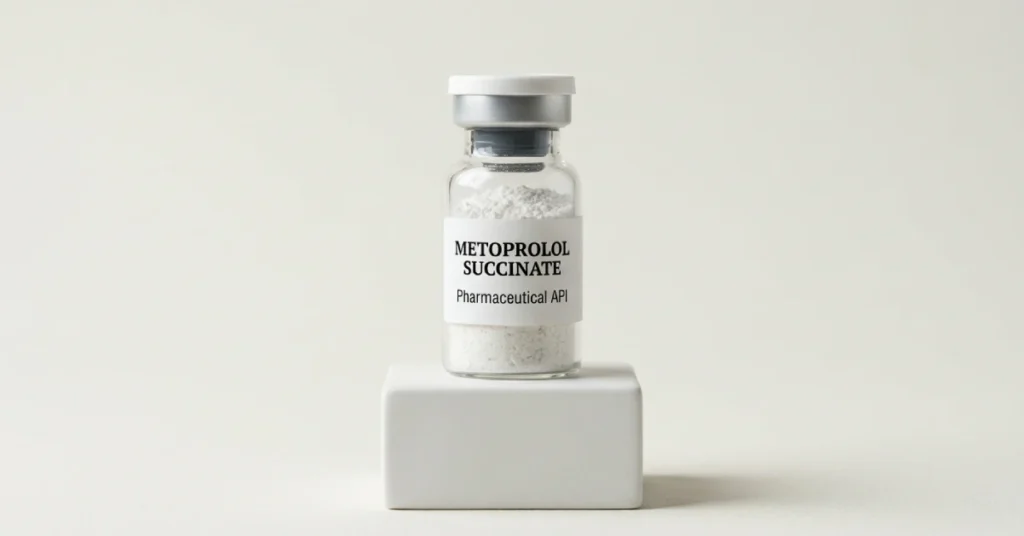
Metoprolol succinate is an extended-release salt form of metoprolol, a widely prescribed cardiovascular medicine belonging to the beta-adrenergic blocking drug class. It is most commonly used to manage high blood pressure, chronic angina, and stable symptomatic heart failure. Unlike metoprolol tartrate, which is an immediate-release formulation often used in acute clinical settings, metoprolol succinate is formulated for once-daily oral administration and provides a gradual, sustained release of the active drug. This extended-release design makes it particularly suitable for long-term treatment, where consistent drug exposure throughout the day is clinically important.
Metoprolol is described as a beta1-selective, or cardioselective, beta-blocker. At conventional doses, it preferentially blocks beta1-adrenergic receptors in the heart, thereby reducing heart rate, cardiac contractility, and blood pressure. At higher concentrations, however, its selectivity is not absolute, and it may also inhibit beta2 receptors located in bronchial and vascular tissue. This property is important because beta2 blockade can contribute to bronchospasm in susceptible patients, especially those with asthma or chronic obstructive pulmonary disease.
Chemical Structure and Identity
Metoprolol succinate is the succinate salt of metoprolol, a synthetic beta-adrenergic receptor antagonist. Its active pharmacological component, metoprolol, contains an aryloxypropanolamine structure typical of many beta-blockers. The molecule is designed to interact with beta-adrenergic receptors, particularly beta1 receptors in cardiac tissue, thereby reducing the physiological response to circulating catecholamines such as adrenaline and noradrenaline.
The extended-release tablet formulation is designed to release metoprolol gradually after ingestion. This controlled release reduces peak-to-trough fluctuations in drug concentration compared with immediate-release products. As a result, metoprolol succinate can provide more stable beta-blockade over a 24-hour period and is generally administered once daily. The extended-release nature of the formulation is clinically meaningful because it supports convenient dosing and may improve adherence in patients requiring long-term cardiovascular therapy.
Metoprolol-Based Medicines List
Metoprolol is available in several salt forms, dosage strengths, and branded or generic products. The following list includes eight well-known metoprolol-based medicines:
- Toprol-XL — extended-release metoprolol succinate tablets.
- Lopressor — immediate-release metoprolol tartrate tablets.
- Metoprolol succinate extended-release tablets — generic extended-release formulation.
- Metoprolol tartrate tablets — generic immediate-release formulation.
- Betaloc — metoprolol-based beta-blocker brand available in several international markets.
- Selokeen — metoprolol-based medicine marketed in parts of Europe.
- Metoprolol succinate and hydrochlorothiazide combination products — combination therapy for hypertension.
- Metoprolol tartrate injection — injectable formulation used in supervised clinical settings for acute cardiovascular management.
The availability and exact product names vary by country. In the United States, “metoprolol succinate” extended-release tablets are approved for hypertension, angina pectoris, and stable symptomatic heart failure.
Mechanism of Action
Metoprolol succinate works primarily by blocking beta1-adrenergic receptors in the heart. Under stress, exercise, illness, or emotional stimulation, the sympathetic nervous system releases catecholamines that bind to beta receptors and increase heart rate, myocardial contractility, and blood pressure. By competitively blocking these receptors, metoprolol reduces the effects of catecholamines on cardiac tissue.
This receptor blockade produces several clinically useful effects. It lowers resting and exercise heart rate, reduces cardiac output, decreases systolic blood pressure during exertion, and limits reflex tachycardia. In patients with angina, these changes reduce myocardial oxygen demand, helping to decrease the frequency and severity of anginal episodes. The FDA label specifically explains that metoprolol reduces heart rate, myocardial contraction velocity and extent, and blood pressure, thereby lowering the heart’s oxygen requirement at a given level of effort.
Pharmacokinetics
Metoprolol succinate is administered orally and is absorbed from the gastrointestinal tract. The extended-release formulation releases metoprolol gradually, producing a smoother concentration-time profile than immediate-release metoprolol tartrate. This pharmacokinetic property allows once-daily dosing and helps maintain relatively stable beta-blockade throughout the dosing interval.
After absorption, metoprolol undergoes extensive first-pass metabolism in the liver. It is predominantly metabolized by the cytochrome P450 enzyme CYP2D6. Genetic variation in CYP2D6 can influence metoprolol exposure, and coadministration of strong CYP2D6 inhibitors can substantially increase metoprolol concentrations. For example, the FDA label notes that strong CYP2D6 inhibitors such as quinidine, fluoxetine, paroxetine, and propafenone can double metoprolol concentrations, while some combinations may produce even greater increases.
Therapeutic Uses
| Therapeutic Use | Clinical Purpose |
|---|---|
| Hypertension | Lowers elevated blood pressure and reduces the risk of fatal and nonfatal cardiovascular events, including stroke and myocardial infarction. |
| Stable angina pectoris | Reduces anginal attacks and improves exercise tolerance by lowering myocardial oxygen demand. |
| Chronic heart failure | Treats stable, symptomatic NYHA Class II or III heart failure of ischemic, hypertensive, or cardiomyopathic origin; reduces cardiovascular mortality and heart-failure hospitalizations. |
| Post-myocardial infarction management | May be used as part of long-term cardiovascular risk management in selected patients, depending on clinical guidelines and individual patient factors. |
| Rate control in selected arrhythmias | May be used under specialist guidance to control excessive heart rate in certain supraventricular arrhythmias, although this use varies by formulation and jurisdiction. |
| Preoperative cardiovascular risk management | May be considered in selected patients with established cardiovascular disease, but routine initiation immediately before surgery is not appropriate for all patients and requires individualized assessment. |
Side Effects
Like other beta-blockers, metoprolol succinate can cause adverse effects related to excessive slowing of heart rate and reduced cardiac output. Common effects include fatigue, dizziness, tiredness, bradycardia, hypotension, cold extremities, and exercise intolerance. These effects are often more noticeable when treatment is started, when the dose is increased, or when metoprolol is combined with other blood-pressure-lowering medicines.
Gastrointestinal symptoms such as nausea, abdominal discomfort, diarrhea, or constipation may also occur. Some patients experience sleep disturbances, vivid dreams, depression, or reduced exercise capacity. Although metoprolol is relatively cardioselective, it can still worsen bronchospasm in patients with reactive airway disease, particularly at higher doses or when beta1 selectivity is overcome.
Drug Interactions
Metoprolol succinate has several clinically important interactions. Strong CYP2D6 inhibitors can raise metoprolol exposure and intensify beta-blocking effects. Medicines in this category include quinidine, fluoxetine, paroxetine, and propafenone. Increased metoprolol levels may lead to excessive bradycardia, hypotension, dizziness, fatigue, or heart block.
Combining metoprolol with other heart-rate-lowering or blood-pressure-lowering drugs requires caution. These include calcium channel blockers such as verapamil and diltiazem, digoxin, amiodarone, clonidine, and other antihypertensive agents. Such combinations can increase the risk of severe bradycardia, atrioventricular block, hypotension, or reduced cardiac output.
Safety Considerations
Metoprolol succinate extended-release tablets are contraindicated in severe bradycardia, second- or third-degree atrioventricular block, cardiogenic shock, decompensated heart failure, and sick sinus syndrome unless a permanent pacemaker is in place. Hypersensitivity to metoprolol or any component of the formulation is also a contraindication.
Patients with asthma, chronic obstructive pulmonary disease, diabetes, peripheral arterial disease, or a history of severe allergic reactions require individualized assessment. Beta-blockers may mask some symptoms of hypoglycemia, especially tremor and palpitations, although sweating may remain. In patients with diabetes, metoprolol can therefore complicate recognition of low blood sugar.

Regulatory Status
Metoprolol succinate extended-release tablets are approved by the U.S. Food and Drug Administration for the treatment of hypertension, angina pectoris, and stable symptomatic heart failure. The FDA-approved labeling describes the product as a beta1-selective adrenoceptor blocking agent and identifies its extended-release tablet presentation for oral use.
The medicine is available both as the branded product Toprol-XL and as generic extended-release metoprolol succinate. Regulatory approval, available strengths, and prescribing restrictions differ among countries, so patients should rely on the labeling and prescribing information applicable in their own region.
Conclusion
Metoprolol succinate is an important long-term cardiovascular medicine with established roles in hypertension, stable angina, and selected patients with chronic heart failure. Its beta1-selective mechanism lowers heart rate, myocardial oxygen demand, and blood pressure, while its extended-release formulation supports convenient once-daily dosing. Although generally effective and widely used, it requires careful attention to heart rate, blood pressure, drug interactions, respiratory disease, diabetes, and the risk associated with abrupt discontinuation. Appropriate use under medical supervision allows metoprolol succinate to provide meaningful cardiovascular protection for many patients.