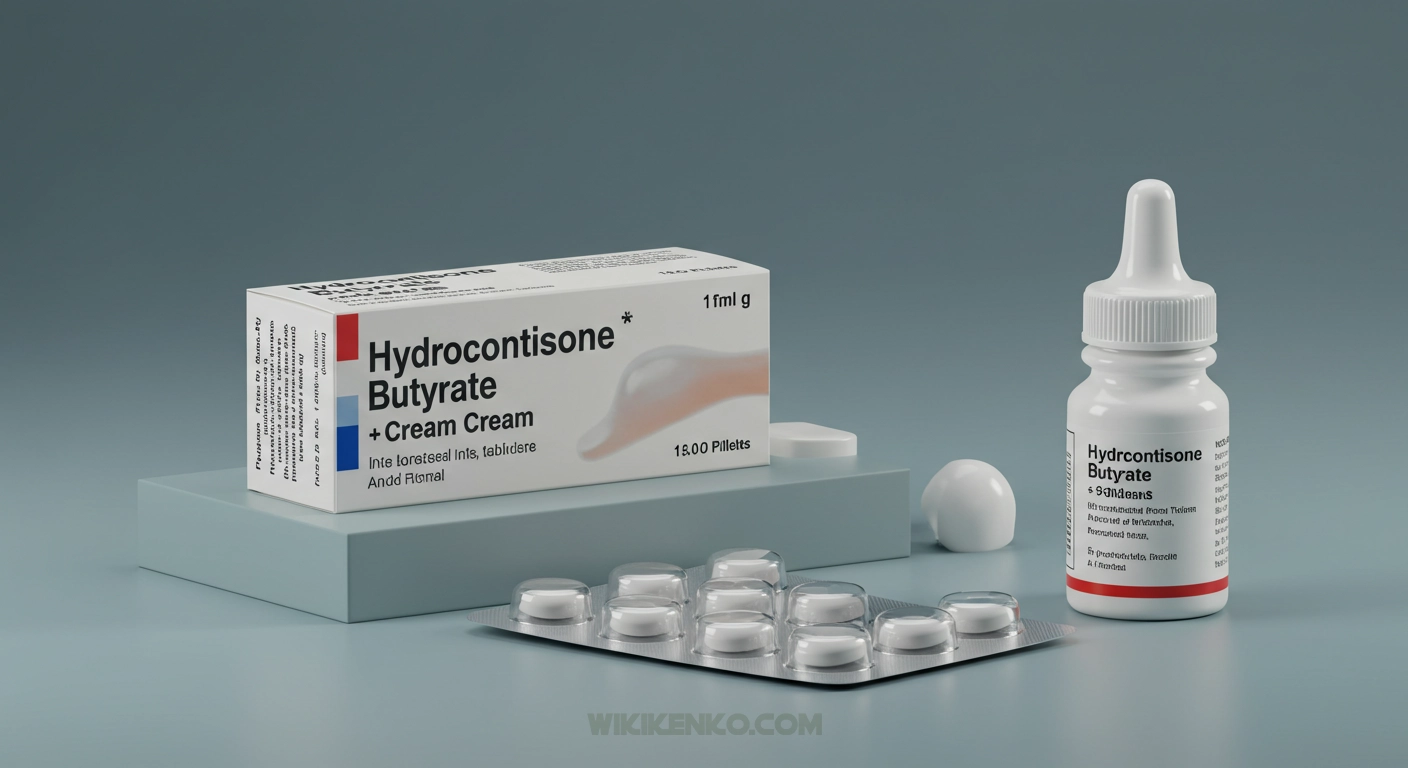
Hydrocortisone butyrate is a synthetic corticosteroid derived from hydrocortisone, used topically to reduce inflammation, redness, swelling, and itching associated with various dermatologic conditions. As a moderate-to-potent corticosteroid, it plays a central role in treating inflammatory skin diseases like eczema, psoriasis, dermatitis, and allergic reactions. Hydrocortisone butyrate is valued for its efficacy combined with a relatively favorable safety profile when used for short-term treatment on non-sensitive skin areas.
Available in various formulations including creams, ointments, lotions, and emulsions, this molecule offers versatility and local anti-inflammatory effects with minimal systemic absorption when used appropriately. It exists in two forms: hydrocortisone-17-butyrate and hydrocortisone-21-butyrate, each with specific potencies and indications.
Chemical Structure
- IUPAC Name: (11β)-11,17-Dihydroxy-21-(butanoyloxy)pregn-4-ene-3,20-dione
- Molecular Formula: C25H36O6
- Molecular Weight: ~432.55 g/mol
- Chemical Class: Glucocorticoid corticosteroid
- Structure Type: Steroid nucleus with a butyrate ester group
- Solubility: Practically insoluble in water, soluble in organic solvents like ethanol and chloroform
- Appearance: White or almost white crystalline powder
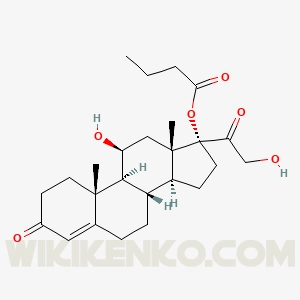
The esterification of hydrocortisone with butyric acid improves lipophilicity, enhancing penetration through the skin and improving its topical anti-inflammatory effect.
Hydrocortisone Butyrate-Based Medicines List
- Locoid® – One of the most common brand-name products available in cream, ointment, and lotion forms.
- Locoid Lipocream® – A lipid-enriched cream with better skin adherence and hydration.
- Locoid Crelo® – Emulsion-based formulation for sensitive skin.
- Hydroval® – A prescription-only topical corticosteroid.
- Cort-B® – Generic brand used for dermatologic inflammation.
- Butavate® – Known for its potent anti-inflammatory effects.
- Valmex-HC® – A combination product available in select markets.
- Hydrocortistab® – Mainly used in dermatology clinics for moderate dermatitis.
These are used in both monotherapy and combination products with antifungals or antibacterials in dermatologic practice.
Mechanism of Action
Hydrocortisone butyrate exerts its therapeutic effects through glucocorticoid receptor-mediated actions:
- It binds to cytoplasmic glucocorticoid receptors, translocates to the nucleus, and modulates gene transcription.
- This results in repression of pro-inflammatory genes (like cytokines, prostaglandins, and leukotrienes).
- It also induces anti-inflammatory proteins such as lipocortin-1, which inhibits phospholipase A2 and downregulates the arachidonic acid pathway.
- Additionally, it stabilizes lysosomal membranes, decreases capillary permeability, and suppresses immune cell migration to sites of inflammation.
Due to its lipophilic structure, “hydrocortisone butyrate” penetrates the skin barrier more effectively than plain hydrocortisone, increasing local potency.
Pharmacokinetics
| Parameter | Details |
|---|---|
| Route of Administration | Topical |
| Absorption | Minimal systemic absorption when applied to intact skin |
| Onset of Action | Within hours of application |
| Plasma Protein Binding | High (once systemically absorbed) |
| Metabolism | Primarily hepatic via enzymatic hydrolysis of the ester group |
| Excretion | Metabolites excreted via urine and bile |
| Bioavailability | Low systemic bioavailability with proper topical use |
| Half-Life (if systemically absorbed) | Approx. 1.5–2 hours |
The extent of systemic absorption depends on multiple factors including skin integrity, formulation, area of application, and duration of therapy.
Therapeutic Uses
| Indication | Therapeutic Role |
|---|---|
| Atopic dermatitis | Reduces inflammation and itching |
| Psoriasis (localized) | Controls flare-ups and plaque formation |
| Contact dermatitis (allergic/irritant) | Treats redness, itching, and swelling |
| Seborrheic dermatitis | Reduces flaking and inflammation |
| Lichen simplex chronicus | Soothes thickened, itchy skin |
| Insect bite reactions | Alleviates swelling and allergic inflammation |
| Nummular eczema | Treats coin-shaped inflammatory lesions |
| Intertrigo (mild cases) | Controls inflammation in skin folds |
Hydrocortisone butyrate is generally avoided in perioral, perianal, or ocular areas due to risk of irritation or thinning.
Side Effects
Most side effects are localized to the skin, especially with prolonged use or over-application.
Common Side Effects
- Skin thinning (atrophy)
- Burning or stinging at application site
- Dryness or peeling
- Folliculitis
- Hyperpigmentation or hypopigmentation
Rare or Serious Side Effects
- Skin infections (fungal, bacterial) due to immunosuppression
- Perioral dermatitis
- Striae (stretch marks)
- Systemic adrenal suppression (very rare, usually in children or with occlusion)
Use under occlusive dressings or over large surface areas can increase systemic exposure.
Drug Interactions
Since hydrocortisone butyrate is topically applied, significant systemic drug interactions are rare. However, the following considerations apply:
- Other topical agents: Risk of cumulative irritation or absorption when used with other steroids, antifungals, or antibacterials.
- Immunosuppressants: When combined systemically, may increase the risk of infections.
- CYP3A4 inhibitors (e.g., ketoconazole) can theoretically reduce metabolism if systemic absorption occurs, though clinically irrelevant in most cases.
Safety Considerations
Population-Based Safety
- Pediatrics: Use cautiously; infants and young children have a higher skin surface-to-body mass ratio, increasing the risk of systemic effects.
- Pregnancy: Category C – Use only if benefits outweigh risks; prolonged use should be avoided.
- Lactation: Low risk if applied to non-breast areas; should not be applied on or near nipples.
- Elderly: Thinner skin increases the risk of local side effects; lower potency steroids may be preferred.
General Precautions
- Do not use on broken, infected, or ulcerated skin unless advised.
- Avoid long-term continuous use on the face or in skin folds.
- Taper off gradually to avoid rebound dermatitis.
Regulatory Status
- United States (FDA): Approved for prescription use under various brand and generic names.
- European Union (EMA): Approved and classified under moderate-potency topical corticosteroids.
- India and Asia: Widely used, both as monotherapy and in combination products.
- Controlled Status: Prescription-only medicine (Rx) in most jurisdictions.
- Formulary Inclusion: Listed in several national and hospital formularies for dermatology use.
Conclusion
Hydrocortisone butyrate is a topical corticosteroid of moderate potency, widely used in dermatology for its anti-inflammatory and antipruritic effects. Its formulation as an ester enhances skin penetration and local efficacy while minimizing systemic risks when used appropriately. It is particularly useful in managing eczema, dermatitis, and other localized inflammatory skin conditions.
Despite its overall safety profile, judicious use is essential, particularly in pediatric populations and for facial or sensitive skin areas, to avoid complications like skin thinning or adrenal suppression. As a well-established molecule with a broad global market presence, hydrocortisone butyrate remains a cornerstone treatment in the realm of topical corticosteroids.