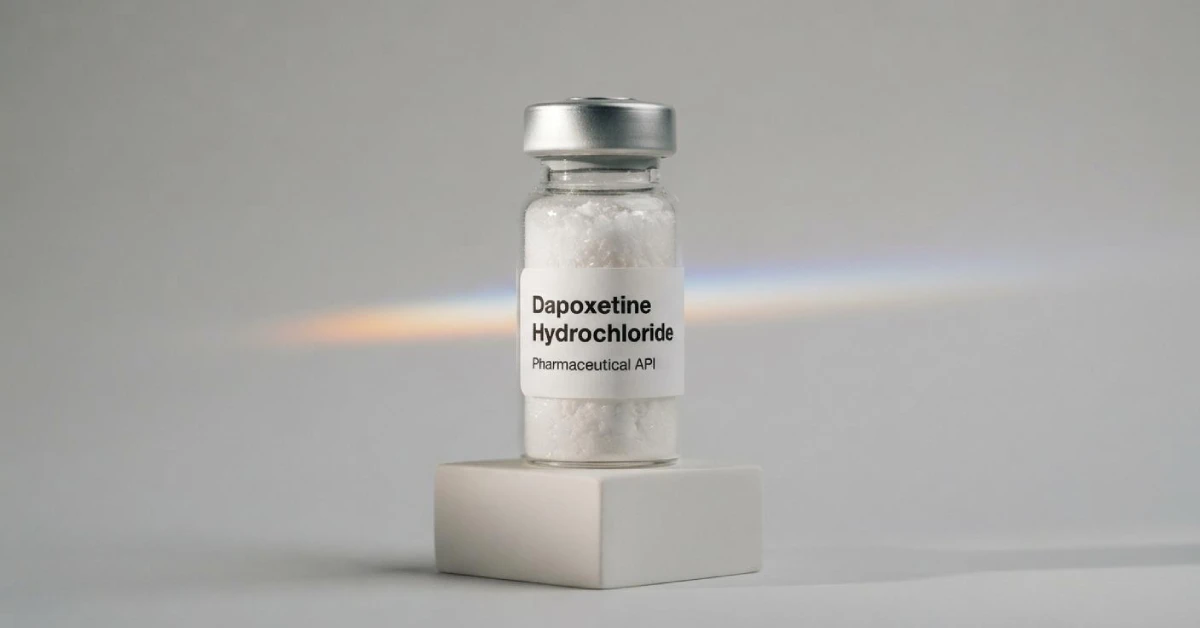
Dapoxetine hydrochloride is a short-acting selective serotonin reuptake inhibitor (SSRI) developed specifically for the on-demand treatment of premature ejaculation in adult men. Unlike conventional SSRIs used for depression and anxiety, which are taken daily, dapoxetine is designed to be taken shortly before anticipated sexual activity. This rapid onset and relatively short duration of action make it distinct from most other SSRIs.
Dapoxetine hydrochloride is the hydrochloride salt form of dapoxetine, the active pharmaceutical ingredient. It is marketed in many countries under the brand name Priligy and is also available as generic dapoxetine hydrochloride products in certain markets. The medicine is intended for men aged 18 to 64 years who have persistent or recurrent premature ejaculation and who meet the clinical criteria for the condition.
Chemical Structure
“Dapoxetine hydrochloride” has the molecular formula C21H23NO·HCl. Its IUPAC name is (1S)-N,N-dimethyl-3-(naphthalen-1-yloxy)-1-phenylpropan-1-amine hydrochloride. The molecule contains a naphthalene ether group, a phenyl group, and a dimethylamino side chain, giving it the structural features of a selective serotonin reuptake inhibitor.
Dapoxetine is the S-enantiomer, meaning it has a specific three-dimensional configuration that contributes to its pharmacological activity. The hydrochloride salt improves the compound’s stability and suitability for oral tablet formulation. Dapoxetine hydrochloride is classified as an SSRI, although its pharmacokinetic profile is much shorter than that of SSRIs commonly used for psychiatric indications.
Dapoxetine-Based Medicines List
Dapoxetine is marketed under several brand names and generic products around the world. The following list includes eight well-known dapoxetine-based medicines:
- Priligy — the principal branded dapoxetine hydrochloride product.
- Westoxetin — a dapoxetine-based product marketed in some countries.
- Dapoxet — a dapoxetine hydrochloride brand available in selected markets.
- Duralast — a dapoxetine-containing product marketed in certain regions.
- Duratia — a dapoxetine-based product available in selected markets.
- Dapoxetine hydrochloride tablets — generic immediate-release oral formulation.
- Dapoxetine and sildenafil combination products — combination therapy marketed in some countries for erectile dysfunction and premature ejaculation.
- Dapoxetine and tadalafil combination products — combination therapy marketed in certain regions for erectile dysfunction and premature ejaculation.
The availability and exact product names vary by country. Priligy is the most widely recognized branded dapoxetine product and has been authorized in numerous countries worldwide.
Mechanism of Action
Dapoxetine hydrochloride works by inhibiting the reuptake of serotonin in the central nervous system. Serotonin is a neurotransmitter involved in the regulation of mood, emotion, and ejaculation. By blocking serotonin reuptake, dapoxetine increases serotonin activity at pre- and postsynaptic receptors, which is believed to delay ejaculation and improve ejaculatory control.
The mechanism of action in premature ejaculation is presumed to be linked to the inhibition of neuronal serotonin reuptake and the subsequent potentiation of serotonin’s effects at pre- and postsynaptic receptors. This increased serotonergic activity helps delay the ejaculatory reflex, allowing men to have greater control over the timing of ejaculation.
Pharmacokinetics
Dapoxetine hydrochloride is rapidly absorbed after oral administration. Maximum plasma concentrations are typically reached within 1 to 2 hours after tablet intake, which supports its use as an on-demand treatment taken before anticipated sexual activity.
The absolute bioavailability of dapoxetine is approximately 42%, with a range of 15% to 76%. Dose-proportional increases in exposure are observed between the 30 mg and 60 mg dose strengths, allowing clinicians to adjust the dose based on individual response and tolerability.
Therapeutic Uses
| Therapeutic Use | Clinical Purpose |
|---|---|
| Premature ejaculation | Treats premature ejaculation in men aged 18 to 64 years by improving ejaculatory control and increasing time to ejaculation. |
| On-demand treatment | Designed to be taken 1 to 3 hours before anticipated sexual activity, rather than on a daily schedule. |
| Ejaculatory control improvement | Helps men achieve greater control over the timing of ejaculation during sexual activity. |
| Sexual satisfaction improvement | May improve sexual satisfaction for both the patient and partner by reducing the distress associated with premature ejaculation. |
| Combination therapy with PDE5 inhibitors | May be used in combination with PDE5 inhibitors such as sildenafil or tadalafil in men with both premature ejaculation and erectile dysfunction, subject to clinical assessment and safety monitoring. |
| Off-label use in other conditions | Dapoxetine has been studied for other indications, but its approved use remains limited to premature ejaculation in most jurisdictions. |
Side Effects
The most common adverse effects of dapoxetine hydrochloride include nausea, dizziness, headache, diarrhea, and somnolence. These effects are generally mild to moderate in severity and often diminish with continued use. Nausea is particularly common and may be more pronounced at higher doses.
Other reported side effects include insomnia, dry mouth, constipation, fatigue, and erectile dysfunction. Some patients may experience anxiety, agitation, or mood changes, particularly during the initial treatment period. These effects are generally related to the drug’s serotonergic activity and its impact on central nervous system function.
Drug Interactions
Dapoxetine hydrochloride has several clinically important interactions. Strong CYP2D6 inhibitors, such as fluoxetine, paroxetine, and quinidine, can substantially increase dapoxetine concentrations and intensify its effects. The FDA label notes that fluoxetine can increase the Cmax and AUC of dapoxetine by 50% and 88%, respectively.
Potent CYP3A4 inhibitors, such as ketoconazole, can also increase dapoxetine exposure. When dapoxetine is combined with a potent CYP3A4 inhibitor, the maximum recommended dose is 30 mg, and caution is advised even with moderate CYP3A4 inhibitors.
Safety Considerations
Dapoxetine hydrochloride is contraindicated in patients with hypersensitivity to dapoxetine or any component of the formulation. It should not be used in patients with a history of syncope, orthostatic hypotension, or significant cardiovascular disease, as these conditions may be exacerbated by the drug’s effects on blood pressure and heart rate.
Patients with a history of mania, bipolar disorder, or seizures should use dapoxetine with caution, as SSRIs can potentially worsen these conditions. Dapoxetine should also be used with caution in patients with renal or hepatic impairment, as altered metabolism and clearance may increase the risk of adverse effects.
Treatment should begin at the lowest effective dose, typically 30 mg, and be titrated based on individual response and tolerability. Patients should be advised to take dapoxetine with water and to avoid alcohol, as alcohol can increase the risk of dizziness, syncope, and orthostatic hypotension.
Regulatory Status
Dapoxetine hydrochloride is approved for the treatment of premature ejaculation in many countries worldwide, including several European Union member states. The European Medicines Agency has authorized Priligy for use in men aged 18 to 64 years with premature ejaculation.
In the United States, dapoxetine has not received FDA approval for any indication, including premature ejaculation. The drug was originally developed by Eli Lilly and later licensed to Alza and Janssen-Cilag for further development, but it has not completed the FDA approval process.
Conclusion
Dapoxetine hydrochloride is a unique short-acting SSRI specifically developed for the on-demand treatment of premature ejaculation in adult men. Its rapid absorption, short half-life, and potent serotonin reuptake inhibition make it well suited for this indication, allowing men to achieve greater ejaculatory control and improved sexual satisfaction. Although generally effective, dapoxetine requires careful attention to drug interactions, cardiovascular safety, and the risk of serotonin syndrome. Appropriate use under medical supervision allows dapoxetine hydrochloride to provide meaningful benefit for men with premature ejaculation.