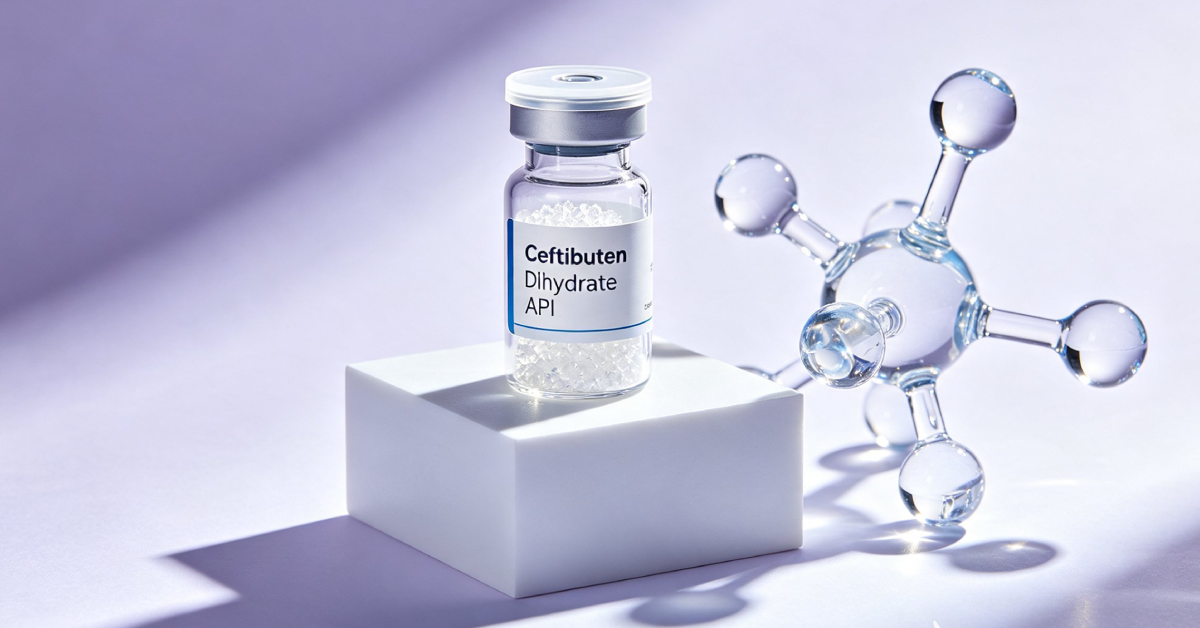
ceftibuten dihydrate is the hydrated pharmaceutical form of ceftibuten, an orally administered, semisynthetic third-generation cephalosporin antibiotic. It belongs to the β-lactam antibiotic family and is supplied mainly as capsules or oral suspension. The dihydrate contains two water molecules associated with each ceftibuten molecule and provides a stable, standardized form for pharmaceutical production.
“ceftibuten dihydrate” was marketed in the United States under the brand name Cedax. The original product was approved by the U.S. Food and Drug Administration in 1995 for selected mild-to-moderate bacterial infections. U.S. Cedax capsules and oral suspensions are now listed as discontinued, although ceftibuten products remain available in some international markets. FDA records indicate that the products were not withdrawn because of safety or effectiveness concerns.
Chemical Structure
The chemical name of ceftibuten dihydrate is (+)-(6R,7R)-7-[(Z)-2-(2-amino-4-thiazolyl)-4-carboxycrotonamido]-8-oxo-5-thia-1-azabicyclo[4.2.0]oct-2-ene-2-carboxylic acid dihydrate.
Its molecular formula is commonly written as , or when the water molecules are included. The molecular weight of the dihydrate is approximately 446.45–446.46 g/mol, while anhydrous ceftibuten has a molecular weight of about 410.43 g/mol.
The molecule contains a β-lactam ring fused to a sulfur-containing ring, a carboxylic acid group, and an aminothiazole substituent. The β-lactam ring is essential to antibacterial activity because it enables the drug to bind bacterial penicillin-binding proteins. Structural features also provide stability against several bacterial β-lactamases, although resistant organisms can still inactivate the medicine.

Ceftibuten-Based Medicines: Top Eight
Common ceftibuten-based products include:
- Cedax 400 mg capsules.
- Cedax 90 mg/5 mL oral suspension.
- Cedax 180 mg/5 mL oral suspension.
- Isocef capsules.
- Isocef pediatric oral suspension.
- Seftem capsules.
- Generic ceftibuten capsules.
- Generic ceftibuten oral suspension.
Product names, strengths, and availability vary between countries. Some listed brands may no longer be marketed in particular regions. The official local product information should be checked for approved age ranges, storage conditions, dosage, and reconstitution instructions.
Mechanism of Action
ceftibuten dihydrate kills susceptible bacteria by interfering with cell-wall synthesis. It binds to penicillin-binding proteins, enzymes responsible for the final stages of peptidoglycan assembly and cross-linking. Peptidoglycan gives the bacterial cell wall its strength and rigidity.
When these enzymes are blocked, the developing cell wall becomes structurally weak. Growing bacteria may then rupture because of osmotic pressure, producing a bactericidal effect. Ceftibuten has activity against selected Gram-negative and Gram-positive organisms, but it is not effective against every bacterial species.
The drug does not work against viruses. Using it for viral infections provides no benefit and can contribute to antibiotic resistance, unnecessary adverse effects, and disruption of normal intestinal bacteria.
Pharmacokinetics
ceftibuten dihydrate is absorbed after oral administration through both carrier-mediated transport and passive diffusion. Peak blood concentrations are generally reached within a few hours. Food may reduce or delay absorption, especially when the suspension is taken with a high-fat meal. Historical product information recommended administering the suspension at least two hours before or one hour after food.
The drug has relatively low plasma protein binding and distributes mainly through extracellular fluid. It undergoes limited metabolism, and most of the absorbed dose is eliminated unchanged in urine. Studies have reported approximately 67% to 94% urinary recovery of unchanged ceftibuten, depending on the study and patient population. The elimination half-life in adults with normal renal function is approximately 2.5 hours.
Kidney function is therefore important. Clearance decreases in patients with renal impairment, and dosage adjustment may be required when creatinine clearance is below approximately 50 mL/min. Older adults, children with kidney disease, and patients with chronic renal impairment require individualized dosing.
Therapeutic Uses
| Therapeutic use | Clinical role |
|---|---|
| Acute bacterial exacerbations of chronic bronchitis | Treatment of susceptible bacterial exacerbations when oral ceftibuten is appropriate |
| Acute bacterial otitis media | Oral treatment of selected susceptible infections, particularly in pediatric patients |
| Pharyngitis | Treatment of susceptible bacterial throat infection |
| Tonsillitis | Oral treatment when the causative organism is susceptible |
| Upper respiratory tract infections | Use depends on local labeling and microbiological susceptibility |
| Infections caused by susceptible Gram-negative bacteria | Considered only when the organism is documented or strongly suspected to be susceptible |
| Pediatric bacterial infections | Oral suspension allows weight-based administration |
| Step-down therapy | May be used after initial treatment when a susceptible infection can be managed orally |
Historical FDA labeling included mild-to-moderate infections caused by selected susceptible organisms, including certain strains of Streptococcus pneumoniae. Treatment should be guided by clinical assessment, bacterial susceptibility, local resistance patterns, and allergy history rather than by symptoms alone.
Side Effects
The most common adverse effects are gastrointestinal. Patients may experience diarrhea, nausea, vomiting, abdominal discomfort, indigestion, or changes in stool consistency. Headache has also been reported. In children, unpleasant taste and loose stools may affect adherence to oral suspension.
Like other antibiotics, ceftibuten can cause antibiotic-associated diarrhea, including infection with Clostridioides difficile. Severe, persistent, watery, or bloody diarrhea requires medical assessment. Patients should not automatically use antidiarrheal medicines without professional advice.
Allergic reactions may include rash, itching, hives, facial swelling, wheezing, bronchospasm, or anaphylaxis. Rarely, ceftibuten dihydrate may be associated with blood abnormalities, liver enzyme elevations, kidney problems, or neurologic effects. Risk may be greater during prolonged treatment or in medically vulnerable patients.
Drug Interactions
ceftibuten dihydrate has relatively few well-established drug interactions. Available information suggests that ordinary antacids do not produce a major change in exposure, but patients should follow the instructions supplied with their particular product. Historical studies found that ranitidine modestly increased ceftibuten exposure, although this was generally not considered clinically significant.
Some cephalosporins can interfere with certain urine glucose tests. Patients with diabetes should follow laboratory instructions and tell healthcare professionals that they are taking an antibiotic. Patients receiving anticoagulants or medicines affecting blood clotting may require additional monitoring during serious illness or prolonged therapy.
Safety Considerations
ceftibuten dihydrate should not be used by people with a known severe allergy to ceftibuten or other cephalosporins. Caution is needed in patients with a history of immediate penicillin allergy because cross-reactivity among β-lactam antibiotics is possible, although the actual risk depends on the specific drugs and previous reaction.
Renal function should be evaluated when kidney impairment is known or suspected. Accumulation may increase adverse effects, and the dose should be adjusted when appropriate. Patients should take the medicine exactly as prescribed and should not save leftover doses for a future illness.
ceftibuten dihydrate may be used during breastfeeding when clinically appropriate, but infants should be observed for diarrhea or oral thrush. Pregnancy decisions should be individualized with a physician or pharmacist.

Regulatory Status
ceftibuten dihydrate was approved by the FDA in 1995 under the brand name Cedax. U.S. products included 400 mg capsules and oral suspensions equivalent to 90 mg/5 mL and 180 mg/5 mL. These products are listed as discontinued in the U.S. Orange Book, and their discontinuation was not attributed to safety or effectiveness concerns.
Ceftibuten dihydrate is also supplied as an API by specialist manufacturers and distributors. Industry directories list companies and suppliers with different regulatory filings, but supplier listings alone do not prove current GMP compliance. Purchasers should verify active DMFs, certificates, inspection records, quality agreements, and batch documentation before selecting an API source.
Conclusion
ceftibuten dihydrate is an oral third-generation cephalosporin API used in capsules and pediatric suspensions. It acts by binding bacterial penicillin-binding proteins and disrupting cell-wall synthesis. Its oral absorption, urinary elimination, and activity against selected respiratory pathogens made it a useful oral antibiotic.
However, it should not be used for viral infections or without appropriate clinical justification. Allergy, antibiotic-associated diarrhea, resistance, and kidney impairment are the main safety concerns. Because Cedax has been discontinued in the United States but ceftibuten dihydrate remains available in some countries, current local regulatory information and treatment guidelines should always be consulted.