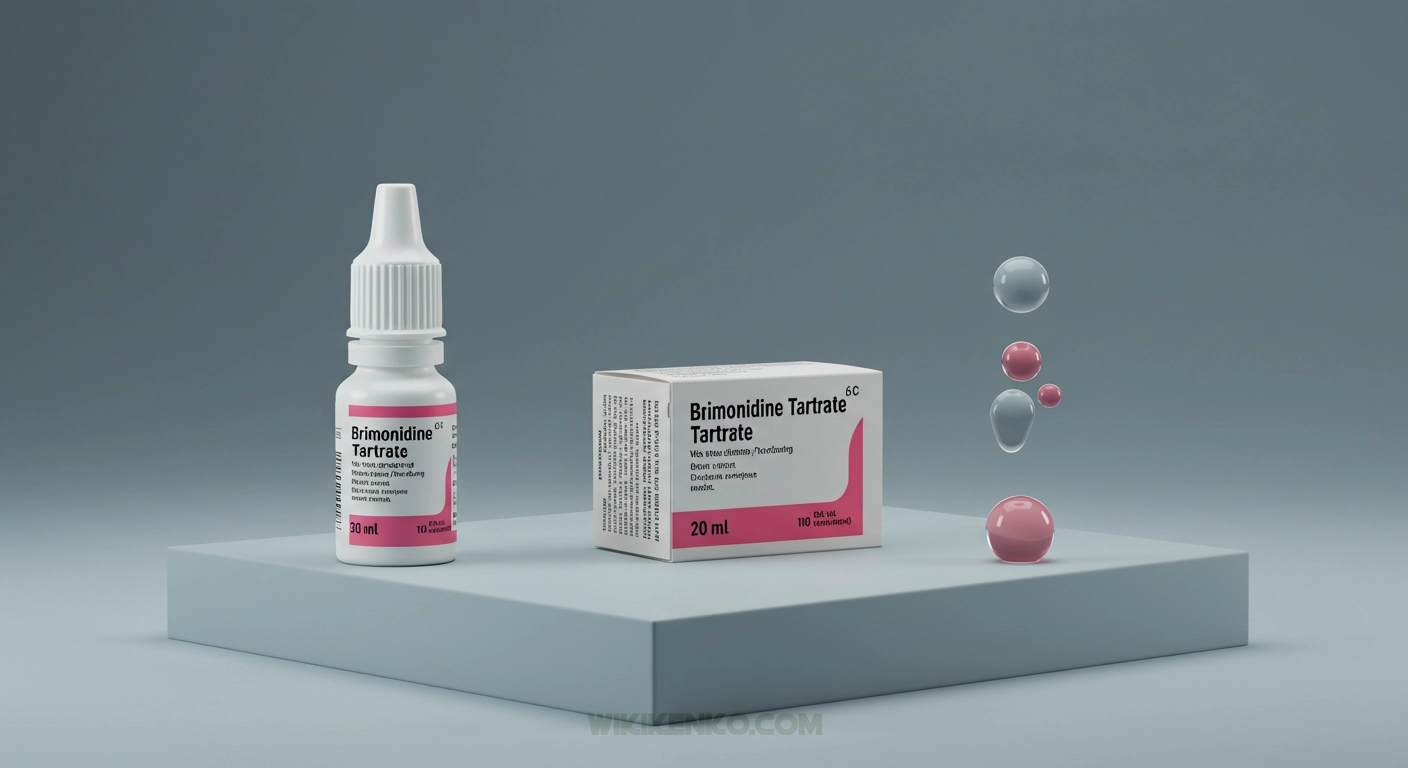
Brimonidine tartrate is a selective alpha-2 adrenergic receptor agonist primarily used in the treatment of open-angle glaucoma and ocular hypertension. By reducing intraocular pressure (IOP), it plays a crucial role in preventing optic nerve damage and vision loss. In addition to ophthalmic use, brimonidine tartrate has gained applications in dermatology, particularly for the treatment of facial erythema associated with rosacea. It is valued for its dual mechanism: decreasing aqueous humor production while simultaneously enhancing uveoscleral outflow.
Chemical Structure
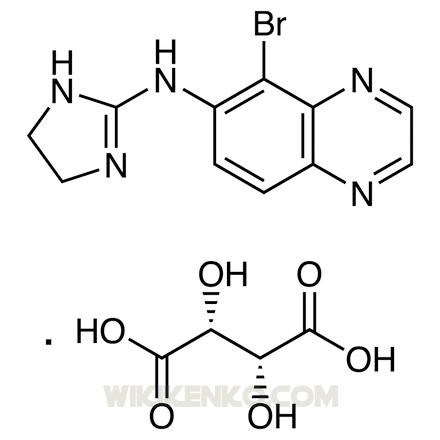
Brimonidine tartrate is the tartrate salt of brimonidine, which belongs to the class of imidazoline derivatives.
- Molecular formula (base): C11H10BrN5
- Molecular formula (tartrate salt): C15H16BrN5O6
- Molecular weight: ~442.2 g/mol
The drug contains a brominated quinoxaline structure linked to an imidazoline ring. Its tartrate salt form increases aqueous solubility and stability, making it suitable for ophthalmic solutions and topical dermatological formulations.
Brimonidine-Based Medicines List
- Alphagan® – Ophthalmic solution for glaucoma and ocular hypertension.
- Alphagan P® – Purite-preserved formulation with enhanced tolerability.
- Combigan® – Combination of brimonidine and timolol for glaucoma.
- Lumify® – Over-the-counter low-dose brimonidine eye drops for ocular redness.
- Mirvaso® – Topical gel formulation for facial erythema due to rosacea.
- Brimogan® – Generic ophthalmic solution used internationally.
- Briomide® – Alternative generic for ocular hypertension.
- Alphadrop® – Regional brand formulation for lowering IOP.
Mechanism of Action
Brimonidine tartrate acts as a highly selective alpha-2 adrenergic receptor agonist.
- Ophthalmic action:
- Decreases aqueous humor production by inhibiting cyclic AMP synthesis in the ciliary body.
- Increases uveoscleral outflow, promoting drainage of aqueous humor from the eye.
This dual action results in significant reduction of intraocular pressure, a key factor in preventing progression of glaucoma-related optic nerve damage.
- Dermatologic action:
In rosacea, brimonidine induces vasoconstriction of cutaneous blood vessels, reducing persistent facial erythema by directly acting on superficial vasculature.
Pharmacokinetics
- Absorption: When applied topically to the eye, systemic absorption is minimal, though detectable plasma levels are observed. Topical dermal application also results in low systemic exposure.
- Distribution: Widely distributed in ocular tissues, particularly the ciliary body and conjunctiva.
- Metabolism: Extensively metabolized in the liver, primarily by aldehyde oxidase and to a lesser extent by CYP450 enzymes.
- Elimination half-life: Approximately 2–3 hours.
- Excretion: Metabolites are excreted primarily in the urine.
Therapeutic Uses
| Condition | Formulation | Role of Brimonidine Tartrate |
|---|---|---|
| Open-angle glaucoma | Ophthalmic solution | Reduces intraocular pressure |
| Ocular hypertension | Ophthalmic solution | Lowers pressure to prevent optic nerve damage |
| Adjunctive therapy in glaucoma | Ophthalmic solution (combo use) | Often combined with beta-blockers or prostaglandin analogues |
| Facial erythema in rosacea | Topical gel | Vasoconstrictive effect reduces persistent redness |
| Ocular redness (cosmetic use) | OTC eye drops (low dose) | Relieves eye redness with less rebound hyperemia than other vasoconstrictors |
| Post-surgical IOP control | Ophthalmic solution | Used temporarily after ocular surgery to stabilize intraocular pressure |
| Off-label: Neuroprotection | Ophthalmic solution | Potential benefits in preventing optic nerve degeneration |
| Off-label: Dry eye with redness | Low-concentration drops | Used with caution for cosmetic symptom relief |
Side Effects
Common
- Eye irritation, burning or stinging
- Dry eyes
- Conjunctival hyperemia (mild rebound redness)
- Allergic conjunctivitis
- Fatigue or drowsiness (systemic absorption)
Less Common
- Blurred vision
- Eye itching or swelling
- Dry mouth
- Headache
Rare but Serious
- Bradycardia or hypotension (systemic effect in sensitive individuals)
- Allergic dermatitis from topical gel use
- Severe ocular allergic reactions requiring discontinuation
Drug Interactions
- CNS depressants (alcohol, sedatives, anesthetics): May enhance drowsiness and fatigue.
- Antihypertensive drugs: Additive hypotensive effect.
- Monoamine oxidase inhibitors (MAOIs): Contraindicated due to potential for hypertensive crisis.
- Tricyclic antidepressants: May reduce brimonidine’s efficacy in lowering IOP.
- Other glaucoma medications: Often used safely in combination, but monitoring is required to avoid excessive IOP reduction or ocular side effects.
Safety Considerations
- Pregnancy: Limited human data; animal studies suggest caution. Should only be used if benefits outweigh risks.
- Lactation: Unknown if excreted in breast milk; avoid or use under medical supervision.
- Pediatrics: Contraindicated in children under 2 years due to risk of severe CNS depression and apnea. Use with caution in older children.
- Elderly: Generally safe, but more prone to systemic side effects like fatigue and hypotension.
- Dermatology (rosacea use): Avoid application to eyes, mucous membranes, or broken skin to prevent irritation or systemic absorption.
- Ophthalmology: Contact lenses should be removed before instillation and reinserted after at least 15 minutes.
Regulatory Status
Brimonidine tartrate is widely approved across the globe.
- Prescription-only medication (Rx) for ophthalmic and dermatologic indications.
- Available in various concentrations: 0.1%, 0.15%, and 0.2% ophthalmic solutions, and 0.33% topical gel.
- FDA-approved for glaucoma, ocular hypertension, and rosacea.
- Included in standard treatment guidelines for first-line or adjunctive therapy in glaucoma.
- Marketed worldwide under multiple brand names, with both branded and generic versions available.
Conclusion
Brimonidine tartrate is a highly effective and versatile agent used in ophthalmology and dermatology. Its unique dual mechanism of reducing aqueous humor production and increasing outflow makes it indispensable in glaucoma management, while its vasoconstrictive action provides relief from rosacea-related erythema. Despite its strong efficacy, attention must be paid to its side effect profile, systemic absorption risks, and contraindications in young children. As a well-established, FDA-approved drug, brimonidine tartrate remains a cornerstone in the management of ocular pressure disorders and selected dermatological conditions.