
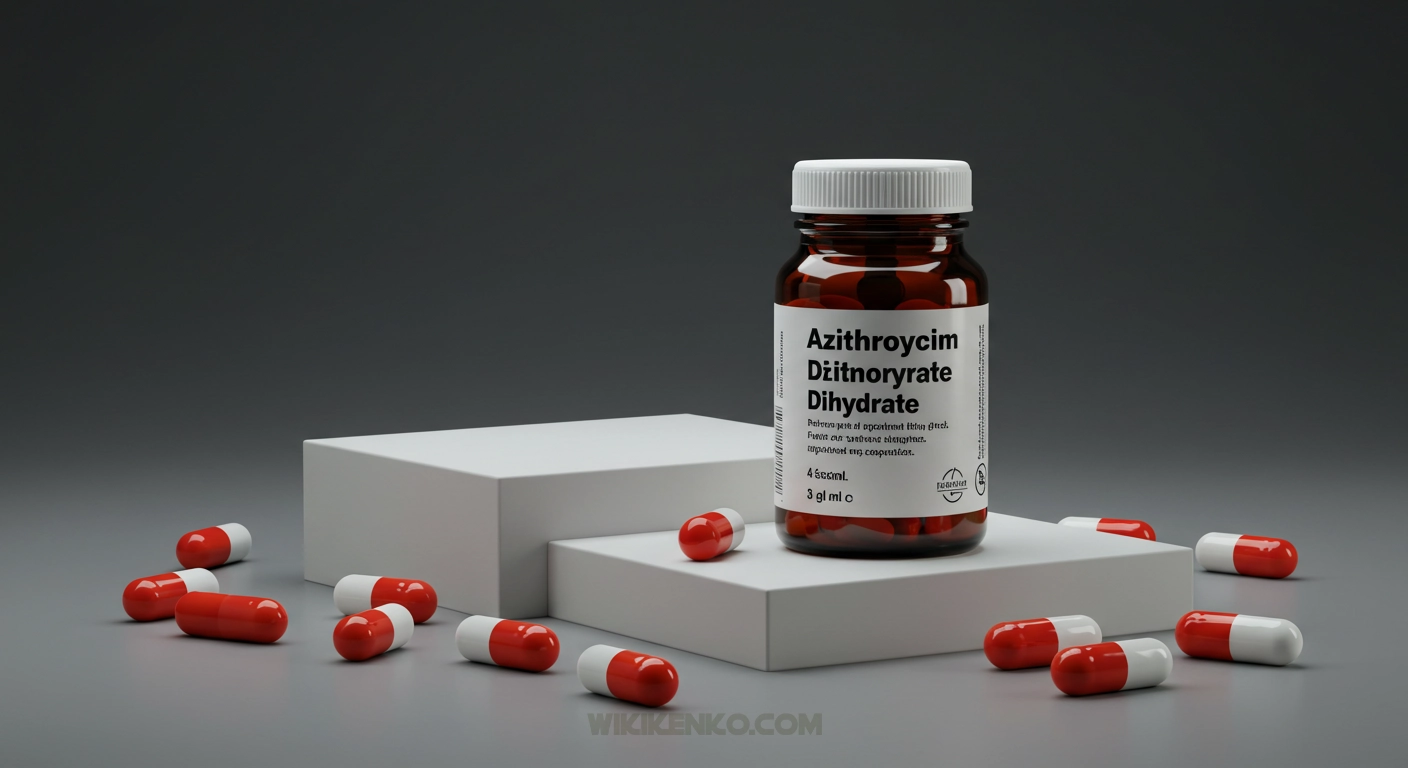
Azithromycin dihydrate is a widely used macrolide antibiotic that belongs to the azalide subclass. Developed as a derivative of erythromycin, it possesses a broader spectrum of activity, enhanced stability in acidic environments, and improved pharmacokinetics. Known for its convenient dosing regimen and well-tolerated profile, azithromycin dihydrate is used globally in the treatment of bacterial infections including respiratory, skin, urogenital, and enteric infections. Its long tissue half-life allows for once-daily dosing and short treatment durations, making it a preferred agent in both adult and pediatric settings.
Chemical Structure
“Azithromycin dihydrate” is the dihydrate form of azithromycin, with two molecules of water attached to its crystal structure. The molecular formula is C₃₈H₇₂N₂O₁₂·2H₂O, and the molecular weight is approximately 785 g/mol. Chemically, azithromycin is a 15-membered macrolide ring with a nitrogen atom incorporated into the lactone ring, making it an azalide. This nitrogen substitution significantly improves the acid stability of the molecule and enhances oral bioavailability compared to earlier macrolides such as erythromycin.

Azithromycin-Based Medicines List
Here are eight common pharmaceutical products that contain azithromycin dihydrate as the active ingredient:
- Zithromax® – Available as tablets, oral suspension, and intravenous injection.
- Z-Pak® – A 5-day oral dosing pack, widely prescribed for respiratory infections.
- Zmax® – An extended-release oral suspension for single-dose administration.
- AzaSite® – Ophthalmic solution used for bacterial conjunctivitis.
- Sumamed® – A globally marketed azithromycin brand available in various forms.
- Azithromycin Injection – Used in hospital settings for severe infections.
- Azomax® – A commonly used generic azithromycin product.
- Azibiot® – Oral tablets or suspensions prescribed for upper respiratory and skin infections.
Mechanism of Action
Azithromycin works by inhibiting bacterial protein synthesis. It binds irreversibly to the 50S subunit of the bacterial ribosome, specifically interfering with the translocation steps of protein elongation. This prevents the bacteria from synthesizing vital proteins, resulting in a bacteriostatic effect, though it may be bactericidal at higher concentrations or against susceptible organisms. It is active against a broad range of bacteria including Streptococcus pneumoniae, Haemophilus influenzae, Moraxella catarrhalis, Chlamydia trachomatis, Mycoplasma pneumoniae, and Neisseria gonorrhoeae.
Pharmacokinetics
Azithromycin exhibits unique pharmacokinetic properties that contribute to its clinical usefulness:
- Absorption: Oral bioavailability is about 37%, and food slightly reduces peak serum levels, although clinical significance is limited.
- Distribution: It achieves very high tissue concentrations, particularly in the lungs, tonsils, and prostate. It accumulates in phagocytes, which transport the drug to sites of infection.
- Metabolism: Metabolized minimally in the liver.
- Elimination: Excreted primarily through bile; a small fraction is eliminated via the kidneys.
- Half-life: Its terminal elimination half-life is approximately 68 hours, which supports once-daily dosing and allows for shorter courses of therapy.
Therapeutic Uses
| Condition | Use of Azithromycin Dihydrate |
|---|---|
| Community-acquired pneumonia | Effective against typical and atypical pathogens |
| Acute bacterial sinusitis | Used as a short-course alternative to beta-lactams |
| Pharyngitis/tonsillitis | Alternative for patients allergic to penicillin |
| Otitis media (especially pediatric) | Short-course therapy for middle ear infections |
| Skin and soft tissue infections | Covers staphylococci and streptococci |
| Urethritis and cervicitis | First-line for Chlamydia trachomatis infections |
| Traveler’s diarrhea | Occasionally used when fluoroquinolones are not preferred |
| Mycobacterium avium complex (MAC) prophylaxis | Used in immunocompromised individuals (e.g., HIV/AIDS patients) |
Side Effects
Azithromycin is generally well tolerated, but some adverse effects have been reported:
- Common (1–10%): Nausea, vomiting, diarrhea, abdominal pain, flatulence.
- Less Common: Headache, dizziness, fatigue, skin rash.
- Rare but Serious:
- Hepatotoxicity: Rare cases of hepatic dysfunction and cholestatic jaundice.
- Cardiac toxicity: QT interval prolongation, which may lead to torsades de pointes, especially in patients with underlying cardiac issues.
- Allergic reactions: Anaphylaxis, Stevens-Johnson syndrome, and angioedema have been reported rarely.
- Hearing loss: Reversible sensorineural hearing loss, typically after high or prolonged dosing.

Drug Interactions
Azithromycin has fewer significant drug interactions compared to other macrolides like erythromycin or clarithromycin because it has minimal effect on the cytochrome P450 system. However, caution is warranted in certain scenarios:
- Antacids containing aluminum or magnesium: May reduce azithromycin absorption; advisable to separate doses.
- Drugs that prolong QT interval: Concurrent use with antiarrhythmics (e.g., amiodarone), antipsychotics, or certain antidepressants increases the risk of arrhythmia.
- Warfarin: Azithromycin may potentiate the effects of warfarin; INR monitoring is recommended.
- Colchicine and cyclosporine: Increased risk of toxicity due to altered drug clearance.
Safety Considerations
- Pregnancy: Considered relatively safe; classified under pregnancy category B. Animal studies have not shown harm, and limited human data have not revealed teratogenicity.
- Lactation: Azithromycin passes into breast milk in small amounts. Short-term use is generally considered safe.
- Pediatrics: Approved for use in children over 6 months of age for most indications. Dosing must be weight-adjusted.
- Geriatrics: Increased caution is necessary due to potential for QT prolongation and cardiac arrhythmias.
- Renal and Hepatic Impairment: No dosage adjustment is needed for mild impairment, but caution is advised in severe hepatic dysfunction.
Regulatory Status
Azithromycin dihydrate is approved for medical use in many countries around the world. It is classified as a prescription-only medication (Rx) in nearly all jurisdictions. It is included in the World Health Organization’s List of Essential Medicines, reflecting its safety, efficacy, and importance in healthcare systems. Available in both branded and generic forms, it remains one of the most widely prescribed antibiotics in both community and hospital settings.

Conclusion
Azithromycin dihydrate is a versatile and highly effective antibiotic with a broad antimicrobial spectrum, convenient dosing regimen, and a favorable safety profile. Its utility in both outpatient and inpatient settings has made it a mainstay in the treatment of numerous bacterial infections. However, prudent use is essential to minimize the risk of resistance and to preserve its efficacy for future generations. Monitoring for cardiac effects in high-risk patients and cautious co-administration with interacting drugs is recommended for optimal safety.