
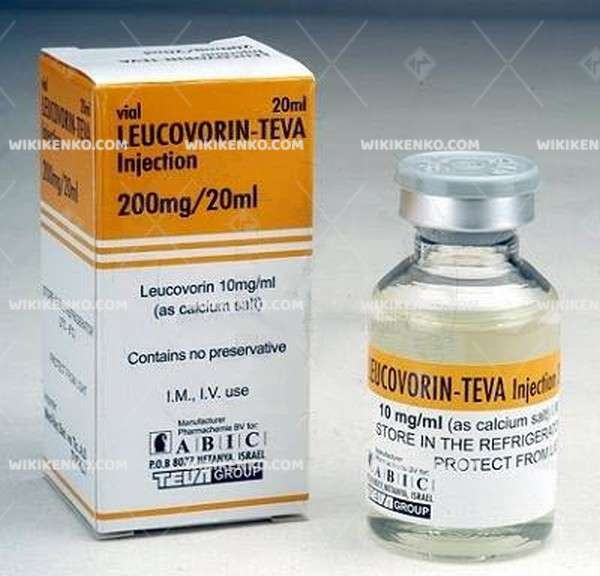
Leucovorin – Teva Iv/Im Injection Solution Iceren Vial 200 Mg/20Ml

Dosage form

Pack size

Potency

200 Mg/20Ml 1X20Ml

Manufacturer

(Teva – Macaristan)

Origin

Hungary

Generic Name (Ingredient)

The 1 Ml Injection Solution Contains Calcium Folinate Equivalent To 10 Mg Of Folinic Acid.

Leucovorin‑Teva IV/IM Injection Solution (200 mg/20 mL; 10 mg/mL) is a parenteral formulation of calcium folinate (leucovorin calcium), a reduced folate used primarily as an antidote to folate antagonists and as a biochemical modulator of 5‑fluorouracil in oncology.

read more

Assuming you’re in a life-threatening situation and require immediate access to medication, please visit our Community Support Network page.


Description

Pharmaceutical identification and composition

Leucovorin‑Teva IV/IM Injection 200 mg/20 mL contains calcium folinate equivalent to 10 mg/mL folinic acid (total content 200 mg in a 20 mL vial), formulated as a sterile solution for intravenous (IV) or intramuscular (IM) use. Calcium folinate is the calcium salt of 5‑formyl‑5,6,7,8‑tetrahydrofolic acid (folinic acid), a reduced folate derivative distinct from folic acid. The product is typically preservative‑free and may contain excipients such as sodium chloride and water for injections, with pH adjustment agents as per the specific national formulation.

Table 1. Key pharmaceutical characteristics of Leucovorin‑Teva 200 mg/20 mL

Parameter Description
International non‑proprietary name Calcium folinate (folinic acid, leucovorin calcium)
Strength 200 mg/20 mL (10 mg/mL) folinic acid equivalent
Dosage form Solution for injection/infusion (IV/IM)
Route of administration Intravenous (bolus or infusion) and intramuscular
Pharmaceutical class Reduced folate; antidote to folate antagonists; cytotoxic therapy modulator
ATC class (typical) V03AF (detoxifying agents for antineoplastic treatment) 

Mechanism of action

Folinic acid is a biologically active form of folate that bypasses dihydrofolate reductase (DHFR), thereby replenishing reduced folate pools depleted by antifolate agents such as methotrexate. At the cellular level, leucovorin is converted to 5‑methyltetrahydrofolate and other tetrahydrofolate cofactors, supporting thymidylate and purine synthesis required for DNA replication and repair. In “leucovorin rescue,” this restores folate‑dependent pathways in normal tissues without significantly reversing methotrexate activity in malignant cells when appropriately timed.

When administered with 5‑fluorouracil (5‑FU), folinic acid enhances formation of the ternary complex between 5‑fluoro‑2′‑deoxyuridine monophosphate, thymidylate synthase, and reduced folates, thereby stabilising enzyme inhibition and increasing cytotoxicity. This biochemical modulation improves antitumour efficacy at the expense of increased mucosal and gastrointestinal toxicity, necessitating careful regimen selection and monitoring.

Clinical indications

Rescue after high‑dose methotrexate and antifolate toxicity

Calcium folinate is indicated to diminish the toxicity and counteract the action of folic‑acid antagonists (e.g. high‑dose methotrexate) during cytotoxic therapy or after inadvertent overdose in adults and children. Leucovorin rescue is mandatory with methotrexate doses greater than approximately 500 mg/m² and should be considered for doses of 100–500 mg/m², with dosing and duration guided by serum methotrexate levels and clinical status. It is also used to limit toxicity of other antifolates such as trimetrexate and, in some settings, to mitigate effects of pyrimethamine or other folate antagonists.

Combination therapy with 5‑fluorouracil

Leucovorin‑Teva is used in combination with 5‑FU in various regimens for advanced or metastatic colorectal cancer and other sensitive malignancies. Regimens include weekly, biweekly (e.g. de Gramont‑type), or monthly schedules in which calcium folinate is given as a bolus or short infusion immediately before or concomitantly with 5‑FU. The combination improves response rates and survival compared with 5‑FU alone but increases gastrointestinal and haematologic toxicity.

Off‑label and supportive uses

Folinic acid has been employed as supportive therapy in megaloblastic anaemia due to folate deficiency when oral supplementation is not feasible, though folic acid is generally preferred. It is also utilised in protocols for Pneumocystis and toxoplasmosis regimens that include antifolate components (e.g. pyrimethamine), to reduce haematologic toxicity.

Posology and method of administration

Dosing of Leucovorin‑Teva 200 mg/20 mL must follow protocol‑specific guidance, taking into account methotrexate dose, renal function, and concomitant cytotoxic regimens. The solution may be administered by slow IV injection, short IV infusion (often diluted in 0.9% sodium chloride or 5% glucose), or IM injection; rapid IV injection is limited by calcium load, and commonly no more than about 160 mg calcium folinate is injected per minute.

Leucovorin rescue after high‑dose methotrexate

Typical rescue protocols initiate leucovorin 12–24 hours after the start of methotrexate infusion, with 15 mg (approximately 10–15 mg/m²) given every 6 hours for 10 doses, adjusted according to methotrexate plasma concentrations and renal function. In cases of delayed methotrexate elimination or renal impairment, doses are increased and/or the rescue duration extended, sometimes to 72 hours or longer, until methotrexate levels fall below toxicity thresholds. If gastrointestinal toxicity, nausea, or vomiting prevent oral therapy, parenteral administration (IV/IM) of Leucovorin‑Teva is mandatory.

Methotrexate overdose

In inadvertent overdose, calcium folinate should be initiated as soon as possible, ideally within 1 hour of recognition and within 24 hours of methotrexate administration. A commonly recommended starting dose is 10 mg/m² IV or IM every 6 hours, titrated based on measured methotrexate concentrations and clinical evolution.

Combination regimens with 5‑fluorouracil

Several evidence‑based regimens are established:

  • Weekly regimen: Calcium folinate 20 mg/m² IV bolus or 200–500 mg/m² as a 2‑hour IV infusion, plus 5‑FU 500 mg/m² given as IV bolus during or at the end of the folinate infusion.

  • Monthly (5‑day) regimen: Calcium folinate 20 mg/m² IV bolus or 200–500 mg/m² as ≥2‑hour infusion immediately followed by 5‑FU 425 or 370 mg/m² IV bolus, daily for 5 consecutive days, repeated every 4 weeks.

  • Biweekly regimens: e.g. 200 mg/m² calcium folinate IV infusion over ≥2 hours on days 1 and 2, combined with 5‑FU bolus and infusional doses (de Gramont‑type), repeated every 2 weeks.

When using the 200 mg/20 mL vial, clinicians calculate the required mg/m² dose and withdraw the corresponding volume, taking into account patient body surface area and maximum safe infusion rates. 5‑FU and leucovorin are generally administered sequentially through separate lines or flushes to avoid physical incompatibility and precipitation.

Table 2. Example adult dosing schemes (protocol dependent)

Clinical context Typical leucovorin dose and schedule Notes
High‑dose methotrexate rescue 15 mg (≈10–15 mg/m²) q6h × 10 doses starting 12–24 h after MTX start Adjust by MTX levels and renal function.
Methotrexate overdose / delayed elimination 10 mg/m² IV/IM q6h, intensified and prolonged per MTX levels Initiate as early as possible.
Weekly 5‑FU regimen 20 mg/m² IV bolus or 200–500 mg/m² IV over 2 h + 5‑FU 500 mg/m² bolus weekly Monitor GI and haematologic toxicity.
Monthly 5‑day 5‑FU regimen 20 mg/m² IV bolus or 200–500 mg/m² IV over 2 h + 5‑FU 425–370 mg/m² daily ×5 q4w Higher mucosal toxicity risk.

Pharmacokinetics

After IV administration, folinic acid exhibits rapid distribution, with peak plasma levels achievable immediately and conversion to active reduced folates in tissues. Folinic acid and its metabolites undergo hepatic and tissue metabolism to 5‑methyltetrahydrofolate, with elimination via renal and biliary routes. The elimination half‑life of folinic acid is relatively short (in the order of several hours), and pharmacokinetics may be altered in renal impairment, necessitating careful methotrexate level monitoring rather than relying solely on standard leucovorin doses.

Contraindications and important precautions

Leucovorin‑Teva must not be used in patients with known hypersensitivity to calcium folinate, folinic acid, or any excipients. It should not be used as monotherapy to treat pernicious anaemia or other vitamin B12‑deficient megaloblastic anaemias because it can correct haematologic abnormalities while allowing neurological damage to progress. In combination with 5‑FU, calcium folinate must not be administered in patients with pre‑existing severe diarrhoea or mucositis, or in those with severe haematologic suppression, until toxicity has resolved.

Caution is required in patients with epilepsy treated with phenobarbital, phenytoin, primidone, or succinimides, because folates may reduce antiepileptic plasma concentrations and increase seizure frequency. In renal impairment, particularly when methotrexate is used, aggressive hydration, urinary alkalinisation, and intensive methotrexate level monitoring are essential to tailor leucovorin rescue. The product should not be administered intrathecally under any circumstance, as fatal outcomes have been reported with intrathecal calcium folinate given after intrathecal methotrexate.

Drug interactions

As a reduced folate, leucovorin may diminish the antiepileptic effects of phenobarbital, phenytoin, primidone, and succinimides, by increasing hepatic metabolism of these agents and lowering serum levels. In high‑dose methotrexate regimens, timing and dosing of leucovorin are critical; excessive or premature dosing may theoretically reduce antitumour efficacy, whereas inadequate rescue leads to severe toxicity. When combined with 5‑FU, leucovorin significantly potentiates fluoropyrimidine toxicity, and any agents that further impair bone marrow or gastrointestinal mucosa may synergistically increase adverse events.

Adverse reactions

The safety profile of Leucovorin‑Teva reflects both its intrinsic effects and its role as a modulator of other cytotoxics.

  • Hypersensitivity: Rare cases of allergic reactions, including urticaria, anaphylactoid reactions, and anaphylaxis, have been reported.

  • Gastrointestinal: When used with 5‑FU, very common adverse reactions include nausea, vomiting, diarrhoea, stomatitis, and mucositis, which can be severe and dose‑limiting.

  • Haematologic: Combined leucovorin/5‑FU regimens frequently cause neutropenia, leucopenia, thrombocytopenia, and anaemia; these can be severe and require treatment interruption.

  • Neurological: In epileptic patients, increased seizure frequency has been described due to interactions with antiepileptics.

When used solely as methotrexate rescue without 5‑FU, leucovorin is generally well tolerated, with most toxicity attributable to the underlying chemotherapy rather than to folinate itself.

Use in special populations

In paediatric populations, leucovorin rescue after high‑dose methotrexate is standard practice, with dosing based on body surface area and guided by methotrexate levels in the same way as in adults. In elderly patients, pharmacokinetics of folinate are not profoundly altered, but concomitant comorbidities, polypharmacy, and decreased renal function increase the risk of methotrexate and 5‑FU toxicity; careful monitoring and dose adjustments are required. During pregnancy and lactation, folinic acid itself is not considered teratogenic, but its use is tied to cytotoxic regimens; decisions must balance maternal benefit and fetal/infant risk.

Practical handling and administration considerations

For IV infusion, the required volume of Leucovorin‑Teva 200 mg/20 mL is withdrawn under aseptic conditions and diluted in a compatible infusion solution, typically 0.9% sodium chloride or 5% glucose, and administered over the prescribed duration. Unused portions of a single‑dose vial should be discarded, and solutions should be visually inspected for particulate matter and discolouration before use. Co‑administration with 5‑FU in the same infusion bag is generally avoided due to incompatibility; instead, drugs are given sequentially through the same line with adequate flushing or through separate lines.

Reviews

There are no reviews yet.

Be the first to review “Leucovorin – Teva Iv/Im Injection Solution Iceren Vial 200 Mg/20Ml”

Your email address will not be published. Required fields are marked *

Use the form below to report an error

Please answer the questions as thoroughly and accurately as possible. Your answers will help us better understand what kind of mistakes happen, why and where they happen, and in the end the purpose is to build a better archive to guide researchers and professionals around the world.


If an image of the drug is not available on the Wikikenko health encyclopedia, you have the option to submit images/leaflets of the product. Following verification by our pharmaceutical specialist, your submitted images/leaflets will be included in our archive, with due acknowledgment of your contribution. Your cooperation in this matter would greatly assist researchers in finding the information they seek. Upload Images/Leaflet (Less than 2MB)

No Choosen File

Wikikenko.com does not sell, distribute, or provide any pharmaceutical products or health services. Our platform functions solely as a health encyclopedia, providing information on a wide range of health topics, including but not limited to medications.


Medical Disclaimer: Seek Professional Advice

The information on this page is not intended to be a substitute for professional medical advice, diagnosis, or treatment. always seek the advice for your physician or another qualified health provider with any questions you may have regarding a medical condition. Always remember to

  1. Ask your own doctor for medical advice.
  2. Names, brands, and dosage may differ between countries.
  3. When not feeling well, or experiencing side effects always contact your own doctor.

Why you can't look for symptoms on the Internet

If diagnoses could be made simply from a textbook or an article on a website, we would all be doctors and treat ourselves. Nothing can replace the experience and knowledge of specially trained people. As in any field, in medicine there are unscrupulous specialists, differences of opinion, inaccurate diagnoses and incorrect test results. According to Wikipedia, cyberchondria is a mental disorder consisting in the desire to independently make a diagnosis based on the symptoms of diseases described on Internet sites.

 

People also search for…


More results…

Generic selectors
Exact matches only
Search in title
Search in content
Post Type Selectors

The expert search feature is especially useful for healthcare professionals, researchers, and scientists who require accurate and up-to-date information on pharmaceutical products. By narrowing down their searches using filters, they can easily access the relevant data they need, making informed decisions about treatment options or drug research endeavors.

Expert Search  →


Recent comments