
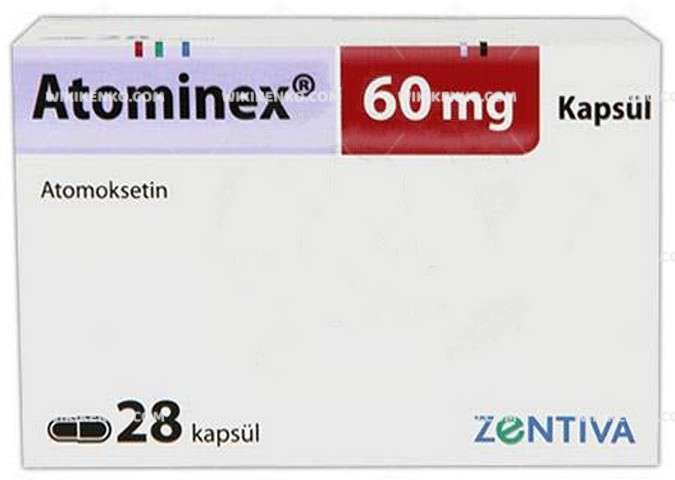
Atominex Capsule 60 Mg

Dosage form

Pack size

Potency

60 Mg

Manufacturer

Origin

Generic Name (Ingredient)

Each Capsule Contains Atomoxetine Hydrochloride Equivalent To 60 Mg Of Atomoxetine.

Atominex Capsule 60 mg represents a branded formulation of atomoxetine hydrochloride, primarily utilized in the management of attention-deficit/hyperactivity disorder (ADHD). This Turkish-market product, manufactured by Sanofi İlaç Sanayi ve Tic. A.Ş., delivers 60 mg of atomoxetine per capsule and aligns with established pharmacological profiles for this selective norepinephrine reuptake inhibitor.

read more

Assuming you’re in a life-threatening situation and require immediate access to medication, please visit our Community Support Network page.


Description

Brand and generic name
Atomınex (also written Atominex) contains atomoxetine hydrochloride, a selective norepinephrine reuptake inhibitor (NRI) indicated for ADHD as part of a comprehensive treatment plan including psychological and social interventions.

Active ingredient and strength
Each Atominex Capsule 60 mg contains atomoxetine hydrochloride equivalent to 60 mg atomoxetine. Atomoxetine is present as the hydrochloride salt, in a hard gelatin capsule designed for oral administration.

Pharmaceutical form and appearance
European and UK atomoxetine 60 mg capsules are described as blue–light yellow hard capsules (size 1) containing white to off‑white powder, and marketed in blister packs of various sizes (e.g., 7–98 capsules). Atominex, as a Turkish generic, follows comparable dose strengths and oral capsule presentation to originator Strattera and other atomoxetine generics (10–100 mg capsule range).

Mechanism of action and pharmacodynamics

Atomoxetine is a selective inhibitor of the presynaptic norepinephrine transporter (NET), with minimal direct affinity for other monoamine transporters or receptors at therapeutic concentrations. By blocking NET, atomoxetine increases norepinephrine concentrations in the prefrontal cortex and related circuits implicated in attention, executive function, and impulse control.

Unlike psychostimulants (e.g., methylphenidate, amphetamine), atomoxetine does not substantially increase extracellular dopamine in the striatal reward pathways at usual doses, which contributes to its classification as a non‑stimulant with low abuse liability.

Clinically, atomoxetine improves core ADHD dimensions—inattention, hyperactivity, and impulsivity—over several weeks of continuous dosing, with symptom reduction typically emerging after 1–2 weeks and maximal effect by 6–12 weeks in clinical trials.

Pharmacokinetics

Absorption and distribution

Atomoxetine is rapidly absorbed after oral administration, with peak plasma concentrations usually reached within 1–2 hours in extensive metabolizers (EMs). Oral bioavailability ranges from approximately 63–94%, influenced by first‑pass hepatic metabolism and CYP2D6 phenotype.

Atomoxetine is extensively bound to plasma proteins (about 98%), predominantly albumin, and distributes widely, crossing the blood–brain barrier to act on central noradrenergic pathways.

Metabolism

Atomoxetine is primarily metabolized in the liver via cytochrome P450 2D6 (CYP2D6) to its principal active metabolite, 4‑hydroxyatomoxetine, which is then rapidly glucuronidated. Genetic polymorphisms of CYP2D6 lead to distinct pharmacokinetic profiles between extensive metabolizers (EMs) and poor metabolizers (PMs), with PMs exhibiting higher plasma concentrations and prolonged half‑life. Concomitant administration of strong CYP2D6 inhibitors (e.g., paroxetine, fluoxetine, quinidine) can convert EMs functionally toward a PM phenotype and necessitates dose adjustment.

Elimination

Atomoxetine and its metabolites are largely excreted via the urine (over 80% of the dose), with a smaller fraction eliminated in feces. The elimination half‑life is around 5 hours in EMs and can extend to approximately 22 hours in PMs. Dose adjustments and careful monitoring are recommended in hepatic impairment, in which clearance is reduced and exposure increased.

Clinical indications

Atomoxetine (and thus Atominex 60 mg) is indicated for the treatment of ADHD in children, adolescents, and adults as part of a comprehensive management programme. Guidelines and product information emphasize that pharmacological therapy is not appropriate for all patients, and initiation should follow a thorough assessment of symptom severity, functional impairment, and persistence across settings.

Off‑label, atomoxetine has been explored for conditions such as treatment‑resistant depression, anxiety disorders, and binge‑eating disorder, but these uses remain investigational and are not included in standard product labels.

Posology and method of administration

General dosing principles

Atomoxetine can be administered once daily in the morning, or in two divided doses (morning and late afternoon/early evening), depending on tolerability and clinical response. Capsules should be swallowed whole, not opened, crushed, or chewed, to avoid exposure of mucous membranes to the irritant powder and to ensure dose accuracy.

Dosage is typically based on body weight in paediatric patients and as fixed daily doses in adults, with titration from a lower starting dose to a target maintenance dose after several days to a week, depending on response and tolerability.

Typical adult regimen (reference for 60 mg strength)

Regulatory labels for atomoxetine in adults recommend:

  • Initial dose: 40 mg once daily for at least 3–7 days.

  • Usual maintenance dose: 80 mg/day (either once daily or divided).

  • Maximum dose: 100 mg/day; higher doses show no additional benefit and less safety experience.

A 60 mg capsule, such as Atominex 60 mg, is often used as part of these regimens (e.g., 60 mg once daily in intermediate stages of titration, or combined with other strengths to reach 80–100 mg/day).

Special populations and dose adjustments

  • Hepatic impairment: In moderate impairment (Child–Pugh B), both target and maximum doses are typically reduced to 50% of usual; in severe impairment (Child–Pugh C), to about 25%.

  • CYP2D6 poor metabolizers or strong CYP2D6 inhibitor co‑administration: Start at lower doses (e.g., 40 mg/day in adults) and titrate cautiously, with longer intervals and careful monitoring for adverse effects.

  • Renal impairment: No major adjustment is generally required, but clinical monitoring is advised, especially in severe renal dysfunction.

  • Elderly: Data are limited; atomoxetine is not routinely used in patients over 65 years, and risk–benefit should be carefully evaluated.

Contraindications and major warnings

Key contraindications for atomoxetine products include:

  • Hypersensitivity to atomoxetine or any capsule excipient.

  • Concomitant use of monoamine oxidase inhibitors (MAOIs) or within 14 days of discontinuing an MAOI, due to risk of serious, potentially life‑threatening reactions.

  • Narrow‑angle glaucoma.

  • Phaeochromocytoma or a history of pheochromocytoma.

Cardiovascular and cerebrovascular risk

Atomoxetine can cause modest increases in heart rate and blood pressure; in some patients, clinically significant tachycardia or hypertension occurs. Baseline cardiovascular evaluation (including history, physical examination, and where indicated, ECG) is recommended before starting therapy, particularly in patients with pre‑existing cardiac disease, structural abnormalities, or risk factors for cerebrovascular events.

Patients should be monitored periodically for blood pressure and heart rate during treatment, and atomoxetine should be used cautiously or avoided in severe cardiovascular or cerebrovascular disorders where increases in blood pressure or heart rate could be problematic.

Psychiatric warnings, suicidality, and growth

Atomoxetine has been associated with an increased risk of suicidal ideation in children and adolescents with ADHD, particularly during the early phase of treatment. Careful monitoring for worsening mood, suicidal thinking, irritability, agitation, or unusual behaviour is required, with family members encouraged to observe and report concerning symptoms.

Atomoxetine may also precipitate or exacerbate anxiety, psychotic or manic symptoms in susceptible individuals; discontinuation or reassessment is indicated if such reactions occur. In paediatric patients, modest effects on growth (height and weight gain) have been reported, and regular monitoring of growth parameters is advised.

Hepatic and other serious reactions

Rare but serious cases of severe liver injury, including hepatic failure, have been reported with atomoxetine, sometimes requiring hospitalization. Patients should be informed about signs of liver dysfunction (e.g., pruritus, dark urine, jaundice, right upper quadrant tenderness, unexplained flu‑like symptoms) and treatment should be discontinued if laboratory evidence of liver injury appears.

Serotonin syndrome has been very rarely reported, typically in the context of concomitant serotonergic agents. Atomoxetine should be used cautiously with other drugs affecting serotonin or norepinephrine.

Adverse reactions

The most commonly reported adverse reactions with atomoxetine include gastrointestinal and central nervous system symptoms, as summarized below.

Adverse reaction category Representative events at typical doses Frequency range (labels/clinical data)
Gastrointestinal Nausea, vomiting, stomach upset, abdominal pain, constipation, decreased appetite, weight loss Very common to common (≥1/10 to ≥1/100)
Central nervous system Headache, dizziness, somnolence, insomnia, fatigue, irritability Very common to common
Cardiovascular Increased heart rate, increased blood pressure, palpitations Common (some uncommon)
Psychiatric Mood swings, anxiety, decreased libido, sexual dysfunction Common to uncommon

In adults, sexual side effects such as erectile dysfunction, decreased libido, and orgasmic disturbance may be more prominent than in children. Dry mouth and urinary hesitancy or retention also occur and may be bothersome in some patients.

Serious and rare events

Serious but rare adverse events reported with atomoxetine include:

  • Severe hepatic injury or hepatic failure.

  • Serious cardiovascular events (e.g., syncope, QTc prolongation in predisposed patients); sudden death has been reported rarely, usually in individuals with structural heart disease or other risk factors.

  • Suicidal ideation and, very rarely, suicidal behaviour, primarily in children and adolescents.

  • Very rare serotonin syndrome when combined with serotonergic agents.

Clinical practice requires an individualized risk–benefit assessment, especially in patients with underlying hepatic, cardiovascular, or psychiatric comorbidities.

Drug interactions

Atomoxetine is a substrate of CYP2D6; strong inhibitors of this enzyme significantly increase atomoxetine plasma concentrations, requiring dosage adjustment. Examples include paroxetine, fluoxetine, quinidine, and some other antidepressants and antiarrhythmics.

Concomitant use with MAOIs is contraindicated, and a washout period of at least 14 days is required when switching between atomoxetine and an MAOI. Caution is advised when atomoxetine is used with other drugs that increase blood pressure or heart rate, or with drugs that affect QT interval.

The combination with serotonergic agents (SSRIs, SNRIs, triptans, tramadol, etc.) may increase the risk of serotonin syndrome, particularly at higher doses or in susceptible patients.

Use in pregnancy, lactation, and special groups

Data on atomoxetine use in pregnancy are limited; animal studies have not demonstrated major teratogenic effects, but delayed ossification and slight fetal weight changes have been observed at maternally toxic doses. Consequently, atomoxetine should be used during pregnancy only if the potential benefit justifies the potential risk to the fetus.

It is not known conclusively whether atomoxetine is excreted in human breast milk, though it is present in the milk of lactating animals; caution is therefore recommended, and a decision should be made whether to discontinue breastfeeding or discontinue atomoxetine, considering the importance of therapy to the mother.

In patients with significant hepatic or severe cardiovascular disease, dose modification or alternative therapies may be preferable.

Comparative regulatory and product information (reference context)

The originator product Strattera (atomoxetine hydrochloride) has been extensively characterized in FDA and EMA product labels, providing a reference for the expected pharmacology and safety profile of atomoxetine generics such as Atominex. European SmPCs and UK product information for atomoxetine 60 mg hard capsules describe indications, dosing schedules, and risk management measures similar to those summarized above.

The Turkish‑manufactured Atominex is described in international pharmacy sources as a generic atomoxetine hydrochloride product with available strengths 25–100 mg, including 60 mg capsules, for the treatment of ADHD, mirroring the therapeutic positioning and dosing approaches of established atomoxetine products.

Structured overview of key clinical characteristics

The table below summarizes major clinical attributes of atomoxetine 60 mg capsules (e.g., Atominex 60 mg) based on regulatory and reference sources.

Domain Key points for atomoxetine 60 mg capsules
Therapeutic class Selective norepinephrine reuptake inhibitor, non‑stimulant ADHD medication
Indication ADHD in children, adolescents, and adults as part of a comprehensive treatment programme
Usual adult dose range 40–100 mg/day; 80 mg/day most common maintenance dose
Role of 60 mg strength Intermediate or maintenance dose; combined with other strengths to reach target dose
Onset and course of effect Gradual; clinically meaningful improvement typically within 1–2 weeks, maximal by 6–12 weeks
Common adverse effects Nausea, reduced appetite, abdominal pain, insomnia or somnolence, headache, dry mouth, mild blood pressure and heart rate increases
Major warnings Suicidal ideation in youth, serious hepatic injury, cardiovascular and cerebrovascular risks, potential psychiatric exacerbations
Key contraindications MAOI use (current/recent), severe cardiovascular disease, pheochromocytoma, narrow‑angle glaucoma, hypersensitivity

Final academic note

Atominex Capsule 60 mg, as a Turkish generic atomoxetine hydrochloride preparation, should be regarded as pharmacologically equivalent to other atomoxetine 60 mg capsules in terms of mechanism, dosing principles, and core risk profile, provided that it is manufactured and regulated under appropriate quality standards. Nevertheless, clinicians should always consult the specific national Summary of Product Characteristics or manufacturer’s prescribing information for Atominex to confirm locally approved indications, dosing recommendations, and safety information.

Reviews

There are no reviews yet.

Be the first to review “Atominex Capsule 60 Mg”

Your email address will not be published. Required fields are marked *

Use the form below to report an error

Please answer the questions as thoroughly and accurately as possible. Your answers will help us better understand what kind of mistakes happen, why and where they happen, and in the end the purpose is to build a better archive to guide researchers and professionals around the world.


If an image of the drug is not available on the Wikikenko health encyclopedia, you have the option to submit images/leaflets of the product. Following verification by our pharmaceutical specialist, your submitted images/leaflets will be included in our archive, with due acknowledgment of your contribution. Your cooperation in this matter would greatly assist researchers in finding the information they seek. Upload Images/Leaflet (Less than 2MB)

No Choosen File

Wikikenko.com does not sell, distribute, or provide any pharmaceutical products or health services. Our platform functions solely as a health encyclopedia, providing information on a wide range of health topics, including but not limited to medications.


Medical Disclaimer: Seek Professional Advice

The information on this page is not intended to be a substitute for professional medical advice, diagnosis, or treatment. always seek the advice for your physician or another qualified health provider with any questions you may have regarding a medical condition. Always remember to

  1. Ask your own doctor for medical advice.
  2. Names, brands, and dosage may differ between countries.
  3. When not feeling well, or experiencing side effects always contact your own doctor.

Why you can't look for symptoms on the Internet

If diagnoses could be made simply from a textbook or an article on a website, we would all be doctors and treat ourselves. Nothing can replace the experience and knowledge of specially trained people. As in any field, in medicine there are unscrupulous specialists, differences of opinion, inaccurate diagnoses and incorrect test results. According to Wikipedia, cyberchondria is a mental disorder consisting in the desire to independently make a diagnosis based on the symptoms of diseases described on Internet sites.

 

People also search for…


More results…

Generic selectors
Exact matches only
Search in title
Search in content
Post Type Selectors

The expert search feature is especially useful for healthcare professionals, researchers, and scientists who require accurate and up-to-date information on pharmaceutical products. By narrowing down their searches using filters, they can easily access the relevant data they need, making informed decisions about treatment options or drug research endeavors.

Expert Search  →


Recent comments