
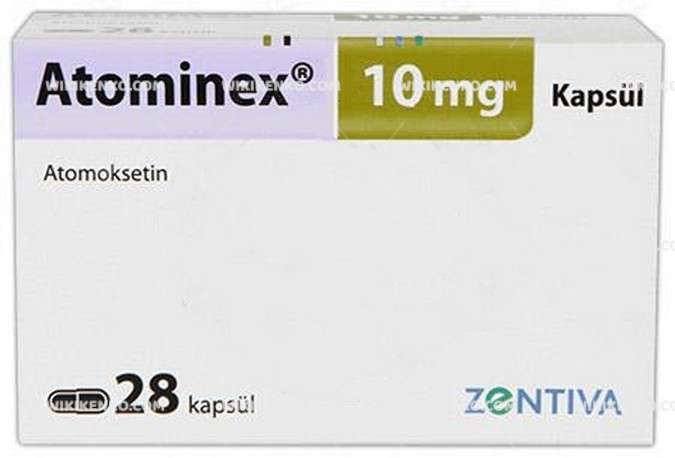
Atominex Capsule 10 Mg

Dosage form

Pack size

Potency

10 Mg

Manufacturer

Origin

Generic Name (Ingredient)

Each Capsule Contains Atomoxetine Hydrochloride Equivalent To 10 Mg Of Atomoxetine.

Atomınex Capsule 10 mg is a hard capsule formulation containing atomoxetine hydrochloride equivalent to 10 mg atomoxetine, a selective norepinephrine reuptake inhibitor indicated for the treatment of attention‑deficit/hyperactivity disorder (ADHD) in children, adolescents and adults.

read more

Assuming you’re in a life-threatening situation and require immediate access to medication, please visit our Community Support Network page.


Description

Atomınex Capsule 10 mg contains atomoxetine hydrochloride as the active substance, quantitatively equivalent to 10 mg of atomoxetine base. The product is intended for oral use as a hard gelatin capsule, similar in quantitative composition to internationally authorized atomoxetine 10 mg capsule strengths such as those in Strattera and generic atomoxetine products.

Excipients are typically those used in hard‑gelatin capsule formulations (e.g. lactose, microcrystalline cellulose, povidone, sodium starch glycolate, magnesium stearate and capsule shell components), although the exact qualitative composition depends on the local marketing authorization holder and national formulary registration.

Therapeutic Indications

Atomoxetine is indicated for the treatment of ADHD in children from 6 years of age, adolescents, and adults as part of a comprehensive treatment program that includes psychological, educational and social measures. Pharmacological treatment is reserved for patients with moderate to severe symptoms causing clinically significant functional impairment and after a thorough assessment of the patient’s clinical status and comorbidities.

In adults, atomoxetine is indicated for the treatment of ADHD when symptoms are present since childhood and continue to cause impairment in at least two domains, such as occupational performance, academic functioning, or social relationships. Atomoxetine is not indicated for the treatment of major depressive disorder, anxiety disorders or other primary psychiatric conditions and should not be used solely for weight loss.

Mechanism of Action

Atomoxetine is a highly selective norepinephrine reuptake inhibitor (sNRI) with minimal direct affinity for other monoaminergic transporters or receptors at therapeutic concentrations. By inhibiting the presynaptic norepinephrine transporter (NET), atomoxetine increases extracellular norepinephrine and, secondarily, dopamine levels particularly in the prefrontal cortex, a region implicated in attention, impulse control and executive function.

Unlike psychostimulants (e.g. methylphenidate, amphetamines), atomoxetine does not substantially increase dopamine in striatal regions associated with reward, which may account for its lower abuse potential and distinct clinical profile. Functional imaging and neuropsychological data suggest improvements in sustained attention, working memory and response inhibition that correspond with the pharmacodynamic enhancement of catecholaminergic transmission in frontostriatal circuits.

Pharmacokinetics

Absorption and Distribution

Orally administered atomoxetine is rapidly and almost completely absorbed from the gastrointestinal tract, with a time to maximum plasma concentration (Tmax) of approximately 1–2 hours under fasting conditions. Absolute bioavailability is influenced by CYP2D6 metabolizer status and ranges around 63% in extensive metabolizers and up to 94% in poor metabolizers. Concomitant food may reduce Cmax by around 10–40% and delay Tmax by about 3 hours without clinically relevant impact on overall exposure.

Atomoxetine is moderately bound to plasma proteins (mainly albumin) and distributes widely, with an apparent volume of distribution consistent with extensive tissue penetration.

Metabolism and Elimination

Atomoxetine undergoes extensive hepatic metabolism, predominantly via cytochrome P450 isoenzyme CYP2D6 to its principal active metabolite 4‑hydroxyatomoxetine, which is subsequently glucuronidated. Individuals who are CYP2D6 poor metabolizers exhibit several‑fold higher atomoxetine plasma concentrations and prolonged half‑life compared with extensive metabolizers. A secondary metabolic pathway via CYP2C19 contributes to clearance, particularly in poor CYP2D6 metabolizers.

Elimination is mainly renal in the form of metabolites, with less than 5% excreted as unchanged drug. The typical elimination half‑life of atomoxetine in extensive metabolizers is approximately 5 hours, whereas poor metabolizers can display half‑lives extending to about 20 hours or more, leading to higher steady‑state concentrations at a given dose.

Posology and Method of Administration

Atomınex 10 mg capsules are administered orally and may be taken with or without food. Dosing is individualized based on body weight in pediatric patients and on clinical response and tolerability in all age groups.

Pediatric Patients (≥6 Years, up to 70 kg)

International labeling for atomoxetine recommends initiating therapy at approximately 0.5 mg/kg/day, followed after at least 3 days by titration to a target dose of approximately 1.2 mg/kg/day, administered either once daily in the morning or as two divided doses. No additional benefit has been demonstrated at doses exceeding 1.2 mg/kg/day, and the maximum total daily dose should not exceed 1.4 mg/kg or 100 mg, whichever is lower.

Adolescents and Adults (or Pediatric Patients ≥70 kg)

In patients ≥70 kg, the usual initial dose is 40 mg/day, increasing after a minimum of 3 days to 80 mg/day based on clinical response. Some patients may benefit from further titration up to a maximum of 100 mg/day. Once‑daily morning dosing is common; however, twice‑daily dosing (morning and late afternoon/early evening) may improve tolerability in individuals experiencing peak‑related adverse effects such as nausea or somnolence.

Special Populations and CYP2D6 Inhibitors

In patients concomitantly receiving strong CYP2D6 inhibitors (e.g. paroxetine, fluoxetine, quinidine), atomoxetine exposure is increased several‑fold, necessitating dose adjustments. For such patients, adult dosing guidelines recommend initiating at 40 mg/day and increasing to 80 mg/day only if symptoms do not adequately improve after 4 weeks and the initial dose is well tolerated. Dose reductions and slower titration are also advised in known CYP2D6 poor metabolizers and in patients with moderate to severe hepatic impairment.

Clinical Efficacy Overview

Randomized controlled trials have demonstrated that atomoxetine significantly improves core ADHD symptoms, including inattention, hyperactivity and impulsivity, compared with placebo in children, adolescents and adults. Symptom reduction generally emerges within the first 1–2 weeks but may continue to accrue over several weeks, with maximal effects frequently observed after 4–8 weeks of therapy.

Meta‑analyses and long‑term extension studies indicate that atomoxetine maintains efficacy over periods of up to one year with an acceptable safety and tolerability profile. Comparative studies suggest that atomoxetine’s effect size is somewhat smaller than that of stimulants; however, it offers a valuable non‑stimulant option, particularly in patients with tics, anxiety, substance‑use risk, or poor stimulant tolerability.

Table 1. Selected Evidence on Atomoxetine Efficacy and Safety

Study / source Population Design / duration Key efficacy findings Key safety findings
FDA registration trials (summarized in label) Children, adolescents, adults with ADHD Multiple randomized, double‑blind, placebo‑controlled trials; 6–10 weeks Statistically significant reduction in ADHD rating scale scores vs placebo; clinically meaningful improvement in attention and hyperactivity symptoms Adverse events mainly gastrointestinal and sleep‑related; small mean increases in heart rate and blood pressure; rare suicidal ideation in pediatric patients
Long‑term adult safety study Adults with ADHD Double‑blind 25‑week phase plus extension to 1 year Sustained symptom improvement over long‑term treatment Acceptable long‑term safety profile; similar discontinuation rates due to adverse events compared with placebo (3.4% vs 1.9%)
Adverse event profile analysis in children Children with ADHD Double‑blind, placebo‑controlled Atomoxetine associated with higher rates of appetite decrease and gastrointestinal complaints compared with placebo No significant increase in cardiac adverse events; one report of suicidal ideation occurred in placebo group

Safety Profile and Adverse Reactions

The most frequently reported adverse reactions to atomoxetine involve the gastrointestinal, central nervous, and cardiovascular systems, as well as appetite and sleep. Common events (often dose‑related) include:

  • Decreased appetite, weight loss or reduced weight gain in children and adolescents.

  • Nausea, vomiting, abdominal pain and dyspepsia.

  • Somnolence, fatigue, dizziness and headache.

  • Insomnia or difficulties initiating or maintaining sleep.

  • Mild increases in heart rate and blood pressure, usually without clinical sequelae in otherwise healthy patients.

A pooled analysis in children reported gastrointestinal complaints in approximately 77% of atomoxetine‑treated subjects versus 67% of placebo, with appetite decrease more frequent on atomoxetine (52% vs 33%). Adult long‑term data show higher overall incidence of treatment‑emergent adverse events versus placebo but low discontinuation rates attributable to these events.

Serious Adverse Reactions and Warnings

Important safety concerns identified in regulatory labeling include suicidal ideation in children and adolescents, severe hepatic injury, significant cardiovascular events and psychiatric symptom exacerbation.

  • Suicidal ideation: An increased risk of suicidal thoughts has been observed in short‑term studies in children and adolescents, leading to a boxed warning in some jurisdictions; close monitoring for clinical worsening, suicidality, or unusual behavioral changes is mandated, particularly during the initial months or dose adjustments.

  • Hepatic injury: Rare cases of severe liver injury, including marked elevations of hepatic enzymes and bilirubin with jaundice, have been reported; atomoxetine should be discontinued in patients who develop jaundice or laboratory evidence of liver dysfunction and not re‑initiated if injury is confirmed.

  • Cardiovascular events: Atomoxetine can increase heart rate and blood pressure; serious events such as QT prolongation, tachycardia and hypertensive crises are rare but may occur in predisposed individuals, warranting careful assessment of cardiovascular history and periodic monitoring.

  • Psychiatric effects: Anxiety, agitation, irritability, aggression, hostility and mood lability have been reported; patients with comorbid psychiatric disorders require particular caution.

Adverse Event Frequencies in Clinical Trials

Table 2 illustrates representative adverse events observed in double‑blind, placebo‑controlled pediatric trials of atomoxetine.

Table 2. Selected Adverse Events in Pediatric Atomoxetine Trials

Adverse event category Atomoxetine (n = 64) Placebo (n = 64) p value
Any gastrointestinal event 49 (77%) 43 (67%)
Appetite decrease 33 (52%) 21 (33%) 0.0485
Nausea 19 (30%) 14 (22%) 0.4192
Vomiting 13 (20%) 11 (17%) 0.8213
Headache 18 (28%) 15 (23%) 0.6865
Fatigue 28 (44%) 32 (50%) 0.5954
Any behavioral event 51 (80%) 46 (72%)
Irritability 10 (16%) 5 (8%) 0.1802
Difficulty initiating sleep 20 (31%) 16 (25%) 0.5557

These data highlight appetite and gastrointestinal symptoms as prominent tolerability considerations in pediatric practice.

Contraindications and Precautions

Contraindications

Absolute contraindications described in reference atomoxetine labeling include:

  • Hypersensitivity to atomoxetine or any excipient.

  • Concomitant treatment with monoamine oxidase inhibitors (MAOIs) or use within 14 days of discontinuing an MAOI, due to risk of serious hypertensive reactions.

  • Narrow‑angle glaucoma.

  • Severe cardiovascular or cerebrovascular disorders where increased blood pressure or heart rate could pose significant risk (e.g. severe hypertension, advanced arteriosclerosis, severe heart failure, pheochromocytoma).

  • Pheochromocytoma or a history of pheochromocytoma in some regulatory texts.

Warnings and Special Precautions

Before initiating atomoxetine, clinicians should conduct a careful cardiac history, family history of sudden death or ventricular arrhythmia, and physical examination including blood pressure and heart rate measurement. Periodic re‑evaluation of cardiovascular status is recommended during treatment.

Atomoxetine should be used cautiously in patients with:

  • Hypertension, tachycardia or cardiovascular/cerebrovascular disease.

  • Hepatic impairment; dose reductions are recommended in moderate to severe impairment.

  • Comorbid psychiatric conditions such as bipolar disorder, depression, anxiety or psychosis, due to potential symptom exacerbation.

  • Seizure disorders, although data suggest no substantial increase in seizure risk at therapeutic doses.

Growth parameters (height, weight, body mass index) should be monitored in pediatric patients because of appetite suppression and potential effects on weight gain and growth trajectories.

Drug–Drug Interactions

Atomoxetine is principally metabolized by CYP2D6, and drugs that inhibit or induce this isoenzyme can significantly alter atomoxetine plasma concentrations.

  • Strong CYP2D6 inhibitors (e.g. paroxetine, fluoxetine, quinidine) increase atomoxetine exposure approximately 5–10‑fold; dose reduction and careful titration are required to mitigate adverse effects.

  • Co‑administration with MAOIs is contraindicated due to the risk of serious, potentially life‑threatening hypertensive events.

  • Caution is advised with drugs that prolong QT interval or affect heart rate and blood pressure (e.g. certain antipsychotics, tricyclic antidepressants), as additive cardiovascular effects may occur.

Atomoxetine does not appear to meaningfully induce or inhibit major CYP isoenzymes at therapeutic doses and has limited interaction potential with oral contraceptives or common antihistamines.

Use in Specific Populations

Pregnancy and Lactation

Human data on atomoxetine use during pregnancy are limited; animal studies show effects at maternally toxic doses, but the clinical significance for human pregnancy remains uncertain. Atomoxetine should only be used during pregnancy if the potential benefit justifies the potential risk to the fetus.

Atomoxetine and/or its metabolites are excreted into the milk of animals; excretion into human breast milk is expected, and a risk to the breast‑fed infant cannot be excluded. Decisions regarding continuation of breastfeeding or atomoxetine therapy must consider the benefits of breastfeeding and the clinical need for atomoxetine.

Pediatric and Geriatric Use

Atomoxetine is approved for use in children aged 6 years and older; safety and efficacy have not been established in children under 6 years. Pediatric patients require careful monitoring of growth, appetite, cardiovascular parameters and psychiatric status.

Clinical trial data in patients over 65 years are limited, and atomoxetine is not routinely indicated for geriatric ADHD; cautious dosing and monitoring would be required if used off‑label in older adults with comorbidities.

Overdose Management

Atomoxetine overdose may present with symptoms related to noradrenergic excess, including somnolence, agitation, hyperactivity, gastrointestinal upset, tachycardia, hypertension and, in severe cases, seizures or QT prolongation. There is no specific antidote; management is supportive with close monitoring of cardiovascular and neurological status, maintenance of airway and circulation, and consideration of activated charcoal if presentation is early.

Due to high protein binding and extensive distribution, hemodialysis is unlikely to be beneficial in atomoxetine overdose.

Regulatory and Quality Considerations

Atomoxetine hydrochloride capsules, including 10 mg strengths, have been approved by multiple regulatory agencies such as the FDA and EMA for ADHD treatment, under brand names (e.g. Strattera) and as generic atomoxetine. Generic formulations must demonstrate pharmaceutical equivalence and bioequivalence to the reference product, including identical qualitative and quantitative active ingredient composition, comparable dissolution characteristics and systemic exposure.

A product marketed under a national trade name such as “Atomınex Capsule 10 mg” that contains atomoxetine hydrochloride equivalent to 10 mg atomoxetine would be expected to follow the same core clinical pharmacology, efficacy, safety and risk‑management principles summarized above, assuming it is an authorized atomoxetine formulation compliant with local regulatory standards.

Reviews

There are no reviews yet.

Be the first to review “Atominex Capsule 10 Mg”

Your email address will not be published. Required fields are marked *

Use the form below to report an error

Please answer the questions as thoroughly and accurately as possible. Your answers will help us better understand what kind of mistakes happen, why and where they happen, and in the end the purpose is to build a better archive to guide researchers and professionals around the world.


If an image of the drug is not available on the Wikikenko health encyclopedia, you have the option to submit images/leaflets of the product. Following verification by our pharmaceutical specialist, your submitted images/leaflets will be included in our archive, with due acknowledgment of your contribution. Your cooperation in this matter would greatly assist researchers in finding the information they seek. Upload Images/Leaflet (Less than 2MB)

No Choosen File

Wikikenko.com does not sell, distribute, or provide any pharmaceutical products or health services. Our platform functions solely as a health encyclopedia, providing information on a wide range of health topics, including but not limited to medications.


Medical Disclaimer: Seek Professional Advice

The information on this page is not intended to be a substitute for professional medical advice, diagnosis, or treatment. always seek the advice for your physician or another qualified health provider with any questions you may have regarding a medical condition. Always remember to

  1. Ask your own doctor for medical advice.
  2. Names, brands, and dosage may differ between countries.
  3. When not feeling well, or experiencing side effects always contact your own doctor.

Why you can't look for symptoms on the Internet

If diagnoses could be made simply from a textbook or an article on a website, we would all be doctors and treat ourselves. Nothing can replace the experience and knowledge of specially trained people. As in any field, in medicine there are unscrupulous specialists, differences of opinion, inaccurate diagnoses and incorrect test results. According to Wikipedia, cyberchondria is a mental disorder consisting in the desire to independently make a diagnosis based on the symptoms of diseases described on Internet sites.

 

People also search for…


More results…

Generic selectors
Exact matches only
Search in title
Search in content
Post Type Selectors

The expert search feature is especially useful for healthcare professionals, researchers, and scientists who require accurate and up-to-date information on pharmaceutical products. By narrowing down their searches using filters, they can easily access the relevant data they need, making informed decisions about treatment options or drug research endeavors.
Expert Search  →


Recent comments