
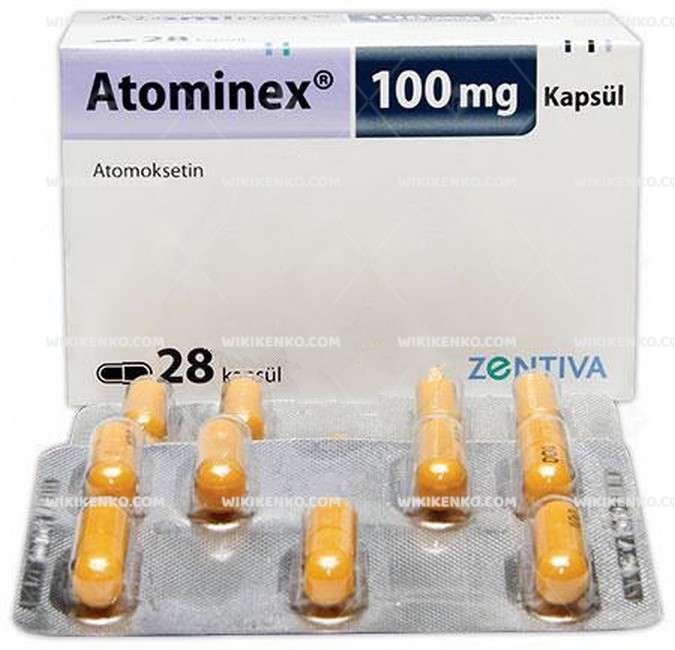
Atominex Capsule 100 Mg

Dosage form

Pack size

Potency

100 Mg

Manufacturer

Origin

Generic Name (Ingredient)

Each Capsule Contains Atomoxetine Hydrochloride Equivalent To 100 Mg Of Atomoxetine.

Atomınex Capsule 100 mg is a Turkish proprietary product containing atomoxetine hydrochloride equivalent to 100 mg atomoxetine, a selective norepinephrine reuptake inhibitor indicated for attention‑deficit/hyperactivity disorder (ADHD).

read more

Assuming you’re in a life-threatening situation and require immediate access to medication, please visit our Community Support Network page.


Description

Atomoxetine is a non‑stimulant psychopharmacological agent approved for the treatment of ADHD in children from 6 years of age, adolescents and adults. Atominex Capsule 100 mg is a high‑strength oral formulation marketed in Türkiye that contains atomoxetine hydrochloride as the single active substance for once‑ or twice‑daily dosing regimens.

Qualitative and Quantitative Composition

Each Atominex Capsule 100 mg contains atomoxetine hydrochloride in an amount equivalent to 100 mg atomoxetine as the active ingredient. Atomoxetine is a selective presynaptic norepinephrine transporter inhibitor belonging to the pharmacotherapeutic class of other psychostimulants and nootropics (ATC code N06BA09).

Mechanism of Action and Pharmacodynamics

Atomoxetine selectively inhibits the presynaptic norepinephrine transporter (NET), thereby preventing reuptake of norepinephrine and increasing extracellular norepinephrine concentrations in key brain regions such as the prefrontal cortex. In addition, atomoxetine secondarily increases dopamine levels in the prefrontal cortex via NET blockade, while exerting minimal direct effect on dopamine transporters in the striatum, which distinguishes it from classical stimulant medications.

Enhanced catecholaminergic transmission in prefrontal cortical circuits is associated with improvements in core ADHD symptoms, including inattention, impulsivity and hyperactivity, without the pronounced abuse liability observed with dopaminergic stimulants. Clinical trials have demonstrated that initial therapeutic effects may emerge within 1–4 weeks of treatment, with further symptom improvement and functional gains accruing over several additional weeks to months.

Pharmacokinetic Properties

Atomoxetine is rapidly absorbed after oral administration, with peak plasma concentrations typically occurring within approximately 1–2 hours in adults under fasting conditions. Oral bioavailability is influenced by extensive first‑pass metabolism via cytochrome P450 2D6 (CYP2D6), resulting in substantial inter‑individual pharmacokinetic variability between extensive and poor metabolizers.

The drug is moderately bound to plasma proteins, predominantly albumin, and exhibits an apparent volume of distribution consistent with wide tissue distribution. Atomoxetine undergoes oxidative metabolism primarily to 4‑hydroxyatomoxetine, followed by conjugation; these metabolites are pharmacologically active but generally less potent than the parent compound and are excreted mainly in urine. The elimination half‑life is approximately 5 hours in CYP2D6 extensive metabolizers but can be prolonged to 20 hours or more in poor metabolizers, necessitating careful clinical monitoring.

Therapeutic Indications

Atominex 100 mg, as an atomoxetine formulation, is indicated for the treatment of ADHD in children aged 6 years and older, adolescents and adults as part of a comprehensive therapeutic program that typically includes psychological, educational and social interventions. Use in adults is generally reserved for patients whose symptoms manifested in childhood and continue to meet diagnostic criteria for ADHD with associated functional impairment in academic, occupational or social domains.

Dosage and Administration

Treatment with atomoxetine should be initiated and supervised by a physician experienced in the management of ADHD. Atominex capsules are for oral use and may be administered once daily in the morning or as divided doses (morning and late afternoon/early evening), with or without food.

Standard dosing principles

  • Adults: Therapy is typically initiated at a total daily dose of 40 mg, maintained for at least 7 days, then increased to a usual maintenance dose of 80–100 mg daily, with a maximum recommended total daily dose of 100 mg.

  • Children and adolescents ≥6 years and ≤70 kg: Dosing is weight‑based, starting at approximately 0.5 mg/kg/day and titrated to a target dose of about 1.2 mg/kg/day, without exceeding 1.4 mg/kg or 100 mg per day (whichever is less).

  • Children and adolescents >70 kg: Adult dosing schedules apply, with a usual maintenance dose of 80 mg and a maximum daily dose of 100 mg.

Atominex 100 mg capsules are therefore primarily used in adults and heavier adolescents who require doses at the upper end of the recommended range.

Comparative Dosing and Indications Table

Parameter Atominex 100 mg (Atomoxetine)
Active substance Atomoxetine hydrochloride
Strength per capsule 100 mg atomoxetine equivalent
Indication ADHD in ≥6 years, adolescents, adults
Typical adult maintenance dose 80–100 mg/day
Maximum recommended total daily dose 100 mg/day
Onset of therapeutic effect 1–4 weeks (may require longer for full effect)
Pharmacological class Selective norepinephrine reuptake inhibitor
Primary target Presynaptic norepinephrine transporter (NET)
Metabolizing enzyme CYP2D6 (major pathway)

Contraindications

Atomoxetine‑containing products, including Atominex 100 mg, are contraindicated in several clinically relevant scenarios:

  • Hypersensitivity to atomoxetine hydrochloride or any excipient in the formulation.

  • Concomitant use with monoamine oxidase inhibitors (MAOIs) or within 14 days of discontinuation of an MAOI, due to risk of serious, potentially life‑threatening reactions including hypertensive crisis.

  • Narrow‑angle glaucoma, given atomoxetine’s potential to increase intraocular pressure.

  • Severe cardiovascular or cerebrovascular disorders where increases in blood pressure or heart rate could be clinically significant.

  • Pheochromocytoma or history of pheochromocytoma‑like symptoms, as atomoxetine can exacerbate catecholamine‑mediated cardiovascular responses.

Special Warnings and Precautions

Cardiovascular and cerebrovascular effects

Atomoxetine may cause modest mean increases in heart rate and blood pressure, but some patients experience clinically significant elevations; baseline cardiovascular assessment and periodic monitoring are therefore essential. Caution is required in patients with pre‑existing hypertension, tachycardia, structural cardiac abnormalities, cardiomyopathy, serious arrhythmia, or cerebrovascular disease.

Psychiatric and behavioral effects

Treatment with atomoxetine has been associated with emergent or worsening anxiety, agitation, irritability and, rarely, suicidal ideation, particularly in children and adolescents during the initial treatment period. Close monitoring for behavioral changes, suicidality and mood symptoms is recommended, and discontinuation should be considered if significant psychiatric adverse events occur.

Hepatic effects

Rare cases of severe liver injury, including hepatitis with marked transaminase elevations and jaundice, have been reported in patients receiving atomoxetine. Therapy should be discontinued in patients who develop jaundice or laboratory evidence of significant hepatic dysfunction that cannot be attributed to other causes, and atomoxetine should generally not be restarted.

Growth and development

Long‑term atomoxetine treatment in pediatric populations has been associated with modest effects on growth parameters, including weight gain and height velocity, underscoring the need for regular monitoring of growth during prolonged therapy. Dose adjustment or treatment interruption may be considered in children who are not achieving expected growth or weight gain trajectories.

Adverse Reactions

In clinical studies, the most frequently reported adverse reactions in adults include nausea, dry mouth, decreased appetite, insomnia, fatigue, dizziness and constipation. In pediatric patients, decreased appetite, gastrointestinal upset, somnolence, headache and abdominal pain are commonly observed, especially early in treatment and often attenuate with continued dosing.

Serious and clinically significant adverse reactions

  • Cardiovascular: clinically relevant increases in heart rate and blood pressure, orthostatic hypotension, syncope and, rarely, QT‑interval prolongation.

  • Hepatic: rare but clinically significant hepatotoxicity with marked increases in hepatic transaminases and bilirubin.

  • Psychiatric: suicidal ideation and behavior, aggression, emotional lability, psychotic or manic symptoms in susceptible individuals.

  • Urogenital: urinary retention or hesitation, particularly in adult males.

Drug Interactions

Atomoxetine is metabolized predominantly by CYP2D6; co‑administration with potent CYP2D6 inhibitors (e.g., fluoxetine, paroxetine, quinidine) can significantly increase atomoxetine plasma concentrations, thereby elevating the risk of dose‑dependent adverse effects. In such situations, lower starting doses and slower titration schedules, along with careful clinical monitoring, are recommended.

Caution is also advised when combining atomoxetine with medications that affect blood pressure or heart rate, such as beta2‑adrenergic agonists (e.g., salbutamol) or certain antihypertensives, because additive cardiovascular effects may occur. Concomitant use with MAOIs is contraindicated due to the risk of serious hypertensive reactions and other adverse events.

Use in Specific Populations

  • Renal impairment: Atomoxetine can generally be used in patients with renal impairment without major dose adjustment, although clinical monitoring is prudent in severe renal dysfunction.

  • Hepatic impairment: In moderate or severe hepatic insufficiency, systemic exposure to atomoxetine is increased, and dose reductions (approximately 50–75%) may be necessary according to the degree of hepatic impairment.

  • Pregnancy and lactation: Human data are limited; atomoxetine should be used during pregnancy only if the potential benefit justifies possible risks, and caution is recommended during breastfeeding due to excretion into breast milk in animals and potential exposure to the nursing infant.

  • Geriatric population: Experience in patients aged ≥65 years is limited, and use is not routinely recommended due to insufficient safety and efficacy data.

Overdose

Symptoms of atomoxetine overdose typically include gastrointestinal distress (nausea, vomiting), somnolence, dizziness, tremor, agitation, hyperactivity and tachycardia, with more severe cases potentially involving seizures or significant cardiovascular instability. Management is primarily supportive, including maintenance of airway and cardiovascular status, monitoring of vital signs and ECG, and consideration of activated charcoal if the patient presents early after ingestion; there is no specific antidote for atomoxetine.

Clinical Efficacy and Safety Overview

Randomized controlled trials and subsequent meta‑analyses have demonstrated that atomoxetine provides statistically and clinically significant reductions in ADHD symptom scores in children, adolescents and adults compared with placebo, with sustained benefits observed over long‑term treatment. The overall safety profile is characterized by a low risk of abuse or dependence, predictable catecholaminergic adverse events and a rare but important risk of severe liver injury, mandating appropriate patient selection, counseling and ongoing monitoring.

Conclusion

Atominex Capsule 100 mg, containing atomoxetine hydrochloride equivalent to 100 mg atomoxetine, represents a high‑strength, non‑stimulant pharmacotherapeutic option for ADHD across pediatric and adult populations when used as part of a comprehensive treatment program. Its selective norepinephrine reuptake inhibition, absence of direct dopaminergic stimulant activity in the striatum and established efficacy profile make it particularly suitable for patients who do not tolerate or have contraindications to traditional stimulant therapies, provided that clinicians rigorously observe contraindications, interaction potential and monitoring recommendations.

Reviews

There are no reviews yet.

Be the first to review “Atominex Capsule 100 Mg”

Your email address will not be published. Required fields are marked *

Use the form below to report an error

Please answer the questions as thoroughly and accurately as possible. Your answers will help us better understand what kind of mistakes happen, why and where they happen, and in the end the purpose is to build a better archive to guide researchers and professionals around the world.


If an image of the drug is not available on the Wikikenko health encyclopedia, you have the option to submit images/leaflets of the product. Following verification by our pharmaceutical specialist, your submitted images/leaflets will be included in our archive, with due acknowledgment of your contribution. Your cooperation in this matter would greatly assist researchers in finding the information they seek. Upload Images/Leaflet (Less than 2MB)

No Choosen File

Wikikenko.com does not sell, distribute, or provide any pharmaceutical products or health services. Our platform functions solely as a health encyclopedia, providing information on a wide range of health topics, including but not limited to medications.


Medical Disclaimer: Seek Professional Advice

The information on this page is not intended to be a substitute for professional medical advice, diagnosis, or treatment. always seek the advice for your physician or another qualified health provider with any questions you may have regarding a medical condition. Always remember to

  1. Ask your own doctor for medical advice.
  2. Names, brands, and dosage may differ between countries.
  3. When not feeling well, or experiencing side effects always contact your own doctor.

Why you can't look for symptoms on the Internet

If diagnoses could be made simply from a textbook or an article on a website, we would all be doctors and treat ourselves. Nothing can replace the experience and knowledge of specially trained people. As in any field, in medicine there are unscrupulous specialists, differences of opinion, inaccurate diagnoses and incorrect test results. According to Wikipedia, cyberchondria is a mental disorder consisting in the desire to independently make a diagnosis based on the symptoms of diseases described on Internet sites.

 

People also search for…


More results…

Generic selectors
Exact matches only
Search in title
Search in content
Post Type Selectors

The expert search feature is especially useful for healthcare professionals, researchers, and scientists who require accurate and up-to-date information on pharmaceutical products. By narrowing down their searches using filters, they can easily access the relevant data they need, making informed decisions about treatment options or drug research endeavors.

Expert Search  →


Recent comments