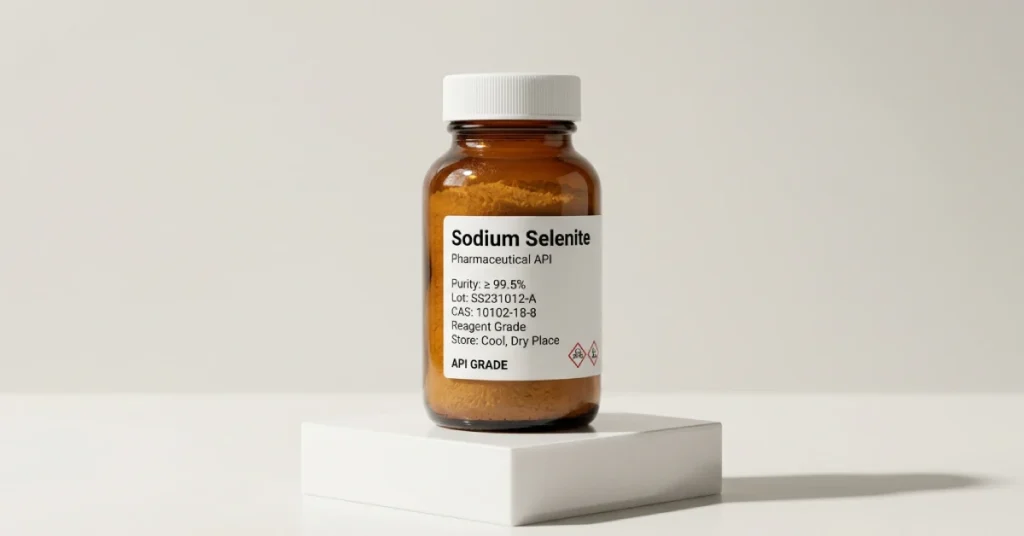
Sodium Selenite is an inorganic selenium salt used to provide the essential trace element selenium in nutritional supplements, fortified foods, parenteral nutrition, and selected pharmaceutical products. Selenium is required for normal antioxidant defense, thyroid hormone metabolism, immune function, reproduction, and DNA synthesis. Sodium selenite is one of the most common inorganic forms used in supplements, alongside sodium selenate, selenomethionine, and selenium-enriched yeast.
Although selenium is essential, the difference between a nutritional dose and a toxic dose is narrow. Sodium selenite can correct deficiency and support selenoprotein production, but excessive or prolonged intake can cause selenosis, a potentially serious toxic syndrome. This narrow therapeutic window makes accurate dosing, product labeling, and avoidance of duplicate selenium sources especially important.
Chemical Structure
“Sodium selenite” is commonly represented as Na2SeO3 and has a molecular weight of approximately 172.94 g/mol in its anhydrous form. It is the sodium salt of selenous acid and contains selenium in the +4 oxidation state. The compound is usually supplied as a white crystalline powder or as the pentahydrate, Na2SeO3·5H2O.
Unlike organic selenium compounds such as selenomethionine, sodium selenite is an inorganic selenium source. After absorption, selenium is incorporated into selenoproteins as selenocysteine, the biologically active amino acid residue found in enzymes such as glutathione peroxidases, thioredoxin reductases, and iodothyronine deiodinases.
Sodium Selenite-Based Medicines
The following are examples of products that may contain sodium selenite. Product availability, selenium salt, and elemental selenium content differ by country.
- Selenase oral solution.
- Selenase T oral solution.
- Selenase T pro injectione.
- SelenoPrecise selenium tablets.
- Selenium ACE supplements.
- Multivitamin and mineral supplements containing selenium.
- Parenteral nutrition trace-element products.
- Veterinary selenium and vitamin E injections, such as BO-SE.
Many “selenium” products do not specify whether they contain selenite, selenate, selenomethionine, or selenium yeast. Combination products should not be assumed equivalent to single-ingredient sodium selenite because their selenium dose and formulation may differ substantially.
Mechanism of Action
Selenium functions primarily through its incorporation into selenoproteins. These proteins include glutathione peroxidases, which reduce hydrogen peroxide and lipid peroxides, thereby limiting oxidative damage to cells and membranes. Thioredoxin reductases also depend on selenium and participate in redox regulation, DNA synthesis, and cellular protection.
Selenium is especially important in the thyroid gland, which has the highest selenium concentration of any organ. Selenoproteins protect thyroid cells from hydrogen peroxide generated during thyroid hormone synthesis and support iodothyronine deiodinases, which convert thyroxine (T4) into the more active triiodothyronine (T3). Adequate selenium is therefore important for normal thyroid hormone metabolism, although supplementation does not necessarily improve thyroid function in selenium-replete people.
Pharmacokinetics
Sodium selenite is absorbed in the small intestine, but its absorption is incomplete; approximately half of an oral dose may be absorbed. Once absorbed, selenium is transported in the blood largely bound to proteins, including selenoprotein P and albumin. In human pharmacokinetic studies involving radiolabeled sodium selenite, 85% of intravenously administered selenium was protein-bound within four to six hours and 95% by 24 hours.
Selenium is distributed to tissues, with particularly high concentrations in the thyroid, liver, kidney, and other selenium-dependent organs. It is incorporated into selenoproteins or excreted mainly through urine, with smaller amounts eliminated through feces and exhaled air. Sodium selenite is generally retained better than sodium selenate after absorption, although organic selenium forms may offer different absorption and retention profiles.
Therapeutic Uses
| Therapeutic area | Typical use of sodium selenite |
|---|---|
| Selenium deficiency | Prevention and correction of nutritional selenium deficiency |
| Parenteral nutrition | Provision of selenium in patients unable to receive adequate oral nutrition |
| Thyroid support | Nutritional support where selenium deficiency is present; not a substitute for standard thyroid treatment |
| Keshan disease prevention | Public-health selenium supplementation in historically deficient regions |
| Immune support | General nutritional supplementation where dietary intake is inadequate |
| Veterinary nutrition | Prevention and treatment of selenium deficiency in livestock |
| Antioxidant support | Contribution to normal glutathione peroxidase and selenoprotein activity |
| Combination nutrition therapy | Part of multivitamin-mineral or trace-element formulations |
Sodium selenite is primarily a nutritional and replacement therapy. It is not a proven treatment for cancer, viral infections, thyroid disease, or chronic disease in selenium-sufficient individuals, and claims beyond correction of deficiency should be interpreted cautiously.
Side Effects
At appropriate nutritional doses, sodium selenite is usually well tolerated. Mild gastrointestinal symptoms, nausea, diarrhea, or a metallic taste may occur in some people, particularly with higher supplemental doses. Allergic reactions are uncommon but possible.
The principal risk is selenosis, or chronic selenium toxicity. Early features include garlic-like breath odor, metallic taste, hair loss, brittle or discolored nails, skin rash, nausea, diarrhea, fatigue, and irritability. More severe toxicity can involve peripheral neuropathy, paresthesia, ataxia, tremor, kidney injury, cardiac dysfunction, respiratory distress, and rarely death.
Drug Interactions
Documented drug interactions with selenium are limited, but some medicines may reduce circulating selenium concentrations. Valproic acid and cisplatin have been associated with lower selenium levels in treated patients, potentially increasing the importance of nutritional assessment in susceptible individuals.
Selenium supplements may theoretically increase bleeding risk when combined with anticoagulants, antiplatelet drugs, aspirin, or other agents that impair hemostasis, although clinical evidence is limited. Patients should also avoid taking multiple selenium-containing supplements simultaneously, because combined doses can quickly exceed safe limits.
Safety Considerations
The adult tolerable upper intake level for total selenium is 400 mcg per day from food, supplements, and other sources combined. Chronic intake above this level increases the risk of selenosis, while prolonged exposure to substantially higher amounts can cause severe neurologic, renal, cardiac, and respiratory toxicity.
People should not self-treat with high-dose selenium for cancer prevention, thyroid disease, fertility, or immune enhancement without medical advice. Selenium status is best assessed clinically when deficiency or toxicity is suspected, and products should be checked carefully to distinguish the total sodium selenite amount from the amount of elemental selenium delivered.
Regulatory Status
In the United States, selenium is recognized as an essential nutrient, and sodium selenite is permitted in dietary supplements and fortified foods within applicable regulations. The FDA also authorizes selenious acid injection for selenium supplementation in parenteral nutrition; this product received initial U.S. approval in 2019.
Sodium selenite is also used in veterinary medicine, where injectable selenium and vitamin E products are regulated as animal drugs. These veterinary products carry explicit warnings because excessive selenium can cause toxicity, abortion, respiratory distress, and death in animals.
Clinical Perspective
Sodium selenite is a useful API for correcting selenium deficiency and supporting normal selenoprotein function. Its major clinical value lies in prevention and replacement, particularly in people with inadequate dietary intake, malabsorption, or increased nutritional requirements.
However, sodium selenite should not be viewed as a benign “more is better” supplement. Because toxicity can occur at doses not far above nutritional needs, patients should use only labeled doses, avoid duplicate selenium products, and seek medical advice before using high-dose selenium for unproven indications.