
Description
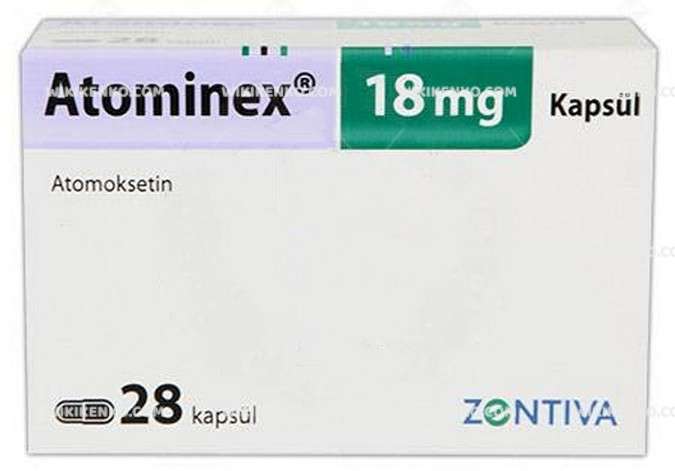
Atominex 18 mg capsule is a branded atomoxetine hydrochloride product belonging to the pharmacotherapeutic group “psychoanaleptics”, ATC code N06BA09 (atomoxetine). It is classified in the nervous system (N) category within the Anatomical Therapeutic Chemical (ATC) system used by the Turkish Medicines and Medical Devices Agency (TİTCK). Each commercial pack of Atominex 18 mg contains 28 hard capsules for oral use and is dispensed on prescription (“Beyaz Reçete”) in Turkey. The product is manufactured for Sanofi İlaç Sanayi ve Tic. A.Ş. in Turkey and is a generic equivalent of atomoxetine (global reference product: Strattera).
Atomoxetine as an active substance is approved internationally for the treatment of ADHD in children (≥6 years), adolescents, and adults, with national variations in specific indications and age limits. Regulatory product information for comparable atomoxetine 18 mg capsules (e.g. Atomoxetine Accord 18 mg, Strattera 18 mg) supports the same qualitative and quantitative composition of the active ingredient as declared for Atominex 18 mg.
Qualitative and Quantitative Composition
Each Atominex 18 mg capsule contains atomoxetine hydrochloride equivalent to 18 mg atomoxetine as the sole active pharmaceutical ingredient. Atomoxetine hydrochloride is a selective norepinephrine reuptake inhibitor (NRI) presented as a white to practically white solid with moderate aqueous solubility.
Excipients in generic atomoxetine 18 mg capsules typically include pregelatinized starch and dimethicone in the fill, and hard gelatin capsule shells containing gelatin, sodium lauryl sulfate, and colorants; Atominex 18 mg follows this general formulation pattern, although the exact excipient list must be verified in the Turkish summary of product characteristics (Kısa Ürün Bilgisi). Atomoxetine capsules are designed for oral administration only and must be swallowed whole; they are not intended to be opened, crushed, or chewed.
Pharmaceutical Form and Presentation
Atominex 18 mg is supplied as hard gelatin capsules containing a white to off‑white powder of atomoxetine hydrochloride. Internationally, 18 mg atomoxetine capsules are typically of size 3, with an opaque yellow or gold cap and an opaque white body marked with “18” and “mg”, although specific imprinting and color may differ slightly for Atominex marketed in Turkey. The commercial Turkish pack contains 28 capsules, supporting both initiation and early titration of ADHD therapy.
Atomoxetine is available globally in multiple strengths (10, 18, 25, 40, 60, 80, and 100 mg) to permit weight‑based and clinically individualized dosing; Atominex is one of several strengths (e.g. 18 mg, 25 mg, 40 mg, 60 mg, 80 mg, 100 mg) produced under the same brand name. Atominex 18 mg can therefore be used as a low or intermediate dose in flexible dose regimens, especially in children and adolescents undergoing titration.
Mechanism of Action
Atomoxetine is a selective norepinephrine reuptake inhibitor that exerts its pharmacological effect primarily through potent inhibition of the presynaptic norepinephrine transporter (NET) in the central nervous system. By blocking NET, atomoxetine increases extracellular norepinephrine concentrations in the prefrontal cortex and other brain regions involved in attention, impulse control, and executive functioning. Unlike psychostimulants (e.g. methylphenidate, amphetamines), atomoxetine has minimal direct dopaminergic effects in the striatal regions and does not act via dopamine transporter inhibition, contributing to its classification as a non‑stimulant ADHD therapy.
Preclinical data indicate that atomoxetine does not significantly promote dopamine release in the nucleus accumbens, which correlates with a lower abuse liability compared with stimulant medications. However, functional imaging studies demonstrate enhanced catecholaminergic transmission in prefrontal cortical circuits, consistent with improved attention and reduced hyperactivity and impulsivity in clinical use.
Attention‑Deficit/Hyperactivity Disorder (ADHD)
Atominex 18 mg is indicated as part of a comprehensive treatment program for ADHD that includes psychological, educational, and social measures. The diagnosis of ADHD should be made according to established diagnostic criteria (e.g. DSM‑5, ICD‑10/11) based on a thorough clinical evaluation, including assessment of symptoms in multiple settings and evaluation of comorbid conditions. Atomoxetine is approved for use in children (≥6 years) and adolescents, and in many jurisdictions also for adults with ADHD when symptoms persist and are functionally impairing.
Atomoxetine may be preferred in specific clinical scenarios, such as patients with contraindications to stimulant treatment, a history of substance misuse, tics, or comorbid anxiety disorders, although clinical judgment and local guidelines should be followed. Atominex 18 mg provides a low dose particularly suited for initial dosing in lower‑weight children, dose adjustments in intermediate weight bands, or cautious titration in adults with co‑morbidities.
Dosage and Administration
Atomoxetine dosing is weight‑based in children and adolescents up to approximately 70 kg, while fixed dosing ranges are often used for those above 70 kg and for adults. Treatment should be initiated at a low dose and titrated upwards based on clinical response and tolerability, with periodic reassessment of the need for ongoing therapy. Atominex capsules are for oral use and may be taken with or without food, once daily in the morning or divided into two doses (morning and late afternoon/early evening).
Example Dosing Regimens (from international labels)
The following regimens illustrate evidence‑based atomoxetine dosing; specific national recommendations and individual clinical circumstances must be followed when prescribing Atominex 18 mg.
-
Children and adolescents ≤70 kg:
-
Initial: approximately 0.5 mg/kg/day.
-
Target: approximately 1.2 mg/kg/day; some patients may benefit from up to 1.4 mg/kg/day but doses above this have not shown additional benefit.
-
-
Children and adolescents >70 kg and adults:
-
Initial: 40 mg/day.
-
Target: 80 mg/day; maximum recommended dose 100 mg/day.
-
The Atominex Turkish information notes an average adult daily dose of 80 mg, with a starting dose of 0.5 mg/kg (40 mg/day in adults) and maintenance dose 1–2 mg/kg/day (80 mg/day) in two divided doses for hyperactivity. Capsules must be swallowed whole with water; opening the capsule may expose the patient or caregiver to the active powder, which can cause ocular irritation and other local effects.
Illustrative Dosing Table for Atomoxetine (Including 18 mg Strength)
The table below summarizes typical atomoxetine dosing ranges using available strengths, illustrating how Atominex 18 mg may be integrated into regimens (for example, for intermediate doses or fine adjustments). Values are derived from published product information and clinical references.
| Patient group | Approx. body weight | Usual initial daily dose (mg) | Usual target daily dose (mg) | Example capsule combinations (including 18 mg) |
|---|---|---|---|---|
| Child 6–12 y | 25–35 kg | 10–18 mg/day (≈0.5 mg/kg) | 25–40 mg/day (≈1.0–1.2 mg/kg) | 18 mg once daily or 10 + 18 mg once daily (if available), adjust by 10–18 mg increments |
| Adolescent ≤70 kg | 40–55 kg | 18–25 mg/day (≈0.5 mg/kg) | 40–60 mg/day (≈1.0–1.2 mg/kg) | 18 mg twice daily, or 18 + 25 mg once daily depending on available strengths |
| Adolescent/Adult >70 kg | >70 kg | 40 mg/day | 80 mg/day (max. 100 mg/day) | 18 mg may be used for titration steps (e.g. 60 + 18 mg), or dose reduction (e.g. 40 + 18 mg) |
| CYP2D6 poor metabolizer or with strong CYP2D6 inhibitor | Any | Lower initial dose, slower titration | Lower target dose than usual | 18 mg provides a small increment to individualize dosing and minimize adverse events |
Pharmacokinetics
Absorption and Distribution
Atomoxetine is rapidly absorbed after oral administration, with peak plasma concentrations typically occurring within 1–2 hours. Food has minimal effect on the extent of absorption (AUC), although it may modestly delay Tmax, making atomoxetine suitable for administration with or without meals. Atomoxetine is extensively bound to plasma proteins (approximately 98%), mainly albumin, and distributes widely throughout body tissues.
Metabolism
Atomoxetine is predominantly metabolized in the liver by cytochrome P450 isoenzyme CYP2D6 to its principal active metabolite 4‑hydroxyatomoxetine, which is subsequently glucuronidated. Genetic polymorphisms in CYP2D6 result in marked interindividual variability in exposure: poor metabolizers (PMs) exhibit 5‑ to 10‑fold higher atomoxetine plasma concentrations compared to extensive metabolizers (EMs). Co‑administration of strong CYP2D6 inhibitors (e.g. fluoxetine, paroxetine, quinidine) can reproduce the poor‑metabolizer phenotype, leading to 6–8‑fold increased exposure and necessitating lower and more cautious dosing.
Elimination
Atomoxetine and its metabolites are eliminated primarily via the urine, with a smaller fraction excreted in feces. The elimination half‑life in extensive metabolizers is approximately 5 hours, while in poor metabolizers it may exceed 20 hours, explaining differences in steady‑state concentrations and adverse event profiles. Dose adjustments, slower titration, and careful monitoring are therefore recommended in known CYP2D6 poor metabolizers or in patients receiving strong CYP2D6 inhibitors.
Efficacy in ADHD
The efficacy of atomoxetine capsules in ADHD was established in multiple randomized, double‑blind, placebo‑controlled trials in children, adolescents, and adults. In pediatric trials, atomoxetine produced statistically significant improvements in standard ADHD rating scales (e.g. ADHD‑RS) versus placebo, with clinically meaningful reductions in inattention and hyperactivity‑impulsivity symptoms. Adult trials similarly demonstrated benefit in core ADHD symptoms and functional outcomes, though effect sizes tend to be modest to moderate compared with stimulant medications.
Evidence supports once‑daily or twice‑daily dosing regimens, with some studies suggesting improved early tolerability (e.g. reduced gastrointestinal side effects) when dosing is divided. Long‑term studies indicate sustained efficacy over 12 months or longer, with periodic reassessment recommended to determine the continued need for treatment. Atominex 18 mg, as a generic atomoxetine product, is expected to have equivalent efficacy to the reference atomoxetine formulations when used at bioequivalent doses.
Safety Profile and Adverse Reactions
Common Adverse Reactions
The safety profile of Atominex 18 mg reflects that of atomoxetine as a class. Commonly reported adverse reactions in children and adolescents include:
-
Gastrointestinal: decreased appetite, abdominal pain, nausea, vomiting.
-
Nervous system: headache, somnolence, dizziness.
-
Psychiatric: irritability, mood swings, insomnia, emotional lability.
-
Cardiovascular: modest increases in heart rate and blood pressure.
In adults, similar events are observed, with additional reports of dry mouth, constipation, urinary disturbances, and sexual dysfunction (e.g. decreased libido, erectile dysfunction). Many adverse effects are dose‑related and may be mitigated by gradual titration and administration with food.
Serious and Rare Adverse Reactions
Serious but uncommon adverse reactions include:
-
Hepatic: rare cases of severe liver injury, including hepatic failure, have been reported; atomoxetine should be discontinued if jaundice or laboratory evidence of liver injury appears.
-
Cardiovascular: rare events of QT prolongation, tachyarrhythmia, and sudden death in patients with pre‑existing cardiac abnormalities or serious heart disease.
-
Psychiatric: increased risk of suicidal ideation in children and adolescents, particularly early in treatment; emergent aggression or hostility has also been observed.
-
Allergic: rash, angioedema, and rare anaphylactic reactions.
Monitoring of liver function tests is advisable if clinical signs of hepatic dysfunction arise, and cardiovascular status should be assessed at baseline and periodically during therapy, especially in patients with risk factors.
Summary of Key Safety Signals
The following narrative table synthesizes key safety concerns associated with atomoxetine, relevant for Atominex 18 mg, and the recommended clinical actions.
| Safety domain | Key risk or adverse reaction | Clinical implications | Recommended monitoring/management |
|---|---|---|---|
| Hepatic | Rare severe liver injury, hepatic failure | Potentially life‑threatening if unrecognized | Counsel patients on symptoms (pruritus, dark urine, jaundice), discontinue if liver injury suspected, consider LFTs if symptoms occur |
| Cardiovascular | Elevated heart rate and blood pressure; rare QT prolongation and arrhythmia | Risk in patients with structural heart disease, hypertension, or arrhythmias | Baseline and periodic HR/BP, cardiac evaluation in patients with known disease, avoid in serious cardiovascular disorders |
| Psychiatric | Suicidal ideation (particularly in pediatric patients), aggression, mood changes | Increased risk early in treatment or after dose changes | Close monitoring for suicidal thoughts/behavior, especially during initiation; educate caregivers and patients; dose adjustment or discontinuation if needed |
| Growth (children) | Possible reduced weight gain and growth velocity | May affect long‑term growth trajectory | Monitor height and weight periodically; consider dose reduction or treatment interruption if growth suppression is observed |
| Genitourinary | Urinary retention, urinary hesitancy, sexual dysfunction | May impair quality of life and adherence | Elicit genitourinary and sexual symptoms; consider dose adjustment or alternative therapy if significant |
| Hypersensitivity | Rash, angioedema, anaphylaxis | Potentially serious allergic manifestations | Discontinue if serious hypersensitivity occurs; manage according to severity (antihistamines, emergency care) |
Contraindications
Atominex 18 mg is contraindicated in line with atomoxetine class labeling. Major contraindications include:
-
Hypersensitivity to atomoxetine or to any excipient in the formulation.
-
Concomitant use with monoamine oxidase inhibitors (MAOIs) or within 14 days of discontinuing an MAOI due to the risk of serious, potentially life‑threatening reactions (e.g. hypertensive crisis).
-
Narrow‑angle glaucoma, where atomoxetine‑induced pupillary dilation may exacerbate intraocular pressure.
-
Severe cardiovascular or cerebrovascular disorders where increases in blood pressure or heart rate could pose significant risk.
The Turkish Atominex information specifically lists MAOI co‑administration, narrow‑angle glaucoma, and hypersensitivity as contraindications, consistent with international atomoxetine labels.
Special Warnings and Precautions
Cardiovascular and Cerebrovascular Effects
Atomoxetine may cause mean increases in heart rate and blood pressure; significant changes can occur in susceptible individuals. Baseline evaluation should include a careful history and physical examination focusing on cardiovascular disease, and further investigations (e.g. ECG) should be considered where indicated. Regular monitoring of blood pressure and pulse is recommended after each dose adjustment and periodically during ongoing therapy.
Psychiatric and Behavioral Effects
Children, adolescents, and young adults receiving atomoxetine have shown a small but statistically significant increase in suicidal ideation compared with placebo. Close monitoring for clinical worsening, suicidality, or unusual behavioral changes is essential, particularly during the first few months of therapy or at times of dose changes. Atomoxetine can also exacerbate symptoms of anxiety, aggression, or hostility in some individuals, requiring careful risk–benefit assessment and, if necessary, dose adjustment or discontinuation.
Hepatic Impairment
Patients with moderate to severe hepatic impairment exhibit reduced clearance and increased exposure to atomoxetine, necessitating lower doses or extended dosing intervals. Atomoxetine should be used with caution in any patient with pre‑existing liver disease, and discontinued if clinical or laboratory evidence of liver injury emerges.
Growth and Development
Long‑term atomoxetine treatment in children may be associated with modest reductions in weight gain and linear growth compared with expected norms. Height and weight should be monitored at baseline and at regular intervals; clinicians may consider dose reduction or therapy interruptions if clinically significant growth suppression is observed.
Drug–Drug Interactions
Atomoxetine is a substrate of CYP2D6, and interactions are clinically most relevant with inhibitors or inducers of this isoenzyme. Strong CYP2D6 inhibitors such as fluoxetine, paroxetine, and quinidine significantly increase atomoxetine plasma concentrations, approximating the exposure seen in genetic poor metabolizers; lower starting doses and slower titration are recommended when such combinations are unavoidable.
The Turkish Atominex documentation notes interactions with high‑dose intravenous salbutamol (e.g. ≥600 micrograms over >2 hours) when combined with atomoxetine 60 mg twice daily, with potentially enhanced cardiovascular effects. Caution is advised when atomoxetine is co‑administered with other drugs that increase blood pressure or heart rate, or with agents that prolong the QT interval. Co‑administration with MAOIs is contraindicated due to the risk of serious hypertensive reactions.
Use in Specific Populations
-
Pediatric population (≥6 years): Atomoxetine is widely used and approved in children and adolescents with ADHD; safety and efficacy are well documented.
-
Adults: Many regulatory agencies authorize atomoxetine for adult ADHD; therapeutic principles and adverse event profiles are broadly similar to those in adolescents, but cardiovascular risk and psychiatric history warrant particular attention.
-
Elderly: Data are limited, and atomoxetine is generally not routinely used in geriatric populations with ADHD symptoms.
-
Pregnancy and lactation: Atominex is listed as pregnancy category C in Turkish information (risk cannot be ruled out). Atomoxetine should be used during pregnancy only if the potential benefit justifies the potential risk to the fetus, and caution is advised during lactation due to limited data on excretion into human milk.
-
Renal impairment: No major dose adjustments are typically required in mild to moderate renal dysfunction, but careful monitoring is prudent.
-
Hepatic impairment: Dose reductions are recommended in moderate and severe hepatic impairment as noted above.
Practical Considerations and Handling
Atominex 18 mg capsules should be stored as directed in the package insert, generally in a dry place at room temperature, protected from excessive heat and moisture. Care should be taken not to open the capsules; in case of accidental capsule breakage, contact with the powder should be minimized, and any material contacting skin or eyes should be washed off with water.
Patients and caregivers should be educated regarding:
-
The importance of adherence and not abruptly discontinuing therapy without medical advice.
-
Expected onset of action (often several days to weeks, sometimes longer) compared with stimulants.
-
The need to report emergent mood changes, suicidality, jaundice, or cardiovascular symptoms promptly.
Conclusion
Atominex 18 mg capsule is a Turkish‑market atomoxetine hydrochloride product belonging to the non‑stimulant class of ADHD treatments, with demonstrated efficacy in reducing core ADHD symptoms through selective norepinephrine reuptake inhibition. Its 18 mg strength facilitates weight‑based titration and individualized dosing across pediatric and adult populations, while sharing the established pharmacokinetic, efficacy, and safety profile of atomoxetine described in international regulatory documents and clinical literature. Careful patient selection, adherence to contraindications and interaction warnings, and ongoing monitoring of cardiovascular, psychiatric, hepatic, and growth parameters are essential to optimize the risk–benefit balance when prescribing Atominex 18 mg.













Reviews
There are no reviews yet.