
Description
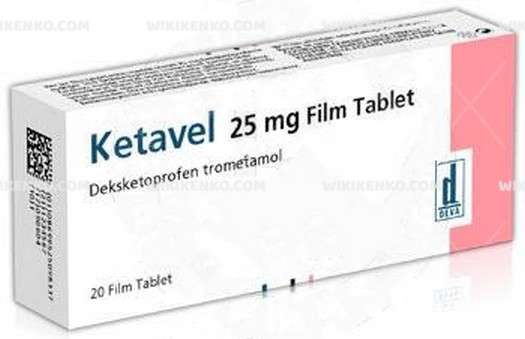
Ketavel Film Tablet 25 mg is a non-steroidal anti-inflammatory drug (NSAID) used for pain management. This comprehensive guide explores its composition, therapeutic applications, dosage guidelines, and safety considerations to provide healthcare professionals and patients with essential information about this medication.
Composition and Formulation
Ketavel Film Tablet 25 mg contains dexketoprofen as its active ingredient, specifically 36.9 mg of dexketoprofen trometamol, which is equivalent to 25 mg of dexketoprofen. Dexketoprofen is the dextrorotatory (S)-(+)-enantiomer of ketoprofen, providing analgesic, anti-inflammatory, and antipyretic properties. The film-coated tablet is white, round, biconvex, and contains a score line that allows it to be divided into equal doses.
Chemical Properties
Dexketoprofen belongs to the arylpropionic acid derivative class of NSAIDs. Its chemical formula is C₁₆H₁₄O₃ with a molecular weight of 254.285 g/mol. Dexketoprofen trometamol is the tromethamine salt of S-(+)-2-(3-benzoylphenyl)propionic acid, making it more water-soluble than the free acid form and enabling faster absorption.
Mechanism of Action
Ketavel works primarily by inhibiting the cyclooxygenase (COX) enzymes, specifically COX-1 and COX-. These enzymes are responsible for the production of prostaglandins, which are chemical mediators that promote pain, inflammation, and fever. By blocking the synthesis of prostaglandins at sites of injury or damage, dexketoprofen effectively reduces pain and inflammation.
Unlike racemic ketoprofen, the analgesic efficacy of dexketoprofen is achieved with approximately half the dose, as the therapeutic activity resides exclusively in the S(+)-enantiomer, while the R(-)-enantiomer is devoid of such activity. This selective action potentially reduces the overall drug load and may improve the safety profile.
Therapeutic Uses
Musculoskeletal Pain
Ketavel is indicated for the treatment of acute musculoskeletal pain conditions, including sprains, strains, and other injuries affecting the muscles, bones, ligaments, tendons, and nerves. Its rapid onset of action makes it particularly suitable for managing sudden muscle pain.
Dysmenorrhea
The medication effectively alleviates painful menstrual periods (dysmenorrhea) by reducing prostaglandin production in the uterine tissue, which is responsible for cramping and pain during menstruation. Women experiencing moderate to severe menstrual pain may benefit from the analgesic properties of Ketavel.
Dental Pain
Ketavel provides relief from acute dental pain, including toothache and post-dental procedure discomfort. Its analgesic effect helps manage the intense pain often associated with dental conditions.
Other Indications
According to clinical information, Ketavel may also be prescribed for other conditions such as osteoarthritis, rheumatoid arthritis, ankilozan spondilit (ankylosing spondylitis), acute gout arthritis, and post-operative pain management. However, these uses should be determined by a healthcare professional based on individual patient needs.
Dosage and Administration
Standard Dosage
For adults, the recommended dosage depends on the severity of pain:
-
Mild to moderate pain: 12.5 mg (half a tablet) every 4-6 hours or 25 mg (one tablet) every 8 hours
-
The total daily dose should not exceed 75 mg
Special Populations
Elderly Patients
For elderly individuals, it is recommended to start with a reduced dosage of 50 mg total daily dose. The dosage may be increased to the standard adult dose only after confirming good tolerance.
Hepatic Impairment
Patients with mild to moderate hepatic dysfunction should begin with a reduced dose (50 mg total daily dose) and be closely monitored. Ketavel is contraindicated in patients with severe hepatic dysfunction.
Renal Impairment
In patients with mild renal impairment, the initial dose should be reduced to 50 mg total daily dose. Ketavel is contraindicated in patients with moderate to severe renal dysfunction.
Administration Guidelines
Ketavel tablets should be taken orally with a sufficient amount of water. For more rapid onset of action, it is recommended to take the medication at least 30 minutes before meals, as food can delay absorption. The treatment should be limited to the symptomatic period as Ketavel is not intended for long-term use.
Pharmacokinetics
Absorption
Dexketoprofen trometamol is rapidly absorbed when administered orally, with peak plasma concentrations (Cmax) occurring within 30 minutes to 1 hour after ingestion. The absorption rate is reduced when taken with food, which may delay the onset of action.
Distribution
Dexketoprofen is highly protein-bound, particularly to albumin, with a volume of distribution less than 0.25 L/kg. The drug is distributed throughout the body, including synovial fluid.
Metabolism
Dexketoprofen undergoes extensive biotransformation in the liver primarily through glucuronidation to form inactive acyl-glucuronide metabolites. It is metabolized by hepatic cytochrome P450 enzymes, specifically CYP2C8 and CYP2C9. Unlike racemic ketoprofen, no bioinversion of the S(+)-enantiomer to the R(-)-form occurs in humans.
Elimination
Approximately 70-80% of the administered dose is recovered in urine during the first 12 hours post-ingestion, mainly as conjugated metabolites. The elimination half-life of dexketoprofen is relatively short, approximately 1.65 hours.
Contraindications
Ketavel is contraindicated in the following conditions:
-
Hypersensitivity to dexketoprofen, other NSAIDs, or any excipients in the product
-
Patients with asthma, bronchospasm, acute rhinitis, nasal polyps, urticaria, or angioneurotic edema precipitated by aspirin or other NSAIDs
-
Active or suspected peptic ulcer/hemorrhage or history of recurrent peptic ulcer/hemorrhage
-
Gastrointestinal bleeding or other active bleeding disorders
-
Crohn’s disease or ulcerative colitis
-
Severe heart failure
-
Moderate to severe renal dysfunction (creatinine clearance <50 mL/min)
-
Severe hepatic impairment (Child-Pugh score 10-15)
-
Hemorrhagic diathesis and other coagulation disorders
-
Third trimester of pregnancy and during lactation
Precautions and Warnings
Cardiovascular Risk
Like other NSAIDs, Ketavel may increase the risk of cardiovascular events, including myocardial infarction and stroke, especially with prolonged use or in patients with pre-existing cardiovascular disease.
Gastrointestinal Effects
Dexketoprofen can increase the risk of gastrointestinal irritation, ulceration, bleeding, and perforation. These risks are higher in elderly patients and those with a history of peptic ulcer disease.
Pregnancy and Lactation
Ketavel is contraindicated during the third trimester of pregnancy as it may cause premature closure of the fetal ductus arteriosus, pulmonary hypertension, renal dysfunction, and prolonged bleeding time. It should be used with caution during the first and second trimesters and is not recommended during breastfeeding as it is unknown whether dexketoprofen is excreted in human milk.
Driving and Operating Machinery
Ketavel may cause dizziness, drowsiness, and visual disturbances, which can affect a patient’s ability to drive or operate machinery. Patients should refrain from these activities until they are familiar with how dexketoprofen affects them.
Side Effects
Common Side Effects
The most frequently reported adverse reactions include:
-
Gastrointestinal disorders: nausea, vomiting, abdominal pain, diarrhea, dyspepsia
-
Nervous system disorders: dizziness, somnolence, headache
-
General disorders: fatigue, malaise
Serious Side Effects
Though less common, serious adverse reactions may include:
-
Gastrointestinal bleeding or perforation
-
Severe skin reactions
-
Hepatic dysfunction
-
Renal impairment
-
Hypersensitivity reactions
-
Thrombocytopenia and anemia
Storage Instructions
Ketavel Film Tablet 25 mg should be stored in its original packaging at room temperature, away from direct sunlight and moisture. Keep the medication out of reach of children.
Drug Information Table
| Parameter | Details |
|---|---|
| Brand Name | Ketavel |
| Generic Name | Dexketoprofen |
| Formulation | Film-coated tablet |
| Strength | 25 mg (as 36.9 mg dexketoprofen trometamol) |
| Therapeutic Class | Non-steroidal anti-inflammatory drug (NSAID) |
| Primary Uses | Musculoskeletal pain, dysmenorrhea, dental pain |
| Standard Dosage | 12.5 mg every 4-6 hours or 25 mg every 8 hours |
| Maximum Daily Dose | 75 mg |
| Administration | Oral, preferably 30 minutes before meals |
| Common Side Effects | Nausea, dizziness, abdominal pain, dyspepsia |
| Serious Side Effects | GI bleeding, severe skin reactions, hepatic/renal disorders |
| Contraindications | Peptic ulcer, severe hepatic/renal impairment, 3rd trimester pregnancy |
| Storage Conditions | Room temperature, away from light and moisture |
| Manufacturer | DEVA Holding (Turkey) |
Conclusion
Ketavel Film Tablet 25 mg (dexketoprofen trometamol) represents an effective short-term treatment option for various painful conditions. Its rapid onset of action, combined with analgesic and anti-inflammatory properties, makes it valuable in managing acute pain. However, like all medications, it should be used at the lowest effective dose for the shortest duration necessary to minimize potential side effects.
Proper patient selection, considering contraindications and precautions, is essential for safe and effective use of this medication. Always consult a healthcare professional before starting, changing, or discontinuing any medication regimen.










Reviews
There are no reviews yet.