
Description
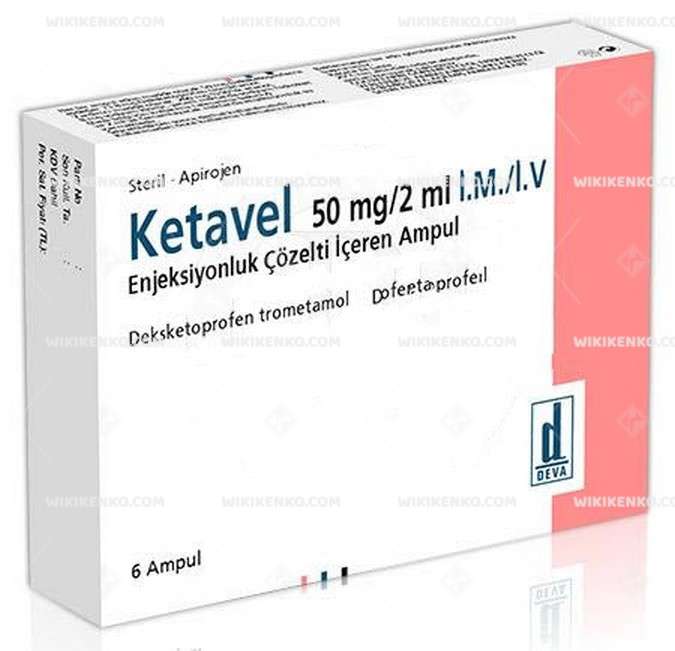
Ketavel Injection Solution Iceren Ampul is a parenteral formulation containing dexketoprofen trometamol, a potent non-steroidal anti-inflammatory drug (NSAID) used for the management of moderate to severe acute pain. This injectable medication provides rapid pain relief when oral administration is not practical or effective. As a pharmaceutical product available in Turkey and other markets, it delivers efficient analgesic and anti-inflammatory effects through its active S-(+)-enantiomer of ketoprofen, offering enhanced potency with a favorable safety profile compared to racemic ketoprofen formulations.
Composition and Pharmacological Properties
Each 2 ml ampoule of Ketavel Injection Solution contains 73.8 mg of dexketoprofen trometamol, which is equivalent to 50 mg of dexketoprofen, the active therapeutic component. The solution also contains excipients including ethanol and sodium chloride to ensure proper solubility and isotonicity for parenteral administration.
Dexketoprofen functions primarily through inhibition of the cyclooxygenase (COX) enzyme pathway, affecting both COX-1 and COX-2 isoforms. This mechanism reduces the production of prostaglandins-key mediators in pain perception and inflammatory processes-at sites of tissue injury. By blocking prostaglandin synthesis, dexketoprofen effectively alleviates pain and reduces inflammation, providing symptomatic relief for various acute pain conditions.
The pharmacokinetic profile of dexketoprofen trometamol demonstrates rapid absorption following intramuscular administration, with peak plasma concentrations achieved within approximately 20 minutes (range: 10-45 minutes). The drug exhibits high plasma protein binding (99%) with a distribution volume below 0.25 L/kg. Its relatively short elimination half-life of 1-2.7 hours allows for appropriate dosing intervals while minimizing drug accumulation.
Mechanism of Action
Dexketoprofen trometamol represents the active S-(+)-enantiomer of ketoprofen, providing analgesic potency with potentially reduced side effects compared to the racemic mixture. As a non-selective COX inhibitor, it interferes with the arachidonic acid cascade by preventing the conversion of arachidonic acid to prostaglandins, which are responsible for sensitizing nociceptors and amplifying pain signals.
The analgesic efficacy of dexketoprofen begins rapidly after administration, with effects typically noticeable within 30 minutes. Clinical studies have demonstrated that the peak analgesic effect occurs within the first 45 minutes, and the duration of action after administering 50 mg of dexketoprofen typically lasts approximately 8 hours.
Therapeutic Indications
Ketavel Injection Solution is primarily indicated for the symptomatic treatment of acute pain characterized by moderate to severe intensity when oral administration is not appropriate. The clinical applications of this injectable formulation encompass several specific scenarios:
Post-Operative Pain Management
In the post-operative setting, Ketavel offers substantial benefits as part of multimodal analgesic approaches. Clinical studies have demonstrated that when used in combination with opioid analgesics, dexketoprofen trometamol significantly reduces opioid consumption by 30-45%. This opioid-sparing effect is particularly valuable in decreasing opioid-related adverse effects while maintaining adequate pain control, especially in the immediate post-surgical period when pain intensity tends to be highest.
Renal Colic
For patients experiencing renal colic, characterized by acute, severe flank pain typically associated with urinary tract obstruction, Ketavel provides rapid and effective pain relief. Studies comparing dexketoprofen trometamol with other analgesics for renal colic have shown comparable efficacy to standard treatments such as dipyrone, but with the advantage of faster onset of action-a crucial benefit in this intensely painful condition.
Low Back Pain
Acute low back pain represents another significant indication for Ketavel. The anti-inflammatory and analgesic properties of dexketoprofen effectively address both the pain and underlying inflammation commonly associated with acute back pain episodes. The injectable form provides particular value when rapid pain relief is required or when gastrointestinal absorption may be compromised.
Other Acute Pain Conditions
Beyond the aforementioned specific indications, Ketavel may also be utilized in various other acute pain conditions, including musculoskeletal pain due to sprains and strains, dysmenorrhea (menstrual pain), and dental pain when rapid intervention is necessary.
Dosage and Administration
The appropriate dosing of Ketavel Injection Solution requires careful consideration of the patient’s pain intensity, overall health status, and concomitant medications.
Standard Dosing Protocol
The standard recommended dosage for adults is 50 mg (one ampoule) administered every 8-12 hours. In cases where pain control is insufficient, the administration interval may be reduced to 6 hours. However, it is imperative to adhere to the maximum daily dose limitation of 150 mg (3 ampoules) to minimize the risk of adverse effects.
Ketavel is intended strictly for short-term use only. The treatment duration should be limited to the acute symptomatic period and should not exceed two days. As soon as clinically feasible, patients should be transitioned to oral analgesic therapy.
Administration Routes
Ketavel Injection Solution can be administered through multiple parenteral routes:
Intramuscular Administration
For intramuscular use, the contents of one ampoule (2 mL) should be injected slowly and deeply into the muscle. This route provides reliable absorption with peak plasma concentrations achieved within approximately 20 minutes.
Intravenous Administration
For intravenous administration, Ketavel offers two different methods:
-
Intravenous bolus: The content of one ampoule may be administered via slow intravenous injection, taking no less than 15 seconds to complete the administration.
-
Intravenous infusion: For this method, the solution should be diluted in 30-100 mL of physiological saline or glucose solution and administered over a period of 10-30 minutes. It is crucial to protect the diluted solution from natural daylight throughout the infusion process.
Contraindications
Several conditions and patient factors constitute absolute contraindications to the use of Ketavel Injection Solution:
-
Hypersensitivity to dexketoprofen, other NSAIDs, or any excipients in the formulation
-
History of asthma attacks, bronchospasm, acute rhinitis, or nasal polyps precipitated by aspirin or other NSAIDs
-
Active peptic ulceration or history of recurrent peptic ulcer/hemorrhage
-
History of gastrointestinal bleeding or perforation related to previous NSAID therapy
-
Severe heart failure
-
Moderate to severe renal dysfunction
-
Severe hepatic impairment
-
Third trimester of pregnancy and during lactation
-
Patients undergoing coronary artery bypass graft (CABG) surgery
Warnings and Precautions
The use of Ketavel necessitates careful consideration of various risk factors and potential complications. Healthcare providers should exercise caution and implement appropriate monitoring when administering this medication to certain patient populations.
Cardiovascular Risks
Dexketoprofen, like other NSAIDs, may increase the risk of serious cardiovascular thrombotic events, myocardial infarction, and stroke. This risk may increase with duration of use and in patients with pre-existing cardiovascular disease or risk factors. For patients with uncontrolled hypertension, congestive heart failure, established ischemic heart disease, peripheral arterial disease, or cerebrovascular disease, Ketavel should be used only after careful consideration of the benefit-risk ratio.
Gastrointestinal Risks
NSAIDs, including dexketoprofen, can cause serious gastrointestinal adverse events including inflammation, bleeding, ulceration, and perforation of the stomach, small intestine, or large intestine. These events can occur at any time during treatment, with or without warning symptoms, and may be fatal. Elderly patients and those with a prior history of gastrointestinal disease are at greater risk for these complications.
Renal Effects
Prolonged use of NSAIDs may result in renal papillary necrosis and other renal injuries. Patients with impaired renal function, heart failure, liver dysfunction, the elderly, and those taking diuretics or ACE inhibitors are at greater risk for renal toxicity and should be closely monitored.
Hepatic Function
Regular assessment of hepatic function is recommended during prolonged treatment, as elevated liver enzymes may occur. Treatment should be discontinued if abnormal liver tests persist or worsen, or if clinical signs and symptoms consistent with liver disease develop.
Side Effects
The administration of Ketavel Injection Solution may be associated with various adverse effects, ranging from common and relatively mild reactions to rare but potentially serious complications.
Common Side Effects
Common side effects (affecting up to 1 in 10 patients) include:
-
Nausea and/or vomiting
-
Injection site pain
-
Injection site reactions (inflammation, bruising, or hemorrhage)
Uncommon Side Effects
Uncommon side effects (affecting up to 1 in 100 patients) include:
-
Vomiting blood
-
Low blood pressure
-
Fever
-
Blurred vision
-
Dizziness
-
Sleepiness
-
Sleep disturbances
-
Headache
-
Abdominal pain
-
Constipation
-
Digestive problems
-
Diarrhea
-
Dry mouth
-
Flushing
-
Rash and itching
Rare and Very Rare Side Effects
Rare side effects (affecting up to 1 in 1,000 patients) include more serious conditions such as peptic ulcer, peptic ulcer hemorrhage or perforation, high blood pressure, fainting, too-slow breathing, and thrombophlebitis.
Very rare side effects (affecting up to 1 in 10,000 patients) include potentially life-threatening reactions such as anaphylaxis, Stevens-Johnson syndrome, angioedema, bronchospasm, shortness of breath, pancreatitis, and renal damage.
Drug Interactions
Ketavel Injection Solution may interact with various medications, necessitating careful consideration of concomitant therapies:
-
Anticoagulants and antiplatelets: Increased risk of bleeding when used with warfarin, other coumarin derivatives, or antiplatelet agents
-
Other NSAIDs: Concomitant use with other NSAIDs should be avoided due to increased risk of gastrointestinal ulceration and bleeding
-
Corticosteroids: Increased risk of gastrointestinal ulceration or bleeding when used concomitantly
-
Lithium: NSAIDs increase plasma lithium levels, potentially reaching toxic values
-
Methotrexate: Reduced tubular secretion of methotrexate, increasing its concentration and potential toxicity
-
Antihypertensives: Reduced efficacy of antihypertensive medications, particularly ACE inhibitors, angiotensin II receptor antagonists, and diuretics
Special Populations
Pregnancy and Lactation
Dexketoprofen is contraindicated during the third trimester of pregnancy due to the risk of premature closure of the fetal ductus arteriosus and potential prolongation of bleeding time. During the first and second trimesters, it should be used only if clearly necessary, at the lowest effective dose, and for the shortest duration possible.
Furthermore, dexketoprofen should be avoided during breastfeeding, as there is insufficient data regarding its excretion in human milk.
Fertility
In women experiencing fertility issues or undergoing fertility investigations, discontinuation of dexketoprofen should be considered, as NSAIDs may impair female fertility through effects on ovulation.
Elderly Patients
Elderly patients are at increased risk of adverse effects from NSAIDs, particularly gastrointestinal bleeding, ulceration, perforation, and renal function impairment. Careful monitoring and potentially lower dosages are recommended for this population.
Storage and Handling
Ketavel Injection Solution should be stored in its original packaging to protect it from light. For intravenous infusion, once diluted in normal saline or glucose solutions, the preparation should be used promptly. The diluted solution must always be protected from natural daylight during administration.
When administering Ketavel intramuscularly or as an intravenous bolus, the solution should be injected immediately after its removal from the ampoule to maintain sterility and stability.
Comprehensive Information Table
| Parameter | Information |
|---|---|
| Active Ingredient | Dexketoprofen trometamol (73.8 mg per 2 ml ampoule, equivalent to 50 mg dexketoprofen) |
| Pharmacological Class | Non-steroidal anti-inflammatory drug (NSAID) |
| Dosage Form | Solution for injection/infusion in ampoules |
| Therapeutic Indications | Moderate to severe acute pain when oral administration is not appropriate (post-operative pain, renal colic, low back pain) |
| Standard Dosage | 50 mg every 8-12 hours (may be administered every 6 hours if necessary) |
| Maximum Daily Dose | 150 mg (3 ampoules) |
| Administration Routes | Intramuscular, intravenous bolus (≥15 seconds), intravenous infusion (10-30 minutes) |
| Duration of Treatment | Short-term use only (maximum 2 days) |
| Onset of Action | Within 30 minutes; peak effect within 45 minutes |
| Duration of Effect | Approximately 8 hours |
| Common Side Effects | Nausea, vomiting, injection site pain and reactions |
| Contraindications | Hypersensitivity to NSAIDs, active peptic ulcer, severe heart/kidney/liver failure, pregnancy (3rd trimester) |
| Major Drug Interactions | Anticoagulants, other NSAIDs, corticosteroids, lithium, methotrexate, antihypertensives |
| Pregnancy Category | Contraindicated in third trimester; use with caution in first and second trimesters |
| Use in Breastfeeding | Not recommended |
| Storage Requirements | Protect from light; no special temperature requirements |
Conclusion
Ketavel Injection Solution Iceren Ampul represents an effective pharmaceutical intervention for the management of acute moderate to severe pain when oral administration is not appropriate. Containing dexketoprofen trometamol as its active component, this injectable formulation offers rapid onset of action, making it particularly suitable for post-operative pain, renal colic, and acute low back pain situations requiring immediate intervention.
The utilization of Ketavel requires careful consideration of the benefit-risk ratio, particularly in vulnerable populations such as the elderly and those with cardiovascular, gastrointestinal, renal, or hepatic comorbidities. Healthcare professionals should remain vigilant for potential adverse effects and drug interactions, ensuring appropriate patient selection, dosing, and monitoring to maximize therapeutic benefits while minimizing risks.
When used appropriately within its approved indications and with proper attention to contraindications and precautions, Ketavel Injection Solution provides valuable analgesic support in the comprehensive management of acute pain conditions, offering patients effective relief during critical periods of intense discomfort.













Reviews
There are no reviews yet.