
Description
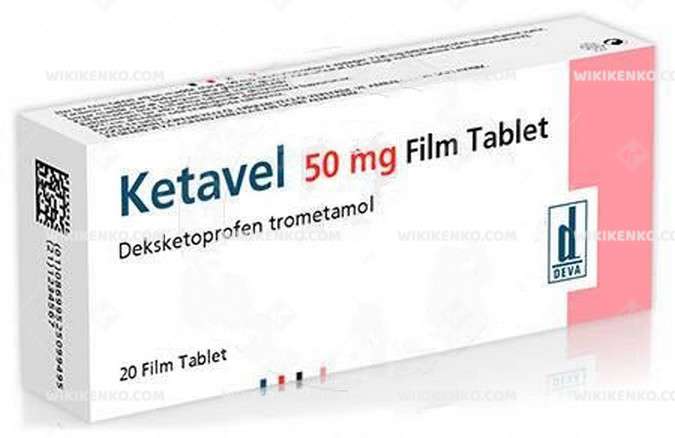
Ketavel Film Tablet 50 mg is a potent non-steroidal anti-inflammatory drug (NSAID) utilized for short-term pain management. This medication, manufactured by DEVA Holding in Turkey, contains dexketoprofen as its active pharmaceutical ingredient, specifically formulated as dexketoprofen trometamol. The following comprehensive guide explores its composition, mechanism of action, therapeutic applications, and important safety considerations to provide healthcare professionals and patients with essential information about this medication.
Composition and Formulation
Ketavel Film Tablet 50 mg contains dexketoprofen as its active ingredient, specifically 73.8 mg of dexketoprofen trometamol, which is equivalent to 50 mg of pure dexketoprofen. This distinction is important as the trometamol salt form enhances water solubility, facilitating more rapid absorption compared to the free acid form. Physically, Ketavel 50 mg is a round, biconvex, white film-coated tablet with a score line on one face, allowing it to be divided if necessary. The tablet includes excipients such as sodium starch glycolate and glycerol monostearate, which contribute to its pharmaceutical formulation and stability.
Mechanism of Action
Dexketoprofen belongs to the propionic acid derivative class of NSAIDs and functions primarily by inhibiting cyclooxygenase (COX) enzymes, specifically both COX-1 and COX-2. These enzymes are responsible for the production of prostaglandins, chemical mediators that promote pain, inflammation, and fever. By blocking prostaglandin synthesis at sites of tissue injury or damage, dexketoprofen effectively reduces pain signals and inflammatory responses.
What distinguishes dexketoprofen from its parent compound ketoprofen is its enantiomeric purity. Dexketoprofen is the pure S(+)-enantiomer of ketoprofen, while the traditional racemic ketoprofen contains both S(+) and R(-) forms. Scientific research has demonstrated that the analgesic and anti-inflammatory properties reside exclusively in the S(+)-enantiomer, while the R(-)-enantiomer lacks therapeutic activity but may contribute to unwanted side effects. This selective pharmaceutical approach potentially allows for effective pain relief with approximately half the dose of the racemic compound, potentially reducing the overall drug burden on the body.
Therapeutic Uses
Musculoskeletal Pain
Ketavel is primarily indicated for the treatment of acute musculoskeletal pain conditions, including sprains, strains, and other injuries affecting muscles, bones, ligaments, tendons, and nerves. Its rapid onset of action makes it particularly suitable for managing sudden onset of intense muscular pain. The medication effectively alleviates discomfort through its dual action of pain reduction and inflammation control.
Dysmenorrhea
The medication provides effective relief for painful menstrual periods (dysmenorrhea) by reducing prostaglandin production in uterine tissue, which is responsible for cramping and pain during menstruation. Women experiencing moderate to severe menstrual pain may benefit significantly from the analgesic properties of Ketavel, as it targets the underlying biochemical mechanisms of menstrual discomfort.
Dental Pain
Ketavel offers substantial relief from acute dental pain, including toothache and post-dental procedure discomfort. Its analgesic effect helps manage the intense pain often associated with dental conditions while simultaneously addressing the inflammatory component of dental pathologies.
Other Clinical Applications
Clinical data suggests that Ketavel may also be prescribed for other pain conditions requiring short-term management. However, it is important to note that the medication is intended for acute pain scenarios rather than chronic pain management, with treatment typically limited to the symptomatic period and not exceeding a few days.
Pharmacokinetics
Absorption and Distribution
Dexketoprofen trometamol demonstrates remarkable pharmacokinetic properties that contribute to its clinical efficacy. After oral administration, it is rapidly absorbed from the gastrointestinal tract, with maximum plasma concentrations (Cmax) achieved within approximately 30 minutes. This rapid absorption profile provides quick onset of analgesic action, making it suitable for acute pain scenarios requiring prompt relief.
The medication is highly protein-bound in circulation, with approximately 99% binding to plasma proteins, particularly albumin. The volume of distribution is relatively small at less than 0.25 L/kg, indicating limited distribution into tissues outside the vascular compartment. The distribution half-life is approximately 0.35 hours, while the elimination half-life typically ranges between 1-2.7 hours.
Metabolism and Elimination
Dexketoprofen undergoes extensive hepatic metabolism primarily through glucuronidation processes. The drug is metabolized by hepatic cytochrome P450 enzymes, specifically CYP2C8 and CYP2C9. Unlike some chiral drugs, dexketoprofen does not undergo bioinversion to the R(-)-enantiomer in humans, maintaining its stereochemical integrity throughout its metabolic pathway.
The metabolites, predominantly inactive glucuroconjugated compounds, are excreted primarily via the urinary route. Virtually no unchanged drug is eliminated, indicating nearly complete biotransformation before excretion. The efficient metabolism and elimination contribute to its suitability for short-term therapeutic use.
Dosage and Administration
Standard Dosage Regimen
For adults with acute pain, the recommended dosage of Ketavel 50 mg is one tablet every 8-12 hours. In cases of more severe pain, the administration interval may be shortened to 6 hours, though maintaining at least 6 hours between doses. It is crucial to emphasize that the total daily dose should not exceed 150 mg (three 50 mg tablets in 24 hours).
Special Populations
Dosage adjustments are necessary for elderly patients and those with renal or hepatic impairment. For such patients, it is recommended to start with a reduced total daily dose not exceeding 50 mg (one tablet per day). The dosage may be increased to the standard regimen only if well-tolerated and clinically necessary.
Ketavel is not recommended for use in children and adolescents under 18 years of age due to insufficient safety and efficacy data in this population.
Administration Guidelines
For optimal analgesic effect and rapid onset of action, Ketavel should ideally be taken approximately 30 minutes before meals, as food can delay absorption and reduce maximum plasma concentrations. However, in patients with sensitive gastrointestinal systems, taking the medication with food may help minimize digestive discomfort.
The duration of treatment should be limited to the acute symptomatic period, typically not exceeding 2-3 days for parenteral forms and switching to oral analgesics when possible. Prolonged use increases the risk of adverse effects without necessarily providing additional therapeutic benefit.
Precautions and Contraindications
Contraindications
Ketavel is contraindicated in several clinical scenarios to prevent potentially serious adverse outcomes. Patients with hypersensitivity to dexketoprofen, other NSAIDs, or any excipients in the formulation should avoid this medication. Similarly, individuals with active peptic ulceration, gastrointestinal bleeding, or history of recurrent peptic ulcer/hemorrhage should not take Ketavel due to increased risk of gastrointestinal complications.
The medication is also contraindicated in patients with severe heart failure, severe renal dysfunction, or severe hepatic impairment. Additionally, women in their third trimester of pregnancy must avoid Ketavel due to potential risks to the developing fetus, including premature closure of the ductus arteriosus.
Special Warnings
Caution is advised when prescribing Ketavel to patients with a history of gastrointestinal disorders, especially inflammatory bowel diseases such as ulcerative colitis or Crohn’s disease. Individuals with hypertension, congestive heart failure, established ischemic heart disease, or significant risk factors for cardiovascular events should use this medication only after careful consideration of risk-benefit ratio.
Patients with asthma combined with chronic rhinitis, chronic sinusitis, or nasal polyps have an elevated risk of allergic reactions to NSAIDs, including dexketoprofen. Elderly patients generally face higher risks of adverse reactions, particularly gastrointestinal bleeding and perforation, which can be fatal.
Side Effects and Adverse Reactions
Common Side Effects
Like other NSAIDs, Ketavel may cause various adverse reactions with variable frequencies. Gastrointestinal effects are the most commonly reported, including nausea, vomiting, abdominal pain, dyspepsia, and diarrhea. These symptoms typically occur in 3-4% of patients taking the medication. Neurological effects such as dizziness, drowsiness, and headache may also occur, though less frequently.
Serious Adverse Events
More serious adverse reactions, though rare, can include gastrointestinal bleeding or ulceration, which may present without warning symptoms in some patients. Severe skin reactions, while uncommon, have been reported with NSAID use, including exfoliative dermatitis and Stevens-Johnson syndrome.
Cardiovascular events, including hypertension, heart failure, and thrombotic events (myocardial infarction or stroke), represent another category of serious potential complications, particularly with prolonged use or in high-risk populations. Hepatic reactions, ranging from mild transaminase elevations to rare but severe hepatic failure, may also occur.
Drug Interactions
Dexketoprofen can interact with various medications, potentially increasing risks or decreasing efficacy. Concomitant use with other NSAIDs, including aspirin, should be avoided due to increased risk of gastrointestinal adverse effects. Similarly, combining Ketavel with corticosteroids may enhance gastrointestinal ulceration or bleeding risk.
Anticoagulants and antiplatelet agents, when used alongside dexketoprofen, can increase bleeding risk due to complementary mechanisms affecting hemostasis. Certain antihypertensives, particularly ACE inhibitors and angiotensin II antagonists, may experience reduced efficacy when co-administered with NSAIDs including dexketoprofen. Additionally, there is evidence that concomitant use with selective serotonin reuptake inhibitors (SSRIs) may increase gastrointestinal bleeding risk.
Lithium and methotrexate levels may be increased when these medications are used alongside NSAIDs, potentially leading to toxicity. Therefore, careful monitoring is essential when such combinations cannot be avoided.
Clinical Efficacy
Clinical studies have demonstrated that dexketoprofen trometamol provides effective pain relief comparable to higher doses of racemic ketoprofen. In postoperative pain management, 50 mg of intravenously administered dexketoprofen showed equivalent analgesic efficacy to 100 mg of racemic ketoprofen. Furthermore, when used in combination with opioid analgesics, dexketoprofen significantly reduced opioid consumption (by 30-45%) compared to placebo, potentially minimizing opioid-related adverse effects.
The onset of analgesic action is notably rapid, with pain relief beginning within 30 minutes of administration in many patients. This quick onset makes it particularly suitable for acute pain scenarios requiring prompt intervention. The analgesic efficacy appears to plateau at approximately 25 mg for the oral formulation, with higher doses primarily extending duration of action rather than significantly increasing peak analgesic effect.
Key Information
| Parameter | Details |
|---|---|
| Brand Name | Ketavel |
| Generic Name | Dexketoprofen (as dexketoprofen trometamol) |
| Formulation | Film-coated tablet |
| Strength | 50 mg (as 73.8 mg dexketoprofen trometamol) |
| Therapeutic Class | Non-steroidal anti-inflammatory drug (NSAID) |
| Primary Uses | Musculoskeletal pain, dysmenorrhea, dental pain |
| Standard Dosage | 50 mg every 8-12 hours |
| Maximum Daily Dose | 150 mg |
| Administration | Oral, preferably 30 minutes before meals |
| Common Side Effects | Nausea, dizziness, abdominal pain, dyspepsia |
| Serious Side Effects | GI bleeding, cardiovascular events, severe skin reactions, hepatic/renal disorders |
| Contraindications | Peptic ulcer, severe heart/hepatic/renal failure, 3rd trimester pregnancy |
| Special Precautions | Elderly patients, history of GI disorders, cardiovascular risk factors |
| Drug Interactions | Other NSAIDs, anticoagulants, lithium, methotrexate, antihypertensives |
| Storage Conditions | Room temperature, away from light and moisture |
| Manufacturer | DEVA Holding (Turkey) |
Storage and Handling
Ketavel Film Tablet 50 mg should be stored in its original packaging at room temperature, away from direct sunlight, excessive heat, and moisture. The medication should be kept out of reach of children to prevent accidental ingestion. Patients should check the expiration date before use and not consume expired medication. The tablets should not be removed from their blister packaging until immediately before consumption to maintain stability and efficacy.
Conclusion
Ketavel Film Tablet 50 mg (dexketoprofen trometamol) represents an effective short-term treatment option for various acute painful conditions. Its rapid onset of action, combined with potent analgesic and anti-inflammatory properties, makes it valuable in managing moderate to severe pain. The use of the pure S(+)-enantiomer allows for effective pain relief at lower doses compared to racemic ketoprofen, potentially reducing the risk of dose-dependent adverse effects.
However, like all medications, Ketavel should be used at the lowest effective dose for the shortest duration necessary to minimize potential side effects. Proper patient selection, considering contraindications and precautions, is essential for safe and effective use of this medication. Always consult a healthcare professional before starting, changing, or discontinuing any medication regimen, and report any unusual symptoms promptly to your healthcare provider.











Robert –
I went to Turkey on a holiday. I bought ketavel tablets for back pain from a pharmacy. They’re the best I’ve ever had. So would like to buy some more pls
Medical Guidance Center –
Hello Robert, this is WikiKenko.
I’m glad to hear that Ketavel helped with your back pain. However, it’s important to note that Ketavel is a prescription medication and should only be used under the guidance of a doctor. It’s always a good idea to consult with a healthcare professional before taking any medication. They can help you determine if Ketavel is the right medication for you and provide you with a prescription if necessary.
Ketavel Film Tablet 50 Mg is a non-steroidal anti-inflammatory drug (NSAID) used for symptomatic treatment of musculoskeletal pain, painful menstrual periods (dysmenorrhea), and toothache in adults. It is important to note that this medication should only be used under the guidance of a doctor and it is not recommended to buy it without a prescription. As for side effects, like all medicines, Ketavel can cause side effects, although not everybody gets them. It is important to read the patient information leaflet that comes with the medication for a complete list of possible side effects and to consult with your doctor if you have any concerns.