
Description
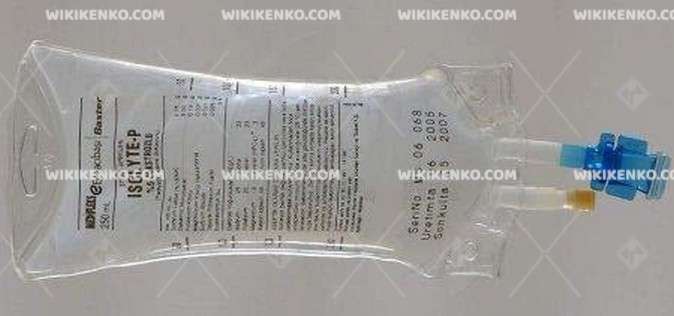
Isolyte-P 5% Dextrose is a specialized intravenous maintenance solution specifically formulated for pediatric patients that provides essential electrolytes, hydration, and calories. This sterile, nonpyrogenic solution serves as a critical component in managing fluid-electrolyte balance in infants and young children. The following comprehensive analysis examines the composition, therapeutic applications, administration protocols, and safety considerations of this important pediatric intravenous solution.
Composition and Formulation
Isolyte-P 5% Dextrose contains a carefully balanced combination of electrolytes in a glucose-based solution designed specifically to meet pediatric physiological requirements. Each 100 ml of the solution contains 5 g of dextrose monohydrate (glucose) providing essential calories, 0.26-0.32 g of sodium lactate or sodium acetate trihydrate acting as an alkalinizing agent, 0.13 g of potassium chloride maintaining potassium balance, 0.031 g of magnesium chloride hexahydrate supporting enzymatic functions, and 0.026 g of dibasic potassium phosphate providing phosphate supplementation. The solution also contains sodium bisulfite as a preservative and may include hydrochloric acid for pH adjustment, with the final pH typically ranging from 4.0 to 6.0.
The calculated osmolarity of Isolyte-P is approximately 340 mOsmol/liter, making it slightly hypotonic relative to blood plasma. In terms of electrolyte concentration per liter, Isolyte-P provides approximately 23 mEq of sodium, 29 mEq of chloride, 20 mEq of potassium, 3 mEq of magnesium, and 3 mEq of phosphate. This balanced electrolyte profile is specifically formulated to accommodate the unique requirements of pediatric patients while providing 170 calories per liter through its dextrose component.
Therapeutic Indications
Isolyte-P serves multiple therapeutic purposes in pediatric medicine and is indicated for several clinical scenarios. The primary indication is the maintenance of daily fluid-electrolyte balance in infants and young children who cannot receive adequate oral hydration. Additionally, it plays a crucial role in the treatment of acute diarrheal illnesses in pediatric patients, where rapid fluid and electrolyte replacement is essential for recovery.
The solution is also indicated for managing excessive fluid loss in various clinical situations, including postoperative states, burns, and other conditions associated with increased insensible water loss. Furthermore, Isolyte-P is utilized in the prevention and treatment of complications associated with diabetic acidosis, where careful fluid and electrolyte management is paramount. As a source of water for hydration with alkalinizing properties, it serves valuable therapeutic functions in conditions requiring correction of mild metabolic acidosis.
Beyond these primary indications, Isolyte-P is sometimes used as a diluent for concentrated intravenous medications that require dilution before administration to pediatric patients. This versatility makes it an essential component of pediatric fluid therapy protocols in various healthcare settings.
Mechanism of Action
The therapeutic effect of Isolyte-P is derived from its ability to restore and maintain fluid-electrolyte homeostasis while providing a modest energy source through its dextrose component. The solution’s dextrose content is rapidly metabolized, providing approximately 170 calories per liter while helping prevent protein catabolism and ketosis. When administered intravenously, the glucose component rapidly distributes throughout the body and is metabolized via insulin-dependent pathways.
The electrolyte components in Isolyte-P function to restore and maintain critical ionic balances. Sodium, the primary extracellular cation, plays a crucial role in maintaining fluid distribution, osmotic pressure, and acid-base balance. Potassium, predominantly an intracellular cation, is essential for neuromuscular function, enzyme activation, and cellular metabolism. The magnesium component supports numerous enzymatic reactions and neuromuscular functions, while phosphate serves as a critical buffer and component of cellular metabolism.
The sodium lactate or acetate component undergoes hepatic metabolism to bicarbonate, providing an alkalinizing effect that helps correct mild metabolic acidosis without the rapid pH changes associated with direct bicarbonate administration. This gradual alkalization makes Isolyte-P particularly suitable for pediatric patients, where rapid pH fluctuations can be problematic.
Isolyte-P 5% Dosage and Administration
Isolyte-P is exclusively administered via intravenous infusion and requires careful dosage calculation based on multiple patient factors. The dosage regimen must be individualized according to the patient’s age, weight, clinical condition, and laboratory parameters. For routine maintenance in pediatric patients, fluid requirements are typically calculated using the Holliday-Segar formula: 100 ml/kg/day for the first 10 kg of weight, 50 ml/kg/day for the next 10 kg, and 20 ml/kg/day for weight above 20 kg.
For neonates, fluid requirements follow a different progression based on age: 50-60 ml/kg/day on day 1, increasing progressively to 120-150 ml/kg/day by days 5-28. When used for fluid resuscitation in conditions such as dehydration, Isolyte-P may be administered at 10-20 ml/kg as a bolus over less than 10 minutes, with careful monitoring of the patient’s response.
Administration requires strict aseptic technique and should be performed via an infusion pump to ensure accurate delivery rates. The solution should be inspected visually for particulate matter and discoloration prior to administration. In cases of peripheral administration of hypertonic solutions, slow infusion through a small-bore needle placed well within the lumen of a large vein is recommended to minimize venous irritation, with careful avoidance of infiltration.
Contraindications and Precautions
Despite its therapeutic value, Isolyte-P is contraindicated in certain clinical scenarios. The solution should not be administered to patients with known hypersensitivity to any component of the formulation, particularly sodium bisulfite, which may cause allergic reactions in susceptible individuals. It is also contraindicated in patients with severe renal impairment, as the reduced ability to excrete electrolytes may lead to dangerous accumulation.
Caution is advised when administering Isolyte-P to patients with cardiac dysfunction, hepatic insufficiency, or pulmonary disease, as these conditions may impact fluid tolerance and metabolism of solution components. Particular attention should be paid to patients with diabetes mellitus, as the dextrose component may exacerbate hyperglycemia and necessitate adjustment of insulin therapy. Additionally, patients with pre-existing edema or conditions predisposing to sodium retention require careful monitoring during administration.
In patients at risk for water retention associated with non-osmotic antidiuretic hormone (ADH) secretion, fluid restriction to 50-80% of routine maintenance needs or adjustment based on insensible losses should be considered. Regular monitoring of plasma electrolyte concentrations and blood glucose is essential when initiating intravenous fluid therapy and at least every 24 hours thereafter, with subsequent fluid prescriptions adjusted based on these measurements.
Side Effects and Adverse Reactions
While generally well-tolerated when appropriately administered, Isolyte-P may cause various adverse reactions that require vigilant monitoring and prompt intervention. Infusion site reactions constitute the most common adverse events and include itching, redness, swelling, burning sensation, and potential development of venous thrombosis or phlebitis extending from the injection site. Systemic hypersensitivity reactions may manifest as respiratory distress, wheezing, chest pain, feelings of excessive heat or cold, and anaphylactoid symptoms.
Cardiovascular adverse effects may include palpitations, hypertension or hypotension, and signs of congestive heart failure in susceptible patients, particularly with rapid infusion or excessive volume. Neurological manifestations such as dizziness, syncope, headache, and paresthesias may occur, especially in cases of electrolyte imbalance. Gastrointestinal symptoms including nausea, vomiting, abdominal pain, and diarrhea have also been reported.
Serious complications related to fluid and electrolyte imbalances can develop with inappropriate dosing. These include hypervolemia, hyponatremia, hyperkalemia or hypokalemia, and metabolic acidosis or alkalosis. Rapid correction of electrolyte disturbances, particularly hyponatremia, may lead to serious neurological sequelae, emphasizing the importance of gradual correction and close monitoring. Febrile reactions, though rare, necessitate immediate discontinuation of the infusion and appropriate medical intervention.
Clinical Pharmacology
The pharmacokinetic properties of Isolyte-P derive from its individual components. Following intravenous administration, the solution’s components rapidly achieve maximum plasma concentrations. Glucose is swiftly transported into cells through insulin-dependent mechanisms, where it undergoes metabolism via glycolytic pathways. Sodium primarily distributes throughout extracellular fluid compartments, with distribution patterns varying by tissue type – rapid in muscle, liver, kidney, cartilage, and skin; slower in erythrocytes and neurons; and very slow in bone tissue.
Chloride predominantly distributes in extracellular fluids, while potassium enters cells through active transport mechanisms until reaching concentrations approximately 40 times greater than extracellular levels. This transport is facilitated by glucose, insulin, and oxygen. Magnesium primarily distributes into intracellular fluid, particularly in soft tissue cells.
Metabolism and elimination pathways vary by component. Glucose undergoes hepatic metabolism via glycolysis or storage as glycogen. Electrolytes are primarily eliminated through renal excretion, with rates dependent on filtration, reabsorption, and secretion mechanisms in the kidneys. Under normal physiological conditions, glucose is completely metabolized to carbon dioxide and water, yielding 3.75 kcal/g of anhydrous dextrose.
Storage and Handling
Isolyte-P requires specific storage and handling conditions to maintain sterility and solution integrity. The solution should be stored at room temperature (25°C/77°F), although brief exposure to higher temperatures during transport is generally acceptable. Protection from freezing is essential, as this can damage the container integrity and potentially cause precipitation of solution components.
The container-solution unit is designed as a closed system that does not require entry of external air during administration, maintaining solution sterility. The plastic container is typically overwrapped to provide additional protection from physical damage and to create an additional moisture barrier when necessary. Prior to administration, the solution should be inspected visually for particulate matter, discoloration, container integrity, and solution clarity.
Unused portions of the solution should be discarded, as the product contains no preservatives when the container is opened. When introducing additives, strict aseptic technique must be employed, and the solution with additives should not be stored for extended periods. Healthcare professionals should consult pharmacy resources for compatibility information when considering admixtures with other medications.
Summary Table
| Parameter | Information |
|---|---|
| Active Ingredients | Dextrose monohydrate 5 g/100ml, Sodium lactate/acetate 0.26-0.32 g/100ml, Potassium chloride 0.13 g/100ml, Magnesium chloride hexahydrate 0.031 g/100ml, Dibasic potassium phosphate 0.026 g/100ml |
| Electrolyte Concentration | Sodium 23 mEq/L, Chloride 29 mEq/L, Potassium 20 mEq/L, Magnesium 3 mEq/L, Phosphate 3 mEq/L |
| pH Range | 4.0-6.0 (typically 5.0) |
| Osmolarity | Approximately 340 mOsmol/L |
| Caloric Content | 170 calories/L |
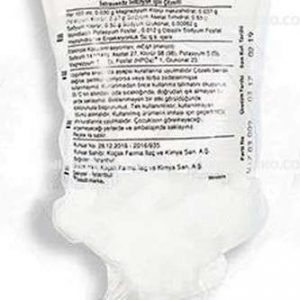
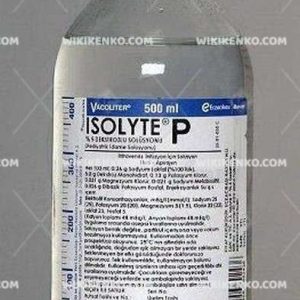
| Dosage Forms | 250 ml and 500 ml plastic containers (with and without administration sets) |
| Route of Administration | Intravenous infusion only |
| Primary Indications | Maintenance of fluid-electrolyte balance in pediatric patients, treatment of dehydration, management of acute diarrhea, prevention and treatment of diabetic acidosis complications |
| Standard Dosage | Variable based on age, weight, and clinical condition; typically follows Holliday-Segar formula for maintenance therapy |
| Contraindications | Hypersensitivity to components, severe renal impairment, significant electrolyte imbalances |
| Common Side Effects | Infusion site reactions, fluid/electrolyte imbalances, hypersensitivity reactions |
| Monitoring Required | Vital signs, fluid balance, electrolyte levels, blood glucose, signs of fluid overload or electrolyte imbalance |
| Storage Conditions | Room temperature (25°C/77°F), protect from freezing |
| Prescription Status | Prescription only |
Conclusion
Isolyte-P 5% Dextrose Pediatric Maintenance Solution represents an essential tool in pediatric fluid therapy, offering a carefully formulated combination of electrolytes and calories specifically designed to meet the unique physiological needs of infants and children. Its versatility in maintaining fluid-electrolyte balance, treating dehydration, providing modest caloric support, and serving as an alkalinizing agent makes it valuable across numerous clinical scenarios in pediatric medicine.
Despite its therapeutic benefits, successful use of Isolyte-P requires careful patient selection, individualized dosing, meticulous administration techniques, and vigilant monitoring for adverse effects. Clinicians must remain mindful of the potential complications associated with intravenous fluid therapy and employ appropriate precautions to ensure patient safety. With proper application and monitoring, Isolyte-P continues to be an important component in the pharmacologic management of fluid and electrolyte disorders in the pediatric population.












Reviews
There are no reviews yet.