Description
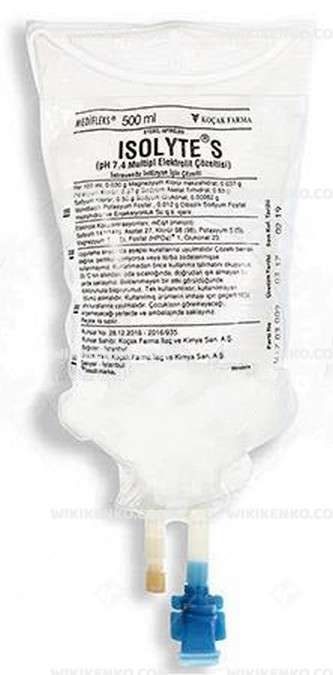
Isolyte S pH 7.4 is a specialized multi-electrolyte solution designed for intravenous administration in clinical settings. This sterile, nonpyrogenic solution is formulated to closely approximate the electrolyte composition of human plasma, making it an effective option for fluid and electrolyte replacement therapy. The “Medifleks Torbada” designation refers to the flexible bag container system used in Turkey, where this product is marketed alongside other regions globally.
This balanced crystalloid solution serves as an important tool in modern medical practice for maintaining proper hydration and electrolyte balance in patients requiring intravenous fluid therapy.
Composition and Properties
Each 100 mL of Isolyte S pH 7.4 contains a carefully calibrated blend of electrolytes and buffers. The primary components include Sodium Chloride (0.53 g), Sodium Gluconate (0.5 g), and Sodium Acetate Trihydrate (0.37 g), which together establish the solution’s foundational electrolyte profile. Additionally, the formulation incorporates Potassium Chloride (0.037 g) and Magnesium Chloride Hexahydrate (0.03 g) to provide essential cations required for numerous physiological processes.
What distinguishes the pH 7.4 version specifically is the inclusion of Dibasic Sodium Phosphate Heptahydrate (0.012 g) and Monobasic Potassium Phosphate (0.00082 g), which create a phosphate buffer system that maintains the solution’s pH within the physiologically optimal range of 7.0-7.8.
The resulting electrolyte concentration profile delivers Sodium (141 mEq/L), Potassium (5 mEq/L), Magnesium (3 mEq/L), Chloride (98 mEq/L), Phosphate (1 mEq/L), Acetate (27 mEq/L), and Gluconate (23 mEq/L). This composition yields a calculated osmolarity of approximately 295 mOsmol/liter, making it isotonic with human plasma. The solution is free from bacteriostatic or antimicrobial agents and is designed for direct intravenous administration.
Mechanism of Action
The therapeutic efficacy of Isolyte S pH 7.4 stems from its physiological compatibility with human blood. Sodium, the predominant cation in the extracellular fluid, functions primarily in controlling water distribution, fluid balance, and osmotic pressure regulation in body fluids. Additionally, sodium works in concert with chloride and bicarbonate to maintain acid-base equilibrium.
Potassium, as the principal cation of intracellular fluid, plays a vital role in carbohydrate utilization and protein synthesis. It is also critical for regulating nerve conduction and muscle contraction, particularly in cardiac tissue. The magnesium component supports numerous enzymatic reactions throughout the body and contributes to neuromuscular function.
What separates Isolyte S from solutions like normal saline is its balanced approach to electrolyte supplementation. The acetate and gluconate components act as metabolizable anions that are converted to bicarbonate in the liver, providing an alkalinizing effect. This feature is particularly advantageous during tissue hypoxia, as acetate requires less oxygen for metabolism compared to bicarbonate formation through other pathways.
Clinical Uses and Indications
Isolyte S pH 7.4 is indicated primarily as a source of electrolytes and water for hydration, and as an alkalinizing agent. The solution proves particularly valuable in treating dehydration across various clinical scenarios. It is employed in the management of fluid and electrolyte losses associated with surgical procedures, helping to prevent the development of postoperative fluid and electrolyte imbalances.
In pediatric medicine, Isolyte S finds application in treating children with acute diarrhea, where rapid fluid and electrolyte replacement is essential. The solution is also indicated for patients suffering from diabetic or renal acidosis, where the alkalinizing properties help correct metabolic disturbances.
During high-volume blood transfusion procedures using cell saver technology, Isolyte S has demonstrated superiority over normal saline as a wash solution. Research has shown that using Isolyte S results in fewer systemic acid-base and electrolyte derangements compared to normal saline. This advantage is attributed to Isolyte’s more physiologically balanced composition, which better maintains parameters such as pH, bicarbonate, and magnesium concentrations during extensive blood processing.
Dosage and Administration
The administration of Isolyte S pH 7.4 requires careful consideration of the patient’s specific clinical condition. Dosage must be directed by a physician and tailored according to the patient’s age, weight, clinical condition, and ongoing laboratory assessments. Frequent laboratory monitoring and clinical evaluation are essential to effectively track changes in blood glucose, electrolyte concentrations, and overall fluid balance, particularly during prolonged parenteral therapy.
For adult and elderly patients, the typical dosage ranges from 500 to 3000 mL over a 24-hour period. In pediatric patients, the dosage is more precisely calculated based on body weight, generally ranging from 20 to 100 mL/kg over 24 hours. For infants and very small children weighing up to 10 kg, a more specific guideline of 100 mL/kg/day may be followed.
Administration is exclusively through the intravenous route using aseptic technique. The solution should be inspected visually for particulate matter and discoloration prior to administration. If additives are to be introduced into the solution, thorough mixing is required, and the resultant mixture should be used immediately rather than stored for later use.
Contraindications
Despite its broad clinical utility, Isolyte S pH 7.4 is not appropriate for all patients. The solution is contraindicated in patients with advanced liver disease, as impaired hepatic metabolism can interfere with the proper conversion of gluconate, one of the solution’s key components. Additionally, patients with pre-existing metabolic alkalosis should not receive this solution, as the acetate content may further exacerbate their condition.
Caution is also warranted in patients with certain cardiac conditions, renal insufficiency, or conditions associated with sodium retention. In these populations, careful monitoring of fluid status and electrolyte levels is essential to prevent potential complications from fluid overload or electrolyte imbalances.
Side Effects and Adverse Reactions
While Isolyte S pH 7.4 is generally well-tolerated, various adverse reactions may occur during its administration. Common side effects include abdominal or stomach pain, bloating or swelling of extremities, blurred vision, body aches, chills, confusion, and dizziness. Some patients may experience dry mouth, flushed skin, or increased urination during therapy.
More serious adverse reactions, though rare, include convulsions, decreased urine output, and difficulty breathing. These symptoms may indicate a severe reaction requiring immediate medical intervention. Additionally, localized reactions at the infusion site such as pain, redness, swelling, inflammation, or venous irritation may develop and should be monitored closely.
In some cases, patients may experience fluid overload (hypervolemia) resulting from excessive administration, particularly in those with compromised renal function. Electrolyte disturbances can also occur, especially with prolonged use or in vulnerable patient populations.
Special Precautions
Special care must be taken when administering Isolyte S pH 7.4 to certain patient populations. Elderly patients and those with cardiac or renal impairment may require adjusted dosing and more frequent monitoring due to their reduced ability to process and excrete fluids and electrolytes.
The solution should be administered with caution to patients receiving corticosteroids or corticotropin, as these medications can cause sodium and fluid retention. Similarly, patients with conditions characterized by sodium retention, such as congestive heart failure or severe hypertension, should be monitored closely when receiving this solution.
For diabetic patients, it’s important to note that some glucose monitoring devices may be affected by the presence of maltose, resulting in falsely elevated glucose readings. Only glucose-specific monitors and test strips should be used in patients receiving icodextrin peritoneal dialysis solution.
Drug Interactions
When considering the addition of medications to Isolyte S pH 7.4, healthcare providers must ensure compatibility between the added drug and the solution components. The presence of calcium and magnesium ions in the solution requires special attention when adding phosphate-containing medications, as there is a risk of precipitation.
Certain antibiotics, including tetracyclines and amphotericin B, may interact with components of the solution, potentially reducing their efficacy. Additionally, potassium-sparing diuretics may enhance the potassium-retaining effects of the solution, potentially leading to hyperkalemia in susceptible patients.
Corticosteroids and corticotropin can augment sodium and water retention when administered concurrently with Isolyte S pH 7.4, necessitating careful monitoring of fluid balance and electrolyte status in patients receiving these combinations.
Comparison with Other Crystalloid Solutions
Isolyte S pH 7.4 offers several advantages over traditional crystalloids like normal saline. Studies have demonstrated that patients receiving Isolyte S experience fewer acid-base and electrolyte disturbances compared to those receiving normal saline. This is particularly significant during high-volume fluid replacement, where the accumulation of chloride from normal saline can lead to hyperchloremic metabolic acidosis.
The balanced composition of Isolyte S more closely resembles human plasma than normal saline does. While normal saline contains 154 mEq/L of both sodium and chloride, Isolyte S provides sodium at 141 mEq/L and chloride at just 98 mEq/L, alongside important additional electrolytes like potassium, magnesium, and buffer substances. This physiologically balanced profile makes Isolyte S particularly suitable for patients requiring large-volume fluid replacement or those at risk for acid-base disturbances.
Product Specifications and Packaging
In the Turkish market, “Isolyte Dengeli Elektrolit Solusyonu” is available in Medifleks bags, a flexible container system designed specifically for parenteral solutions. These containers are manufactured from multilayered film developed for pharmaceutical use, containing no plasticizers and exhibiting minimal leachables. The solution contact layer consists of a rubberized copolymer of ethylene and propylene, ensuring product stability and safety.
The product is commonly available in 500 mL and 1000 mL volumes, with both setli (with administration set) and setsiz (without administration set) options. The container-solution unit functions as a closed system, not requiring entry of external air during administration. An overwrap provides additional protection from the physical environment and serves as a moisture barrier when necessary.
Key Information
| Parameter | Details |
|---|---|
| Active Ingredients | Sodium Chloride (0.53 g/100mL), Sodium Gluconate (0.5 g/100mL), Sodium Acetate Trihydrate (0.37 g/100mL), Potassium Chloride (0.037 g/100mL), Magnesium Chloride Hexahydrate (0.03 g/100mL), Dibasic Sodium Phosphate Heptahydrate (0.012 g/100mL), Monobasic Potassium Phosphate (0.00082 g/100mL) |
| Electrolyte Concentration | Sodium: 141 mEq/L, Potassium: 5 mEq/L, Magnesium: 3 mEq/L, Chloride: 98 mEq/L, Phosphate: 1 mEq/L, Acetate: 27 mEq/L, Gluconate: 23 mEq/L |
| pH | 7.4 (range: 7.0-7.8) |
| Osmolarity | 295 mOsmol/liter |
| Indications | Source of electrolytes and water for hydration, alkalinizing agent, treatment of dehydration, fluid replacement in surgical patients, management of acidosis |
| Dosage | Adults/Elderly: 500-3000 mL/24h Children: 20-100 mL/kg/24h Infants (0-10 kg): 100 mL/kg/day |
| Contraindications | Advanced liver disease, pre-existing metabolic alkalosis |
| Common Side Effects | Abdominal pain, bloating, dizziness, dry mouth, increased urination, infusion site reactions |
| Serious Adverse Reactions | Convulsions, decreased urine output, difficulty breathing, hypervolemia, electrolyte imbalances |
| Storage Conditions | Store at room temperature, avoid freezing, protect from excessive heat, single-use only |
| Available Sizes | 500 mL and 1000 mL Medifleks bags (with or without administration sets) |
Conclusion
Isolyte S pH 7.4 represents an important advance in balanced crystalloid solutions for intravenous fluid therapy. Its carefully calibrated electrolyte composition closely mimics human plasma, providing effective hydration while minimizing the risk of electrolyte and acid-base disturbances. The solution’s physiological pH of 7.4 further enhances its compatibility with human blood, making it particularly valuable in clinical scenarios requiring substantial fluid replacement.
For healthcare practitioners, Isolyte S pH 7.4 offers a versatile tool for managing dehydration, electrolyte imbalances, and mild metabolic acidosis across diverse patient populations. However, as with all intravenous solutions, careful consideration of individual patient factors, appropriate dosing, diligent monitoring, and awareness of potential contraindications and adverse effects remain essential for safe and effective utilization of this therapeutic agent.


Reviews
There are no reviews yet.