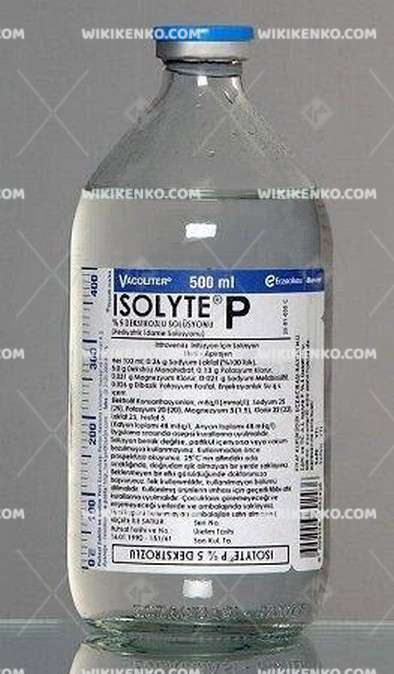
Isolyte-P 5% Dekstrozlu Pediyatrik Idame Solutionu (Glass Bottle)

Dosage form

Pack size

Potency

500Ml

Manufacturer

Origin

Generic Name (Ingredient)

Combined

Isolyte-P 5% Dextrose Pediatric Maintenance Solution is presented as a significant therapeutic option within the United Kingdom for addressing the specific fluid and electrolyte management needs of pediatric patients. Its specialized formulation is designed to meet the unique physiological demands of infants and young children, providing appropriate hydration, electrolyte supplementation, and caloric support through a carefully balanced composition.

read more

Assuming you’re in a life-threatening situation and require immediate access to medication, please visit our Community Support Network page.


Description

Isolyte-P 5% Dextrose Pediatric Maintenance Solution is a specialized intravenous fluid therapy formulation designed specifically for pediatric patients. This sterile, nonpyrogenic solution provides essential electrolytes, hydration, and a modest caloric intake through its carefully balanced composition. The solution, commonly available in glass bottles in the Turkish pharmaceutical market, serves as a vital component in managing fluid and electrolyte balance in infants and young children, particularly during states of illness or when oral intake is compromised. This maintenance solution addresses the unique physiological needs of pediatric patients while providing appropriate hydration and metabolic support.

Composition and Formulation

Isolyte-P 5% Dextrose Pediatric Maintenance Solution contains a precise blend of electrolytes and dextrose designed to meet the specific needs of pediatric patients. Each 100 ml of the solution contains 5 g dextrose monohydrate (providing approximately 170 calories per liter), 0.26 g sodium lactate, 0.13 g potassium chloride, 0.031 g magnesium chloride hexahydrate, and 0.026 g dibasic potassium phosphate. The solution also contains sodium bisulfite (0.021 g per 100 ml) as an excipient. This formulation results in a calculated osmolarity of approximately 340 mOsmol/liter, making it hypotonic relative to plasma.

The electrolyte composition per liter includes approximately 23 mEq sodium, 20 mEq potassium, 3 mEq magnesium, 29 mEq chloride, 3 mEq phosphate, and 23 mEq acetate. This carefully balanced electrolyte profile is designed to supplement the daily electrolyte requirements of pediatric patients while providing modest caloric support through the dextrose component. The pH of the solution is adjusted to approximately 5.0 (range 4.0-6.0), making it slightly acidic.

Therapeutic Indications

Isolyte-P 5% Dextrose is primarily indicated for the maintenance of daily fluid and electrolyte balance in infants and young children. The solution is particularly valuable in several specific clinical scenarios that require careful fluid management. It is frequently utilized for the maintenance of daily fluid-electrolyte balance in infants and small children, especially when oral intake is inadequate or impossible. The solution plays a critical role in the treatment of acute diarrhea in children, where significant electrolyte imbalances can develop rapidly.

Additionally, Isolyte-P is indicated for states of excessive fluid loss, which may occur during prolonged fevers, increased respiratory rates, or environmental conditions that promote dehydration. The solution is also valuable in the prevention and treatment of complications associated with diabetic acidosis, where careful fluid and electrolyte replacement is essential. Overall, this pediatric maintenance solution serves as a source of electrolytes, calories, water for hydration, and as an alkalinizing agent in the pediatric population.

Mechanism of Action

The primary mechanism of action of Isolyte-P 5% Dextrose involves the restoration and maintenance of fluid and electrolyte homeostasis in pediatric patients. When administered intravenously, the solution distributes throughout the total body water, with the distribution determined by the osmolarity of the solution and the physiological state of the patient. The dextrose component provides approximately 170 calories per liter, helping to prevent ketosis and protein catabolism that might otherwise occur during periods of fasting or inadequate oral intake.

The electrolyte components serve crucial physiological functions: sodium helps maintain extracellular fluid volume and osmotic pressure; potassium is essential for intracellular function and neuromuscular activity; magnesium supports enzyme systems and neuromuscular function; and phosphate participates in numerous metabolic processes including energy production and acid-base buffering. The acetate component acts as a bicarbonate precursor, helping to maintain acid-base balance and providing a mild alkalinizing effect when metabolized.

Dosage and Administration

The dosage of Isolyte-P 5% Dextrose must be individualized based on the patient’s age, weight, clinical condition, and laboratory parameters. Administration requires careful medical supervision with regular monitoring of electrolyte levels, fluid balance, and clinical response. The solution is administered exclusively via intravenous infusion, with the rate and volume carefully controlled to avoid fluid overload or electrolyte imbalances.

For general maintenance fluid requirements in pediatric patients, physicians typically calculate dosage based on body weight or surface area. According to the Holliday-Segar formula often referenced for pediatric fluid management, daily fluid requirements are approximately 100 ml/kg for the first 10 kg of body weight, 50 ml/kg for the next 10 kg, and 20 ml/kg for each kilogram thereafter. This calculation provides a baseline that must be adjusted according to the patient’s specific clinical circumstances.

In cases of dehydration or significant fluid losses, replacement volumes must be calculated separately and added to maintenance requirements. Infusion rates should be controlled to avoid rapid shifts in fluid and electrolyte balance, with careful attention to the patient’s cardiovascular status and renal function. The American Academy of Pediatrics recommends the use of isotonic solutions with appropriate electrolyte and dextrose content for maintenance intravenous fluids in children to reduce the risk of iatrogenic hyponatremia.

Clinical Pharmacology

The pharmacological effects of Isolyte-P 5% Dextrose derive from its ability to replenish fluids, provide calories, and restore electrolyte balance. Upon infusion, the dextrose component is rapidly metabolized, with most being utilized for immediate energy needs or converted to glycogen for storage. Any excess dextrose may be converted to fat. The 5% concentration provides approximately 170 calories per liter, which helps prevent ketosis during periods of fasting or inadequate nutrition.

The electrolyte components distribute according to concentration gradients and physiological needs. Sodium primarily remains in the extracellular space, maintaining serum osmolality and intravascular volume. Potassium rapidly moves into cells, supporting intracellular functions and membrane potential. Magnesium and phosphate distribute to their respective compartments, supporting numerous enzymatic and metabolic processes throughout the body.

The acetate component is converted to bicarbonate in the liver, providing a buffering effect that helps maintain acid-base homeostasis. This conversion typically occurs within 8-12 hours after administration, making acetate a useful alternative to direct bicarbonate administration in patients with fluid restrictions or elevated sodium levels.

Contraindications

Isolyte-P 5% Dextrose is contraindicated in certain clinical conditions where its use may exacerbate existing problems or create new complications. The solution should not be administered to patients with known hypersensitivity to any component of the formulation, particularly sodium bisulfite, which may cause allergic reactions in susceptible individuals. Patients with severe renal impairment or anuria should not receive this solution due to the risk of electrolyte accumulation and fluid overload.

The solution is also contraindicated in patients with clinically significant hyperkalemia, as the potassium content may further elevate serum potassium levels to dangerous concentrations. Similarly, patients with diabetes insipidus or other conditions characterized by severe sodium retention should not receive this solution due to its sodium content. In patients with increased intracranial pressure, administration of hypotonic solutions like Isolyte-P may worsen cerebral edema and should be avoided.

Special Warnings and Precautions

Administration of Isolyte-P 5% Dextrose requires careful monitoring and precautions to ensure patient safety. The solution should be used with caution in patients with cardiac insufficiency, renal dysfunction, or conditions associated with sodium retention and edema. Regular monitoring of serum electrolytes, glucose levels, fluid balance, and acid-base status is essential throughout the treatment period, with dosage adjustments made as necessary based on these parameters.

Particular attention should be paid to potassium levels, as excessive or rapid administration of potassium-containing solutions may lead to significant hyperkalemia, especially in patients with reduced renal function. The American Academy of Pediatrics notes that hypotonic maintenance fluids like traditional pediatric formulations may increase the risk of iatrogenic hyponatremia and potential neurological complications, particularly in acutely ill children with impaired water excretion.

Healthcare providers should be aware that this solution contains sodium bisulfite, which may cause allergic-type reactions including anaphylactic symptoms or asthmatic episodes in susceptible individuals. The solution should be visually inspected for particulate matter and discoloration prior to administration whenever the solution and container permit.

Adverse Reactions

While Isolyte-P 5% Dextrose is generally well-tolerated when administered appropriately, various adverse reactions may occur during its use. These reactions can range from local infusion site reactions to systemic effects related to fluid or electrolyte imbalances. Infusion site complications may include phlebitis, local pain, erythema, or infiltration of fluid into surrounding tissues.

Systemic adverse reactions may include fluid overload leading to pulmonary edema and heart failure, particularly in patients with cardiac or renal impairment. Electrolyte imbalances such as hyperkalemia, hyponatremia, or metabolic alkalosis may develop, especially with prolonged or excessive administration. Hyponatremia is of particular concern in pediatric patients and may lead to cerebral edema with symptoms ranging from headache and nausea to seizures, coma, or herniation in severe cases.

Allergic reactions to components of the solution, particularly sodium bisulfite, may occur in sensitive individuals. These reactions can range from mild urticaria to severe anaphylactic reactions requiring immediate intervention. Hyperglycemia may develop, particularly in patients with impaired glucose tolerance or diabetes mellitus. Careful monitoring and appropriate dose adjustments can minimize the risk of these adverse effects.

Drug Interactions

Isolyte-P 5% Dextrose may interact with various medications, potentially altering their efficacy or safety profile. Corticosteroids and corticotropin may enhance sodium and fluid retention, potentially exacerbating edema or hypertension in susceptible patients. Conversely, diuretics may potentiate electrolyte losses, particularly potassium, requiring careful monitoring and possible electrolyte supplementation.

Potassium-sparing diuretics (such as spironolactone, triamterene, or amiloride) may enhance the risk of hyperkalemia when administered concurrently with potassium-containing solutions like Isolyte-P. Digitalis glycosides have increased toxicity in the presence of hypokalemia or hyperkalemia, making electrolyte monitoring particularly important in patients receiving both treatments.

Parenteral administration of solutions containing carbohydrates may increase the risk of glycosuria in diabetic patients or those with glucose intolerance. Additionally, solutions containing lactate may accelerate the excretion of certain drugs, such as aspirin and barbiturates, that require acidic urine for optimal renal elimination. Care should be taken when adding medications to the solution, as incompatibilities may occur, leading to precipitation or altered drug efficacy.

Storage and Handling

Proper storage and handling of Isolyte-P 5% Dextrose are essential to maintain its sterility, potency, and safety for patient use. The solution should be stored at controlled room temperature (15-30°C or 59-86°F), protected from extreme temperatures and freezing. The glass bottles should be protected from physical damage and stored away from direct sunlight or strong artificial light, which may degrade components of the solution.

Prior to administration, each bottle should be visually inspected for particulate matter, discoloration, cloudiness, or damage to the container. The solution should be clear and free of visible particles. If the protective seal is broken or if the solution appears abnormal in any way, the product should not be used. Single-use containers should not be reconnected to administration sets after initial use, and any unused portion should be discarded.

When adding supplemental medications to the solution, strict aseptic technique must be maintained, and compatibility must be verified prior to admixture. Once medications have been added, the solution should be thoroughly mixed and used promptly, as the shelf life may be reduced depending on the added components.

Table of Key Information

Parameter Details
Composition (per 100 ml) 5 g dextrose monohydrate, 0.26 g sodium lactate, 0.13 g potassium chloride, 0.031 g magnesium chloride hexahydrate, 0.026 g dibasic potassium phosphate
Electrolyte Content (mEq/L) Sodium 23, Potassium 20, Magnesium 3, Chloride 29, Phosphate 3, Acetate 23
pH Range 5.0 (4.0-6.0)
Osmolarity Approximately 340 mOsmol/L
Primary Indications Maintenance of fluid-electrolyte balance in children, treatment of acute diarrhea, management of excessive fluid loss, prevention of diabetic acidosis complications
Contraindications Hypersensitivity to components, severe renal impairment, anuria, hyperkalemia, diabetic insipidus, increased intracranial pressure
Standard Dosage Individualized based on age, weight, and clinical condition; typically follows Holliday-Segar formula (100 ml/kg for first 10 kg + 50 ml/kg for second 10 kg + 20 ml/kg for remainder)
Administration Route Intravenous infusion only
Common Side Effects Infusion site reactions, fluid imbalance, electrolyte disturbances, potential hyponatremia
Precautions Regular monitoring of electrolytes, glucose, fluid balance; caution in cardiac/renal impairment
Storage Conditions Store at room temperature (15-30°C), protect from freezing and direct light
Shelf Life As indicated on packaging (typically 24-36 months unopened)

Conclusion

Isolyte-P 5% Dextrose Pediatric Maintenance Solution represents an important therapeutic option for managing fluid and electrolyte requirements in pediatric patients. Its specialized formulation addresses the unique physiological needs of infants and young children, providing appropriate hydration, electrolyte supplementation, and caloric support through a carefully balanced composition. While traditionally valued for its role in pediatric fluid management, current evidence and recommendations from organizations like the American Academy of Pediatrics suggest that isotonic solutions may be preferable in many acute care scenarios to reduce the risk of iatrogenic hyponatremia.

Healthcare providers must carefully consider the individual patient’s clinical condition, fluid and electrolyte status, and specific therapeutic goals when selecting and administering this solution. Appropriate monitoring and dosage adjustments are essential to maximize therapeutic benefits while minimizing potential risks. When used judiciously, with careful attention to established guidelines and the specific needs of each patient, Isolyte-P 5% Dextrose can be an effective component of pediatric fluid therapy.

Reviews

There are no reviews yet.

Be the first to review “Isolyte-P 5% Dekstrozlu Pediyatrik Idame Solutionu (Glass Bottle)”

Your email address will not be published. Required fields are marked *

Use the form below to report an error

Please answer the questions as thoroughly and accurately as possible. Your answers will help us better understand what kind of mistakes happen, why and where they happen, and in the end the purpose is to build a better archive to guide researchers and professionals around the world.


If an image of the drug is not available on the Wikikenko health encyclopedia, you have the option to submit images/leaflets of the product. Following verification by our pharmaceutical specialist, your submitted images/leaflets will be included in our archive, with due acknowledgment of your contribution. Your cooperation in this matter would greatly assist researchers in finding the information they seek. Upload Images/Leaflet (Less than 2MB)

No Choosen File

Wikikenko.com does not sell, distribute, or provide any pharmaceutical products or health services. Our platform functions solely as a health encyclopedia, providing information on a wide range of health topics, including but not limited to medications.


Medical Disclaimer: Seek Professional Advice

The information on this page is not intended to be a substitute for professional medical advice, diagnosis, or treatment. always seek the advice for your physician or another qualified health provider with any questions you may have regarding a medical condition. Always remember to

  1. Ask your own doctor for medical advice.
  2. Names, brands, and dosage may differ between countries.
  3. When not feeling well, or experiencing side effects always contact your own doctor.

Why you can't look for symptoms on the Internet

If diagnoses could be made simply from a textbook or an article on a website, we would all be doctors and treat ourselves. Nothing can replace the experience and knowledge of specially trained people. As in any field, in medicine there are unscrupulous specialists, differences of opinion, inaccurate diagnoses and incorrect test results. According to Wikipedia, cyberchondria is a mental disorder consisting in the desire to independently make a diagnosis based on the symptoms of diseases described on Internet sites.
 

People also search for…


More results…

Generic selectors
Exact matches only
Search in title
Search in content
Post Type Selectors

The expert search feature is especially useful for healthcare professionals, researchers, and scientists who require accurate and up-to-date information on pharmaceutical products. By narrowing down their searches using filters, they can easily access the relevant data they need, making informed decisions about treatment options or drug research endeavors.
Expert Search  →


Recent comments