
Description
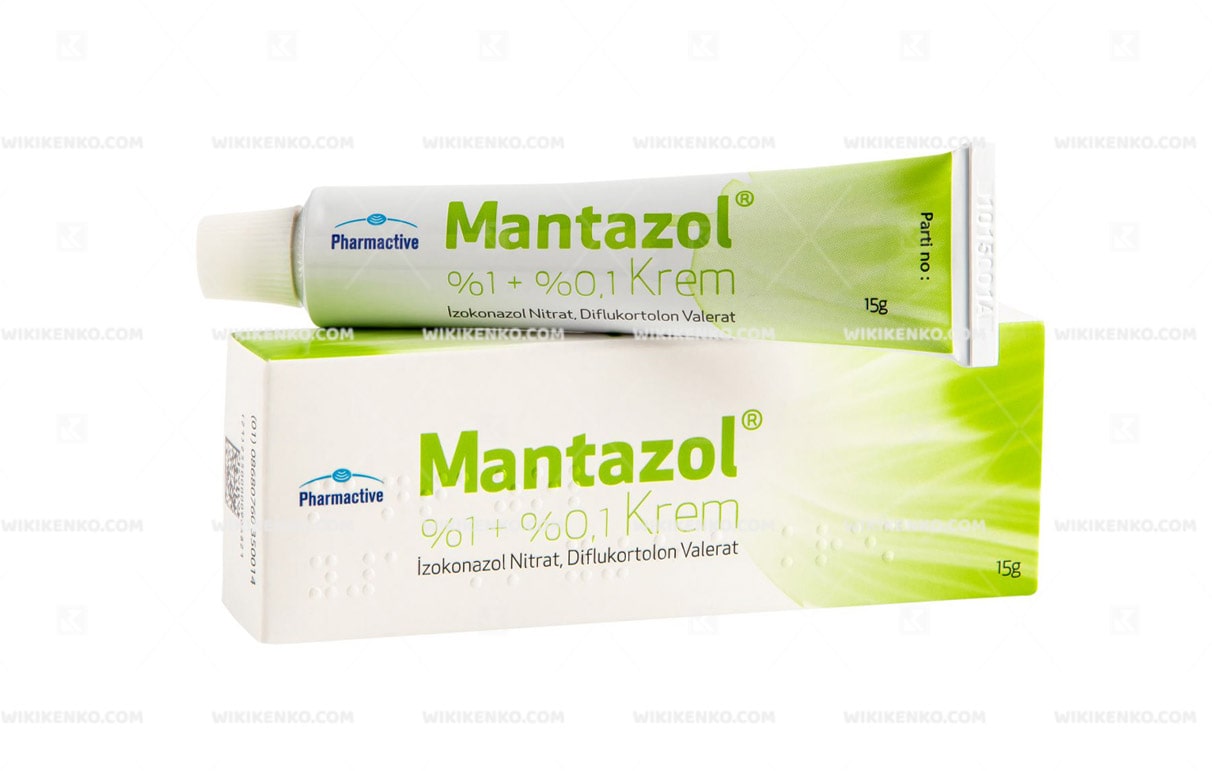
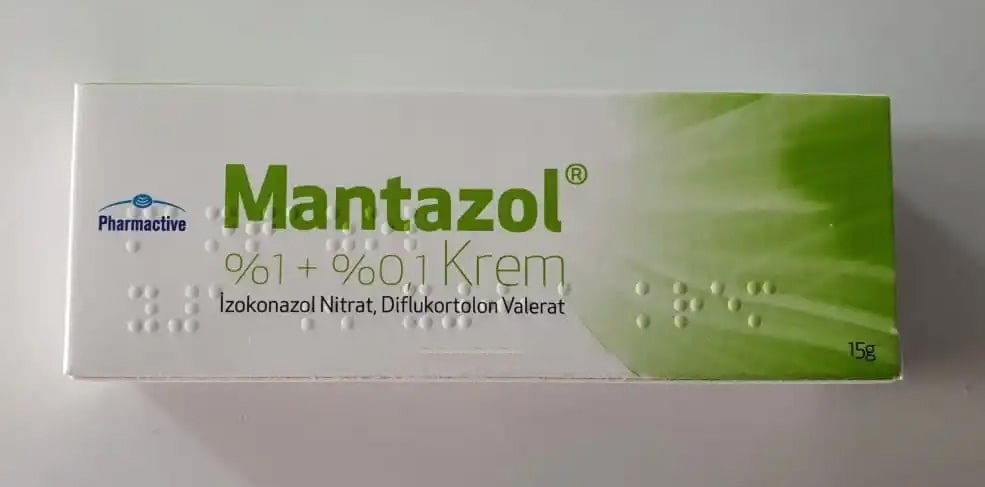
Mantazol Cream is a combination topical medication primarily used for treating fungal skin infections accompanied by inflammation. This pharmaceutical preparation contains isoconazole nitrate and diflucortolone valerate as its active ingredients, delivered in a specially formulated cream base. The dual-action formula provides both antifungal and anti-inflammatory effects, making it particularly valuable for inflammatory dermatophyte infections.
Composition and Formulation
Mantazol Cream contains two primary active pharmaceutical ingredients: isoconazole nitrate (10 mg, 1%) and diflucortolone valerate (1 mg, 0.1%) per gram of cream. The preparation is formulated as a viscous homogeneous, opaque white cream in an oil-in-water emulsion base that facilitates effective dermal penetration and application.
The excipients in Mantazol Cream include liquid paraffin, cetostearyl alcohol (0.75 g), disodium EDTA, sorbitan stearate, deionized water, and yellow soft paraffin. These components contribute to the cream’s stability, texture, and therapeutic efficacy while ensuring proper delivery of the active ingredients to the affected skin areas.
Mechanism of Action
Isoconazole Nitrate
Isoconazole nitrate belongs to the imidazole class of antifungal drugs. Its primary mechanism involves disrupting fungal cell membranes by inhibiting ergosterol synthesis, a vital component of fungal cell walls. This disruption leads to increased membrane permeability, causing leakage of cellular contents and ultimately resulting in fungal cell death.
Beyond its antifungal properties, isoconazole demonstrates significant activity against gram-positive bacteria, making it particularly effective for skin infections with potential bacterial involvement. Research shows that isoconazole rapidly reduces ATP concentrations in fungal cells and interacts with cell walls, causing structural deformations that compromise fungal viability.
Diflucortolone Valerate
Diflucortolone valerate is a potent synthetic glucocorticoid with pronounced anti-inflammatory, antipruritic (anti-itching), and vasoconstrictive properties. Its mechanism of action primarily involves the induction of lipocortins, which are phospholipase A2 inhibitory proteins. By inhibiting phospholipase A2, diflucortolone prevents the release of arachidonic acid, a precursor for inflammatory mediators such as prostaglandins and leukotrienes.
Additionally, diflucortolone operates through transrepression by binding to glucocorticoid receptors, which then migrate to the nucleus. There, it stimulates the transcription of anti-inflammatory genes while suppressing pro-inflammatory gene expression, including cytokines, growth factors, and adhesion molecules. This dual action effectively reduces inflammation, relieves itching, and soothes irritated skin.
Synergistic Effects
The combination of isoconazole nitrate and diflucortolone valerate in Mantazol Cream produces synergistic therapeutic benefits. Clinical studies indicate that this combination increases the local bioavailability of isoconazole compared to monotherapy. The enhanced formulation results in faster onset of antimycotic action, quicker relief of inflammatory symptoms, improved overall therapeutic outcomes, and earlier mycological cure rates.
Therapeutic Indications
Mantazol Cream is specifically indicated for the initial or interim treatment of superficial fungal infections of the skin that are accompanied by highly inflammatory or eczematous conditions. It is particularly effective for infections in:
-
The region of the hands
-
The interdigital spaces of the feet
-
The inguinal and genital regions
The medication is suitable for treating various dermatophyte diseases including:
-
Tinea pedis (athlete’s foot)
-
Tinea corporis (ringworm of the body)
-
Tinea cruris (jock itch)
-
Tinea inguinalis
-
Tinea barbae (fungal infection of beard area)
-
Tinea unguium (nail fungus)
-
Tinea capitis (scalp ringworm)
-
Tinea faciei (facial dermatophytosis)
-
Pityriasis versicolor
These conditions often present with inflammatory symptoms that benefit from the dual-action approach of Mantazol Cream, addressing both the infection and associated inflammation.
Administration and Dosage
Application Method
Mantazol Cream should be applied as a thin layer to affected areas with gentle massage to ensure proper absorption. The skin should be clean and dry before application to maximize therapeutic efficacy. For infections in intertriginous areas (where skin touches skin), such as between toes or in skin folds, thorough drying after washing is essential to prevent maceration.
Treatment Duration
Mantazol should be applied twice daily to the affected areas. The standard recommendation is to continue treatment until the inflammatory or eczematous skin conditions have resolved, but not exceeding two weeks. This time limitation is particularly important due to the corticosteroid component of the preparation.
After inflammation subsides or after the maximum two-week period, treatment should transition to a corticosteroid-free antifungal preparation to complete the eradication of the fungal infection while avoiding potential adverse effects of prolonged corticosteroid use. This sequential therapy approach is especially crucial when treating infections in the inguinal and genital regions, where skin atrophy from extended corticosteroid application poses a greater risk.
Mantazol Cream Equivalent Medicines
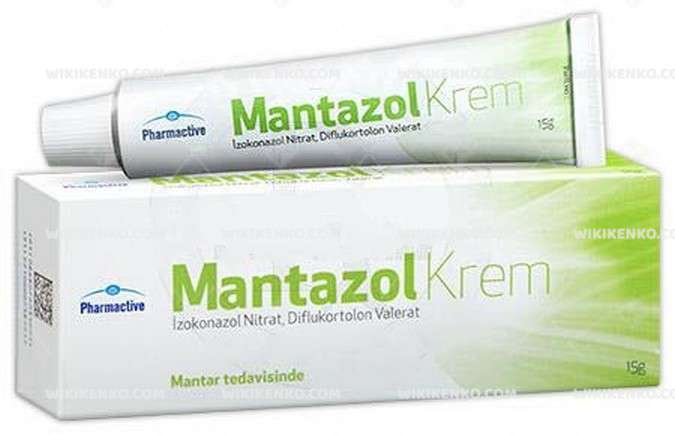
Mantazol Cream is a topical medication combining isoconazole nitrate (an antifungal) and diflucortolone valerate (a corticosteroid), used for treating fungal skin infections with significant inflammation. When seeking equivalent medicines, it is important to identify products with similar active ingredients and therapeutic effects.
Combination Antifungal and Corticosteroid Creams
Several creams contain a combination of an antifungal (often from the imidazole class) and a corticosteroid, mirroring Mantazol’s dual-action approach. Notable equivalents include:
-
Travocort Cream: Contains isoconazole nitrate (1%) and diflucortolone valerate (0.1%), making it a direct equivalent to Mantazol Cream in both composition and therapeutic use.
-
Isocort Cream: Another combination of isoconazole nitrate and a corticosteroid, used for similar indications.
-
Tracovol Cream: Also combines isoconazole nitrate and diflucortolone valerate, used for inflammatory fungal skin infections.
-
Troderm, Trocar, Oly Plus, Fuggy, Fugicide, Fungoid: These creams are listed as alternatives in Turkish and international markets, often containing similar combinations of antifungal and corticosteroid agents.
Other Antifungal + Corticosteroid Combinations
Some products use different antifungal or corticosteroid agents but serve the same clinical purpose:
-
Clotrimazole + Betamethasone (e.g., Lotrisone): Used for tinea and other fungal infections with inflammation.
-
Miconazole + Hydrocortisone: Available in some markets for similar indications.
Single-Agent Antifungal Creams
If only antifungal action is needed (without anti-inflammatory corticosteroid), the following are widely used and effective:
-
Isoconazole Cream: For fungal infections, without corticosteroid.
-
Clotrimazole Cream (Canesten, Lotrimin): Broad-spectrum antifungal for skin infections.
-
Miconazole Cream (Daktarin, Micatin): Effective for tinea, candidiasis, and other superficial fungal infections.
-
Ketoconazole Cream (Nizoral): Treats a wide range of fungal skin conditions.
-
Bifonazole, Oxiconazole, Sertaconazole: Other imidazole antifungals available as creams.
Comparison Table: Mantazol Cream and Equivalents
| Product Name | Active Ingredients | Indications | Anti-inflammatory Component | Market Availability |
|---|---|---|---|---|
| Mantazol Cream | Isoconazole nitrate + Diflucortolone valerate | Fungal skin infections with inflammation | Diflucortolone valerate | Turkey, select markets |
| Travocort Cream | Isoconazole nitrate + Diflucortolone valerate | Same as Mantazol | Diflucortolone valerate | International |
| Isocort Cream | Isoconazole nitrate + corticosteroid | Same as Mantazol | Corticosteroid | Turkey |
| Lotrisone | Clotrimazole + Betamethasone | Fungal infections with inflammation | Betamethasone | US, international |
| Miconazole Cream | Miconazole | Fungal skin infections | None | Global |
| Clotrimazole Cream | Clotrimazole | Fungal skin infections | None | Global |
| Ketoconazole Cream | Ketoconazole | Fungal skin infections | None | Global |
Pharmacokinetics
Absorption and Distribution
Percutaneous absorption of both active ingredients in Mantazol is generally limited, with less than 1% of the applied dose typically reaching systemic circulation when applied to healthy skin. However, absorption can increase significantly when the cream is applied to damaged or inflamed skin, under occlusive dressings, or to areas with thinner epidermis.
The combination of diflucortolone valerate with isoconazole nitrate enhances the local bioavailability of isoconazole, contributing to improved therapeutic efficacy. Both active ingredients primarily remain localized in the skin layers where they exert their therapeutic effects.
Metabolism and Elimination
Diflucortolone valerate undergoes rapid metabolism in the liver if absorbed systemically. Its biological half-life is approximately 4-5 hours, while the half-life of diflucortolone valerate is approximately 9 hours. The elimination is primarily via urine (75%) and feces (25%), with most of the dose recovered within 7 days.
Safety Considerations
Mantazol Cream is contraindicated in several conditions:
-
Tuberculous or syphilitic processes in the area to be treated
-
Viral skin diseases (e.g., varicella, herpes zoster)
-
Rosacea and perioral dermatitis
-
Post-vaccination skin reactions in the treatment area
The medication should also not be used in patients with hypersensitivity to any of its components or applied to open wounds or ulcerated lesions.
Use in Special Populations
Pregnancy and Lactation
Topical glucocorticosteroids should generally not be applied during the first trimester of pregnancy due to potential reproductive toxicity. The clinical necessity for Mantazol treatment should be carefully evaluated in pregnant women, with benefits weighed against risks. Large-area or prolonged use should be particularly avoided during pregnancy. Nursing mothers should not apply Mantazol to the breast area.
Pediatric Use
Limited data are available regarding the safety of Mantazol in children younger than 2 years of age. The medication should be used with caution in children due to their higher ratio of skin surface area to body weight, which increases the risk of systemic absorption and potential side effects.
Clinical Efficacy
Clinical studies have demonstrated that the combination of isoconazole nitrate and diflucortolone valerate offers several advantages over monotherapy with either component. Comparative research indicates faster onset of antimycotic action, more rapid relief of itching and inflammation, improved overall therapeutic benefits, and earlier mycological cure rates with the combination therapy.
The broad-spectrum activity of isoconazole against dermatophytes, yeasts, yeast-like fungi, molds, and gram-positive bacteria makes Mantazol particularly effective for mixed infections or cases where the precise infectious agent has not been definitively identified.
Quick Reference
| Parameter | Information |
|---|---|
| Active Ingredients | Isoconazole nitrate (10 mg, 1%) and diflucortolone valerate (1 mg, 0.1%) per gram |
| Formulation | Viscous homogeneous, opaque white cream (oil-in-water emulsion) |
| Primary Indications | Superficial fungal infections with inflammatory or eczematous skin conditions |
| Specific Conditions Treated | Tinea pedis, Tinea corporis, Tinea cruris, Tinea inguinalis, Tinea barbae, Tinea unguium, Tinea capitis, Tinea faciei, Pityriasis versicolor |
| Dosage | Apply a thin layer to affected areas twice daily |
| Duration of Treatment | Until inflammation subsides; maximum 2 weeks, then switch to corticosteroid-free antifungal |
| Common Side Effects | Skin irritation, burning, itching, dryness at application site |
| Rare Side Effects | Skin atrophy, striae, telangiectasia, hypopigmentation, secondary infection |
| Contraindications | Tuberculous or syphilitic processes, viral skin diseases, rosacea, perioral dermatitis, post-vaccination reactions |
| Pregnancy Category | Should be avoided in first trimester; use only if clearly needed |
| Pediatric Use | Limited data in children under 2 years; use with caution |
| Drug Interactions | Vitamin A derivatives, microdosed progesterone, phenytoin, systemic corticosteroids, carbamazepine, tetracyclines10 |
Conclusion
Mantazol Cream represents an effective therapeutic option for treating superficial fungal infections of the skin accompanied by significant inflammation. The combination of isoconazole nitrate and diflucortolone valerate addresses both the infectious cause and inflammatory symptoms, providing faster symptomatic relief and improved therapeutic outcomes compared to single-agent approaches.
The optimal use of Mantazol involves a sequential therapy approach: initial treatment with Mantazol to rapidly control both infection and inflammation, followed by transition to a corticosteroid-free antifungal agent to complete the eradication of the fungal infection while avoiding potential adverse effects of prolonged corticosteroid use.
Healthcare providers should carefully consider the benefit-risk profile for special populations, including pregnant women, nursing mothers, and children. When used appropriately-applying the correct dose for the recommended duration and transitioning to monotherapy as indicated-Mantazol Cream offers an effective solution for managing inflammatory fungal skin infections.











Reviews
There are no reviews yet.