
Description
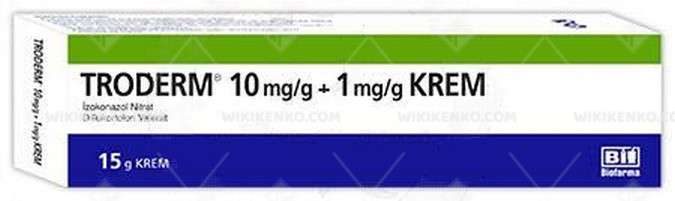
Troderm Cream is a combination medication containing isoconazole nitrate (an antifungal agent) and diflucortolone valerate (a corticosteroid). This dual-action formulation is specifically designed to address fungal skin infections that are accompanied by significant inflammation or eczematous reactions. The product is particularly effective for treating conditions where a fungal infection is causing considerable inflammatory symptoms, providing both antimicrobial activity and anti-inflammatory relief. The following comprehensive overview details the composition, mechanisms of action, therapeutic applications, and important considerations for the safe and effective use of Troderm Cream.
Composition and Formulation
Troderm Cream contains two active ingredients in a specific concentration ratio designed for optimal therapeutic effect. Each gram of cream contains 10 mg (1%) of isoconazole nitrate and 1 mg (0.1%) of diflucortolone valerate. This balanced combination allows for simultaneous treatment of fungal infection and associated inflammatory responses. The preparation appears as a white, odorless homogeneous cream and is typically available in tube packaging for convenient topical application. The formulation includes various excipients that help maintain stability and facilitate proper application to affected skin areas.
Isoconazole Nitrate
Isoconazole nitrate belongs to the azole antifungal class of medications. It possesses a broad spectrum of antimicrobial activity, making it effective against various fungal pathogens. This active ingredient works primarily by preventing fungal cells from growing and replicating by interfering with the synthesis of ergosterol, an essential component of fungal cell membranes. This mechanism disrupts the integrity of the fungal cell membrane, ultimately leading to cell death. Isoconazole demonstrates activity against dermatophytes, yeasts (including Candida species), yeast-like fungi, molds, and the microorganisms responsible for erythrasma.
Diflucortolone Valerate
Diflucortolone valerate is classified as a potent topical corticosteroid. It works by suppressing the inflammatory response in the skin, thereby reducing symptoms such as redness, swelling, and itching that often accompany fungal skin infections. This ingredient has anti-inflammatory, antipruritic (anti-itching), and vasoconstrictive properties that help alleviate the uncomfortable symptoms associated with inflammatory skin conditions. By targeting the inflammatory component of fungal infections, diflucortolone provides symptomatic relief while the antifungal component addresses the underlying cause.
Therapeutic Indications
Troderm Cream is specifically indicated for the initial or interim treatment of superficial fungal infections of the skin that are accompanied by severe inflammatory or eczematous reactions. These conditions typically present with symptoms such as redness, swelling, itching, and discomfort, along with the characteristic features of the fungal infection itself. Common applications include the treatment of fungal infections affecting the hands, the spaces between toes, the groin area, and the genital regions.
The combination of antifungal and anti-inflammatory properties makes Troderm particularly suitable for cases where inflammation is a significant component of the clinical presentation. It provides a dual approach to treatment by addressing both the causative fungal organisms and the symptomatic inflammation they trigger. This makes it an effective option for conditions like tinea pedis (athlete’s foot), tinea cruris (jock itch), and other dermatophyte infections with pronounced inflammatory reactions.
Pharmacokinetics and Pharmacodynamics
Absorption and Distribution
Isoconazole nitrate penetrates the skin rapidly, with peak concentrations in the skin achieved approximately one hour after application. The active ingredient persists in the skin for at least seven hours, with varying concentrations in different skin layers. In the stratum corneum, concentrations reach approximately 3,500 μg/ml, in the living epidermis approximately 20 μg/ml, and in the dermis approximately 3 μg/ml. These concentrations exceed the minimum inhibitory concentration required for most fungal pathogens.
Diflucortolone valerate also demonstrates good penetration into the skin, allowing it to reach the site of inflammation. The systemic absorption of both active ingredients is generally low when applied to intact skin, which helps minimize systemic effects.
Mechanism of Action
The combination of isoconazole nitrate and diflucortolone valerate provides a complementary approach to treating fungal skin infections with inflammatory components. Isoconazole exerts its antifungal effect by inhibiting the synthesis of ergosterol, a vital component of fungal cell membranes. This leads to increased cell permeability, leakage of cellular contents, and ultimately fungal cell death. Diflucortolone acts by suppressing various inflammatory pathways, reducing the production of inflammatory mediators, and inhibiting the migration of inflammatory cells to the affected area.
Dosage and Administration
Standard Dosing Regimen
Troderm Cream should be applied to the affected areas of skin twice daily. The cream should be applied thinly and evenly to the affected area after the skin has been thoroughly cleaned and dried. It is important to wash hands before and after application unless the hands themselves are the area being treated. The medication should be gently rubbed into the skin until it is absorbed.
Duration of Treatment
The duration of treatment with Troderm Cream is limited due to the presence of a potent corticosteroid component. After the inflammatory or eczematous symptoms subside, or at the latest two weeks after starting treatment, Troderm should be discontinued. Treatment should then continue with a non-corticosteroid antifungal preparation to complete the eradication of the fungal infection. This approach is particularly important when treating infections in the groin and genital regions, where prolonged corticosteroid use can potentially cause adverse effects.
Special Population Considerations
In children aged two years and older, no dosage adjustment is necessary. However, Troderm should be used with caution in children younger than two years due to limited safety data and the risk of increased systemic absorption and side effects. In patients with hepatic impairment, caution is advised as high-potency topical corticosteroids used over large surface areas or under occlusive conditions may lead to increased systemic absorption and reversible suppression of the hypothalamic-pituitary-adrenal (HPA) axis.
Contraindications
Troderm Cream is contraindicated in several situations where its use could potentially worsen existing conditions or cause harm. The medication should not be used in cases of:
-
Known hypersensitivity to isoconazole nitrate, diflucortolone valerate, or any of the excipients in the formulation
-
Tuberculosis or syphilis in the treatment area
-
Viral skin infections, such as varicella (chickenpox) or herpes zoster (shingles)
-
Rosacea or perioral dermatitis
-
Post-vaccination skin reactions in the area to be treated
These contraindications are important to observe as using Troderm in these situations could potentially lead to worsening of the condition or other adverse consequences.
Special Warnings and Precautions
General Precautions
Caution should be exercised when using Troderm Cream for bacterial skin infections, as additional specific antimicrobial treatment may be required alongside the topical application. The risk of side effects increases significantly with long-term use, application to large areas of skin, or use under occlusive dressing conditions. Therefore, it is important to follow the recommended duration of treatment and avoid excessive application.
Application Site Considerations
Special care should be taken when applying Troderm Cream to sensitive areas such as the face, groin region, or armpits. These areas have thinner skin and higher absorption rates, which may increase the risk of local adverse effects and systemic absorption of the active ingredients. When used on the face, care should be taken to avoid contact with the eyes.
Pediatric Use
For children, Troderm should be used with caution due to the risk of increased systemic absorption and side effects. Children have a larger ratio of skin surface area to body weight compared to adults, which can lead to greater systemic exposure to topically applied medications. Additionally, their skin barrier function may not be fully developed, potentially allowing for increased absorption.
Adverse Effects
Common Side Effects
Local symptoms such as mild itching, burning sensation, redness (erythema), or vesicle formation can occur in isolated cases at the application site. These reactions are typically transient and resolve with continued use or upon discontinuation of the medication.
Allergic Reactions
Allergic skin reactions to one or more components of Troderm Cream may occur in some individuals. These reactions can manifest as contact dermatitis, urticaria, or other forms of hypersensitivity responses. If signs of allergic reaction develop, the medication should be discontinued, and appropriate medical attention sought.
Corticosteroid-Related Effects
Prolonged use of topical corticosteroids, including diflucortolone valerate, may potentially lead to local adverse effects such as skin thinning (atrophy), striae (stretch marks), telangiectasia (visible blood vessels), or acneiform eruptions. Systemic effects are rare with normal use but can occur with extensive application, prolonged use, or application under occlusive dressings.
Drug Interactions
No significant interactions have been documented for Troderm Cream when used as directed. However, as with any medication, it is advisable to inform healthcare providers about all medications being used, including prescription drugs, over-the-counter medications, and supplements, to avoid potential interactions.
Use During Pregnancy and Lactation
Pregnancy
Data on the use of isoconazole-containing products during pregnancy indicate no teratogenic risk in humans. However, as with all medications during pregnancy, Troderm should be used only when clearly needed and under medical supervision. The benefits of treatment should be weighed against potential risks.
Breastfeeding
Effective quantities of isoconazole are unlikely to be secreted in breast milk. However, if Troderm is used during breastfeeding, it should not be applied to the breast area to prevent direct ingestion by the infant. As with use during pregnancy, the benefits of treatment should be carefully weighed against potential risks.
Storage and Handling
Troderm Cream should be stored below 30°C in a cool, dry place, away from direct sunlight. The medication should be kept out of reach of children. After opening, the cream remains stable for one year unless otherwise specified by the manufacturer. Proper disposal of expired or unused medication is important to prevent accidental ingestion or misuse.
Key Information Table
| Parameter | Details |
|---|---|
| Active Ingredients | Isoconazole nitrate (10 mg/g or 1%), Diflucortolone valerate (1 mg/g or 0.1%) |
| Pharmaceutical Form | Cream |
| Therapeutic Class | Topical corticosteroid-antifungal combination |
| Indications | Treatment of superficial fungal skin infections with severe inflammatory or eczematous reactions |
| Dosage | Apply twice daily to affected areas |
| Duration of Treatment | Until inflammatory symptoms subside or maximum of 2 weeks, then switch to non-corticosteroid antifungal |
| Contraindications | Hypersensitivity to ingredients; tuberculosis or syphilis in treatment area; viral infections; rosacea; perioral dermatitis; post-vaccination skin reactions |
| Common Side Effects | Itching, burning, redness, vesicle formation at application site |
| Special Precautions | Use with caution in bacterial infections; avoid long-term use, application to large areas, or under occlusive dressings; special care for facial, groin, or armpit application; caution in children |
| Use in Pregnancy | No teratogenic risk indicated; use only when clearly needed |
| Use in Breastfeeding | Unlikely to be secreted in breast milk in significant amounts; avoid application to breast area |
| Storage Conditions | Store below 30°C, away from direct sunlight |
Conclusion
Troderm Cream offers an effective dual-action approach for treating superficial fungal infections of the skin that are accompanied by significant inflammatory or eczematous reactions. The combination of isoconazole nitrate (antifungal) and diflucortolone valerate (corticosteroid) addresses both the underlying infection and its symptomatic manifestations. However, due to the presence of a potent corticosteroid, treatment duration should be limited, and the medication should be used with appropriate precautions, particularly in special populations such as children and pregnant women. When used as directed, Troderm Cream can provide effective relief from fungal skin infections with inflammatory components, improving patient comfort and supporting the healing process.











Reviews
There are no reviews yet.